

The Case for Bar Chairs with Backs (And How to Choose the Right One)
Bar chairs with backs are the most popular style of bar stool on the market right now — and for good reason. They keep you comfortable during long meals, casual conversations, and everything in between.
Quick Answer: What to Look for in Bar Chairs with Backs
| Feature | What to Know |
|---|---|
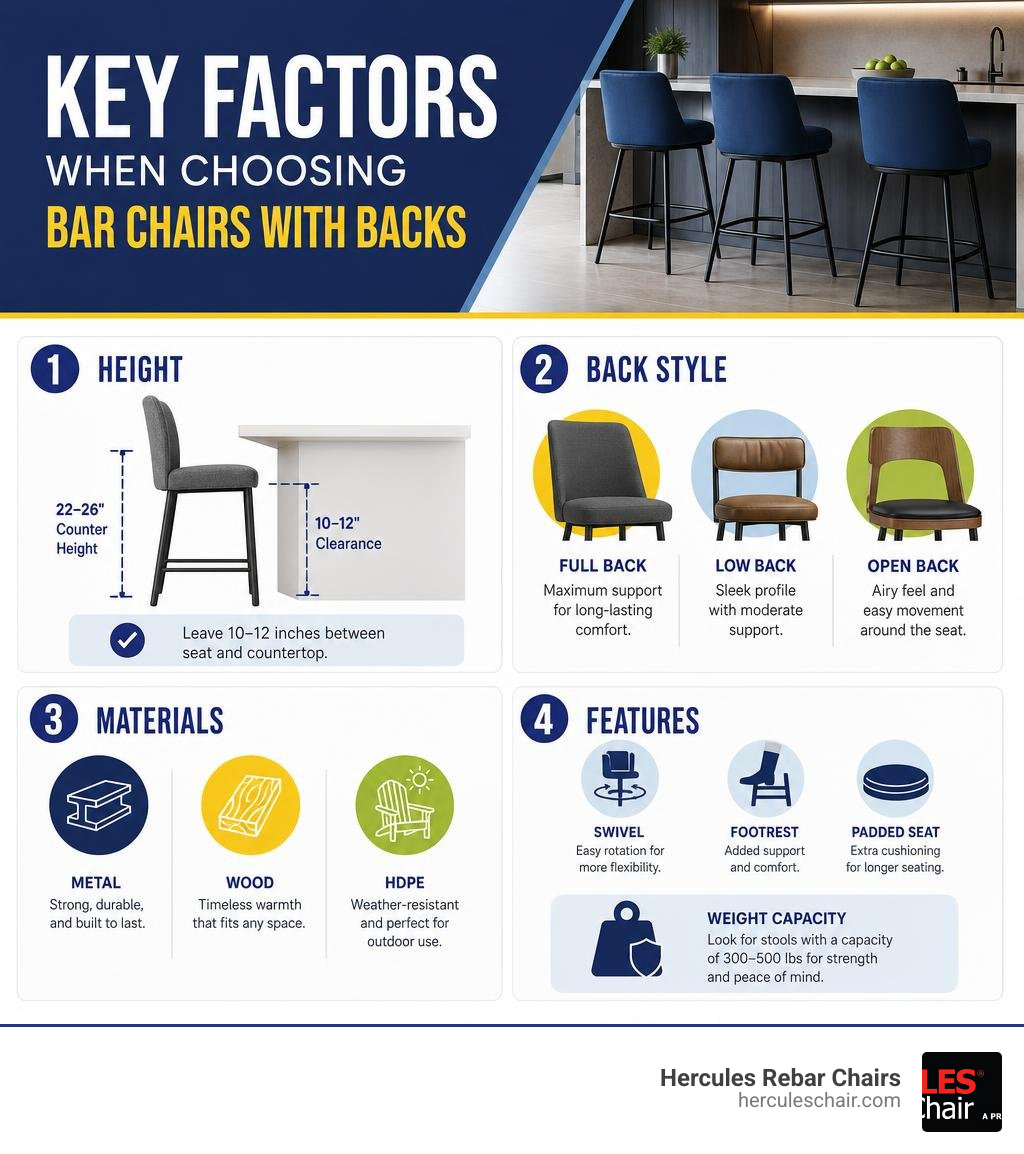
| Counter height | Seat height 22–26 inches; for counters 34–36 inches tall |
| Bar height | Seat height 28–30 inches; for bars 40–42 inches tall |
| Clearance | Leave 10–12 inches between seat and countertop |
| Back style | Full back (most support), low back (sleek look), open back (airy feel) |
| Frame material | Metal for durability; wood for warmth; HDPE for outdoor use |
| Key features | Swivel, footrest, padded seat, weight capacity (300–500 lbs) |
Sit at a backless stool for 20 minutes and you’ll feel it. Your posture drops, your lower back tightens, and you start shifting around. A good backrest changes all of that.
That demand is reflected in the numbers. Amazon’s top 50 best-selling bar stools include 39 models with backs — and the top 3 best sellers are all backed designs. Target lists over 1,000 results in this category alone.
Whether you’re outfitting a kitchen island, a home bar, or a breakfast nook, the right bar chair with a back makes the space more comfortable and more functional.
I’m Jordan Harris, a licensed Professional Engineer and product development lead at T.J. Harris Company — the makers of the Hercules Chair rebar support system — and while my core expertise is in structural engineering and concrete construction, my background in load capacity, material durability, and frame engineering directly informs how I evaluate bar chairs with backs. In the sections below, I’ll walk you through everything you need to know to choose the right stool for your space.
Bar chairs with backs terms you need:
Why Bar Chairs with Backs Are Essential for Ergonomic Seating
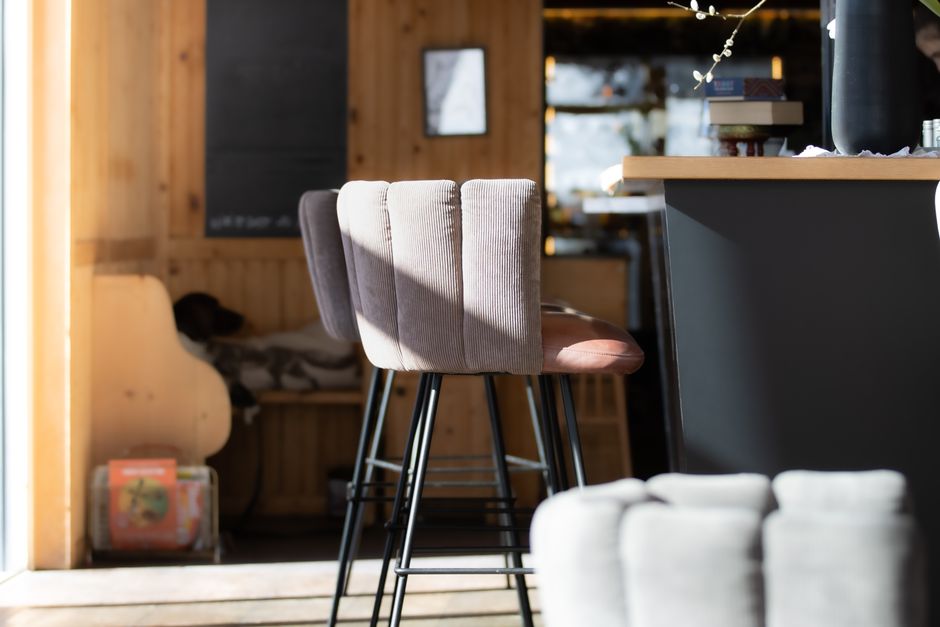
When we sit on a stool without a backrest, our core muscles must work constantly to keep us upright. Over time, fatigue sets in, leading to the dreaded “slouch.” A backrest provides vital lumbar support, relieving the load on your lower spine and allowing your muscles to relax. This is why bar stools with backs are the preferred choice for spaces where people spend more than just a few minutes.
In our engineering work at T.J. Harris Co., we understand that structural support is everything. Just as concrete needs a steady foundation, your spine needs reliable support to remain aligned. To explore how the concept of a “chair” spans across different industries, check out our comprehensive A-Z Guide to Bar Chairs.
Finding the Perfect Height for Bar Chairs with Backs
The most common mistake buyers make is purchasing the wrong height. “Bar stool” is often used as a catch-all term, but there is a major difference between counter-height and bar-height models.
To prevent your knees from bumping the underside of your counter, you need to calculate the correct clearance. Always aim for 10 to 12 inches of space between the top of the stool seat and the underside of your counter or bar top.
| Stool Type | Ideal Seat Height | Matching Table/Counter Height | Best Use Case |
|---|---|---|---|
| Counter Height | 22″ – 26″ | 34″ – 36″ | Kitchen islands, standard breakfast counters |
| Bar Height | 28″ – 30″ | 40″ – 42″ | Home bars, high-top dining tables |
If you are dealing with custom heights, you might want to look into adjustable-height swivel stools, which allow you to customize the clearance on the fly. For a structural perspective on sizing and finding the perfect match, read The Goldilocks Guide to Concrete Bar Chair Sizes: Not Too Big, Not Too Small.
Selecting the Right Backrest Style
The style of backrest you choose impacts both the physical support you receive and the visual weight of the stool in your room:
- Full Back: Offers maximum lumbar and upper back support. Perfect for long dinners or working from your kitchen island.
- Low Back: Provides a sleek, minimalist profile. These stools often tuck cleanly under the counter edge, keeping your sightlines open.
- Open Back: Strikes a balance between support and a light, airy aesthetic. A great example of this style is the Modern 27″ Swivel Bar Stools with Open Back – 6550CS , which combines a breathable, modern frame with comfortable cushioning.
Key Features to Look For in Supportive Bar Stools
When shopping for bar chairs with backs, look beyond aesthetics. The mechanics of the stool determine how comfortable and safe it will be over years of daily use. For instance, just as a high-quality office chair relies on tension and frame design, a great bar stool requires smart engineering. You can read more about ergonomic seating designs in The Ultimate Guide to Mesh Chairs.
Swivel and Footrest Functionality
A 360-degree swivel mechanism makes it incredibly easy to get in and out of a high chair without sliding the heavy base across your floor. It also encourages natural conversation, allowing you to turn easily toward family members or guests.
Equally important is a sturdy footrest. Sitting high without a place to rest your feet cuts off circulation to your legs and puts extra pressure on your thighs. Look for stools with integrated metal footrests, such as the Giantex Bar Stool with Foot Rest Upholstered Cushion & Ergonomic Backr – Giantexus , which ensures your feet are supported at a natural, comfortable angle.
Weight Capacity and Frame Durability
A stable frame is a safe frame. Residential-grade stools typically support 250 to 300 lbs, while commercial-grade options can easily support 400 lbs or more. If you want a stool built like a tank, look for frames constructed from heavy-duty, 18-gauge steel or solid hardwood.
For high-traffic spaces or commercial settings, custom options like the BFM Seating Espy Sand Black Customizable Metal Bar Height Chair with Cherry Wooden Back and 2″ Black Vinyl Swivel Seat provide the ultimate level of durability, combining a welded metal frame with a supportive wooden backrest.
Material and Style Guide for Everyday Durability

Your material choice dictates how much maintenance your stools will require and how well they will stand up to kids, pets, and spilled drinks.
Upholstered and Fabric Options
If comfort is your absolute top priority, upholstered stools are the way to go. High-density foam padding wrapped in breathable linen or easy-to-clean PU leather offers a plush seating experience.
For a sophisticated, high-design look that doesn’t sacrifice comfort, fully upholstered models like the GUBI Coco Bar Chair, Fully Upholstered feature a welcoming, curved backrest that embraces the body of the sitter.
Wood, Metal, and Weather-Resistant Materials
If you prefer a rustic, industrial, or coastal look, non-upholstered materials are incredibly durable and easy to wipe clean:
- Solid Wood: Rubberwood, oak, and maple frames offer natural warmth and classic style.
- Powder-Coated Steel: Highly resistant to scratches, dents, and cleaning chemicals. Perfect for busy, modern kitchens.
- HDPE (High-Density Polyethylene): The ultimate choice for outdoor spaces. Stools like the Comfo Back Bar Chair by Berlin Gardens are made from recycled content and are engineered to resist moisture, UV rays, and extreme weather without cracking or fading.
Smart Buying Strategies: Sets, Spacing, and Retailers
Before you pull out your credit card, you need to calculate exactly how many stools will comfortably fit along your counter.
As a general rule, allow 24 to 30 inches of space from the center of one stool to the center of the next. This ensures your guests have plenty of elbow room and won’t bump elbows while eating or drinking. If your stools have arms or wide, full backs, lean toward the 30-inch spacing rule.
Where to Buy the Best Value Bar Chairs with Backs
Depending on your budget and style preferences, there are several great places to shop for bar chairs with backs:
- Direct-to-Consumer Brands: Companies like Bar Stools with Backs – Nathan James offer high-quality, modern designs at affordable prices with quick shipping and easy assembly.
- Regional Furniture Retailers: For those who want to test out the comfort of their stools in person, local showrooms across our service areas offer excellent selections. You can find great options at Bar Stools – Dining Room – Bailey’s Furniture Alaska , explore local styles at Counter and Bar Stools – Pilgrim Furniture , or check out the regional collections at Counter Counter and Bar Stools – Phoenix – Del Sol Furniture Store and Colorado Counter Stool | The Furniture Mart .
- Specialty and Custom Shops: If you are looking for custom components, check out Trendler Chairs, Barstools, and Swivels in California or browse the catalog at Stools – AAA Home Center . You can even find fun, novelty options like the Alabama Crimson Tide “A” Swivel Bar Stool with Jailhouse Style Back to show off your team spirit.
- Big-Box Retailers: IKEA and Target offer highly affordable, flat-packed options that are perfect for tight budgets or temporary spaces.
Assembly, Warranty, and Return Considerations
Always check the assembly requirements before purchasing. While some commercial stools arrive fully welded and ready to use, many residential options require 15 to 30 minutes of assembly per stool.
Additionally, look for products that offer at least a one-year warranty. High-quality outdoor brands like Berlin Gardens even offer up to a 20-year residential warranty on their HDPE frames, proving that good engineering is built to last.
Frequently Asked Questions about Bar Stools
How much space should I leave between bar stools?
We recommend leaving 24 to 30 inches of space from the center of one stool to the center of the next. This provides comfortable elbow room and allows people to turn or stand up without feeling crowded.
Are metal bar stools more durable than wood?
In high-traffic or commercial settings, metal stools generally outperform wood because welded steel or aluminum frames do not have joints that can loosen over time. However, high-quality, solid wood stools with reinforced stretchers are also incredibly durable for home use.
Can I use indoor bar stools outside?
No. Indoor stools lack the UV inhibitors and moisture-resistant finishes required to survive the elements. For outdoor bars, always choose weather-resistant materials like powder-coated aluminum, teak, or HDPE.
Conclusion
Finding the perfect bar chairs with backs comes down to understanding your space, your height requirements, and your comfort needs. By paying close attention to seat height, clearance, frame construction, and backrest style, you can transform your kitchen counter or home bar into a highly supportive, welcoming gathering spot.
At Hercules Rebar Chairs, we know a thing or two about support. For decades, our team has manufactured America’s #1 concrete and rebar support chairs, helping builders secure their structural steel with maximum stability. Whether you are building a massive concrete foundation or simply setting up your dream kitchen island, proper support is the key to long-term success.
To learn more about our heavy-duty construction support systems, explore our Hercules Chair Products page today!