

What You Need to Know About Bar Chairs (Before You Buy or Build)
A bar chair is elevated seating designed to pair with counters, kitchen islands, or bar-height tables — but the term means something very different on a concrete job site.
Quick answer: Here’s what most people want to know at a glance:
| Question | Answer |
|---|---|
| What is a bar chair? | Elevated seating with a back and/or arms, designed for bar- or counter-height surfaces |
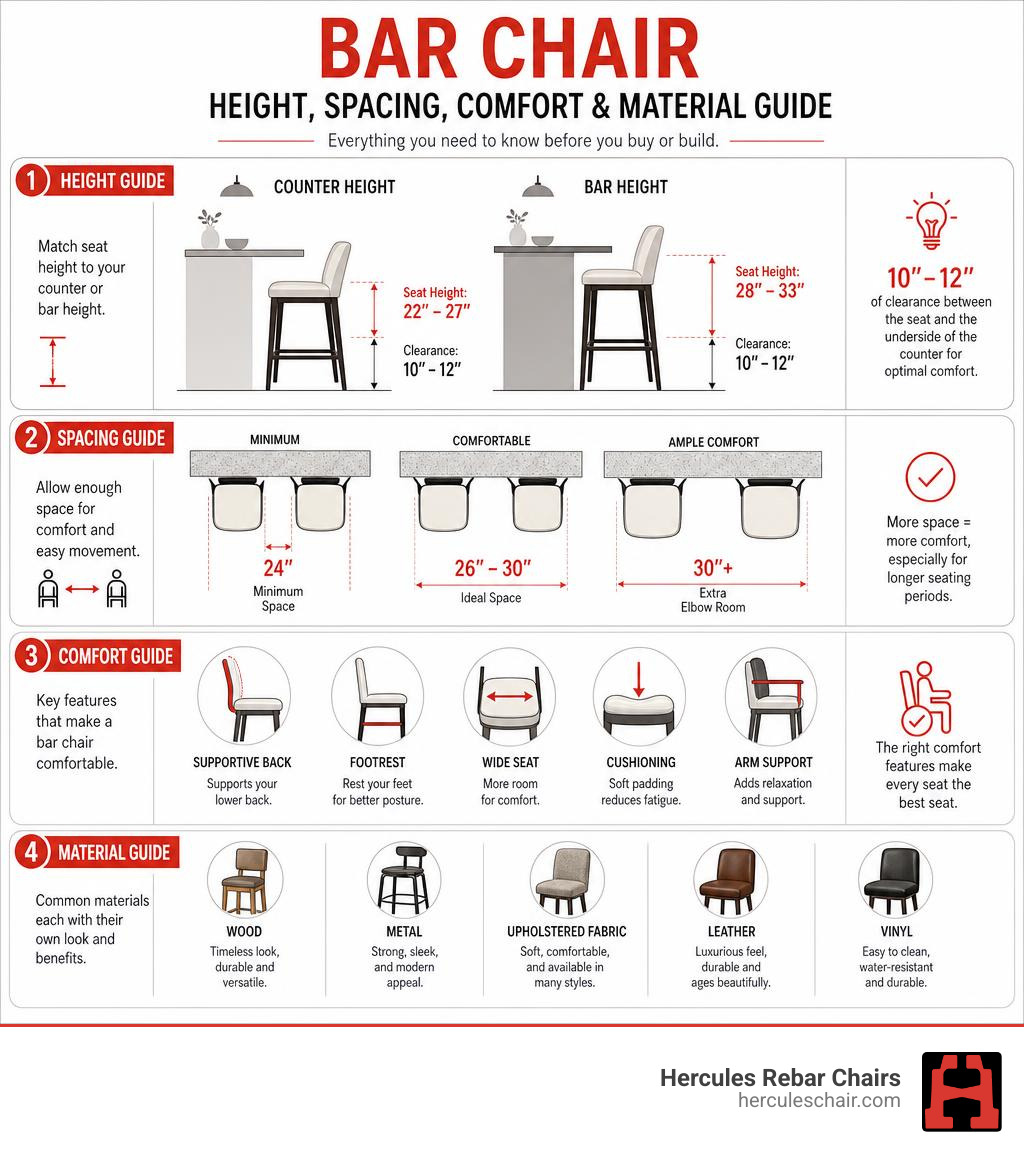
| How tall should it be? | Counter: 22–27 in. seat height / Bar: 28–33 in. seat height |
| How much clearance do I need? | Leave 10–12 inches between the seat and the underside of your counter |
| How far apart should they be spaced? | 24 inches minimum; 26–30 inches for comfortable elbow room |
| What materials are most common? | Wood, metal, upholstered fabric, leather, vinyl |
| Does “bar chair” mean anything else? | Yes — in construction, a bar chair is a concrete support that holds rebar at the correct depth in a slab |
Whether you’re furnishing a kitchen island or specifying rebar support for a concrete pour, the phrase “bar chair” covers both worlds — and mixing them up can lead to some very wrong purchases.
This guide covers everything: heights, materials, spacing, styles, maintenance, and the important distinction between furniture bar chairs and concrete bar chairs used in reinforced slabs.
I’m Jordan Harris, a licensed Professional Engineer and structural engineer with hands-on experience in large-scale concrete and steel construction. While my day-to-day work now centers on rebar support products at T.J. Harris Company, understanding how bar chairs function in both residential design and concrete reinforcement is core to what I do. That dual perspective shapes every section of this guide.
What Is a Bar Chair? Key Differences from Bar Stools and Counter Stools
When shopping for elevated seating, you will run into three terms used almost interchangeably: bar chair, bar stool, and counter stool. However, choosing the wrong one can ruin your room’s ergonomics or leave your knees knocking against the underside of your kitchen island.
Bar Chair vs. Bar Stool vs. Counter Stool
The easiest way to tell these apart is by looking at back support, armrests, and seat heights.
- Bar Stools: Historically, a bar stool is a backless, armless seat. It is designed to be tucked completely under a bar or counter when not in use. They typically feature a stationary or swivel seat and are built for shorter sitting sessions.
- Bar Chairs: A bar chair is essentially a dining chair with long legs. It features a supportive backrest, often has armrests, and prioritizes long-term comfort. If you plan on eating full meals, working on a laptop, or hosting long conversations at your home bar, a bar chair is what you actually want.
- Counter Stools vs. Bar Stools: This comes down to pure height. Counter stools are designed for standard 36-inch residential kitchen counters. They feature a seat height of 22 to 27 inches (most commonly 24 inches). True bar stools and bar chairs are designed for taller 40-to-42-inch bars or pub tables. They feature a taller seat height of 28 to 33 inches.
For a quick reference on how major retailers structure their seating lineups to accommodate these height differences, you can check out the official Bar stool height guidance. Many regional options, such as the curated selections at Bar Stools – Dining Room – Bailey’s Furniture Alaska or Dining Room > Bar Stools – Arizona Furniture, categorize their products strictly by these seat heights to help buyers avoid ordering the wrong size. If you are shopping on giant marketplaces, looking through Alabama Bar Stools – Amazon.com will show a massive range of both adjustable and fixed-height options.
| Seating Type | Typical Seat Height | Matching Table/Counter Height | Key Features | Best Used For |
|---|---|---|---|---|
| Counter Stool | 22″ – 27″ | 35″ – 37″ (Kitchen Islands) | Low profile, often backless | Casual breakfasts, homework |
| Bar Stool | 28″ – 30″ | 40″ – 42″ (Home Bars) | Stationary or swivel, compact | Quick drinks, social gatherings |
| Bar Chair | 28″ – 33″ | 40″ – 42″ (Pub Tables) | Backrest, armrests, cushioned | Long dinners, remote work |
| Concrete Bar Chair | 1″ – 6″+ | N/A (Embedded in Concrete) | Heavy-duty plastic or steel, red | Holding rebar/mesh in slabs |
The Other Meaning of Bar Chair in Concrete Construction
If you are working on a home renovation that involves pouring a new concrete patio, driveway, or foundation slab, your contractor might ask you to buy “bar chairs.” Do not send them to a furniture store!
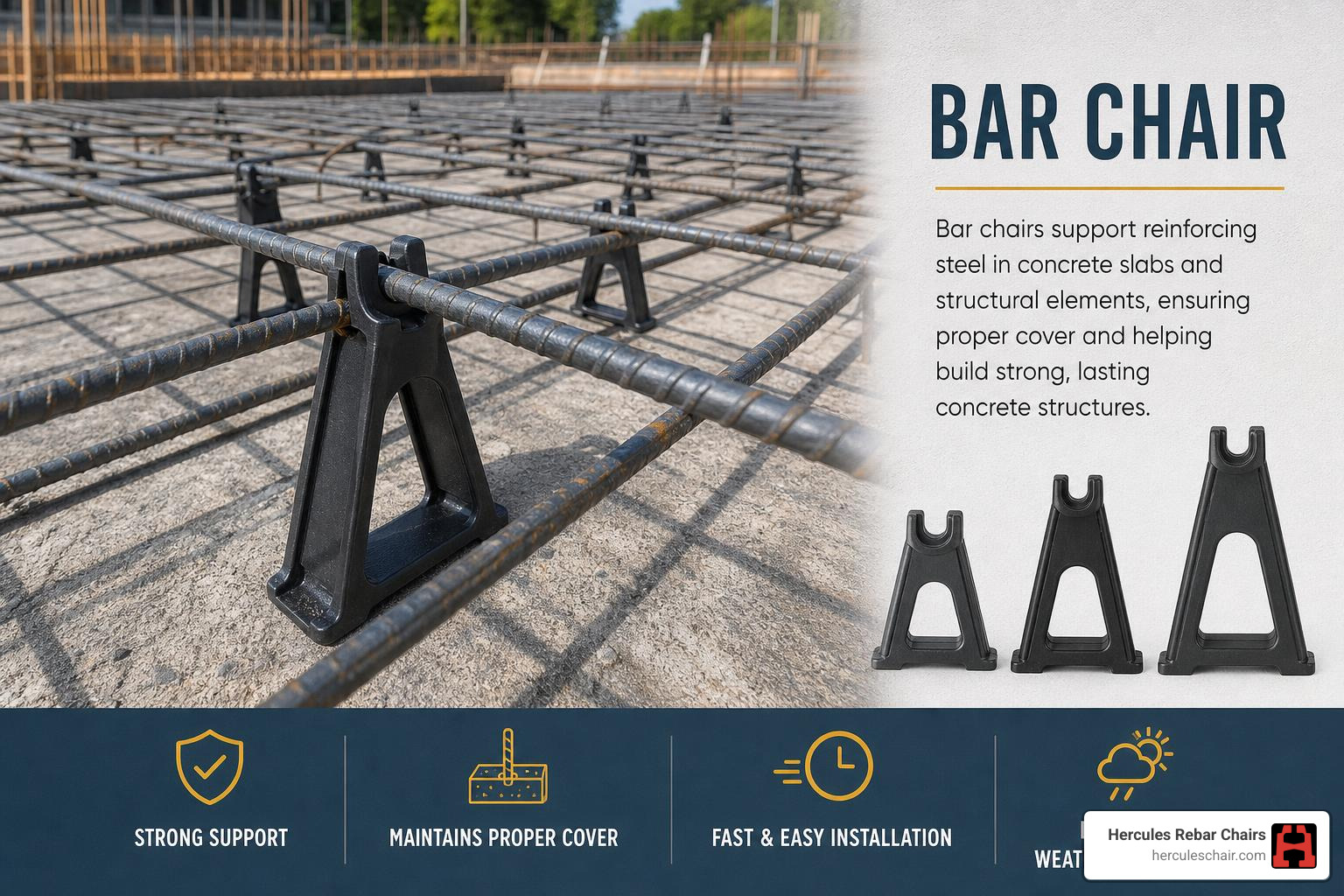
In the construction industry, a bar chair (often called a rebar chair or reinforcement support) is a structural accessory. It holds steel rebar or welded wire mesh at the precise height required within a concrete slab before the pour begins.

Without these supports, the heavy steel reinforcement would sink to the bottom of the wet concrete, rendering it useless. Proper spacing and cover depth are critical for structural integrity and building code compliance. If you are planning a concrete project, check out this comprehensive Guide to rebar chair types to understand how these little tools prevent structural failures.
Using high-quality supports is non-negotiable. To understand the engineering physics behind why these small plastic or metal pieces are so critical, read about Why Your Slab Needs Rebar Chair Supports and Elevate Your Concrete: Why Bar Chairs Are Essential for Strong Slabs.
How to Choose the Right Bar Chair Height, Size, and Spacing
Choosing the wrong bar chair is a recipe for bad posture and bruised knees. To get the perfect fit, you have to measure twice and buy once.
Bar Chair Height Rules for Counters, Islands, and Bar Tables
The golden rule of elevated seating is simple: always allow 10 to 12 inches of clearance between the top of the seat cushion and the underside of the counter or table.
- For a 36-inch counter: You need a seat height of 24 to 26 inches.
- For a 42-inch bar: You need a seat height of 30 to 32 inches.
If you have an unusual counter height, or if multiple members of your family are of vastly different heights, look for adjustable-height chairs. These feature a hydraulic lift base that lets you customize the height on the fly. If you prefer a classic, stable look, stick to fixed-height seating. You can browse specialized options at Shop Bar Stools at Cheap Sleep Furniture & Mattress or look into the customizable wood and metal designs at Bar & Counter Stools – California House.
How Many Bar Chairs Do You Need?
Do not crowd your counter. To ensure your guests have enough elbow room and can slide in and out of their seats without initiating a game of bumper chairs, follow these spacing rules:
- For chairs 16 to 18 inches wide: Leave at least 24 inches of space from the center of one chair to the center of the next.
- For chairs with armrests or swivel features (20 to 22 inches wide): Allow 26 to 30 inches of center-to-center spacing.
- Edge clearance: Always leave at least 12 to 15 inches of space between the end of the counter and the center of the outermost chair.
For example, if you have an 8-foot (96-inch) kitchen island, you can comfortably fit three 24-inch-spaced chairs. Trying to squeeze in a fourth will make the space feel cramped. If you want to visualize how different layouts work in premium spaces, check out the options at Shop Bar Stools at Colorado Style | Denver Furniture Store or browse the sizing guides at Counter and Bar Stools – Pilgrim Furniture.
Residential vs. Commercial Bar Chair Sizing
If you are purchasing a bar chair for a commercial setting, like a restaurant bar or hotel lounge, residential standards will not cut it. Commercial seating must withstand constant, heavy use.
- Weight Capacity: Residential chairs are typically rated for 200 to 250 lbs. Commercial-grade chairs are built to support 300 to 500 lbs.
- Safety Mechanisms: Commercial swivel chairs often feature a “self-return swivel.” This mechanism automatically rotates the seat back to its forward-facing position when a guest stands up, keeping the bar area looking neat.
- Glides and Bases: Commercial chairs must have heavy-duty, non-marring floor glides to prevent scratching expensive restaurant floors.
A great example of a commercial-spec chair is the customizable BFM Seating Espy Sand Black Customizable Metal Bar Height Chair with Cherry Wooden Back and 2″ Black Vinyl Swivel Seat. For high-end hospitality environments where durability is just as important as aesthetic appeal, models like the Gasser Chair | LEB-103-B LeBaron 103 Barstool offer heavy-duty aluminum frames and molded foam cushions designed to handle hundreds of guests a day.
Bar Chair Materials, Durability, and Style Options
The material you choose dictates not only how your bar chair looks, but also how long it will survive daily life.
Wooden Bar Chairs
Wooden chairs bring unmatched warmth and a timeless aesthetic to a home. Whether you love the clean lines of mid-century modern design or the chunky, rustic look of a farmhouse kitchen, solid wood is a fantastic choice.
If you are looking for heirloom-quality wooden furniture, search for Amish-built hardwood frames. For example, the Anson 24″ Stationary Bar Chair – Kings Amish Furniture is constructed with traditional joinery that outlasts mass-produced, flat-packed alternatives. The downside? Wood is heavy, can scratch, and requires occasional polishing to keep its luster.
Metal Bar Chairs
For a modern industrial or minimalist look, metal is king. Typically made from steel or aluminum, metal bar chairs are incredibly strong, lightweight, and easy to clean.
Look for powder-coated finishes, which protect the metal from rust and chipping. If you are using your chairs on an outdoor patio, metal is your best bet—just make sure they are specifically rated for outdoor use so they don’t turn into a rusted eyesore after the first rainstorm.
Upholstered Bar Chairs
If comfort is your absolute top priority, go with upholstery. Upholstered bar chairs feature cushioned seats and backs wrapped in fabric, leather, or synthetic materials.
- Genuine Leather: Elegant, extremely durable, and develops a beautiful patina over time. It is easy to wipe down but comes with a premium price tag.
- Faux Leather / Vinyl: The perfect choice for busy family kitchens. It gives you the look of leather at a fraction of the cost and can be cleaned with a damp cloth.
- Fabric: Offers the widest range of colors and textures, but is highly susceptible to stains from spilled wine, coffee, or pasta sauce. Look for performance fabrics that have built-in stain resistance.
For a sleek, modern upholstered look, check out the Indi Bar Chair or the elegant Zenith Bar Chair – Modern Upholstered Wooden Bar Seating , which beautifully pairs a solid wood frame with premium fabric upholstery.
Pros and Cons of Upholstered, Wooden, and Metal Bar Chairs
To help you make the right call, here is a quick breakdown of how these materials stack up against each other:
Comfort Features to Look for in a Bar Chair
An uncomfortable bar chair is a useless chair. If you want your family and friends to actually enjoy sitting at your counter, look for these key ergonomic features.
Backrest, Arms, and Seat Shape
If you only sit at your island for 10 minutes to drink a morning espresso, a backless stool is fine. But for anything longer, a supportive backrest is essential.
Look for chairs with an ergonomic, curved backrest that supports your lumbar spine. Armrests add another layer of luxury, but make sure they are low enough to slide under your counter when the chair is pushed in. The Misaki Bar Chair Sand Strand | Jesper Home features unique, wing-like armrests that offer excellent upper-body support while maintaining a slim, modern profile.
Swivel, Stationary, and Adjustable Bar Chair Features
- Swivel: A swivel mechanism makes it incredibly easy to get in and out of the chair, especially in tight spaces. It also allows the person sitting to easily turn between the kitchen workspace and the dining area.
- Stationary: Stationary chairs have fewer moving parts, meaning there is less that can break over time. They are inherently more stable, making them a safer choice for households with very young children.
Footrests, Glides, and Base Design
Because your feet cannot reach the floor when sitting in a bar chair, a footrest is not an optional luxury—it is a physiological necessity. Without one, the weight of your hanging legs will cut off circulation under your thighs. Look for footrests protected by a metal plate or “sabot” to prevent scuffing the wood. Finally, ensure the legs are capped with high-quality nylon or felt glides to protect your hardwood or tile floors from scratches.
Matching Bar Chairs to Your Kitchen, Counter, or Bar Table
Your bar chairs should not exist in a vacuum; they need to complement the existing design language of your home.
Popular Bar Chair Styles and 2026 Trends
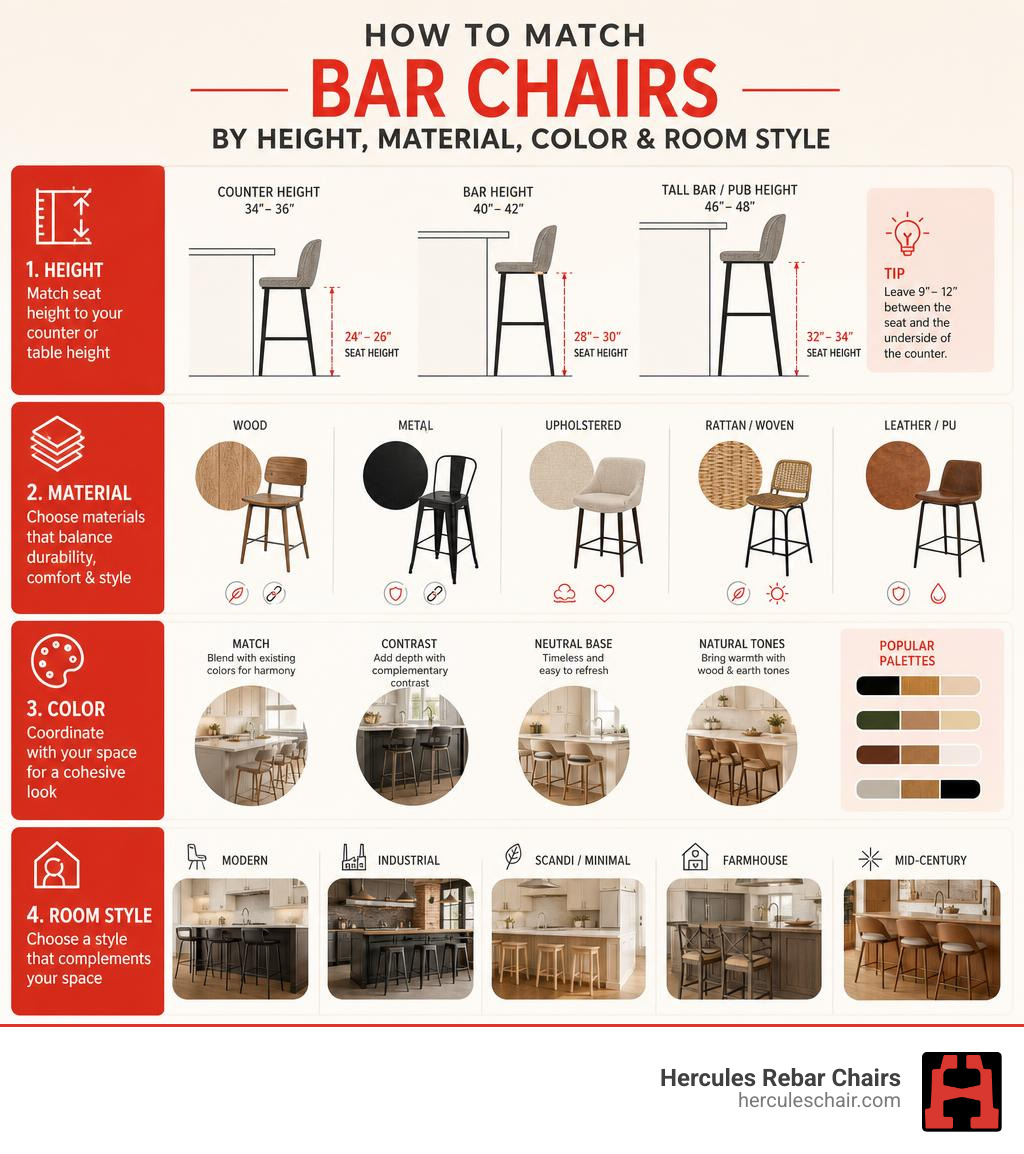
Current design trends emphasize mixed materials and curved, organic silhouettes. We are seeing a lot of:
- Modern Industrial: Matte black steel frames paired with warm, natural wood seats.
- Warm Minimalist: Sleek, backless wooden stools in light oak or walnut.
- Mid-Century Modern: Curved bentwood backs with tapered legs and neutral-toned fabric cushions (like cream, beige, or olive green).
Color, Finish, and Material Coordination
You do not need to match your chairs exactly to your cabinets, but they should coordinate.
- If you have a dark blue kitchen island with brass hardware, try choosing bar chairs with warm wood legs and brass footrests to tie the room together.
- If your kitchen is entirely white, a set of dark charcoal or leather bar chairs can provide a stunning, grounding contrast.
Matching Bar Chairs for Small, Family, and Entertaining Spaces
- For Small Spaces: Choose backless stools that can slide completely under the counter to keep your walkways clear.
- For Families with Kids: Avoid light-colored fabrics. Opt for wipeable faux leather, molded plastic, or powder-coated metal.
- For Entertainers: Swivel chairs are a must. They allow guests to turn and talk to people in the living room or look at the host working in the kitchen.
Bar Chair Care, Maintenance, and Buying Checklist
To keep your investment looking brand new for years to come, establish a simple maintenance routine.
Cleaning Wooden, Metal, Leather, Vinyl, and Fabric Bar Chairs
- Wood: Dust weekly with a microfiber cloth. Use a wood-safe polish twice a year.
- Metal: Wipe down with a damp cloth and mild soap. Periodically check for any rust spots, especially on outdoor frames.
- Leather & Vinyl: Wipe with a damp cloth. Apply a leather conditioner once a year to prevent cracking.
- Fabric: Vacuum regularly to remove crumbs. Blot (do not rub!) liquid spills immediately with a clean, dry towel.
Commercial Bar Chair Maintenance
In a commercial setting, check the bolts and swivel mechanisms of your chairs every month. High-use environments cause screws to loosen over time, which can create a safety hazard if left unchecked.
Concrete Bar Chair Care and Jobsite Selection
On the construction side of things, selecting the right concrete bar chair is all about matching the support to your reinforcement size and slab thickness.
Using the wrong size support can cause your rebar to sit too high (leading to surface cracking) or too low (compromising structural strength). To make sure your concrete project is built to last, read our guide on Concrete Bar Chair Sizes for Every Project and check out The Goldilocks Guide to Concrete Bar Chair Sizes: Not Too Big, Not Too Small.
If you are working with concrete mesh rather than traditional heavy rebar, you will need specialized mesh supports. Learn how to handle this setup by reading Elevate Your Slab with Concrete Mesh Chairs and our comprehensive resource, The Ultimate Guide to Mesh Chairs.
For general tips on ensuring your reinforcement is perfectly positioned, take a look at Chair-ish Your Concrete: Everything You Need to Know About Reinforcement Supports and Sitting Pretty: Everything You Need to Know About Rebar Supports. If you are using rebar bolsters for continuous support, you’ll also want to read about Slab Bolster Chairs and Why Your Rebar Deserves a Seat.
Frequently Asked Questions About Bar Chairs
What Is the Best Height for a Bar Chair?
The best height depends entirely on your counter. Measure from the floor to the underside of your counter or bar table, then subtract 10 to 12 inches. That number is your target seat height. For standard 36-inch kitchen islands, look for 24-inch counter-height chairs. For 42-inch bars, look for 30-inch bar-height chairs.
Are Bar Chairs Better with Backs or Without Backs?
If you prioritize comfort and plan to sit for longer than 20 minutes at a time, choose a bar chair with a backrest. If you have a small space and want to be able to hide the chairs completely under the counter when they aren’t in use, choose backless stools.
How Far Apart Should Bar Chairs Be?
To keep your guests from bumping elbows, allow at least 24 inches of space from the center of one chair to the center of the next. For larger chairs with armrests or swivel features, increase that spacing to 26 to 30 inches.
Conclusion
Finding the perfect bar chair is all about balancing form and function. Before you make a purchase, remember to:
- Measure your counter height to determine whether you need counter-height or bar-height seating.
- Calculate your spacing so your island doesn’t look crowded.
- Choose materials that match your lifestyle (especially if you have kids or pets!).
- Prioritize comfort features like backrests, footrests, and swivel mechanisms.
And if your next big project involves pouring concrete rather than decorating a room, the right structural bar chairs are the secret to a strong, crack-free slab. As America’s #1 manufacturer of rebar supports, with over 14 million units sold across the USA, Hercules Rebar Chairs (T.J. Harris Co.) is here to help you save time, save money, and guarantee code compliance on every single pour. Our signature red concrete supports are engineered for maximum strength and ease of use.
Ready to set your next concrete project up for success? Explore concrete bar chair and rebar support options from Hercules Rebar Chairs today!