

When Does Fiberglass Rebar Make Sense?
Fiberglass rebar is a lightweight, rust-resistant way to reinforce concrete. It is worth considering for driveways exposed to de-icing salts, swimming pools, and marine structures. But it is not a one-for-one swap for steel: it is less stiff, does not bend on site, and cannot provide electrical grounding. For structural work, have the bar size, spacing, and support layout checked against the project design before the pour.
I’m Jordan Harris, a Tennessee-licensed structural engineer with five years of experience on large concrete and steel projects. I’ll use that background to explain where fiberglass rebar helps and what contractors should check before installing it.
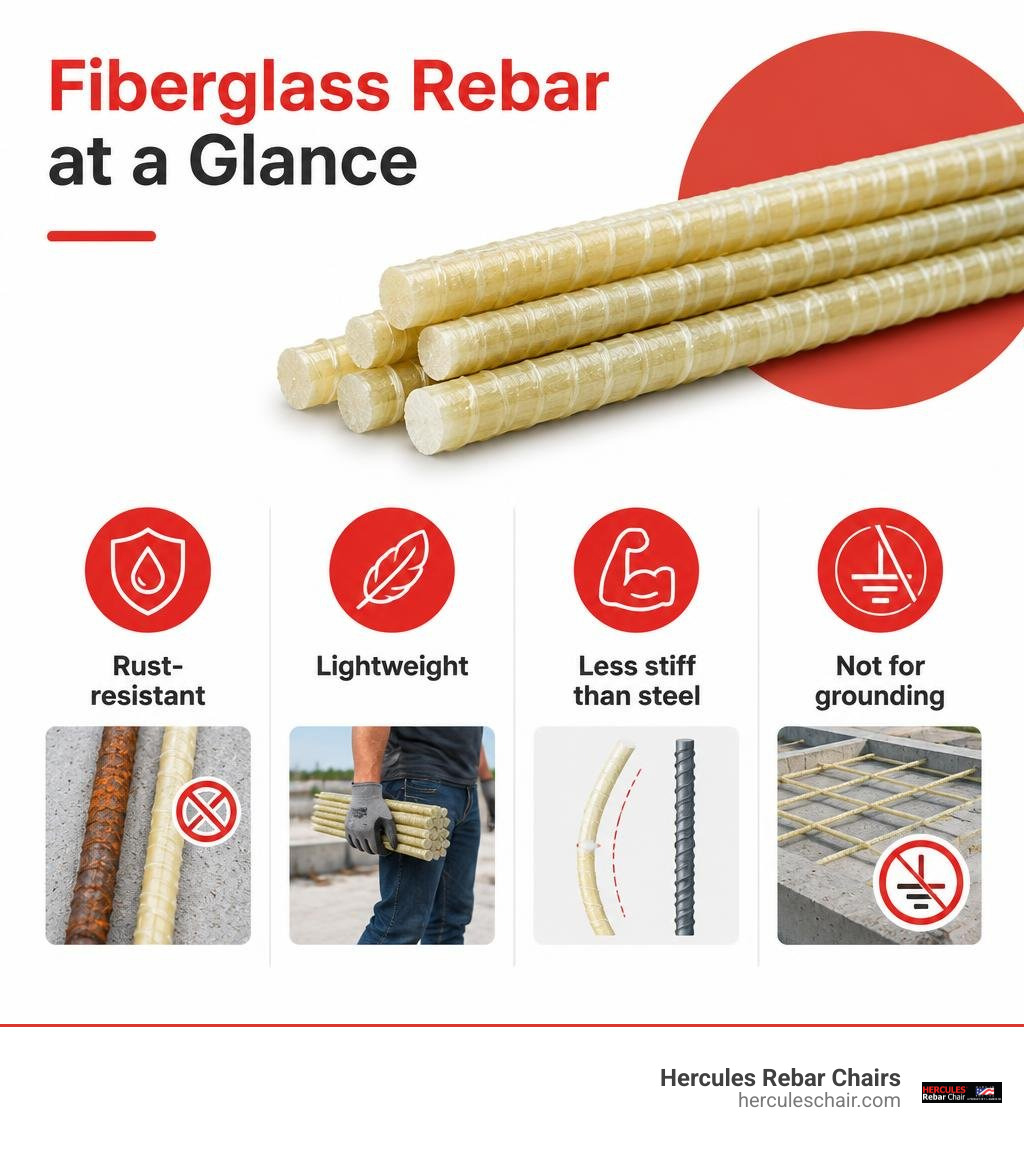
Fiberglass rebar terms made easy:
What Is GFRP and How Does It Compare to Traditional Steel?
Glass Fiber Reinforced Polymer (GFRP), commonly referred to as fiberglass rebar, is a composite material engineered specifically to solve the oldest problem in reinforced concrete: internal corrosion.
While traditional black steel relies on concrete’s alkaline chemistry to passivate its surface, water, salt, and atmospheric carbonation eventually break down that protective barrier. Once steel oxidizes, it expands up to six times its original volume, cracking and spalling the surrounding concrete from the inside out.
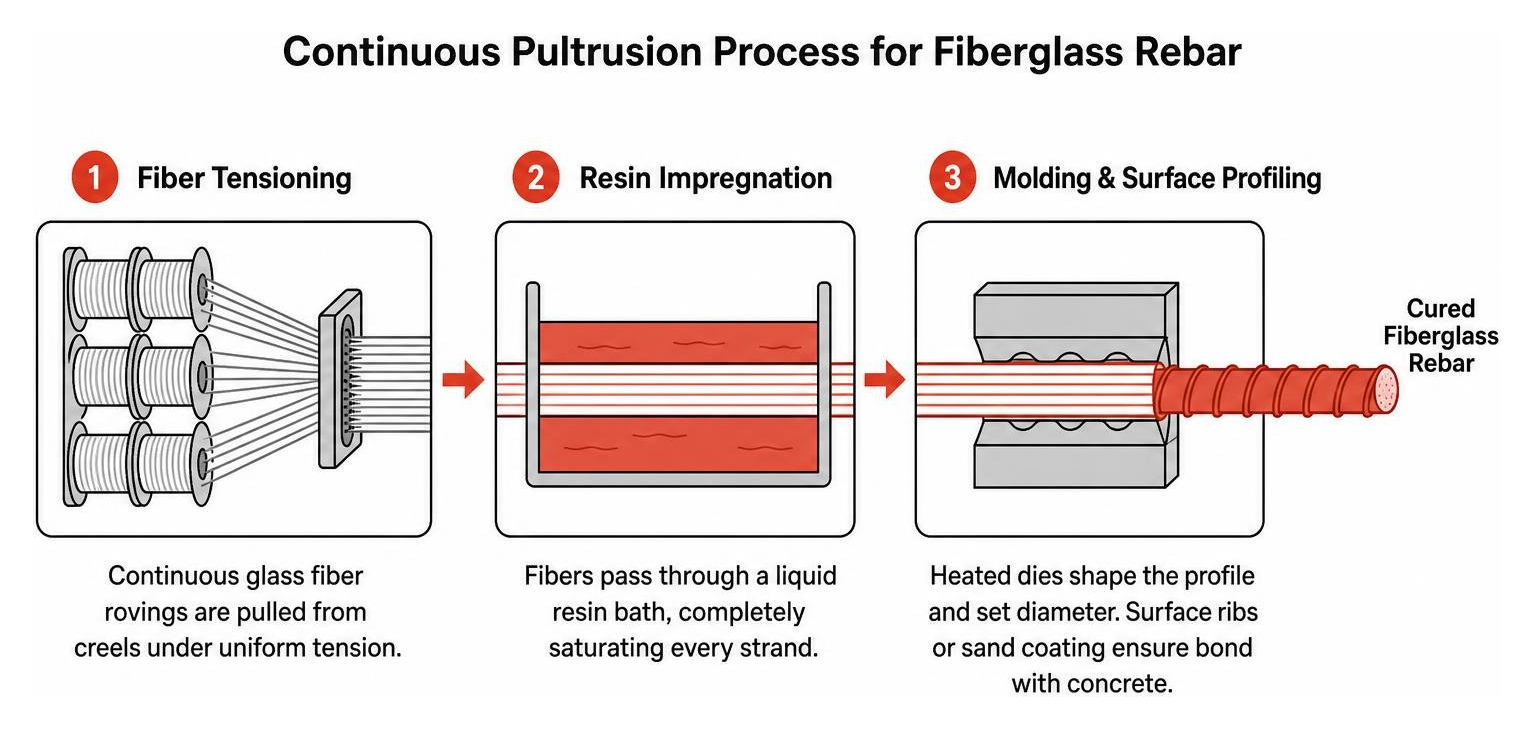
Fiberglass rebar avoids this mechanism entirely because it contains zero iron. It is manufactured through a continuous factory process known as pultrusion:
- Fiber Tensioning: Thousands of continuous, high-strength E-CR or electrical/chemical-resistant glass fiber rovings are pulled from creels under precise, uniform tension.
- Resin Impregnation: The fiber bundle passes through a specialized liquid resin bath—typically a durable vinyl ester or epoxy formulation—that completely saturates every individual strand.
- Molding and Surface Profiling: The saturated bundle is pulled through heated steel dies that shape the profile and set the solid diameter. Before final curing, a secondary process forms surface ribs or applies a fused silica sand coating to guarantee mechanical interlock with concrete.
- Thermoset Polymerization: As the resin cures under controlled heat, it cross-links into a solid, rigid thermoset matrix. Once cured, this polymer cannot be melted, reshaped, or chemically undone.
To understand where composite bars fit into project specifications, contractors often compare them against standard structural steel. Exploring different reinforcement types and uses highlights how material properties dictate design decisions.
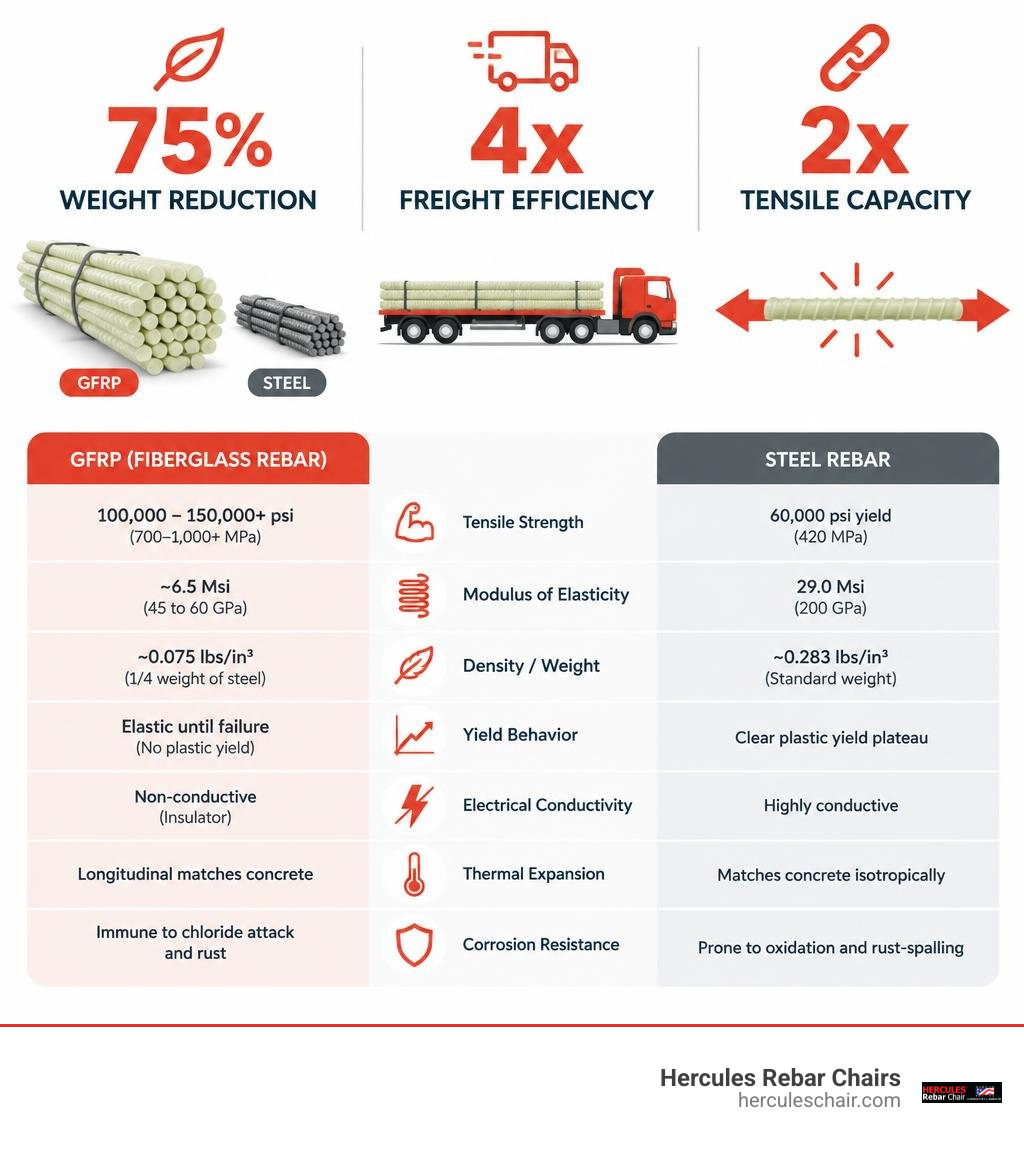
| Property | GFRP (Fiberglass Rebar) | Traditional Carbon Steel (Grade 60) |
|---|---|---|
| Tensile Strength | 100,000 to 150,000+ psi (700–1,000+ MPa) | 60,000 psi yield (420 MPa) |
| Modulus of Elasticity | ~6.5 Msi (45 to 60 GPa) | 29.0 Msi (200 GPa) |
| Density / Weight | ~0.075 lbs/in³ (1/4 weight of steel) | ~0.283 lbs/in³ (Standard weight) |
| Yield Behavior | Elastic until failure (No plastic yield) | Clear plastic yield plateau |
| Electrical Conductivity | Non-conductive (Insulator) | Highly conductive |
| Thermal Expansion | Longitudinal matches concrete | Matches concrete isotropically |
| Corrosion Resistance | Immune to chloride attack and rust | Prone to oxidation and rust-spalling |
Key Mechanical Properties of Fiberglass Rebar
The mechanical profile of fiberglass rebar is characterized by exceptional tensile capacity paired with lower elastic stiffness. Standard #4 composite bars carry a guaranteed minimum ultimate tensile strength exceeding 110,000 psi per ASTM D7957 specifications—roughly double the yield strength of traditional Grade 60 steel.
However, its stress-strain curve is purely linear-elastic right up to the point of rupture. Unlike mild steel, which exhibits a ductile yield plateau that allows steel to stretch, bend, and absorb energy before breaking, GFRP rebar stretches elastically without yielding.
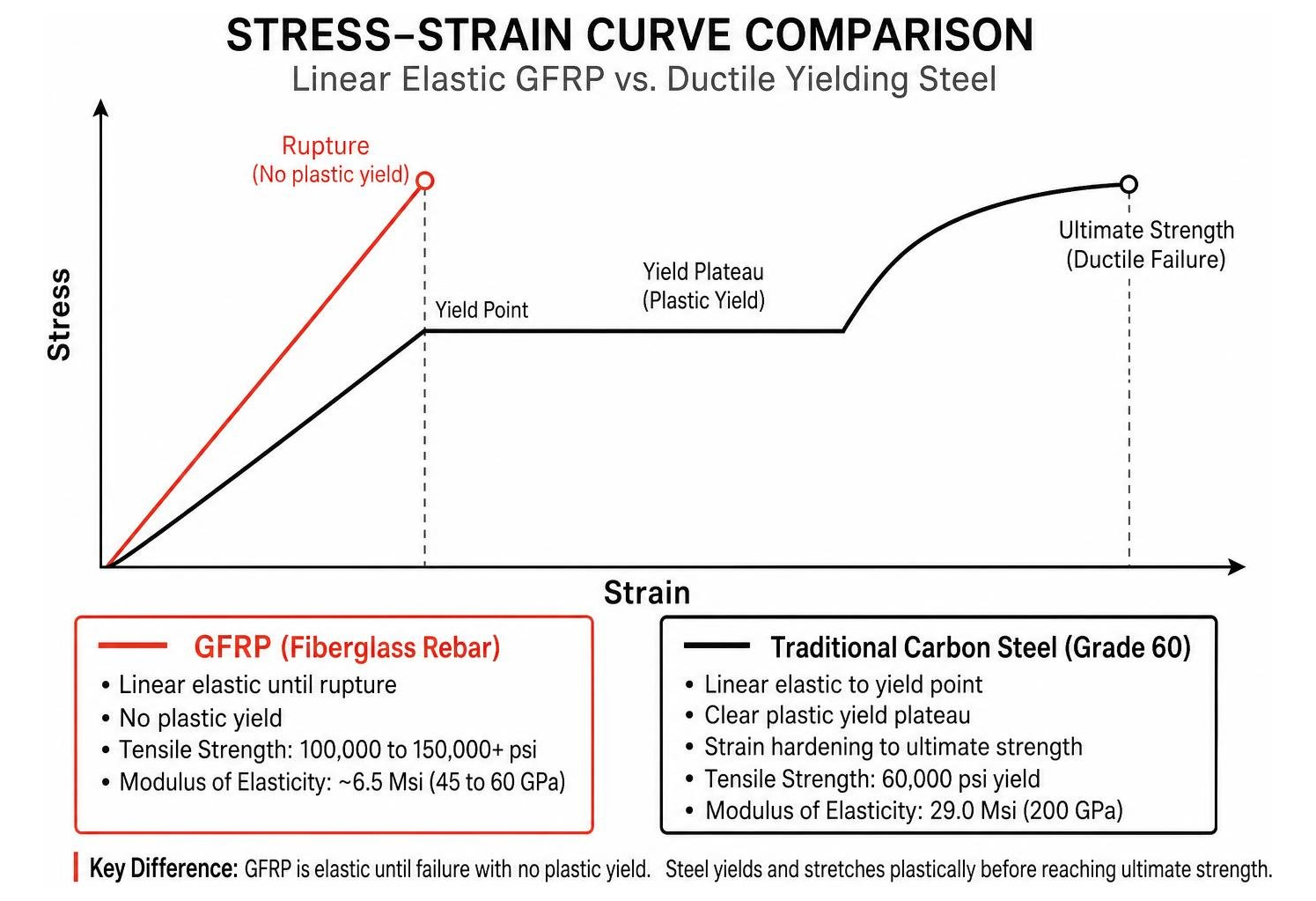
Because its modulus of elasticity sits at approximately 6.5 Msi (about 45 to 60 GPa)—roughly one-fourth the stiffness of carbon steel (29 Msi)—deflection and crack width control, rather than raw tensile capacity, almost always govern the structural design calculations. Engineers interested in calculations can review comprehensive FRP structural design specifications for in-depth load modeling.
Weight and Jobsite Handling Advantages
On the job site, one of the most immediate benefits of composite reinforcement is its drastic weight reduction. Fiberglass rebar is up to 75% lighter than standard black steel. To put that in perspective, a bundle of 25 twenty-foot lengths of #4 fiberglass rebar weighs only about 47 pounds. A single worker can comfortably carry an entire bundle across rough subgrades or up scaffolding without specialized rigging or a crane.
This weight advantage creates major downstream savings:
- Freight and Logistics: Flatbed delivery trucks can transport up to four times more linear footage of reinforcement before maxing out their highway weight limits, cutting overall shipping costs and transport emissions.
- Crew Ergonomics: Field workers experience significantly less fatigue and fewer back, wrist, and shoulder injuries over a full shift.
- Placement Speed: Many residential flatwork and commercial footing projects document installation labor reductions of 25% to 50%, as ironworkers can place, space, and tie the grid in a fraction of the time.
Reviewing the fundamentals of understanding rebar sizing and grades helps crews select matching bar diameters when transitioning from steel schedules.
Ideal Applications for Fiberglass Rebar in Modern Construction

Because composite rebar eliminates internal rusting, it excels anywhere moisture, salt, aggressive chemicals, or stray electrical currents threaten the service life of reinforced concrete. When evaluating reinforcement options for concrete, specific environmental stressors quickly identify whether composite reinforcement is the ideal choice.
Marine Structures and Salt-Exposed Flatwork
Saltwater accelerates rust in standard steel. Marine environments—including seawalls, bulkhead caps, fishing piers, dock slabs, and coastal foundations—routinely expose reinforced concrete to continuous tidal splashing and airborne chlorides.
Similarly, bridge decks, parking garage ramps, and residential driveways across the northern snow belt endure severe surface concentrations of de-icing chemicals every winter. While steel rebar in a salt-treated driveway often shows severe section loss, rust bleeding, and surface spalling within 15 to 25 years, fiberglass rebar maintains its structural integrity for 80 to 100+ years without degrading. A detailed GFRP marine and pool applications guide shows how these installations routinely eliminate recurring patch jobs.
Swimming Pools and High-Chloride Environments
In-ground swimming pools, water treatment facilities, and splash pads represent severe exposure environments. In pool construction, water pressure forces chlorinated moisture through micro-cracks in shotcrete and plaster.
Once chlorine ions hit buried steel, the ensuing rust expansion causes pop-outs, delamination, and brown staining that ruins pool finishes. GFRP bars are completely immune to pool chemicals and sanitizing agents, preserving the structural shell and preventing waterproofing failures over the entire life of the pool.
Non-Magnetic and Electromagnetic Sensitive Facilities
Because fiberglass is an electrical and magnetic insulator, it does not conduct currents or disrupt sensitive electromagnetic fields. This makes composite reinforcement necessary in:
- Healthcare MRI Rooms: Hospital imaging suites require completely non-ferrous construction to prevent severe image distortion and dangerous magnetic interference with the machines.
- Electrical Utility Substations: High-voltage switchyards, reactor pads, and transformer containment vaults use GFRP to prevent dangerous stray electrical currents, eddy currents, and inductive heating within the concrete matrix.
- Transportation Tollways and Testing Facilities: Automated highway toll plazas and radar calibration labs specify non-metallic grids to prevent interference with underground inductive loop sensors and high-frequency communication arrays.
Structural Design Standards and Code Considerations
In modern concrete construction, structural engineers no longer treat composite reinforcement as an experimental product. The American Concrete Institute publishes strict, standardized building codes and design guides:
- ACI 440.11: Building Code Requirements for Structural Concrete Reinforced with Glass Fiber-Reinforced Polymer (GFRP) Bars. This code gives engineers an official, legally enforceable standard for structural framing, slabs, and walls.
- ACI 440.1R: Guide for the Design and Construction of Structural Concrete Reinforced with FRP Bars.
- ASTM D7957: The standard specification defining minimum physical, mechanical, and durability requirements for solid round composite bars.
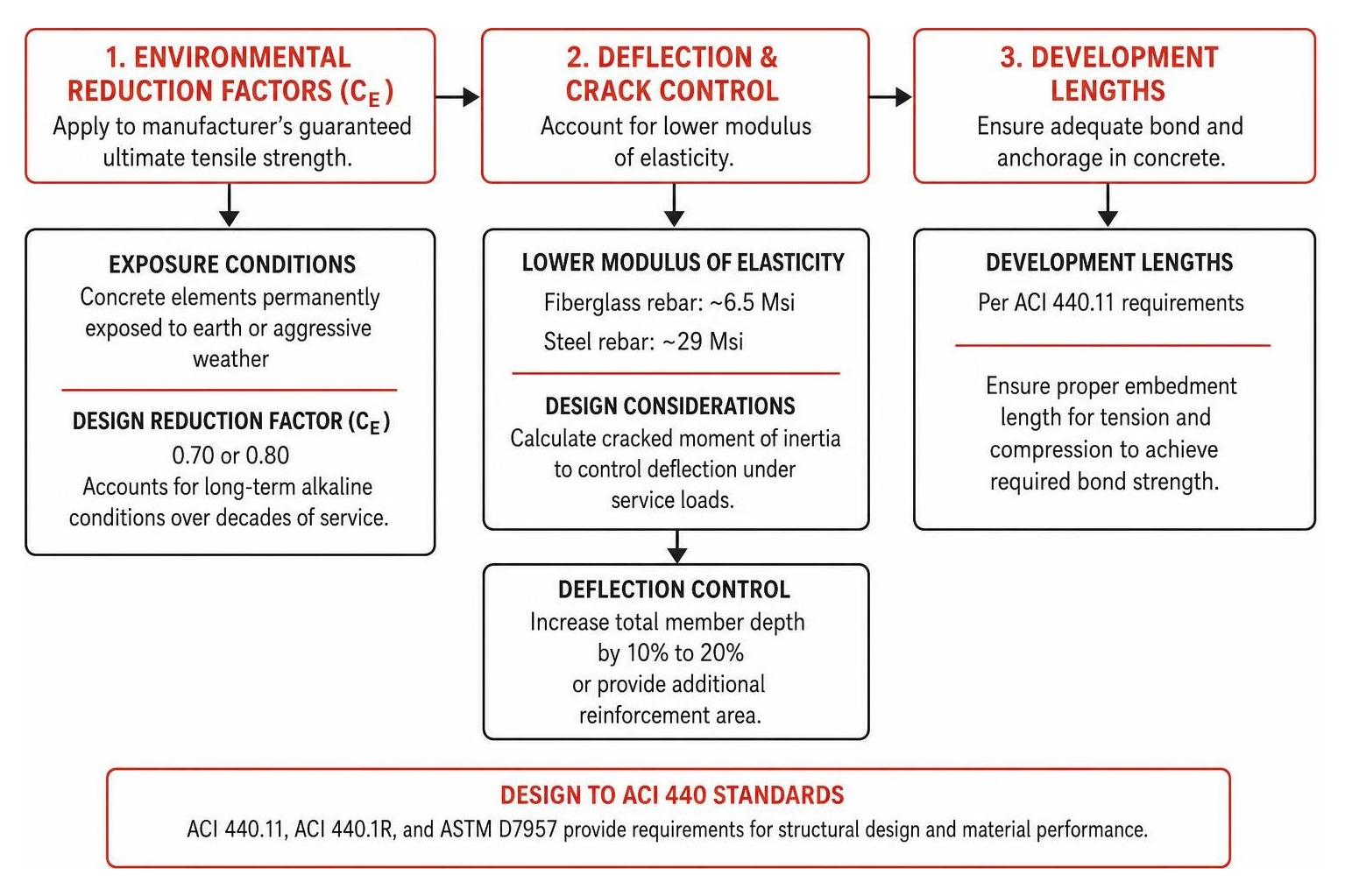
When calculating structural capacity under ACI 440, engineers apply an environmental reduction factor (C_E) to the manufacturer’s guaranteed ultimate tensile strength. For example, for concrete elements permanently exposed to earth or aggressive weather, design calculations typically apply an environmental reduction factor of 0.70 or 0.80 to account for long-term alkaline conditions over decades of service.
Deflection, Crack Control, and Development Length
Because fiberglass rebar has a lower modulus of elasticity than steel (roughly 6.5 Msi compared to 29 Msi), composite reinforced sections experience higher elasticity under full service loads. Design engineers must actively calculate the cracked moment of inertia to ensure members do not sag or bounce excessively under live loads. In structural suspended slabs and beams, controlling deflection often requires increasing the total member depth by 10% to 20% or providing additional reinforcement area beyond what is needed for pure strength.
Furthermore, bond mechanics between composite rebar and curing concrete differ from traditional deformed steel. The surface friction generated by sand-coated or ribbed profiles requires development and lap-splice lengths that are typically two to three times longer than standard Grade 60 steel splices (often 40 to 80 bar diameters, depending on concrete compressive strength).
Electrical Grounding Limitations and Workarounds
One critical limitation that catches many electrical contractors by surprise is that fiberglass rebar cannot be used as a grounding electrode.
The National Electrical Code (NEC Article 250) permits concrete-encased electrodes (frequently called “Ufer grounds”) only when metallic conductors, such as steel rebar or bare copper wire, are embedded in the footing. Because GFRP is an electrical insulator, it cannot conduct fault currents into the earth.
When pouring footings or grade beams reinforced with composite rebar, electrical crews must install an independent, code-compliant grounding system. This is easily achieved by:
- Laying a continuous, bare #4 AWG or #2 AWG copper grounding ring along the bottom of the footing trench prior to placing the fiberglass grid.
- Installing dedicated exterior copper-clad ground rods driven deep into undisturbed soil outside the foundation footprint.
On-Site Installation and Placement Best Practices

Installing fiberglass rebar is fast, clean, and straightforward, but crews must observe specific material handling rules to maintain structural compliance and jobsite safety.
Cutting and Field Handling Protocols
Cutting composite reinforcement requires standard abrasive or diamond cutting equipment rather than shearing tools:
- Approved Cutting Tools: Use a handheld angle grinder fitted with a diamond blade or abrasive cutoff wheel, a portable circular saw, or a carbide-grit reciprocating saw. These tools cut through resin and glass fibers in seconds, leaving clean, unfrayed ends.
- Tools to Avoid: Never attempt to cut fiberglass rebar with oxy-acetylene or plasma torches. Intense thermal heat destroys the polymer matrix, burning away the resin and leaving weak, loose fibers. Heavy manual bolt cutters should also be avoided, as their crushing action can crush and splinter the bar core.
- Personal Protective Equipment (PPE): Cutting composite bars produces fine glass and resin dust. Installers should always wear safety goggles, heavy-duty work gloves, long sleeves, and a well-fitted dust mask or N95 respirator to prevent skin and lung irritation.
Proper Support and Preventing Bar Floating
Because fiberglass rebar weighs only one-fourth as much as carbon steel, it behaves differently when wet concrete enters the formwork. The specific gravity of GFRP is approximately 2.0 to 2.1, while fresh, plastic concrete has a specific gravity of roughly 2.4.
This means unsecured composite rebar will literally float upward toward the top surface of the slab when struck by high-slump concrete or heavy vibrator heads.
To maintain proper concrete clear cover and secure the reinforcement grid against buoyancy and placement displacement:
- Support Spacing: Position stable concrete supports or heavy-duty plastic rebar chairs across the subgrade at closer intervals—ideally every 2 to 3 feet (600 to 900 mm) in each direction.
- Stable Chair Selection: Choose high-capacity supports that lock the bar securely in place. Discovering the best plastic concrete spacers for secure positioning will ensure your bars do not dislodge during aggressive raking.
- Proper Sizing and Layout: Read our comprehensive guide to rebar chairs and slab sizing to determine exact chair heights for single or double-mat setups.
- Tie-Down Restraints: Tie intersection joints securely using plastic-coated tie wire, heavy-duty zip ties, or specialized composite snap ties. In slab-on-grade applications, tie the perimeter bar directly to stakes or formwork pins to prevent the entire mat from lifting during pumping.
Lifecycle Cost Analysis: Initial Investment vs. Long-Term Value
When evaluating material costs purely at the wholesale supply counter, standard fiberglass rebar generally carries an upfront material premium of roughly 25% to 35% compared to raw black carbon steel. However, evaluating reinforcement strictly by initial purchase price overlooks substantial lifecycle cost advantages.
Over a 50-to-100-year infrastructure lifecycle, composite reinforcement delivers massive economic returns:
- Labor Savings: Lighter bundles and faster handling reduce on-site tying and placement labor hours by up to 25% to 50%, immediately offsetting much of the initial material price difference.
- Zero Spall Repairs: A typical salt-exposed residential driveway reinforced with steel incurs hundreds of dollars in joint patching, resurfacing, or premature replacement over 50 years. A driveway reinforced with GFRP incurs zero corrosion-related maintenance costs.
- Rapid ROI Breakeven: In corrosive environments such as coastal seawalls, parking garages, and wastewater tanks, life-cycle cost analyses consistently reveal that fiberglass rebar hits its return-on-investment (ROI) breakeven point within just 8 to 12 years.
- 80% Lower Maintenance Overhead: Over a 100-year service window, structures built with composite reinforcement can slash ongoing concrete maintenance and structural rehabilitation expenses by up to 80%.
- Sustainability Dividends: Manufacturing GFRP consumes less total energy and releases far fewer greenhouse gas emissions than smelting traditional virgin steel. Combined with reduced freight trips, switching to composite rebar can reduce the embodied carbon footprint of reinforced concrete by up to 60%.
Frequently Asked Questions
Can fiberglass rebar be bent on the job site?
No, fiberglass rebar cannot be heated, bent, or reshaped in the field. Because the pultruded polymer matrix is a cured, cross-linked thermoset plastic, attempting to bend a straight bar past its elastic limit will permanently crush or snap the internal structural fibers.
All corner bends, standard 90-degree hooks, stirrups, ties, and circular hoops must be custom-ordered and prefabricated at the factory before the resin cures. When planning a project that requires bent reinforcement, detail all bar shapes and schedule your pre-pour deliveries well in advance.
Does GFRP reinforcement float during a concrete pour?
Yes, if it is not properly secured. Because fresh, liquid concrete is denser than composite bars, unsecured fiberglass mats can float toward the slab surface during placement or active mechanical vibration.
To eliminate floating, place heavy-duty plastic rebar chairs every 2 to 3 feet along the grid, tie all bar intersections firmly with durable wire or heavy-duty zip ties, and fasten the perimeter bars securely to edge forms or subgrade pins.
How does the service life of GFRP compare to steel in corrosive environments?
Traditional black carbon steel in severe chloride or high-moisture environments (like sea walls, de-iced highway slabs, or swimming pools) typically begins corroding, rusting, and spalling concrete within 15 to 30 years.
Because fiberglass rebar is 100% rust-proof and completely unaffected by chloride attack or moisture penetration, it provides a validated service life of 80 to 100+ years with virtually zero structural degradation.
Conclusion
The shift toward composite reinforcement represents one of the most practical advancements in modern concrete engineering. By completely eliminating oxidation, rust expansion, and concrete spalling, fiberglass rebar allows builders to deliver driveways, swimming pools, coastal flatwork, and specialized facilities engineered to endure for generations without costly repairs.
While its lower modulus of elasticity requires proper design detailing and stable support spacing, its lightweight handling and speed of installation make it a favorite for modern concrete crews.
Achieving a durable pour depends on keeping your reinforcement grid held firmly at the correct design height. At Hercules Rebar Chairs, we manufacture high-strength, code-compliant supports designed to hold any reinforcement assembly rock-solid. With over 14 million units sold across the United States, our iconic red chairs save crews time and money while preventing bar sag and displacement.
Explore our full lineup of Hercules Rebar Chairs concrete reinforcement support solutions to ensure your next concrete pour meets the highest standards of durability and strength.