

Is Steel Fiber for Concrete Right for Your Pour?
Steel fiber for concrete helps limit crack growth and gives concrete more strength after it cracks. For slabs, repairs, and shotcrete, start by comparing hooked-end and crimped fibers, then choose a dosage based on the post-crack strength your project needs. Fibers can reduce the need for mesh in some engineered designs, but they do not automatically replace structural rebar.
The choice comes down to the load, the mix, and how the concrete will be placed. Good fiber performance depends on even mixing and a design backed by test results.
I’m Jordan Harris, a Tennessee-licensed structural engineer with five years of experience on large concrete and steel projects. I use that background to assess where steel fiber for concrete helps and where properly supported rebar remains essential.
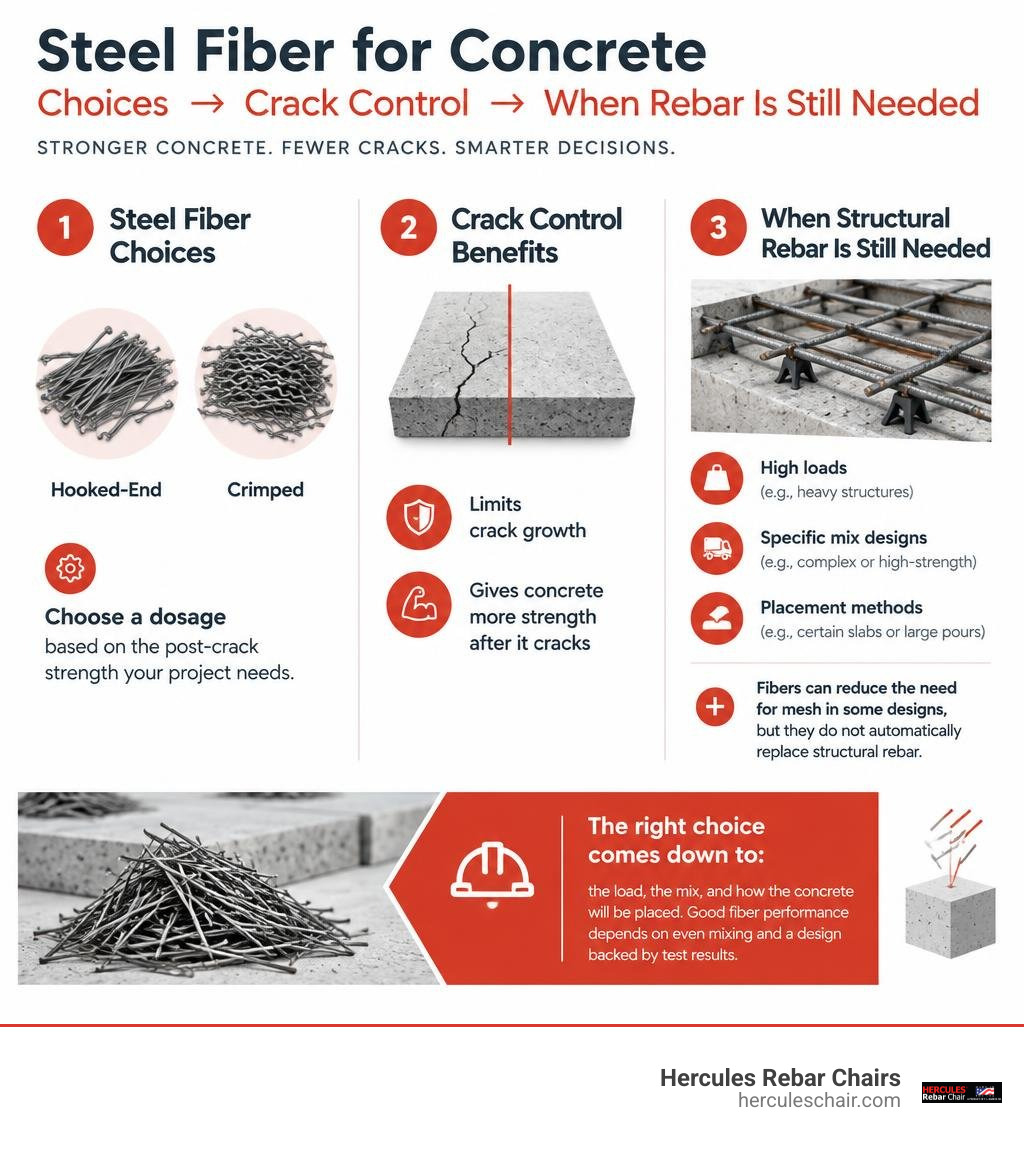
Steel fiber for concrete terms simplified:
Introduction
Plain concrete is fantastic under compression. It holds massive weight without flinching. But subject it to tension, shear, or curling forces, and its brittle nature quickly reveals itself. Microcracks form, coalesce into wider fissures, and eventually threaten the structural integrity of the entire element. In North America alone, concrete deterioration and infrastructure repair costs exceed $20 billion annually.
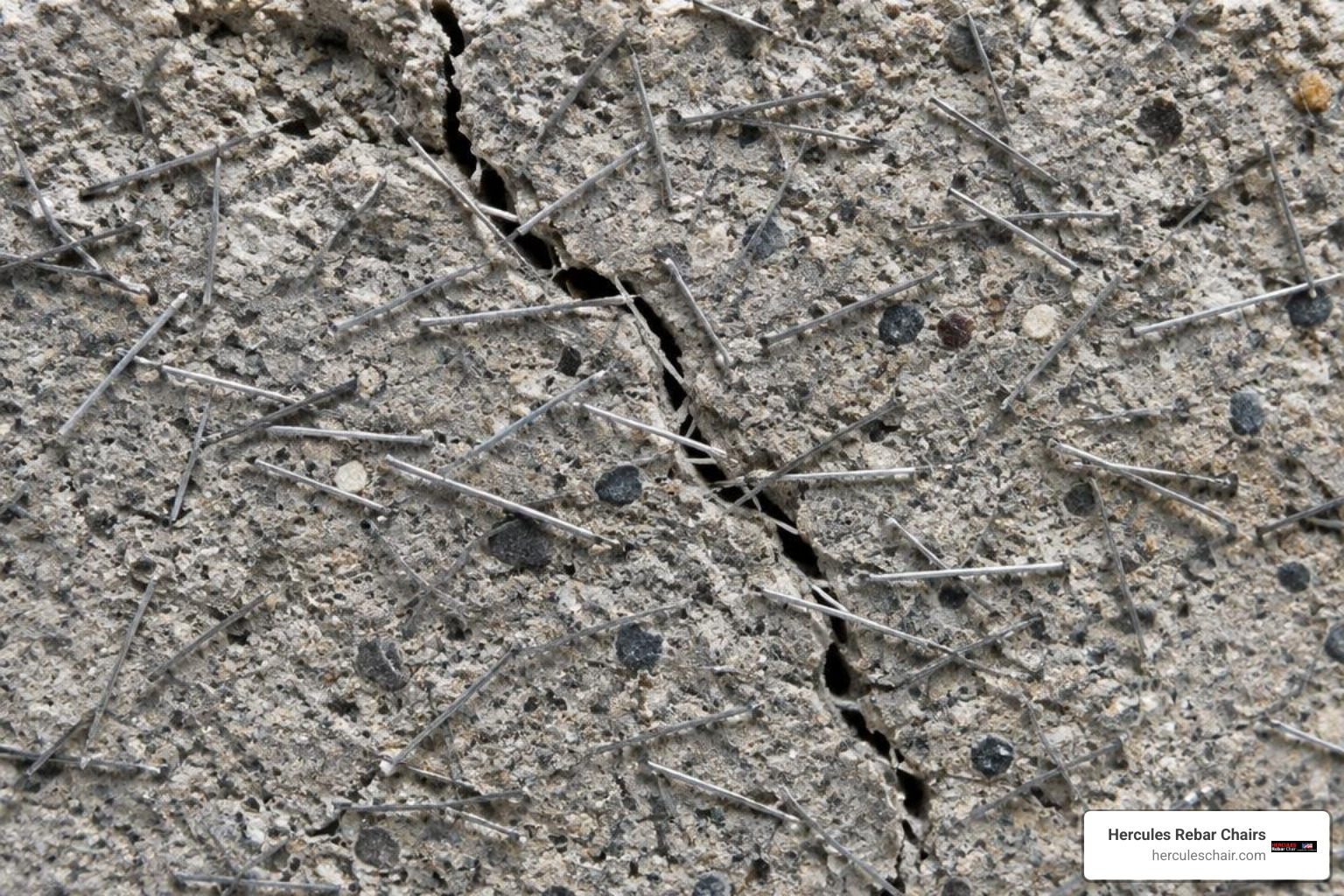
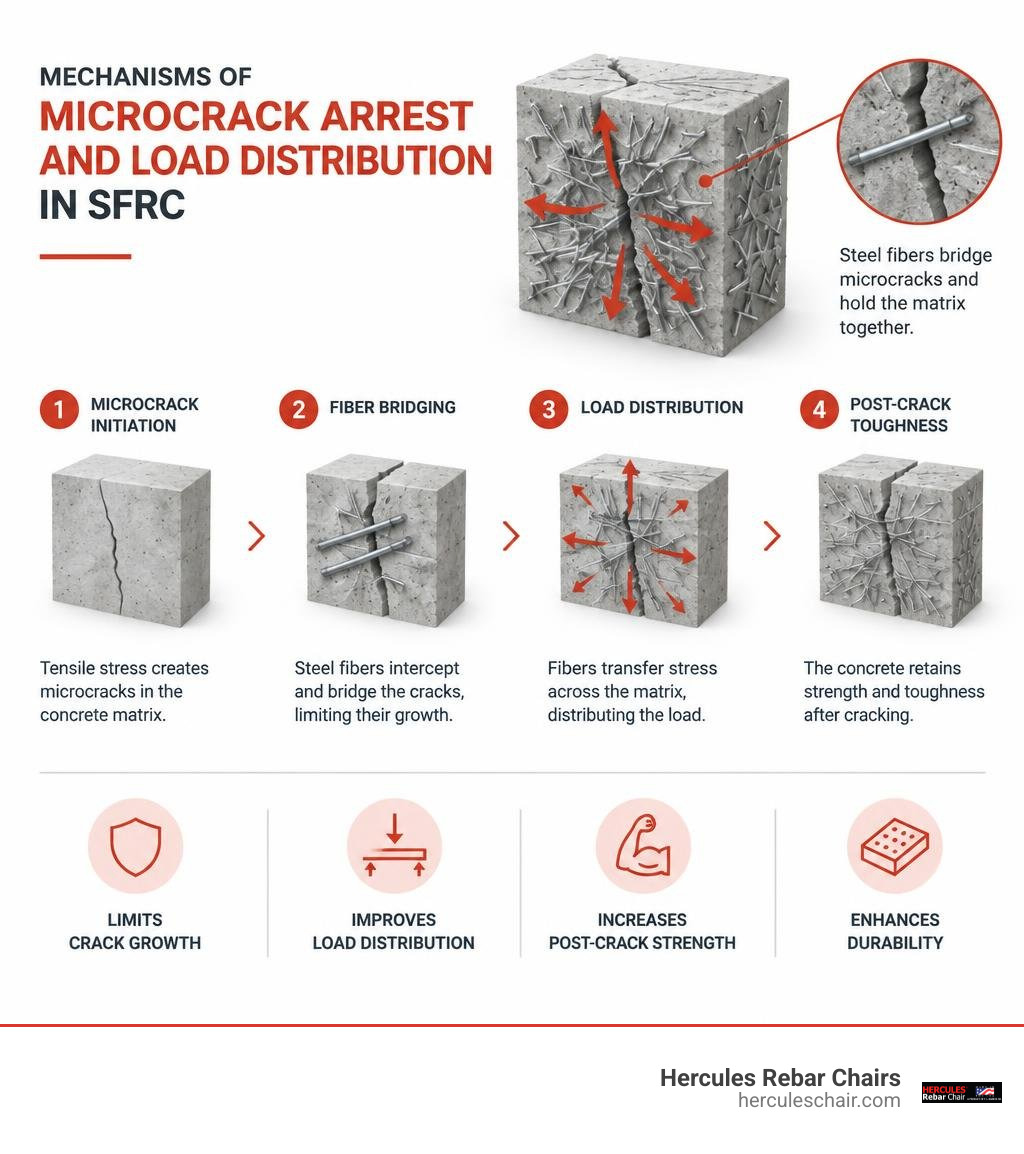
This is where steel fiber-reinforced concrete (SFRC) transforms modern construction. Instead of relying solely on planar steel positioned at a single plane, millions of discontinuous steel filaments distribute multi-directionally (isotropically) throughout the paste. As tensile stresses develop, these fibers bridge the microscopic fissures, preventing crack growth, distributing loads across the slab, and providing exceptional post-crack toughness.
Types and Standard Classifications of Reinforcing Steel Fibers
Steel fibers are not one-size-fits-all products. International and domestic standards categorize fibers primarily by how they are manufactured, their mechanical properties, and their dimensional aspect ratios. When designing mixes, specifiers frequently consult standard specifications from ISO 13270:2013 alongside ASTM and European standards to establish minimum quality criteria.
In standard practice, two primary specifications govern steel fibers:
- ASTM A820 / A820M: Classifies steel fibers into five distinct manufacturing types (Types I through V), ranging from cold-drawn wire to modified sheet products.
- EN 14889-1: Defines fibers across five manufacturing groups (Groups I through V) and requires suppliers to declare the exact dosage needed to achieve targeted residual flexural strengths.
Common structural steel fibers feature lengths between 19 mm and 60 mm, aspect ratios (length divided by diameter) ranging from 30 to 100, and tensile strengths between 345 MPa and 1700 MPa (with high-strength variants exceeding 3000 MPa in ultra-high-performance applications). Choosing the right fiber geometry is a core part of selecting essential concrete reinforcement products suited to specific structural demands.
Mechanical Classification of Steel Fiber for Concrete by Geometry
While manufacturing standards define material source, field performance is heavily influenced by fiber shape. Deformations along the fiber profile provide mechanical anchorage, ensuring the fiber locks into the cementitious matrix rather than sliding out smoothly under tensile strain.
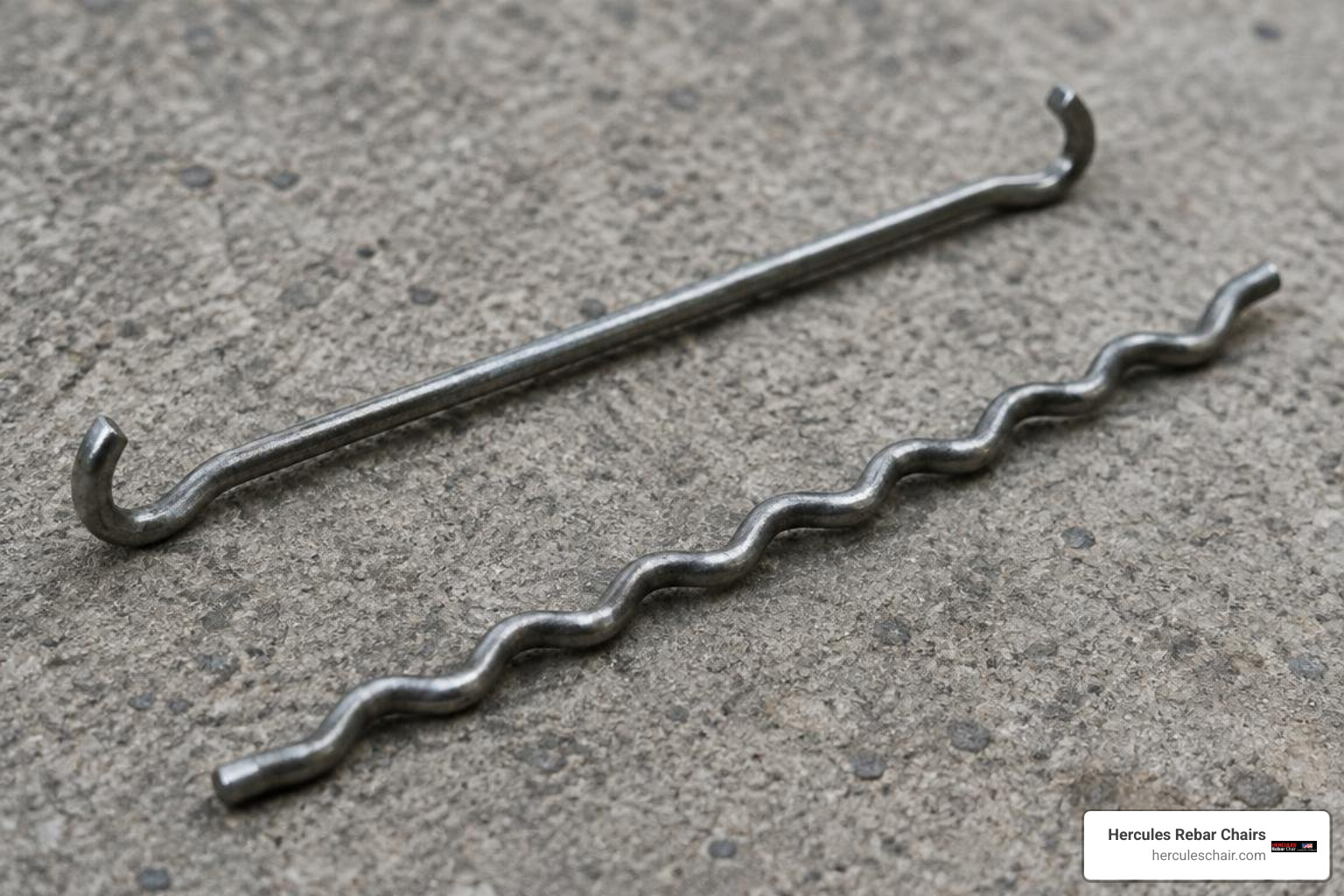
- Hooked-End Fibers: The most widely specified geometry worldwide. The bent hook at each end provides mechanical interlock, requiring substantial pull-out energy to straighten before debonding occurs. Hooked-end fibers achieve pull-out loads two to three times higher than smooth, straight fibers.
- Crimped (Corrugated) Fibers: Feature a continuous wavy profile along their entire length. This provides continuous frictional and mechanical resistance throughout the concrete matrix.
- Straight Micro-Fibers: Smooth, cylindrical filaments (often brass- or copper-coated) typically measuring 6 mm to 13 mm in length. They are primarily utilized in dense paste matrices like Ultra-High-Performance Concrete (UHPC) to control micro-cracking at early stress stages.
- Twisted & Deformed Fibers: Engineered with polygonal cross-sections or spiral twists that unscrew under load, absorbing tremendous energy during matrix pull-out.
| Fiber Geometry | Primary Anchorage Mechanism | Typical Tensile Strength (MPa) | Best Applications |
|---|---|---|---|
| Hooked-End | End mechanical interlock | 1000 – 2300 | Industrial slabs, precast elements, jointless floors |
| Crimped | Continuous surface friction | 600 – 1200 | Pavements, slab overlays, slope stabilization |
| Straight Micro | Matrix chemical adhesion | 1500 – 3000 | UHPC, blast-resistant structures, architectural panels |
| Twisted | Rotational pull-out friction | 800 – 1800 | Dynamic load zones, bridge deck overlays |
Type I vs. Type II Steel Fibers
Under ASTM A820, engineers frequently evaluate the trade-offs between Type I and Type II fibers:
- ASTM A820 Type I (Cold-Drawn Wire): Manufactured by pulling high- or low-carbon steel wire through dies to achieve a uniform round cross-section. These fibers have high tensile strengths (typically exceeding 1172 MPa or 170 ksi) and are formed with hooked ends. Type I fibers deliver structural post-crack flexural capacity, enabling designers to calculate residual load-bearing capacity and extend joint spacing in heavy industrial slabs.
- ASTM A820 Type II (Cut Sheet): Slit directly from thin, low-carbon cold-rolled sheet steel into rectangular cross-sections. While cost-effective, they feature lower tensile capacity and less mechanical anchorage. Type II fibers are generally used for non-structural crack mitigation and secondary shrinkage control in lightly loaded pavements rather than engineered structural slabs.
Engineering Performance and Benefits of Steel Fiber for Concrete
Incorporating steel fibers fundamentally alters concrete from a brittle material into a pseudo-ductile composite. As noted in systematic research on steel fiber-reinforced concrete, the random isotropic dispersion of fibers bridges internal stress fields, improving impact resistance, fatigue endurance, and shear capacity.
| Engineering Property | Plain Concrete | Steel Fiber-Reinforced Concrete (SFRC) | Performance Improvement |
|---|---|---|---|
| Flexural Strength | 3.5 – 5.0 MPa | 5.0 – 7.5 MPa | Up to 51.7% increase in slab repairs |
| Splitting Tensile Strength | 2.5 – 3.8 MPa | 3.0 – 4.7 MPa | 14% to 24% enhancement |
| Crack Width Control | Uncontrolled without rebar | Tightly controlled microcracks | Up to 14% crack width reduction |
| Ultimate Load Capacity | Baseline (Brittle failure) | Elevated (Ductile yield) | 12.3% increase over conventional systems |
| Impact / Fatigue Resistance | Low (Susceptible to spalling) | High (Multi-cycle energy absorption) | Over 100% higher cycle life |
Crack Bridging and Post-Crack Flexural Toughness
When tensile forces exceed the cracking threshold of plain concrete, the element fails suddenly across a single failure plane. In SFRC, the crack cannot propagate without engaging hundreds of intersecting steel fibers.

According to research on steel fiber slab performance, short fibers arrest microcracks at the microscopic level, while longer macro-fibers bridge macrocracks as tensile strains increase. Under standardized testing—such as ASTM C1609 third-point beam loading or ASTM C1550 round panel tests—SFRC exhibits high residual flexural strength. Instead of dropping to zero load capacity upon initial cracking, the composite sustains significant flexural loads across wide deflections.
Long-Term Environmental Durability and Freeze-Thaw Resistance
Steel fibers improve durability under aggressive environmental conditions:
- Freeze-Thaw Resistance: Concrete containing 60 kg/m³ of steel fiber exhibits up to a 125% improvement in freeze-thaw durability compared to unreinforced concrete, reducing interior hydraulic fracturing during sub-zero thermal cycling.
- Marine Exposure & Chloride Resistance: While bare steel in open air will rust, steel fibers encapsulated within the highly alkaline cement matrix (pH > 12.5) remain passivated. When combined with Ground Granulated Blast Furnace Slag (GGBS), SFRC structures exposed to seawater have demonstrated service life improvements exceeding seven times that of standard mixes by limiting microcrack-driven chloride ingress.
- Fire Spalling Mitigation: During rapid heating, the uniform tensile network of steel fibers helps maintain the structural integrity of concrete surfaces, mitigating explosive spalling.
Primary Structural Applications of Steel Fiber-Reinforced Concrete
The versatility of steel fiber reinforcement makes it a standard specification across infrastructure, commercial, and underground sectors, as detailed in technical guidance from The Concrete Society.
Industrial Flooring and Heavy-Duty Slab Systems
Industrial floors endure intense static racking loads, dynamic forklift traffic, and repetitive wheel abrasion. By providing three-dimensional reinforcement throughout the slab depth, steel fibers eliminate weak zones near the surface.
This uniform strength allows engineers to design “jointless” slab configurations with saw-cut control joint spacings expanded from 15 feet out to 100 feet or more, significantly reducing joint maintenance and wheel impact damage. When evaluating floor designs, many builders review reinforcing concrete with wire mesh alternatives to weigh the benefits of fibers against traditional welded mesh.
Shotcrete and Underground Infrastructure Support
In tunneling, mining, and steep rock slope stabilization, installing traditional wire fabric over irregular rock contours is time-consuming and hazardous.
Steel fiber-reinforced shotcrete (SFRS) allows continuous pneumatic application directly onto raw excavation surfaces. The fibers interlock upon impact, providing immediate tensile resistance, high energy absorption against ground convergence, and a safer working environment for crews.
Specification, Dosage, and Field Quality Control Guidelines
Achieving consistent results with SFRC requires careful attention to mix proportioning, batching sequences, and field placement. When planning pours, ensuring you have the right durable concrete construction materials on hand keeps work flowing smoothly.
Selecting the Right Steel Fiber for Concrete Mixes and Dosage Rates
Fiber dosage is determined by structural load calculations and performance requirements rather than arbitrary estimates. Engineers rely on established testing methods and ACI guidelines for fiber selection and dosage to match dosages to required residual strength levels.
- Light Crack Control & Pavements: 15 to 25 kg/m³ (25 to 42 lbs/yd³)
- Commercial & Industrial Slabs-on-Ground: 25 to 45 kg/m³ (42 to 75 lbs/yd³)
- Jointless Slabs & Heavy Industrial Yards: 40 to 65 kg/m³ (67 to 110 lbs/yd³)
- Structural Precast & Shotcrete Linings: 35 to 70 kg/m³ (60 to 118 lbs/yd³)
- Repair Overlays: Typically 0.5% to 2.0% by volume
Mixing, Placement, and Surface Finishing Best Practices
To prevent fiber balling (clumping) and ensure a clean surface finish, follow these standard practices:

- Batching Sequence: Introduce fibers gradually onto the aggregate conveyor belt or charge them directly into the ready-mix drum at normal charging speed. Never dump compressed fiber bundles directly into stationary, dry cement. Glued fiber bundles disperse easily as water dissolves the binding agent during mixing.
- Mixing Time: Mix at charging speed for 4 to 5 minutes (or approximately 70 to 100 drum revolutions) after all fibers are added to achieve uniform isotropic dispersion.
- Rheology and Workability: Steel fibers will reduce apparent slump without necessarily reducing actual workability. Do not add excess water to increase slump; instead, use high-range water reducers (superplasticizers) to adjust flow.
- Placement and Screeding: Use laser screeds or vibrating truss screeds to consolidate the matrix and embed fibers just below the surface.
- Surface Finishing: For industrial floors, use power trowels fitted with pan floats during early floating, followed by finish blades adjusted flat to avoid pulling fibers upward. For exterior pavements requiring slip resistance, apply a light broom finish in a single direction.
Steel Fiber vs. Traditional Rebar and Mesh: Structural and Economic Evaluation
One of the most common engineering decisions is choosing between continuous reinforcing bars, welded wire reinforcement (WWR), and discontinuous steel fibers. A detailed comprehensive rebar vs concrete reinforcement guide helps break down where each system excels.
| Feature | Steel Fiber Reinforcement | Welded Wire Mesh (WWM) | Traditional Rebar Grid |
|---|---|---|---|
| Reinforcement Orientation | 3D isotropic (Multi-directional) | 2D planar (Single plane) | 2D or 3D orthogonal grid |
| Placement Labor | Low (Added directly at batch plant) | High (Cutting, rolling, tying) | High (Tying, spacing, checking) |
| Risk of Misplacement | Zero (Dispersed throughout) | High (Trampled during pour) | Low (When properly chaired) |
| Primary Tensile Capacity | Moderate (Discontinuous) | Moderate | High (Continuous load transfer) |
| Crack Width Control | High (Arrests microcracks) | Moderate (Arrests macrocracks) | High (Restricts macrocrack opening) |
| Impact / Edge Protection | Superior throughout slab depth | Limited to mesh depth | Limited to bar depth |
When to Replace or Combine Mesh and Steel Fibers
Steel fibers can effectively replace light wire mesh and nominal temperature/shrinkage reinforcement in slab-on-ground construction, light pile-supported slabs, and shotcrete. This eliminates the labor required to cut and tie mesh while removing the risk of mesh ending up on the subbase under foot traffic.
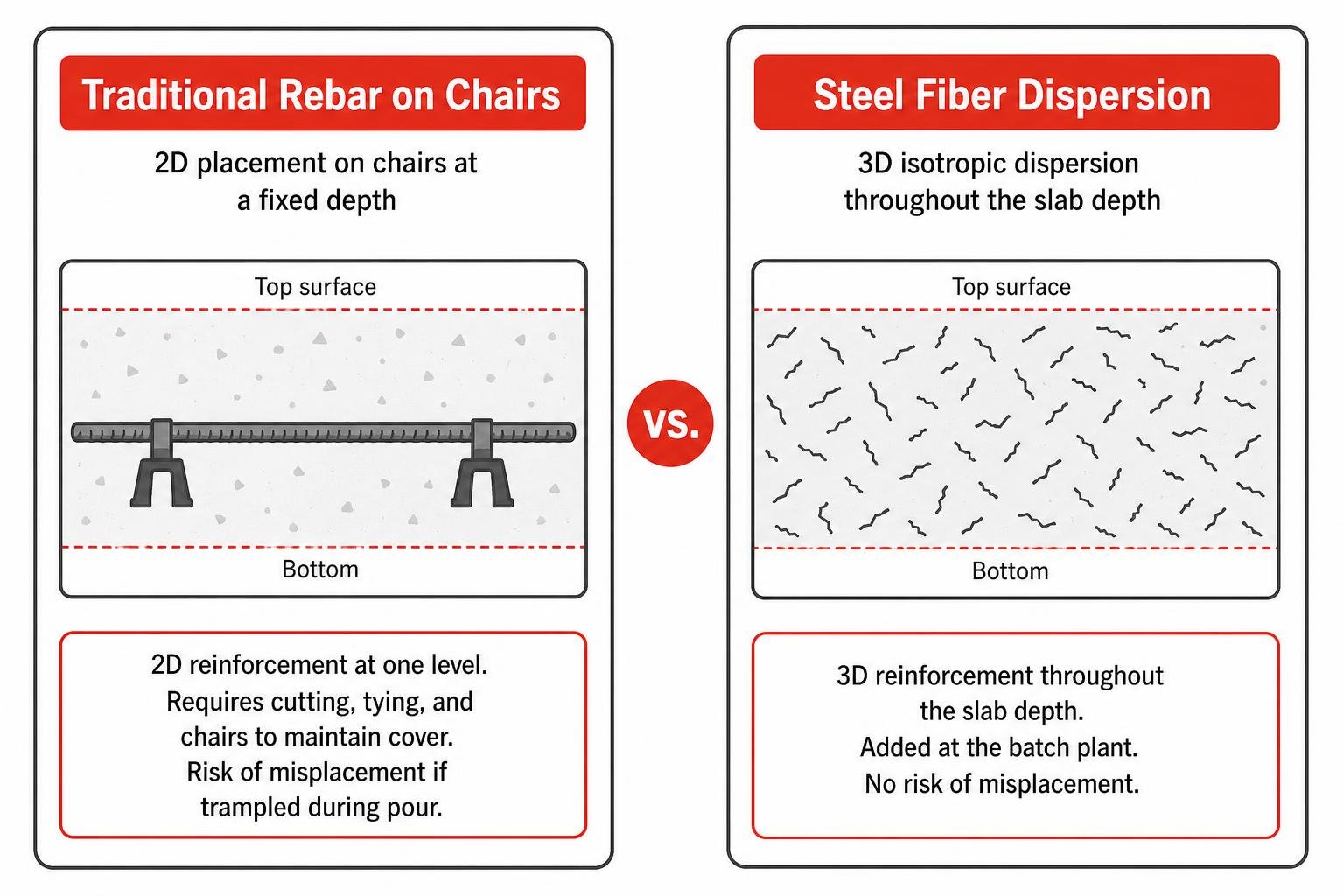
However, steel fibers are discontinuous and cannot carry primary structural tension across long spans or in structural columns, beams, suspended elevated decks, and heavy foundation mats. In these applications, continuous steel rebar remains essential.
On many high-performance projects, engineers use a hybrid approach: continuous rebar handles primary bending and tensile forces, while steel fibers are added to control micro-cracking and improve shear resistance. When installing structural rebar grids, properly sizing rebar chairs for concrete slabs ensures the rebar stays securely locked at its design depth during heavy placement operations.
Sustainability, Embodied Carbon, and Recycled Tire Fibers
As sustainable building practices grow, the environmental footprint of construction materials receives closer scrutiny:
- Embodied Energy: Virgin steel fiber production generates approximately 1.8 to 2.2 kg of CO₂ equivalent per kilogram of steel. However, because SFRC can allow for thinner slab designs and eliminates the scrap steel waste associated with rebar overlapping, it can reduce total embodied carbon in slab systems by 15% to 25%.
- Recycled Tire-Derived Fibers: Recovering high-tensile steel wire from end-of-life vehicle tires provides an effective, sustainable alternative. Tire-derived fibers deliver 25% to 35% improvements in flexural strength—comparable to manufactured commercial fibers—while lowering raw fiber material costs by 40% to 60% and supporting circular economy initiatives.
Frequently Asked Questions About Steel Fiber Concrete
Can steel fibers completely replace rebar in structural concrete?
No. Steel fibers are discontinuous and randomly oriented throughout the mix. While they can replace nominal secondary reinforcement (such as wire mesh for temperature and shrinkage control in ground-supported slabs), they cannot replace continuous structural rebar in structural elements like columns, beams, retaining walls, or suspended elevated slabs where continuous primary tensile capacity is required by building codes.
How do steel fibers affect concrete workability and slump?
Steel fibers create internal mechanical interlock among aggregates, which reduces slump test measurements without necessarily making the mix harder to consolidate. Instead of adding water—which weakens the paste and increases shrinkage—use mid- or high-range water reducers (polycarboxylate superplasticizers) to achieve the necessary flowability and pumpability.
Do exposed steel fibers cause corrosion and surface rust staining?
Fibers embedded within the alkaline concrete matrix are protected from corrosion. Fibers directly exposed to moisture and air at the top surface will oxidize, resulting in small, localized spots of discoloration. In most industrial floors, interior environments, or shotcrete walls, this is cosmetically minor and does not cause internal spalling. For exterior flatwork where appearance is critical, using a light broom finish, applying dry-shake toppings, or selecting galvanized or stainless steel fibers prevents rust staining.
Conclusion
Steel fiber for concrete provides clear engineering advantages: three-dimensional crack control, high post-crack flexural toughness, and long-term durability against dynamic fatigue and environmental wear. By bridging microcracks as they form, SFRC prevents minor fissures from developing into structural failures, extending the service life of industrial floors, pavements, precast components, and underground shotcrete linings.
For primary load-bearing members, continuous rebar remains irreplaceable. Combining continuous steel reinforcement with advanced fiber-reinforced mixes delivers balanced strength and crack control across challenging commercial and civil projects. At Hercules Rebar Chairs (T.J. Harris Co.), we support that durability from the subbase up—manufacturing America’s #1 red rebar chairs with over 14 million units sold to ensure code-compliant concrete cover across the nation. To equip your next pour with industry-trusted supports, explore America’s leading concrete support products and build with long-term confidence.