

How to Find Discount Building Materials Near Knoxville
Start with local lumberyards and building supply stores near Knoxville. Send each store the same material list and ask for a quote that includes bulk pricing, delivery, and lead times. Compare the delivered cost, not just the shelf price. Before you order, confirm that the lumber grades, concrete supplies, and other materials match your plans.
A low price is no bargain if the wrong materials delay a pour. Check stock early, plan where deliveries will be unloaded, and keep supplies protected until they are used.
I’m Jordan Harris, a Tennessee-licensed structural engineer with five years of experience on large concrete and steel projects. Now at my family’s Knoxville construction-products company, I draw on that experience to help contractors source and store building materials with fewer surprises on the jobsite.
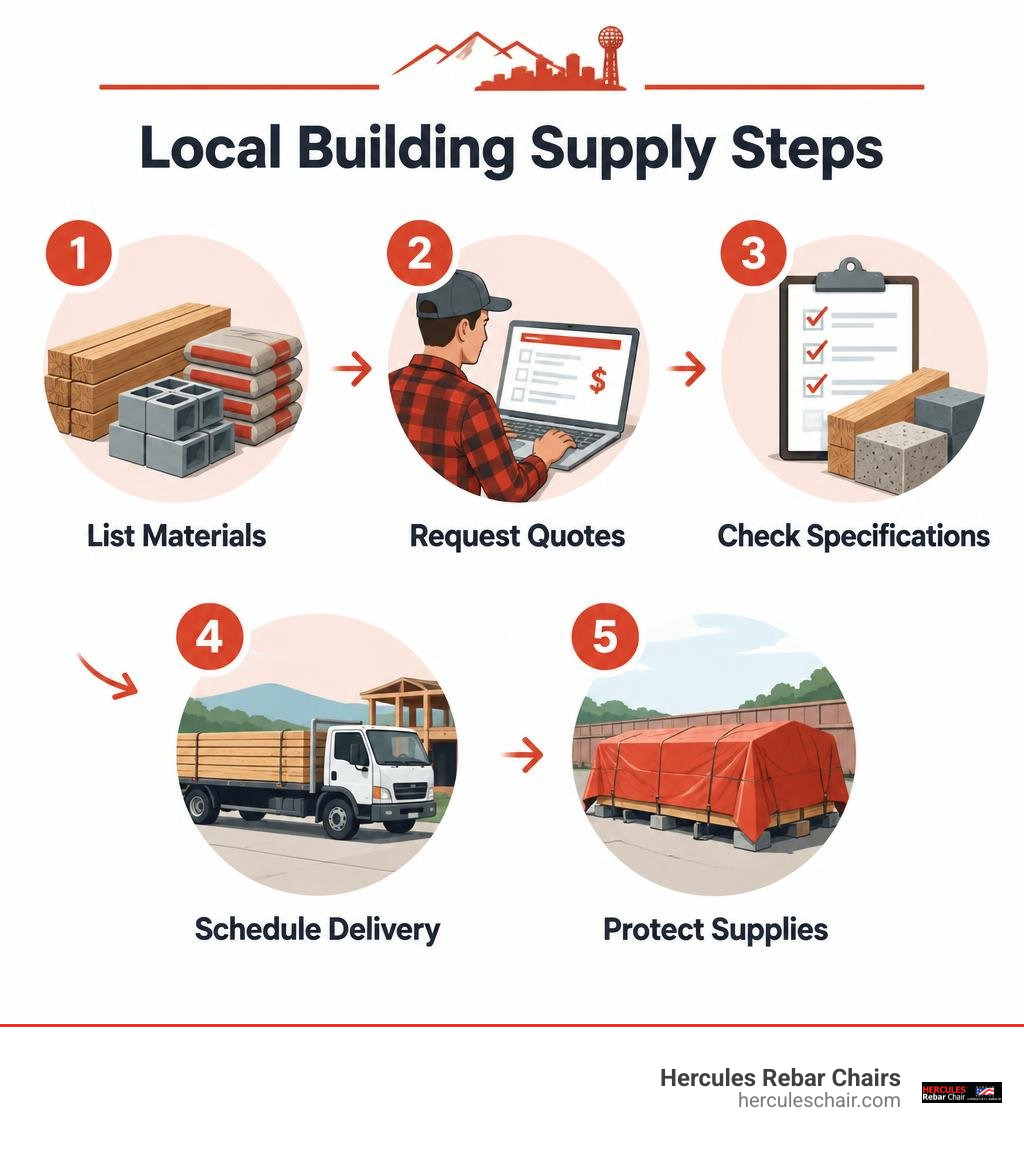
Must-know store building materials terms:
Essential Building Materials for New Builds and Renovations
Every successful construction or remodeling project follows a clear progression from foundational “gray work” to refined interior finishes. Sourcing supplies efficiently requires understanding which materials carry the structural load and which provide aesthetic value and environmental protection. Choosing the right grades prevents costly inspection failures down the line.
Navigating the best local building supply stores helps you source structural timber, masonry blocks, and exterior claddings under one consolidated account. Sourcing locally not only keeps transportation costs predictable, but it also allows builders to practice smart resource conservation by sourcing overages and returning standard units. Adopting sustainable handling practices keeps projects organized, safe, and cost-effective across every phase of construction.
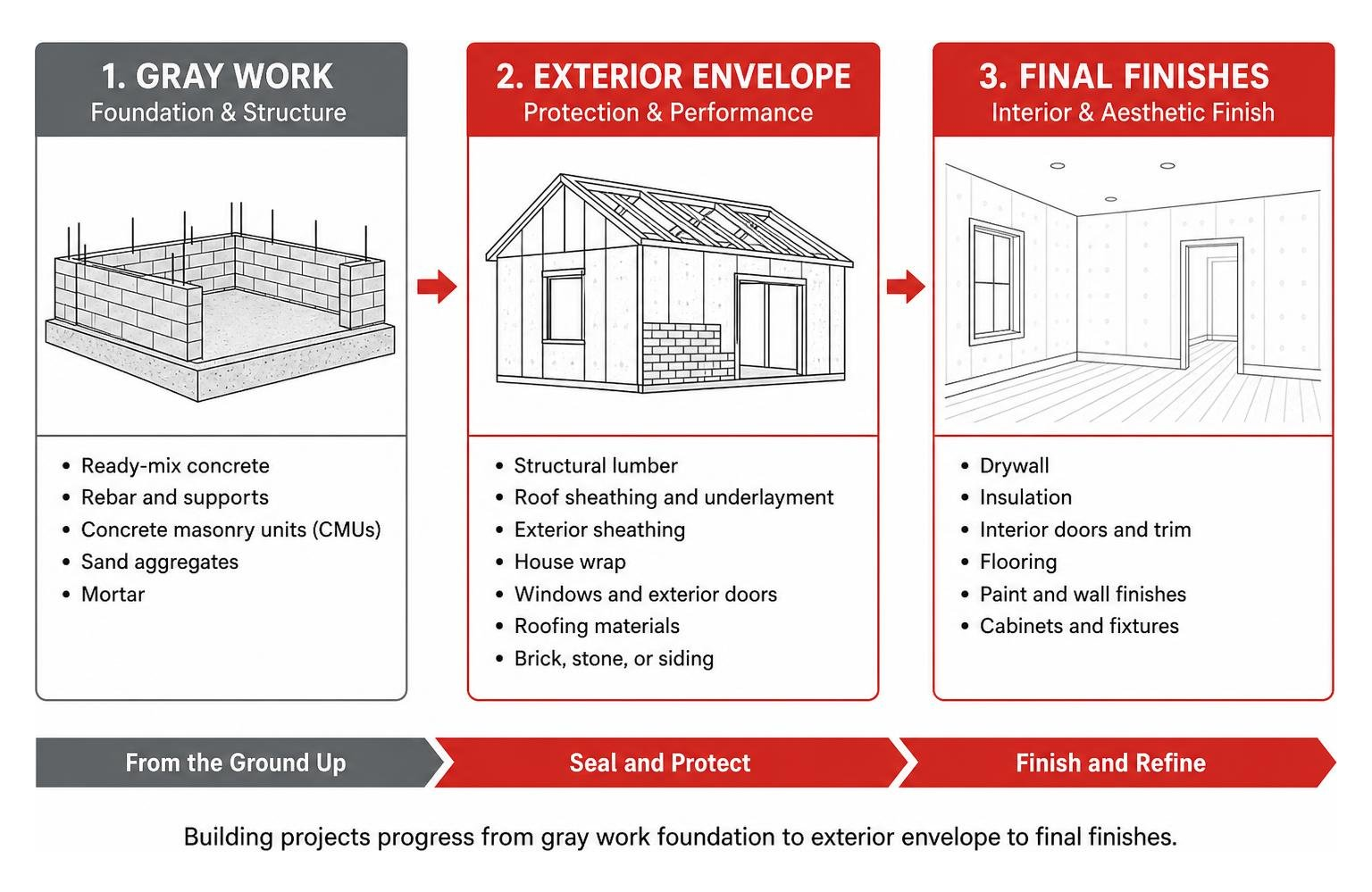
Foundation and Masonry Supplies: Gray Work Fundamentals
The foundation sets the stage for the structural life of the building. Gray work relies heavily on standard ready-mix concrete, concrete masonry units (CMUs or cinder blocks), graded sand aggregates, and specialized mortars. When you are finding the best concrete supplies store for your next project, it pays to evaluate product specifications closely.
Standard concrete mixes work well for small footings, but structural slabs, driveways, and load-bearing steps exceeding two inches in thickness demand high-strength concrete mixes formulated with portland cement, uniform coarse aggregate, and clean sand. Proper rebar positioning is critical here—steel rebar embedded in a slab must be held firmly at the correct height using dedicated supports to prevent structural settling, surface cracking, and moisture corrosion over time.
Structural Framing: Dimensional Lumber vs. Engineered Wood Products
Framing materials must balance load capacity, span distance, dimensional stability, and cost. Sourcing through the ultimate list of local lumber yards for your next project gives you access to both standard dimensional stock and engineered structural members.
| Material Type | Common Applications | Key Strengths | Limitations |
|---|---|---|---|
| Dimensional Lumber (SPF, Douglas Fir, Southern Yellow Pine) | Interior stud framing, plates, standard floor joists | Cost-effective, widely available, easy to cut and nail on-site | Subject to natural warping, twisting, and shrinkage |
| Pressure-Treated Lumber | Mud sills, deck framing, posts, outdoor ground contact | High resistance to rot, fungal decay, and subterranean insects | Requires corrosion-resistant fasteners; prone to checking as it dries |
| Engineered Wood (LVL, I-Joists, Glulam) | Long clear spans, heavy headers, ridge beams, open floor layouts | Uniform strength, minimal warping, true dimensions, exceptional load capacity | Higher upfront material cost; sensitive to prolonged weather exposure |
Sheathing completes the structural frame. Oriented Strand Board (OSB) provides high shear strength and structural consistency for wall and roof decking at a budget-friendly price point, while exterior-grade CDX plywood offers enhanced moisture tolerance for bathroom, kitchen, and exterior subfloor assemblies.
Cladding, Siding, and Fencing Essentials
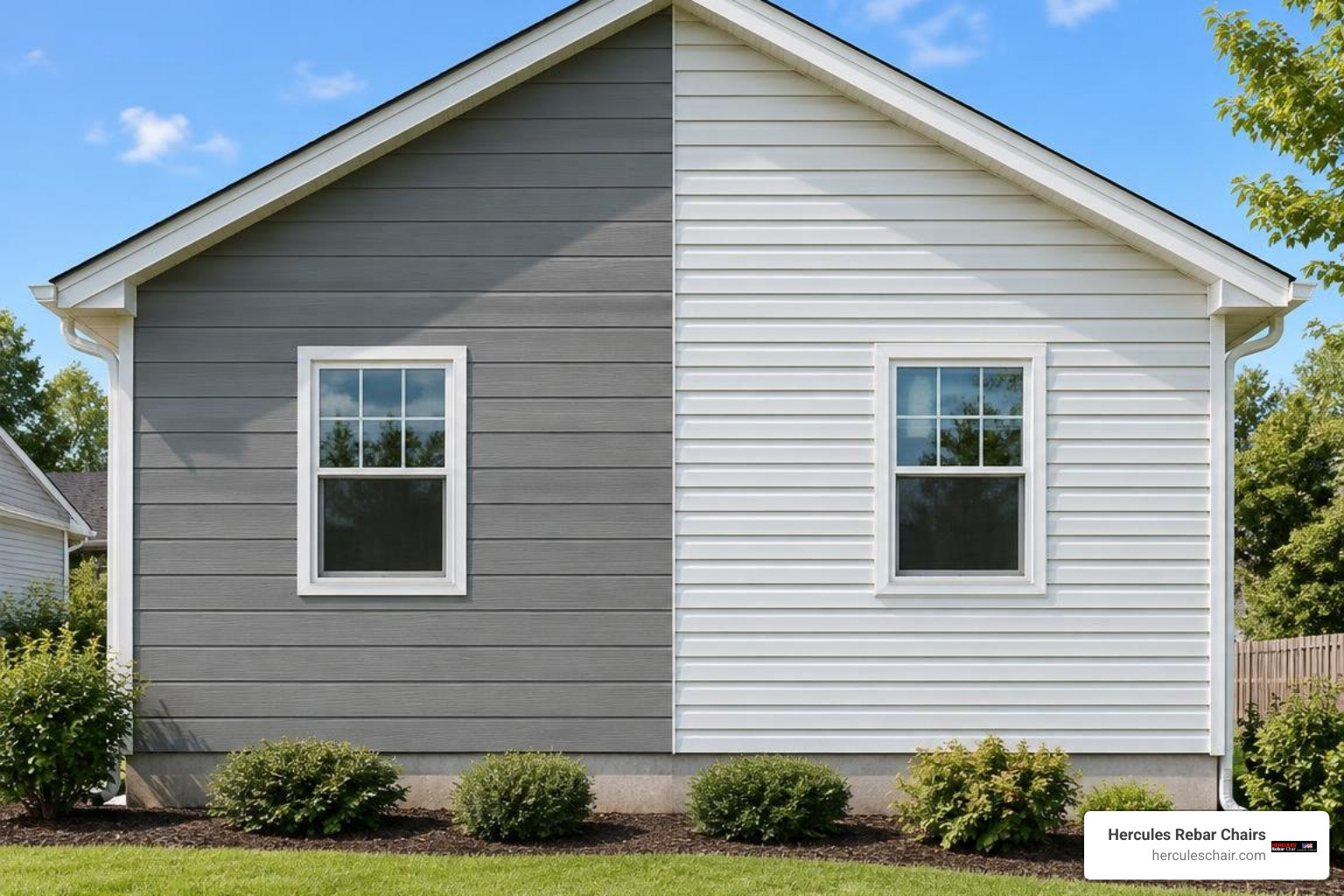
Exterior cladding serves as the primary barrier against driving rain, ultraviolet rays, and physical impacts. Choosing the right material requires weighing long-term maintenance against upfront installation labor:
- Fiber Cement Siding: Composed of sand, cement, and cellulose fibers, this option offers non-combustibility, superior impact resistance, and rot proofing. It requires specialized diamond blades for cutting and proper dust management, but it yields a durable finish that mimics authentic wood grain.
- Vinyl Siding: An economical, low-maintenance choice that resists moisture absorption and never needs painting. Installers must account for thermal expansion and contraction by allowing siding panels to float on fastener shanks rather than nailing them tight to the substrate.
- Composite and Wood Fencing: Pressure-treated pickets offer traditional aesthetics at low initial costs, while composite boards eliminate ongoing staining and resist warping in variable four-season climates.
Selecting Climate-Resilient Roofing, Insulation, and Moisture Barriers
Maintaining an airtight, moisture-resistant building envelope directly determines indoor air quality and overall heating and cooling costs. Properly matching your roofing, moisture barriers, and insulation materials to regional weather extremes protects your structural framing from condensation and moisture intrusion.
Roofing Materials for Extreme Weather and Regional Climates
Your roof endures severe weather shifts, intense solar radiation, and high winds. Selecting the right profile and material grade ensures long-term protection:
- Architectural Asphalt Shingles: Cost-effective, multi-layered shingles that provide wind resistance up to 130 mph and clean aesthetic profiles.
- Standing Seam Metal Roofing: Offering lifespan ratings of 50 years or more, concealed-fastener metal roofs provide superior shedding of heavy snow and total resistance to ember ignition in wildfire-prone areas. Sourcing from specialized distributors like metal roofing supply near me where to find top-tier materials for your next project helps you find localized panel gauges, clips, and trim packages.
- Corrosion-Resistant Metal Panels: In humid, coastal, or high-rainfall climates, galvanized and galvalume-coated corrugated sheets provide durable, economical water shedding for both residential outbuildings and commercial structures, similar to options cataloged at Do it Center Construction Materials.
Thermal Envelope Options: Fiberglass, Foam Board, and Spray Foam
An effective insulation strategy combines appropriate thermal resistance (R-value) with continuous vapor barriers to eliminate thermal bridging across wall studs and ceiling joists.
| Insulation Type | Typical R-Value Per Inch | Best Applications | Key Advantages |
|---|---|---|---|
| Fiberglass Batt / Roll | R-3.1 to R-3.8 | Standard stud cavities, attic floors, floor joists | Highly cost-effective, non-combustible, straightforward installation |
| Rigid Foam Board (XPS / Polyiso) | R-5.0 to R-6.5 | Continuous exterior wall sheathing, foundation walls, slab edges | Breaks thermal bridging across framing; moisture resistant |
| Closed-Cell Spray Foam | R-6.0 to R-7.0 | Unvented roof decks, tight rim joists, cathedral ceilings | Acts as thermal insulation, air barrier, and vapor retarder in one pass |
In addition to thermal control, integrating high-density acoustic insulation slabs inside interior partition walls reduces sound transmission between living spaces, media rooms, and home offices.
Strategic Sourcing: How to Choose the Right Building Materials Store Locally
Finding dependable material suppliers involves more than picking the closest store. You need partners who offer trade discounts, reliable stock levels, accurate lumber pulls, and dependable delivery fleets that keep your crews working.

Independent Lumberyards vs. Pro Contractor Warehouses
Deciding where to buy depends on project scale, required customization, and delivery speed:
- Independent Lumberyards: Known for higher lumber grades, dedicated custom millwork, on-site color matching, and personalized counter service. Regional suppliers like Arizona Building Supply and Crafty Beaver combine regional millwork expertise with customized framing packages tailored to local codes.
- Pro Contractor Warehouses: Big-box trade desks and commercial depots excel at everyday commodity volume. When you source through a contractor warehouse near me how to shop like a pro, you leverage national buying power, bulk pack pricing on fasteners, and early-morning flatbed staging.
Sourcing Salvaged Supplies: How Habitat ReStore Building Materials Save Budgets
For non-structural elements, architectural details, and budget-conscious remodels, visiting a Habitat for Humanity ReStore can significantly stretch your funds. ReStores stock surplus inventory, architectural salvage, and gently used fixtures donated by contractors and homeowners:
- Solid Wood Interior Doors & Hardware: High-end architectural doors and locksets at a fraction of retail prices.
- Kitchen & Vanity Cabinetry: Surplus solid-wood cabinets ready for painting and custom trim.
- Surplus Tile & Masonry: Overstock lots of ceramic tile, natural stone, and brick pavers ideal for accent walls, backsplashes, and garden pathways.
Shopping these outlets prevents usable building goods from ending up in local landfills while directly supporting affordable housing programs in your area. For more eco-friendly ideas, review our guide on the best green building supply stores for sustainable DIYers.
Online Sourcing vs. Local Yard Procurement
Digital procurement hubs have transformed how builders order everyday supplies. Platforms such as the Materials Market Construction Platform allow buyers to compare bulk pricing on sub-base aggregates, cement sacks, and sheet goods across regional merchant networks.
When deciding between online and physical sourcing, weigh these logistical factors:
- Lead Times: Physical yards offer same-day collection or next-day local drops, while specialized online platforms may require 3 to 5 business days for consolidated freight.
- Delivered Freight vs. Drop Fees: Online orders often provide transparent bulk-tier discounts, but rural drop fees and liftgate surcharges must be factored into your net cost.
- Physical Inspection: Selecting premium finish lumber or hand-picked masonry veneer requires visual grading at a local yard, whereas standard structural OSB, rebar, and drywall sheets can be ordered digitally without quality surprises.
Jobsite Logistics, Delivery Protocols, and Equipment Staging
Delivering tons of framing lumber, drywall, and bagged concrete to an active jobsite requires careful coordination. Proper site staging protects valuable materials from weather damage, minimizes equipment repositioning, and keeps your work crews safe.
How to Safely Stage and Store Building Materials on the Jobsite
Improper storage leads to warped lumber, ruined drywall, and moisture-damaged cement bags. Follow these staging rules as soon as materials arrive:
- Elevate Off the Ground: Always set lumber packs, OSB stacks, and gypsum boards on timber dunnage or solid skids at least six inches above bare dirt or wet concrete to prevent ground moisture absorption.
- Allow Air Circulation: Cover weather-sensitive goods with breathable, water-resistant tarps. Secure tarps firmly against wind uplift while leaving bottom edges vented to prevent condensation buildup underneath.
- Erosion and Sediment Control: Lay down geotextile silt fences or erosion control blankets around downslope staging areas to stop rainwater runoff from pooling under bulk aggregate or sand piles.
- Dry Chemical Storage: Stack bagged portland cement, joint compound, and dry grout inside an enclosed, secure trailer or climate-controlled interior room off bare ground.
Bulk Delivery Best Practices and Fleet Coordination
Major home improvement retailers and regional suppliers offer convenient fulfillment options, including same-day delivery on select in-stock building materials when orders are confirmed before afternoon cutoff times (such as 4:00 p.m.). When scheduling flatbed or boom truck deliveries:
- Confirm Site Access: Clear driveways, verify low-hanging utility line clearances, and ensure the delivery route can support heavy three-axle trucks without damaging curbs or soft ground.
- Specify Drop Locations: Instruct drivers to place heavy drywall bundles directly on ground-floor subfloors or stage framing lumber directly adjacent to the foundation perimeter to eliminate double handling.
- Coordinate Pour Schedules: When pouring footings and driveways, schedule aggregate and concrete deliveries to align with forming progress so wet mud never waits in the drum.
Essential Access Equipment: Ladders, Scaffolding, and Fall Protection
Safe access equipment keeps framing, siding, and roofing crews productive and compliant with OSHA safety standards:
- Modular Frame Scaffolding: Essential for exterior masonry, siding, and multistory framing. Ensure all base plates rest on level mudsills with cross-bracing and guardrails installed.
- Type IA / IAA Extension Ladders: Use heavy-duty fiberglass extension ladders rated for 300 to 375 lbs for exterior reach, securing top tie-offs and maintaining a 4:1 base-to-height angle ratio.
- Personal Fall Arrest Systems (PFAS): Equip crews working above six feet on open trusses or steep roof decks with full-body harnesses, shock-absorbing lanyards, and certified ridge anchors.
Frequently Asked Questions About Sourcing Building Materials
What are the most cost-effective building supplies for DIY renovations?
To keep material costs manageable on DIY renovations, focus on purchasing standard dimensional lumber overruns, open-box contractor return packages, and surplus ceramic tile lots from local yard discount racks. Sourcing architectural salvage and gently used interior doors from regional non-profit surplus centers provides solid wood materials at a fraction of specialty retail pricing.
How far in advance should bulk construction materials be ordered?
Commodity materials like standard framing studs, subfloor OSB, and bagged concrete can typically be delivered within 24 to 48 hours from local suppliers. However, custom roof trusses, engineered structural beams (LVL/glulam), specialty metal roofing profiles, and architectural window packages often carry lead times ranging from 3 to 8 weeks. Order these long-lead structural packages as soon as architectural plans receive engineering sign-off.
Can leftover or gently used building supplies be donated locally?
Yes. Non-profit building reuse programs such as Habitat for Humanity ReStore welcome donations of unused dimensional lumber, surplus drywall sheets, masonry bricks, unbroken ceramic tile packs, solid wood doors, and functional electrical fixtures. Most organizations offer tax-deductible donation receipts and provide complimentary flatbed pickup services for large surplus batches, saving you dumpster rental fees while keeping usable supplies out of landfills.
Conclusion
Building a durable, code-compliant structure on budget comes down to smart local sourcing, strict material verification, and organized jobsite logistics. Whether you are ordering framing packages from independent lumberyards, sourcing surplus items through architectural salvage centers, or managing bulk truck deliveries, taking a structured approach to procurement keeps your project running smoothly from excavation through final inspection.
When it comes to foundational concrete slabs and masonry structures, code compliance and structural integrity depend entirely on proper rebar placement. At Hercules Rebar Chairs (a T.J. Harris Co. brand), we manufacture America’s #1 concrete supports. With over 14 million units sold nationwide, our bright red chairs make visual inspection simple, ensure exact reinforcement clearance, and save your crew valuable time and labor on the jobsite.
Ready to reinforce your next foundation with proven structural stability? Visit our network of local distributors at Buy Rebar Chairs / Building Supply Stores to order professional-grade rebar supports today.