

Why Finding a Contractor Warehouse Near Me Can Make or Break Your Project
If you’re looking for a contractor warehouse near me, here’s a quick overview of your main options:
| Type | Best For | Key Feature |
|---|---|---|
| Flex industrial bays | Tools, materials, staging | Drive-up access, 24/7 entry |
| Contractor storage yards | Fleet vehicles, heavy equipment | Gated outdoor lots |
| Building material supply warehouses | Buying lumber, doors, windows | In-stock, same-day pickup |
| Short-term bay rentals | Project-based storage | Month-to-month leases |
It’s 6:45 AM. Your crew is on site. Your materials are 22 miles away.
That’s not just a bad morning — it’s lost money. Contractors can lose up to 20 billable hours per month just in transit time between job sites and remote storage locations. A single crew delay can wipe out hundreds of dollars in morning productivity before a single tool hits the ground.
The right contractor warehouse — close to your active job site, with drive-up access and 24/7 availability — fixes that problem directly. This guide breaks down exactly what to look for, what questions to ask, and how to find the best option near your current project.
I’m Jordan Harris, a licensed Professional Engineer and co-owner of T.J. Harris Company, where we manufacture rebar support systems used on concrete job sites across the country — the kind of job sites where staging, logistics, and material storage directly affect how a pour goes. My experience working alongside general contractors and concrete crews gives me a practical understanding of how the right contractor warehouse near me can protect your schedule, your tools, and your bottom line.
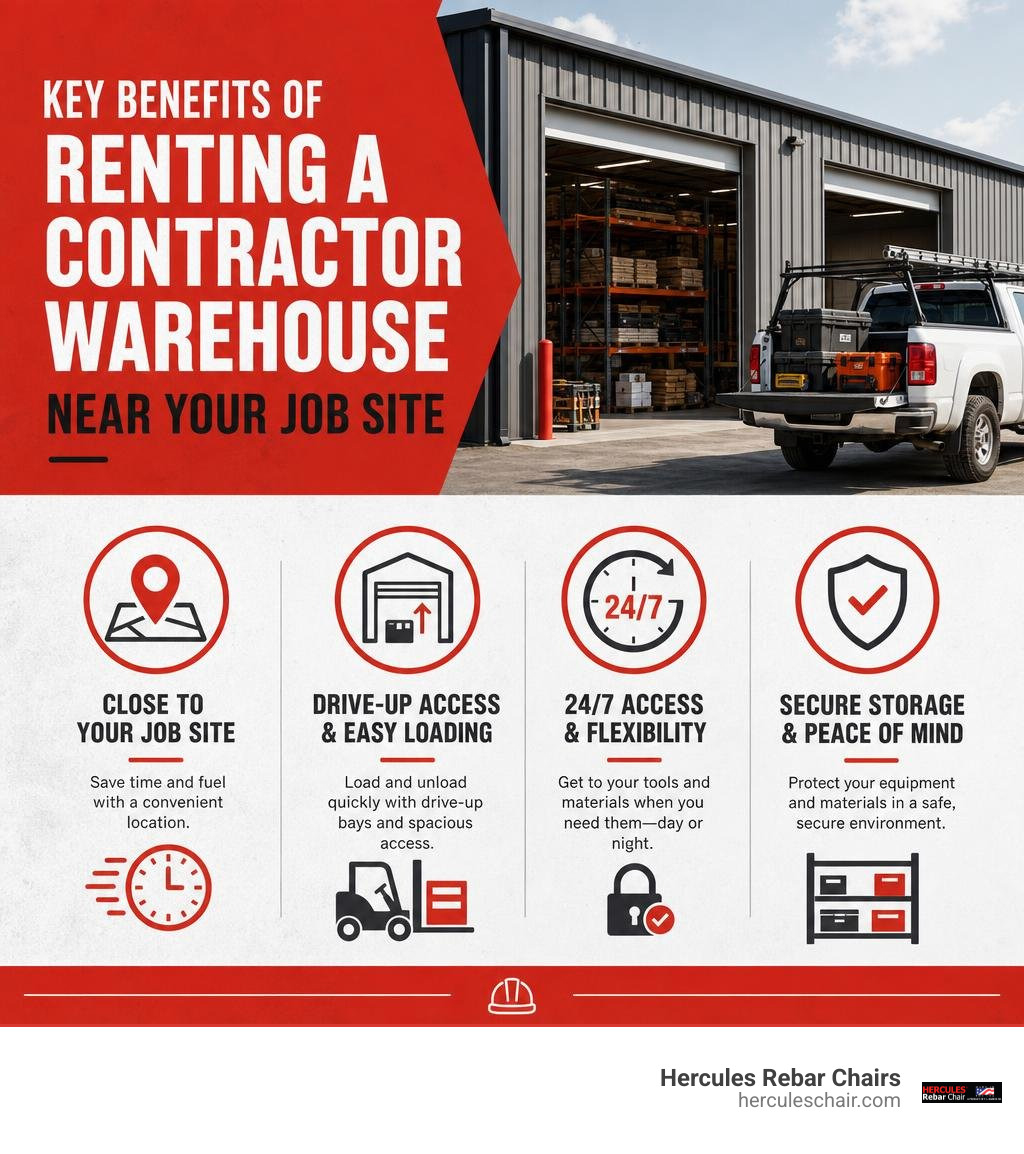
Contractor warehouse near me terms to remember:
Essential Types of Contractor Warehouses and Storage Space
When searching for a contractor warehouse near me, you quickly realize that commercial storage isn’t a one-size-fits-all solution. Depending on whether you need a daily operational hub, a staging yard for heavy machinery, or an immediate source for raw materials, the ideal facility varies significantly.
Broadly speaking, space dedicated to trade operators falls into four major categories:
- Flex Industrial Bays: Enclosed commercial spaces featuring ground-level drive-up overhead doors, reinforced concrete slabs, high ceiling clearance, and basic utilities like power and lighting.
- Contractor Yard Storage: Secure, outdoor, county-approved open storage lots engineered specifically for fleet trucks, flatbed trailers, heavy machinery, skid steers, and bulk materials.
- Material Supply Outlets: Wholesale and retail building supply warehouses stocking lumber, doors, plumbing, electrical, and concrete accessories available for direct drive-thru loading and same-day site delivery.
- Trade Staging Hubs: Regional flex facilities situated along high-volume transit corridors where crews load service vans and stage project inventory before heading out to active builds.
Selecting a Contractor Warehouse Near Me vs. Traditional Self-Storage
A common mistake growing trade operators make when searching for a contractor warehouse near me is settling for a standard self-storage facility. While traditional self-storage works well for personal belongings or off-season household items, it creates massive operational bottlenecks for commercial trade businesses.
Standard self-storage units usually feature narrow aisles, restricted access hours (often locking gates at 9 PM or 10 PM), strict rules against running business operations, and low electrical capacity — if power is offered at all. In contrast, flex industrial space is built specifically for trade workflows.

Here is a side-by-side comparison detailing why trade professionals choose dedicated contractor warehouse space over traditional self-storage:
| Feature / Capability | Traditional Self-Storage | Contractor Warehouse Space |
|---|---|---|
| Primary Design | Household goods & personal items | Commercial trade operations & material staging |
| Access Hours | Standard business hours (e.g., 6 AM–10 PM) | 24/7/365 unrestricted gated access |
| Door Clearance | Standard roll-up doors (7–8 ft height) | Heavy industrial overhead clearance (12–14+ ft) |
| Electrical Power | None, or single low-amp outlet for light | High-capacity, multi-outlet power (110V/220V/three-phase) |
| Site Vehicle Access | Tight aisles built for passenger cars | Wide aprons (20+ ft gates) for box trucks, flatbeds, and trailers |
| On-Site Operations | Strictly prohibited by facility rules | Fully permitted (staging inventory, minor shop work, prep) |
| Heating & Water | Rare or costly climate control | Available in-unit heating, floor drains, and utility water access |
Upgrading from a residential garage or household storage locker into flex industrial space elevates your operational capacity immediately. It turns your inventory management into a well-oiled machine while establishing a true command center for your field staff.
Flex Space and Material Supply Outlets
In addition to dedicated commercial bay rentals, trade pros regularly rely on wholesale building material outlets. Retail supply facilities — such as those found through Contractors’ Warehouse store locations — have served trade professionals since 1983 by providing direct access to thousands of in-stock items under one roof.
These material supply hubs offer dedicated drive-thru lumberyards that allow work trucks to drive directly up to material stacks. This direct loading setup eliminates manual cart loading, saving physical effort and cutting staging time in half. Combining a flex staging warehouse with reliable local outlets from The Best Local Building Supply Stores guarantees your job site never sits idle waiting on missing inventory.
Key Features to Look For in a Contractor Warehouse Near Me
Searching for the right commercial property requires evaluating specific facility specifications. The wrong facility layout can lead to damaged equipment, security risks, or logistical delays during busy morning dispatch windows.
Drive-Up Access, Bay Sizes, and Security Measures
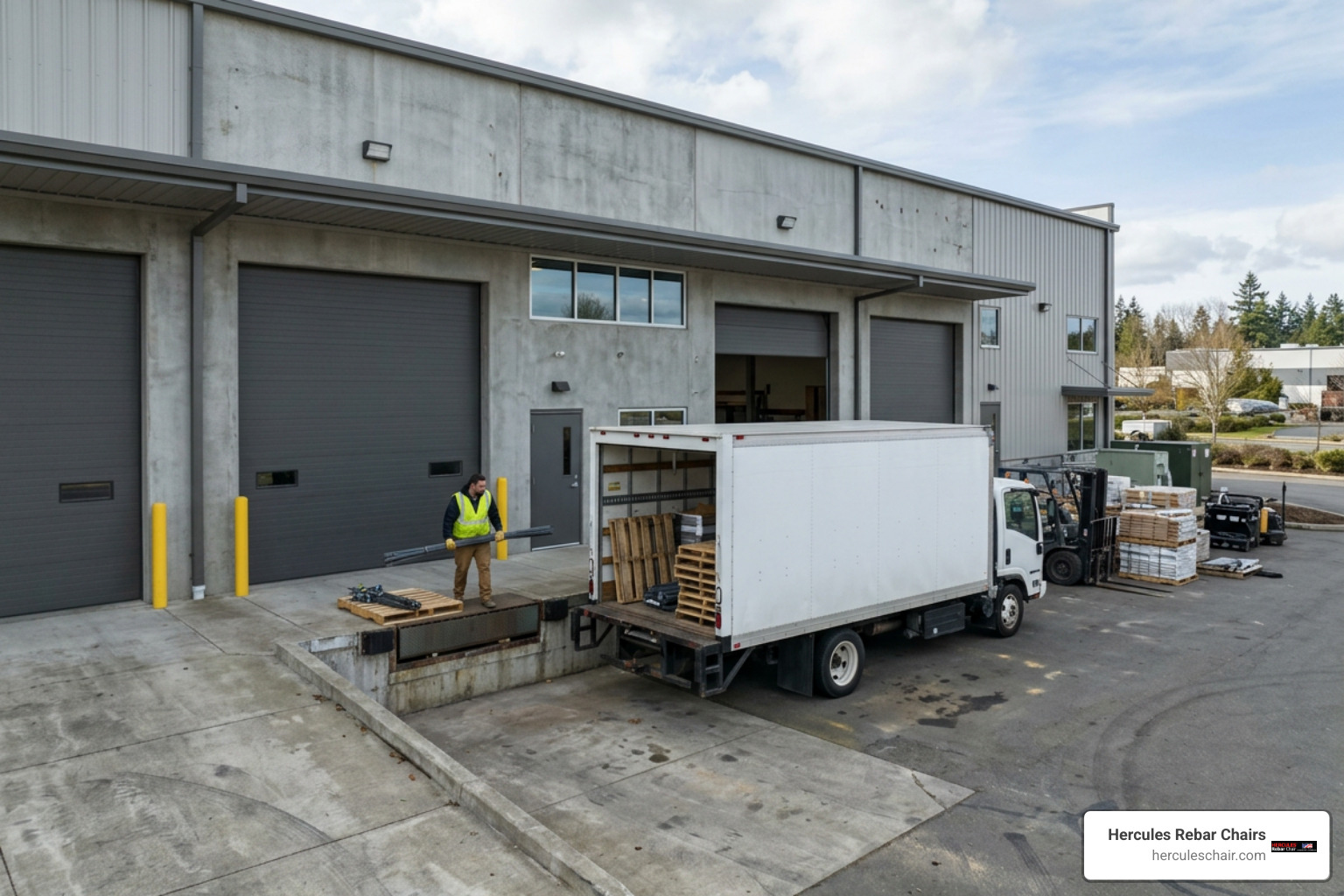
When touring potential properties, assess structural features carefully. Heavy machinery, palletized concrete supplies, and long bundles of lumber demand spacious drive-up bays with ground-level loading access.
Key architectural and security specifications to verify include:
- Overhead Door Clearance: Look for doors at least 12 to 14 feet tall and 12 to 16 feet wide to accommodate high-roof vans, box trucks, and loaded trailers.
- Drive-Up Ground Access: Grade-level entry allows forklifts, skid steers, and service trucks to drive straight into the unit, completely avoiding dock-height scheduling issues or freight elevators.
- Wide Perimeter Gates: Facilities with 20-foot wide entry gates ensure oversized semi-trucks, wide flatbeds, and heavy machinery can enter without tight maneuvering.
- 24/7 Gated Access and Video Surveillance: Commercial tool theft can devastate a small business. In fact, replacing a single stolen tool haul often costs more than a full month of contractor storage rent. Top-tier operations like Contractor storage facilities in Colorado provide full 24/7 gated security, electronic keypad entry, perimeter fencing with razor wire, and continuous HD camera monitoring.
Utilities, Amenities, and Customization Options
A quality contractor warehouse functions as an operational command center rather than a silent storage room. Make sure to inquire about available utilities and structural customization options:
- Electrical Power: Verify that the unit supplies sufficient amperage. While basic lighting and 110V wall outlets handle tool battery charging, heavy machinery or welding rigs require 220V or three-phase power connections.
- In-Unit Heating: Cold winter months can damage water-based adhesives, specialty paint coatings, grout mix, and electrical equipment. Heated bays keep temperature-sensitive materials safe and provide a comfortable workspace during off-hours prep.
- Water Access and Restrooms: Dedicated utility sinks, floor drains, and accessible on-site restrooms make early morning crew prep much smoother.
- Dedicated Fleet Parking: Ask if the facility offers extra reserved outdoor parking spots for trailers, dump trucks, or employee service vehicles when not out on job sites.
- Trash and Waste Services: Commercial dumpster access on-site eliminates the hassle of hauling job site debris back to residential property or paying separate waste disposal fees.
How Contractor Warehouses Streamline Job Site Logistics
Every extra mile between your material storage hub and your active job site represents hidden overhead cost. When field crews sit in heavy traffic or drive back and forth across town to retrieve forgotten tools, project margins shrink quickly.
How to Locate the Best Contractor Warehouse Near Me for Project Logistics
To optimize logistics across active job sites, use this strategic step-by-step selection approach:
- Map Your Active Project Radius: Plot your primary active job locations for the next 6 to 12 months. Calculate the central geographic midpoint to minimize overall drive times.
- Prioritize Transit Corridors: Select facilities positioned directly along major interstate highways, beltways, or arterial industrial routes to avoid congested city traffic during peak morning rush hours.
- Verify Site Turning Radius: Drive your largest service vehicle — complete with attached trailers — to the facility lot to test entry gates, turning space, and backup clearance in person.
- Assess Multi-Site Flexibility: If your business manages multiple parallel job sites across a metro region, explore warehouse network providers like Cubework that operate flex industrial locations across 19 states.
Typical Lease Terms and Cost Savings
Flex industrial space gives trade businesses a financial advantage over rigid commercial real estate contracts. Traditional industrial real estate leases usually demand 3-to-5-year binding commitments, high financial guarantees, and complex utility setups that drain working capital.
Modern contractor bays reverse this structure by offering flexible, short-term lease arrangements tailored to commercial project cycles:
- Month-to-Month Agreements: Ideal for temporary regional project staging, allowing you to move in rapidly and provide simple 30-day notice upon contract completion.
- 3-Month Short-Term Leases: Programs like those offered by Cornerstone Contractor Bays feature low-commitment 3-month initial terms. This setup lets trade operators scale footprint up or down based on incoming job contracts without taking on long-term real estate risk.
- All-Inclusive Utility Bundling: Many flex facilities bundle electric service, trash pickup, site security, and water access into one predictable monthly rent bill.
Protecting project profit margins requires keeping fixed overhead aligned with current project revenues. When a major build wraps up, short-term lease flexibility allows you to scale back storage footprint instead of paying for empty commercial square footage for years.
Frequently Asked Questions About Contractor Warehouses
What sizes of contractor warehouse units are available?
Contractor storage units are designed to accommodate operations of any scale, ranging from small trade specialty shops to multi-trade general contractors:
- Small Units (10×18 to 15×22 sq ft): Perfect for trade specialists (electricians, painters, locksmiths) who need to store hand tools, ladders, fasteners, and compact utility carts.
- Medium Bays (1,000 to 1,500 sq ft / 12×40 to 20×40 sq ft): The most popular size for small-to-midsize trade operators. Easily houses material pallets, gang boxes, work benches, and a service truck.
- Large & XL Shops (2,000 to 3,000+ sq ft / 40×40 to 50×30 sq ft): Engineered for general contractors, masonry crews, and framing contractors managing extensive material inventory, multiple sub-trade staging bays, and heavy equipment.
Can I store heavy equipment and fleet vehicles in a contractor warehouse?
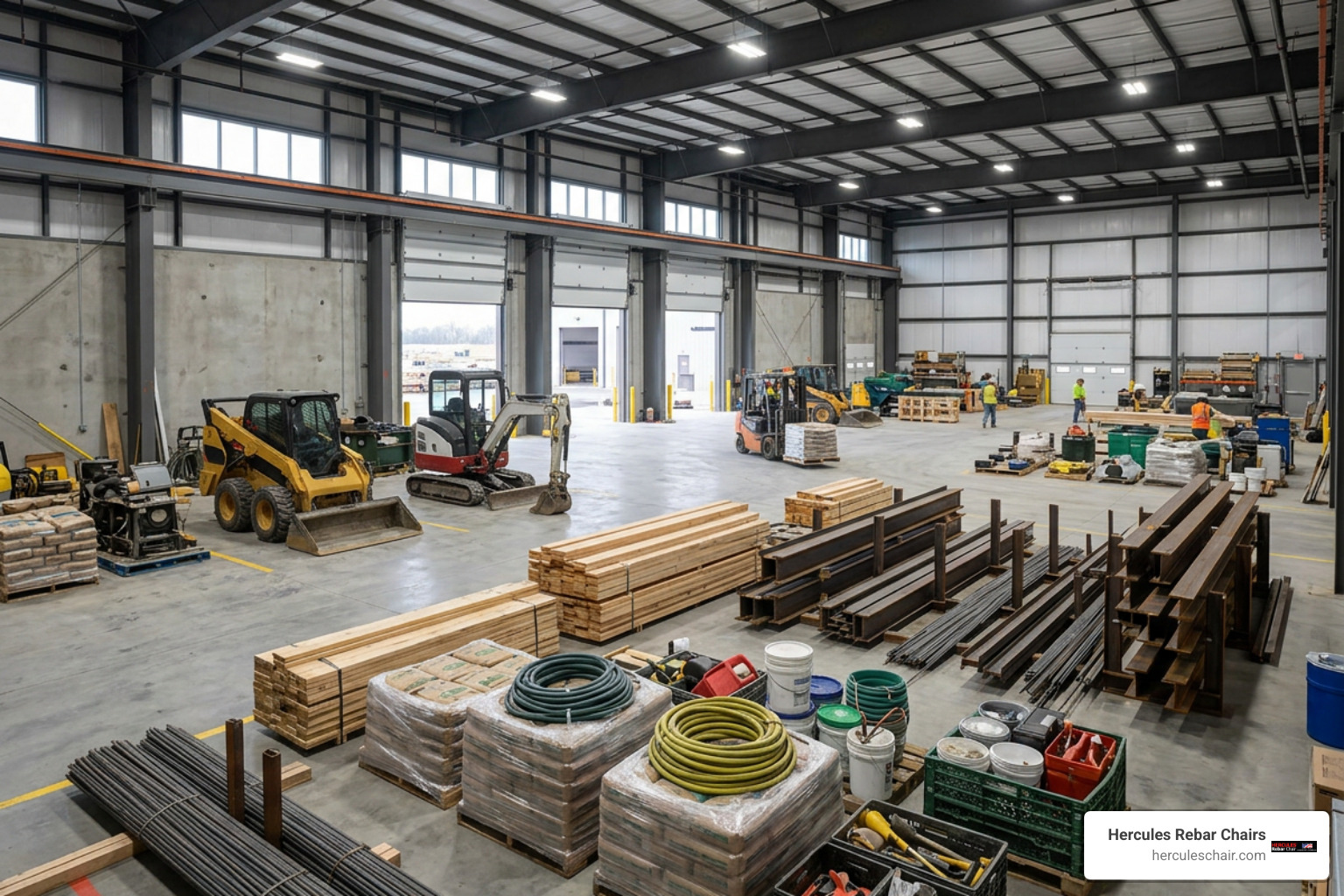
Yes, standard contractor flex spaces with high-capacity concrete floor slabs are designed specifically for heavy equipment storage. Ground-level drive-up access makes it easy to park skid steers, mini-excavators, scissor lifts, trenchers, and concrete buggies directly inside secure bays.
For larger fleet vehicles, flatbeds, and heavy machinery, outdoor contractor storage yards offer gated perimeter parking options. These yards provide secure open storage lots equipped with razor wire fencing, 24/7 video surveillance, and wide entry gates.
What trades benefit most from renting flex warehouse space?
Virtually any commercial or residential trade operator that has outgrown a residential garage or requires dedicated site-proximate staging benefits from flex industrial space. Trades using these facilities daily include:
- Concrete and Masonry Contractors: Staging rebar supports, concrete forms, vibrators, power trowels, bulk curing agents, and decorative stamps.
- Plumbing and HVAC Technicians: Staging pipe inventory, water heaters, ductwork assemblies, boilers, and specialized press tools.
- Electrical Contractors: Staging conduit reels, panel boards, wire spools, and heavy pull equipment in dry, secure bays.
- Landscaping Contractors: Parking commercial mower fleets, trailers, blowers, bulk soil amendments, and hardscaping supplies.
- Remodeling and Framing Pros: Housing staging materials, pre-assembled kitchen/bath cabinetry, tile pallets, and stationary saws.
Conclusion
Finding the right contractor warehouse near me comes down to balancing geographic proximity, facility security, flex lease terms, and operational drive-up access. By securing space near active transit routes, you reduce drive time, prevent material loss, eliminate crew downtime, and protect hard-earned project profit margins.
At Hercules Rebar Chairs (manufactured by T.J. Harris Co.), we know that job site efficiency depends on reliable logistics from start to finish. Our vibrant red rebar chairs are engineered to save time and labor during rebar placement, ensuring code compliance and structural integrity on concrete builds nationwide.
When planning your next job site setup, streamline your staging and material sourcing. Explore your local flex space options and make sure to buy rebar chairs from local building supply stores to keep your upcoming pour running on time and on budget.