

Where to Find Lumber Stores in My Area (Quick Answer)
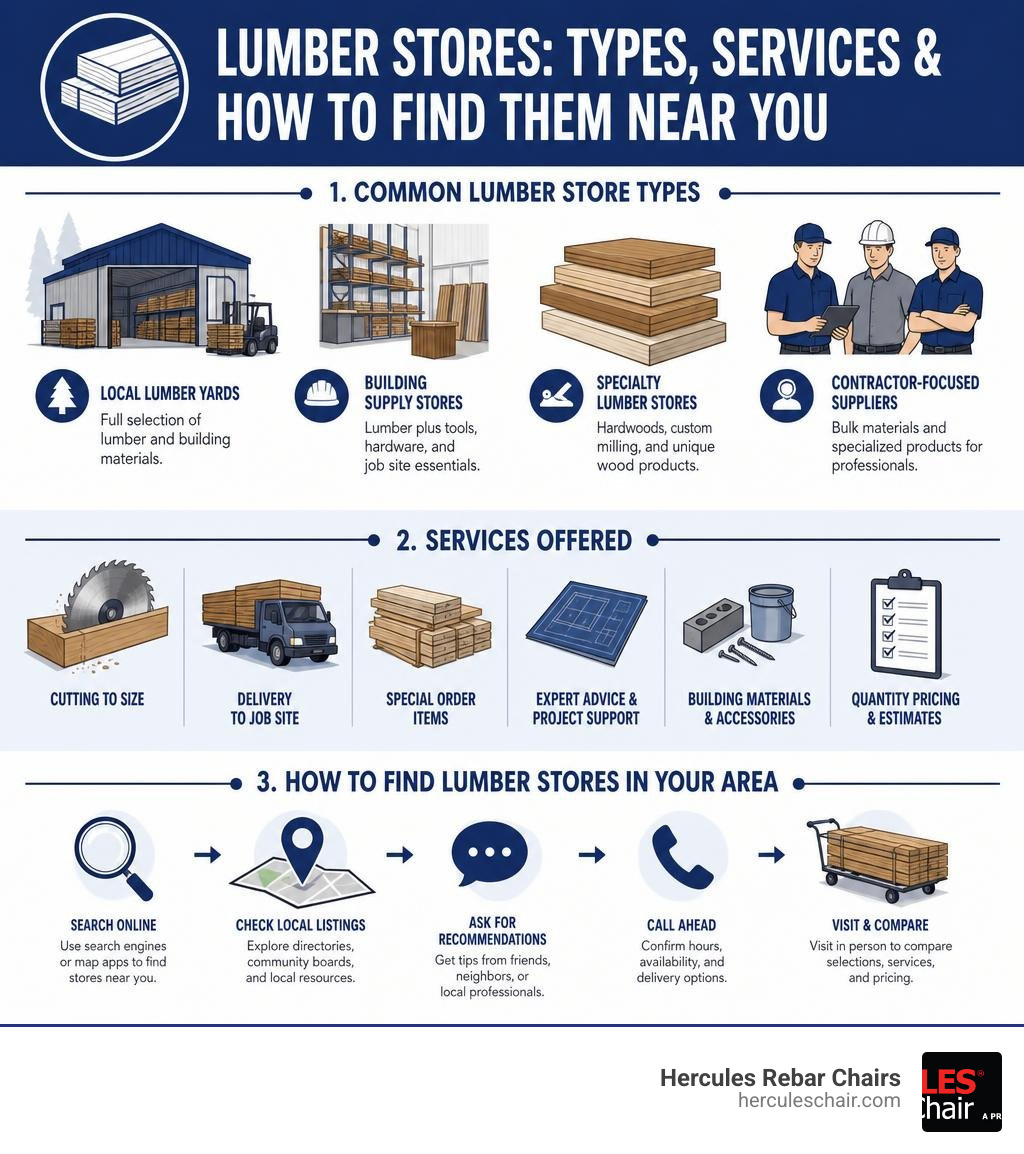
Finding lumber stores in my area is easier than you might think. Here are the most common ways to locate one near you:
- Search online — Google “lumber stores near me” or use store locators on retailer websites like 84 Lumber (320 locations across 34 states)
- Check for local independents — Family-owned yards often offer better service and custom cutting that big-box stores can’t match
- Look for specialty stores — Some yards focus on hardwoods, custom millwork, or contractor supplies
- Call ahead — Confirm hours, product availability, and delivery options before you make the trip
Pro tip: Local lumber yards often carry specialty products — like engineered wood, custom doors, and roof trusses — that you simply won’t find at a big-box retailer.
Whether you’re framing a new deck, pouring a concrete slab, or tackling a full home renovation, the right lumber yard can make or break your project. A good supplier isn’t just a place to buy wood — it’s a resource. Knowledgeable staff, job-site delivery, and specialty products can save you hours of frustration and dozens of extra trips.
The challenge? Not all lumber yards are created equal. Some serve contractors almost exclusively. Others are set up specifically for DIYers. Some have been operating for over a century and carry products you can’t find anywhere else. Knowing where to look — and what to look for — is the first step to getting your project done right.
I’m Jordan Harris, a licensed structural engineer and co-owner of T.J. Harris Company, and my background in large-scale concrete and steel construction has given me a deep appreciation for quality material sourcing — including knowing which lumber stores in my area are worth your time. In the sections below, I’ll walk you through how to find, evaluate, and get the most out of your local lumber yard.
Quick lumber stores in my area definitions:
Why Choose Independent lumber stores in my area Over Big-Box Retailers
When you need a couple of 2x4s for a quick weekend project, running to the nearest orange or blue big-box home improvement center is a common reflex. But if you are planning a major home renovation, building a deck, or pouring a structural concrete slab, heading to independent lumber stores in my area is almost always the smarter move.
First and foremost, independent lumber yards offer a level of local expertise that big-box retailers simply cannot match. When you walk into a historic local yard, the person behind the counter isn’t someone who was working in the garden department last week. They are often multi-generational lumber experts who understand wood species, local building codes, and structural load requirements.
For instance, Larsen Lumber — Premium Building Materials & Service in San Leandro, California, has been in continuous operation for over 140 years (since 1882) and is recognized as the fifth oldest family-owned lumberyard in the United States. Their sales staff averages over 20 years of industry experience. When you ask them a question about structural framing or custom millwork, you are getting an answer backed by over a century of community trust and professional expertise.
Another massive advantage is custom milling. Big-box stores will cross-cut a board so it fits in your SUV, but they won’t surface rough lumber, rip sheets to custom widths, or match historic trim profiles. Independent yards often feature fully operational woodshops on-site, allowing you to source custom-dimensioned wood tailored to your specific architectural needs.
Furthermore, independent yards boast deep roots in community history. These businesses have survived economic downturns, material shortages, and the rise of corporate giants by focusing on relationships. When you support them, your money stays local. If you want to explore the historical and practical benefits of choosing local yards, check out our comprehensive guide on The Ultimate List of Local Lumber Yards for Your Next Project.
Top Services Offered by Local Lumber Yards
If you think a lumber yard is just a dusty outdoor lot with stacks of wood, you are missing out on some incredible, time-saving services. Modern local lumber stores have evolved into full-service project hubs.
Here are the standout services that top-tier independent suppliers offer:
- Dedicated Design Showrooms: Many local suppliers feature state-of-the-art showrooms where you can touch, feel, and test premium products. You will find fully designed kitchen and bath setups, interactive window displays, and extensive door galleries showing off everything from Shaker-style interior doors to heavy Craftsman entryways.
- Professional Take-Offs: If you bring in your blue prints or architectural drawings, many local yards have dedicated estimators who will perform a professional “take-off.” They will calculate exactly how much framing lumber, drywall, roofing, siding, and hardware your project requires, ensuring you don’t over-purchase or run short halfway through construction.
- Custom Kitchen & Bath Design: Rather than hiring an expensive independent designer, yards like Ring’s End – Your Inspiration. Our expertise. provide in-house design consultations, helping you maximize your layout and select the perfect cabinetry, millwork, and finishes.
- Heavy-Duty Job-Site Delivery: Navigating traffic with 16-foot framing joists hanging out the back of a light-duty pickup is a recipe for disaster. Local yards maintain extensive delivery fleets. For example, Harper Lumber & Building Supply Co. – Shop where the PROS shop!, which has been serving West Virginia builders since 1946, operates a fleet of over 12 specialized delivery vehicles to transport materials safely and drop them exactly where your crew needs them.
By utilizing these specialized services, you can transition your project from a stressful DIY headache into a streamlined, professional-grade build. To learn more about selecting the right hub for your materials, take a look at our breakdown of The Best Local Building Supply Stores.
How to Evaluate lumber stores in my area for Your Project
Before you open an account or place a massive material order, it is crucial to evaluate the local yards near you. Not every lumber store is optimized for every type of customer. To help you weigh your options, we’ve broken down how independent yards stack up against national big-box chains:
| Feature | Independent Lumber Yards | Big-Box Retailers |
|---|---|---|
| Wood Quality & Grades | High-grade structural lumber, stored under cover to prevent warping. | Utility-grade lumber, often left in open-air aisles where it can warp and twist. |
| Custom Milling | Often available; custom cutting, surfacing, and profiling on-site. | Extremely limited; basic cross-cuts only. |
| Delivery Services | Specialized boom trucks, flatbeds, and job-site drop-offs. | Standard curb-side drop-offs, often with long wait times. |
| Customer Support | Highly experienced sales staff and dedicated contractor desks. | General retail associates with varying levels of trade knowledge. |
| Specialty Ordering | Can source rare species, engineered wood, and custom trusses. | Limited to stock inventory and standard online catalogs. |
When evaluating lumber stores in my area, look closely at their storage conditions. Are their premium boards stored under dry, covered sheds, or are they sitting out in the elements? Check their delivery minimums and lead times. If you are a contractor, ask about their commercial credit options and whether they assign a dedicated account manager to your projects.
Finding Specialty lumber stores in my area for Custom Woodworking
If your project involves fine furniture making, custom cabinetry, or restoring a historic home, standard construction-grade SPF (Spruce-Pine-Fir) lumber won’t cut it. You need to find a specialty lumber store that caters to custom woodworkers and high-end finish carpenters.
Specialty yards stock premium hardwood species like walnut, cherry, white oak, maple, and mahogany, alongside exotic imports. They also carry thick-stock lumber (such as 8/4 or 12/4 boards) that is kiln-dried to precise moisture levels to prevent future splitting or cupping.
If you are located on the West Coast, LA’s #1 Destination for the Best Lumber and Wood … – Los Angeles is a prime example of a specialty yard. They offer an incredible array of domestic and imported hardwoods, sheet goods, and custom milling services, making them a haven for local craftsmen, furniture designers, and commercial finish carpenters alike.
Sourcing Building Materials from lumber stores in my area for Home Renovations
For larger structural renovations—like adding a second story, building an accessory dwelling unit (ADU), or replacing a roof—your material list will extend far beyond basic studs. You will need advanced engineered wood products (like Laminated Veneer Lumber or LVLs), custom-engineered roof trusses, and specialized weather barriers.
For these complex builds, partnering with an established regional supplier is indispensable. In the Midwest, Stoughton Lumber Company, Inc. operates three locations across Wisconsin (Stoughton, Orfordville, and Evansville) and provides delivery services 7 days a week. They supply everything from framing packages and custom trusses to garage door service, ensuring your structural renovation stays on schedule.
Additionally, many modern builders are prioritizing eco-friendly materials to reduce their carbon footprint and improve indoor air quality. If sustainability is a focus for your home upgrade, check out our guide on The Best Green Building Supply Stores for Sustainable DIYers to source certified sustainable lumber and non-toxic building materials.
Essential Materials to Pick Up at Your Local Supplier
When you visit your local lumber store, you aren’t just there to buy wood. A truly efficient trip involves grabbing all the structural components required to make your project robust and code-compliant.

Here is a checklist of essential materials you should source from your local supplier:
- Framing & Sheathing: Premium-grade studs, pressure-treated lumber for outdoor applications, and high-quality plywood or OSB (Oriented Strand Board) for subfloors and wall sheathing.
- Fasteners & Connectors: High-strength structural screws, joist hangers, and corrosion-resistant nails designed for pressure-treated wood.
- Concrete Accessories: If you are pouring a patio, retaining wall, or foundation, you will need rebar, concrete mixes, and structural supports. To ensure your concrete cures perfectly and the steel rebar stays positioned exactly where it belongs, check out our advice on Finding the Best Concrete Supplies Store for Your Next Project.
Frequently Asked Questions About Local Lumber Yards
Navigating a professional lumber yard can feel a bit intimidating if you’ve only ever shopped at retail home centers. Here are answers to the most common questions to help you shop like a pro.
Do local lumber yards deliver to residential job sites?
Yes! Most local lumber yards offer residential job-site delivery. Because they operate specialized fleets—including flatbeds, piggyback forklift trucks, and boom trucks—they can deliver heavy framing packages, drywall, and roofing directly to your driveway or backyard. Be sure to ask about delivery fees, minimum order requirements, and clearance space needed for their trucks.
Can I get lumber custom cut at a local yard?
Absolutely. Unlike big-box stores that only offer rough cross-cuts to help you transport wood, many independent lumber yards have dedicated millwork departments. They can rip plywood sheets to precise dimensions, surface rough-sawn lumber to exact thicknesses, and even cut custom profiles to match historic moldings.
Do lumber stores cater to DIY homeowners or just contractors?
While many lumber yards primarily serve commercial builders and contractors, the vast majority warmly welcome DIY homeowners. In fact, shopping at a local yard gives DIYers a massive advantage: you get access to the exact same high-quality materials, expert advice, and specialty delivery services that the pros use to get their jobs done right.
Conclusion
At the end of the day, supporting your local lumber yard is about more than just finding high-quality wood—it’s about building a relationship with local experts who want to see your project succeed. Whether you are sourcing structural framing from regional legends like Larsen Lumber — Premium Building Materials & Service or ordering specialty supplies, having a trusted local partner makes all the difference.
And remember, a strong build starts from the ground up. If your next DIY project or professional build involves pouring concrete for a deck footer, driveway, or foundation slab, don’t compromise on structural integrity.
We at Hercules Rebar Chairs (T.J. Harris Co.) manufacture America’s #1 rebar chairs and concrete supports. With over 14 million units sold, our iconic red chairs save you time and money on the job site while ensuring absolute code compliance. Don’t let your rebar sink to the bottom of the pour—ask for our durable concrete supports at your local supplier. To find a distributor near you, head over to the Hercules Rebar Chairs Building Supply Stores locator today!