

Choose Rebar Stands by Load, Size, and Job Conditions
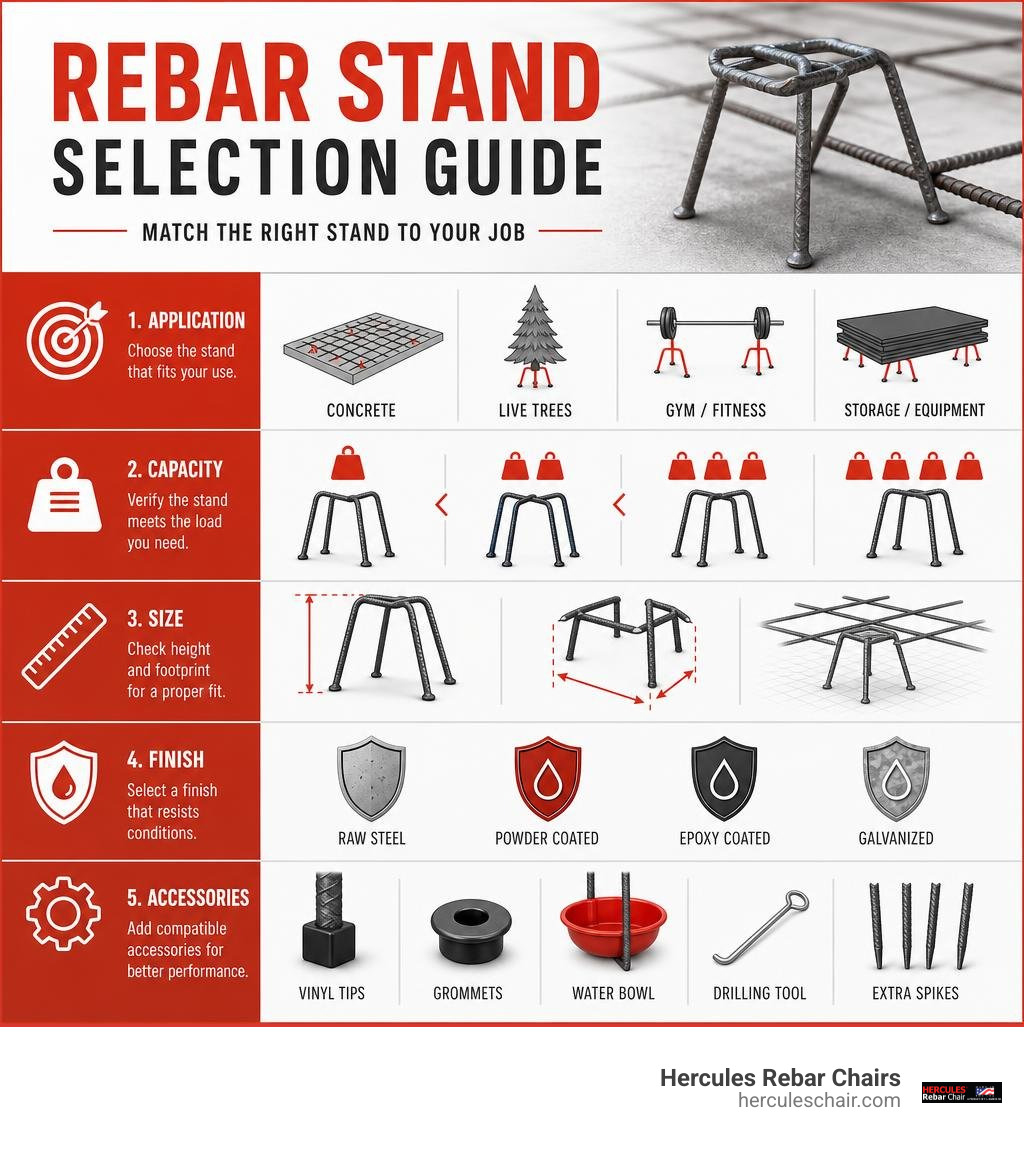
Buy rebar stands by matching the stand to the load, the space, and the surface it will support. For concrete work, that means selecting a purpose-built rebar support that holds reinforcement at the required elevation through the pour. For other uses, such as live Christmas trees, gym bars, or storage mats, check the stated tree-height, bar-count, mat-count, and weight rating before you buy.
A good stand is more than bent steel. Look for durable material, stable leg geometry, sound welds, and a protective finish suited to moisture and wear. For example, heavy-duty tree stands may use 5/8-inch rebar legs and hardened spikes, while gym bar stands often use powder-coated high-gauge steel and list a clear load limit.
The same buying rule applies across categories: do not size by appearance alone. Measure your available footprint, confirm the required capacity, and make sure compatible accessories – such as vinyl tips, grommets, water bowls, or drilling tools – fit the stand you choose.
I am Jordan Harris, a Tennessee Professional Engineer with experience in structural engineering, concrete and steel projects, and rebar-product development at T.J. Harris Company. In the sections ahead, I will break down how to compare rebar stands and choose dependable support for demanding concrete work and other heavy-duty applications.
Comparing Key Features and Types of Rebar Stands
Selecting the right stand begins with identifying the mechanical demands of the job. A unit engineered to anchor a top-heavy live fir outdoors must counter wind shear and uneven ground, whereas an indoor equipment rack focuses on vertical storage density and floor protection. In concrete placement, footer and slab supports must maintain exact bar elevations under heavy dynamic loads without sinking or shifting.
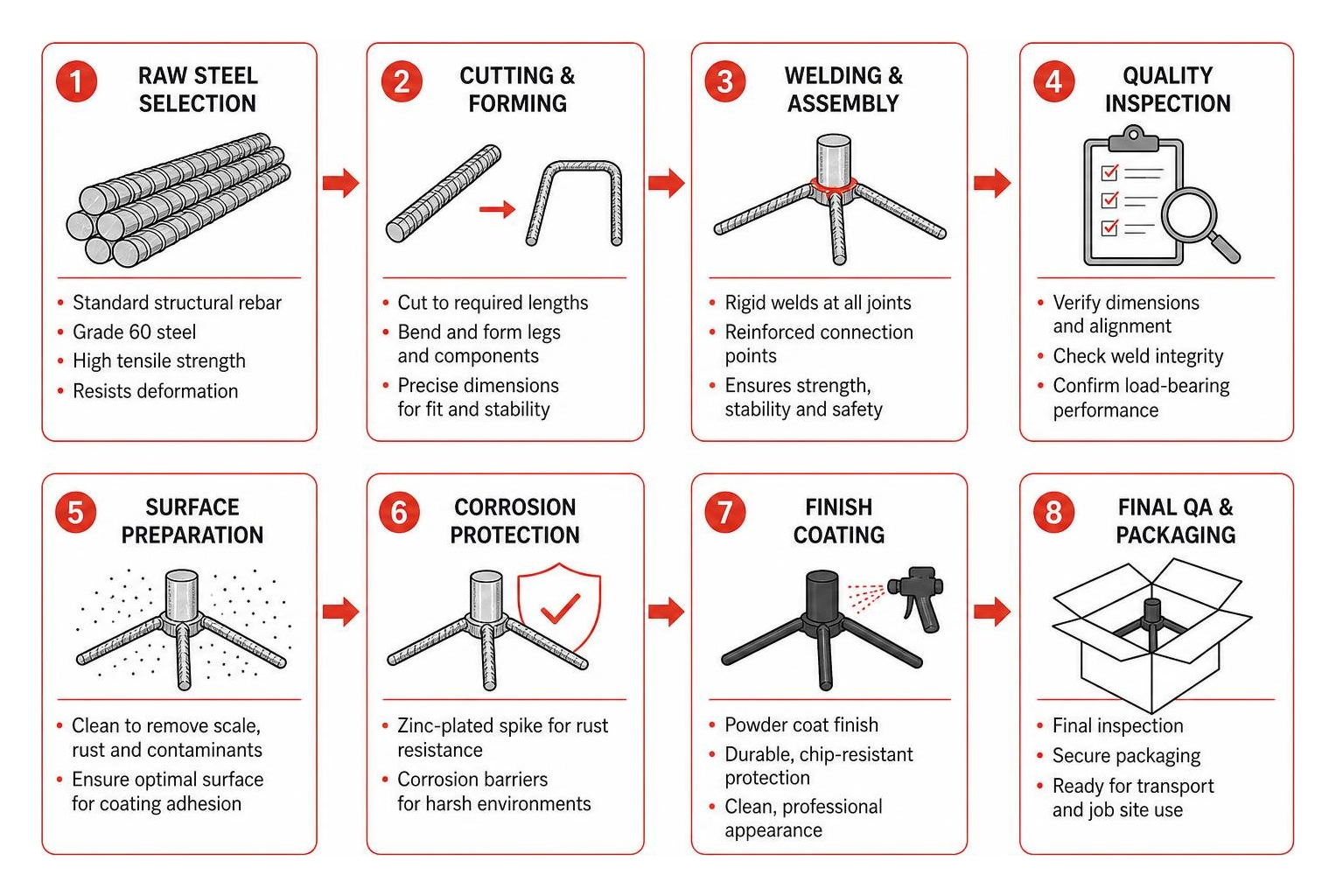
Standard structural rebar gives these stands high tensile strength, rigid weld points, and resistance to deformation. By understanding the core parameters—load threshold, footprint dimensions, and steel grading—you can easily pinpoint the exact fabrication required for your job site or commercial space.
| Stand Category | Primary Purpose | Material & Gauge | Rated Capacity / Dimensions | Key Finish / Accessories |
|---|---|---|---|---|
| Commercial Tree Spike Stand | Live evergreen retail & outdoor display | 5/8″ Grade 60 domestic steel rebar | Trees 9’–11′ tall; 22″ legs; 40″ x 40″ x 10″ | Zinc-plated 9/16″ spike; vinyl leg caps; water bowls |
| Vertical Gym Bar Stand | Olympic & specialty bar storage | High-gauge structural steel tubing | Holds 9 bars; 180 kg capacity; 44 x 44 x 19 cm | Industrial black powder coating; weld-reinforced base |
| Standing Mat Organizer | Rebar mesh & fitness mat storage | Reinforced structural steel tubing | Holds up to 10 mats; 78 x 68 x 199 cm | Black powder coat; 50 mm prong spacing |
| Concrete Footing & Slab Stands | Elevating rebar in footers & slabs | Structural Grade 60 steel / high-impact poly | Continuous structural load rated for wet concrete pours | Corrosion barriers; integrated tie slots; stable footing bases |
Commercial Holiday Tree Rebar Stands
Heavy-duty commercial tree stands rely on rigid, wide-stance rebar legs welded to a center hub featuring a hardened, vertical drive spike. When anchoring heavy evergreens ranging from 9 to 11 feet tall, the stand utilizes 22-inch legs made from 5/8-inch rebar to create an expansive, tip-resistant base.
A central 9/16-inch hardened, zinc-plated spike penetrates the drilled core of the trunk, locking the tree upright. The zinc plating prevents surface rust when exposed to standing water in tree bowls or winter precipitation, ensuring the stand remains fully reusable year after year across high-volume commercial tree lots.
Fitness and Storage Organization Stands
In commercial facilities, garages, and modular workshops, freestanding welded steel stands provide compact vertical storage. A vertical bar stand constructed from high-gauge steel offers a 180 kg total weight capacity while fitting up to 9 Olympic or specialty bars. With a square footprint measuring just 44 cm long by 44 cm wide and 19 cm high, the 25 kg stand utilizes its own low center of gravity to prevent tipping in tight spaces.
Similarly, standing mat racks built from reinforced steel tubing hold up to 10 mats across a vertical profile of 78 cm length, 68 cm width, and 199 cm height. Weighing 24 kg, these units keep heavy mats elevated for proper airflow while preventing moisture buildup on facility floors.
Structural Construction Footing and Slab Stands
In structural concrete construction, elevating reinforcing steel to the exact center of a footing or slab is vital for load transfer and code compliance. Placing rebar directly on the ground or propping it up on unstable bricks causes structural failure, voids, and corrosion. Using engineered supports outlined in A Practical Guide to Rebar Footing Stands ensures bars remain locked at the specified elevation while wet concrete is placed and consolidated.
For multi-bar trench footings, choosing proven hardware from our review of the Top 3 Bar Footer Stands for a Rock-Solid Concrete Pour guarantees uniform cover across the entire foundation run.
Key Engineering Features and Specifications to Evaluate
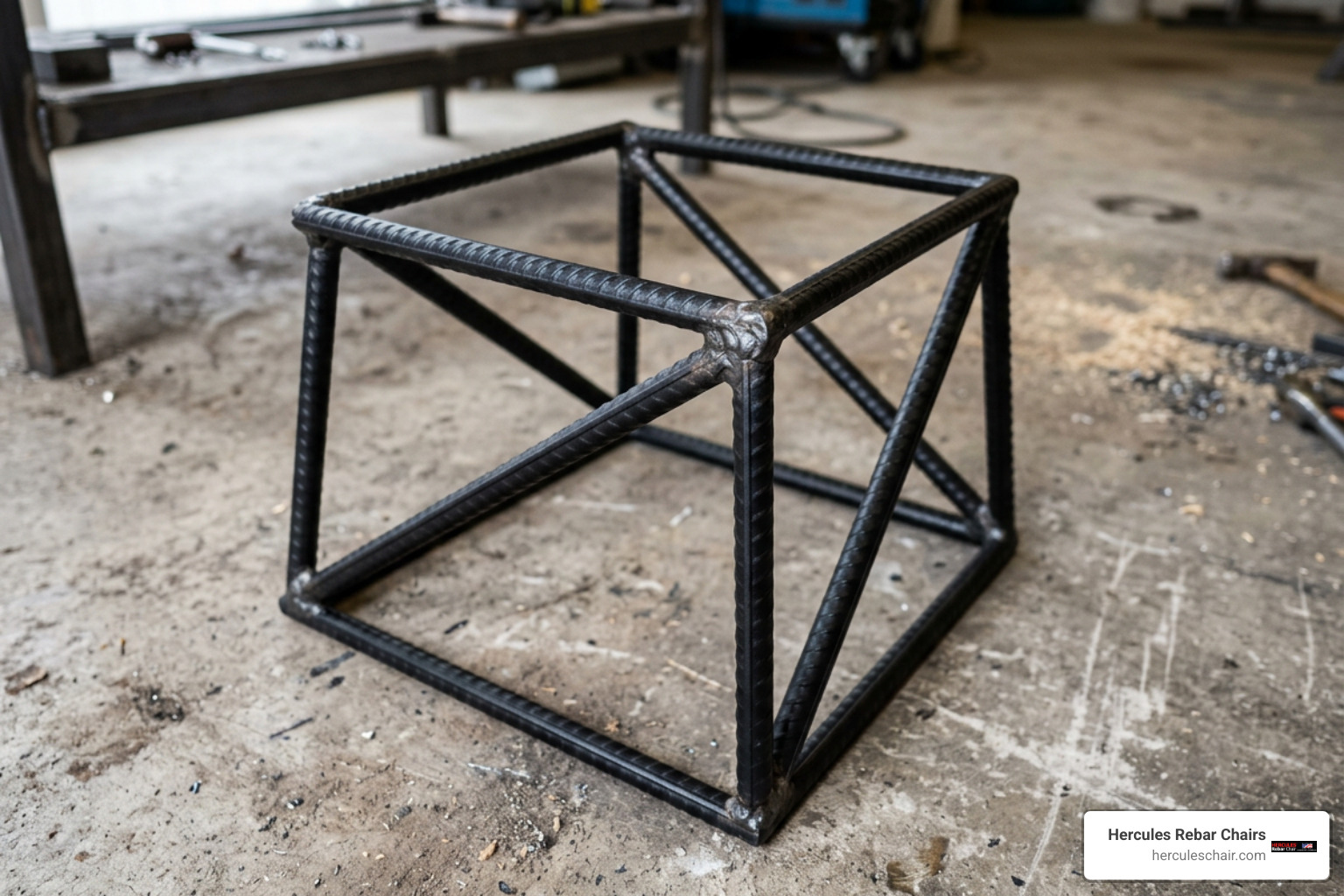
The longevity and safety of any steel stand depend on raw material quality, weld integrity, and protective finishes. Inferior imports made from brittle, low-grade scrap steel can crack under lateral loads or bend when loaded to maximum capacity.
Steel Gauge, Rebar Grades, and Protective Coatings
For heavy structural and outdoor applications, specify domestic USA Grade 60 steel, which provides a minimum yield strength of 60,000 psi. This material tolerates significant bending forces without permanent deformation.
Protective coatings dictate how long a stand survives environmental exposure:
- Zinc Plating: Sacrificial zinc coatings protect critical contact points, such as tree spikes or exposed fasteners, preventing rust from locking moving parts or weakening steel pins.
- Industrial Powder Coating: Baked-on polymer powder coats provide an impact-resistant, non-porous shell that shields indoor and workshop storage stands from humidity, sweat, and chipping.
- Corrosion-Proof Polymeric Stands: For concrete pours, non-corrosive supports prevent moisture paths from reaching the structural reinforcement, as detailed in The Ultimate Guide to Footer Stand Options.
Sizing Guide for Rebar Stands Across Applications
Sizing mistakes cause instability, excessive deflection, or wasted floor area. Match your project requirements against these standard sizing tiers:
- Small Commercial Stands (Trees up to 4 ft): Utilize compact legs with a 9/16-inch center pin for tabletop or low-profile displays.
- Medium Commercial Stands (Trees up to 8 ft): Feature extended leg spans with a 9/16-inch hardened spike to support standard residential-height trees.
- Large Commercial Stands (Trees 9–11 ft): Require heavy 22-inch legs made from 5/8-inch Grade 60 rebar and a 9/16-inch hardened spike to resist high overturning moments.
- Commercial Grade XL Stands (Trees 10 ft+): Utilize extra-heavy 5/8-inch spikes or extended 18-inch drive pins for oversized municipal displays.
- Multi-Bar Storage Racks: Designed with precision-spaced slots accommodating standard 28 mm to 32 mm bar sleeves with a 180 kg static threshold.
- Concrete Chairs and Elevation Stands: Selected according to slab depth, bar thickness, and required concrete cover following the criteria in How to Choose the Right Concrete Rebar Chair for Your Project.
Essential Accessories and Wholesale Purchasing Options

Operating efficiently means pairing your stands with the right accessories and taking advantage of bulk procurement channels.
Protective Tips, Hardware, and Installation Accessories
Bare cut steel edges can scratch finished flooring or puncture ground barriers. Using dedicated accessories ensures safe operation:
- Vinyl Rebar Caps: Heavy-duty red and green vinyl caps slip over raw rebar leg ends to prevent flooring gouges. Packs of 100 typically include 1/2-inch sizes for small-to-medium stands and 5/8-inch sizes for large and commercial stands.
- Water Bowls and Grommets: For live trees, reservoir bowls ranging from 1 quart up to 6.5 gallons fit directly over the center pin. Rubber grommets seal the base opening around the spike to prevent leaks.
- Pre-Drilling Machines: Commercial tree operations utilize specialized drilling machines to bore straight, centered holes into tree bases, reducing setup time by up to 30%.
Retail vs. Wholesale Bulk Sourcing Strategies
For municipal seasonal displays, large fitness chains, or commercial construction sites, ordering individual units at retail markup quickly inflates project overhead. Manufacturers package heavy tree stands in 3-stand bundles, with tiered pricing lowering per-unit costs when orders hit commercial thresholds.
Similarly, sourcing concrete supports through high-volume channels like our Buy Rebar Chairs Wholesale Distributors network allows contractors across the United States to secure truckload pricing and maintain consistent job site supply.
Frequently Asked Questions About Heavy-Duty Stands
How much weight can heavy-duty rebar stands support?
Weight capacity depends on geometry and gauge. Compact vertical gym storage stands built from heavy-gauge steel support up to 180 kg (nearly 400 lbs) across 9 vertical slots. Heavy-duty rebar tree stands support large 9-to-11-foot live evergreens weighing several hundred pounds, counteracting strong dynamic wind loads through wide 22-inch Grade 60 steel legs.
What is the advantage of welded rebar over plastic or standard tubular steel stands?
Welded rebar stands provide unmatched rigidity and high shear resistance. Unlike thin-walled tubular steel that can dent or crimp under point loads, solid Grade 60 deformed rebar absorbs heavy impact without snapping. For outdoor installations, the extra mass provides a lower center of gravity, preventing tipping during severe weather.
How do you protect floors and surfaces from rebar stand legs?
To prevent direct metal-to-floor contact, install molded vinyl rebar end caps onto the feet of the stand. For indoor seasonal displays or gym installations, pairing 5/8-inch vinyl tips with rubber utility mats ensures tile, wood, and epoxy floors remain scratch-free throughout use.
Conclusion
Whether you are anchoring a 10-foot evergreen on a retail lot, organizing hundreds of pounds of steel equipment in a training facility, or stabilizing reinforcement cages for a commercial foundation pour, matching your stand to the job’s mechanical demands is essential. Prioritize Grade 60 domestic steel, verified load ratings, solid welds, and resilient protective coatings to ensure safety and long-term durability.
For structural construction projects where failure is not an option, rely on proven, code-compliant foundation supports. Explore the full range of heavy-duty concrete supports in the complete Hercules Rebar Chair product lineup from Hercules Rebar Chairs (T.J. Harris Co.) to ensure your next project stands on a rock-solid foundation.