

How to Navigate Local Lumber Yards
To shop local lumber yards near Knoxville, start with a material list that includes sizes, quantities, grades, and your pickup or delivery date. Call ahead to confirm stock and hours. At the yard, take your list to the sales counter, ask where to pick up your order, and check the boards and order ticket before you leave.
I’m Jordan Harris, a Knoxville-based structural engineer and Tennessee PE. My work on large construction projects taught me to check material specs and delivery plans carefully; I’ll use that approach to help you navigate local lumber yards with confidence.
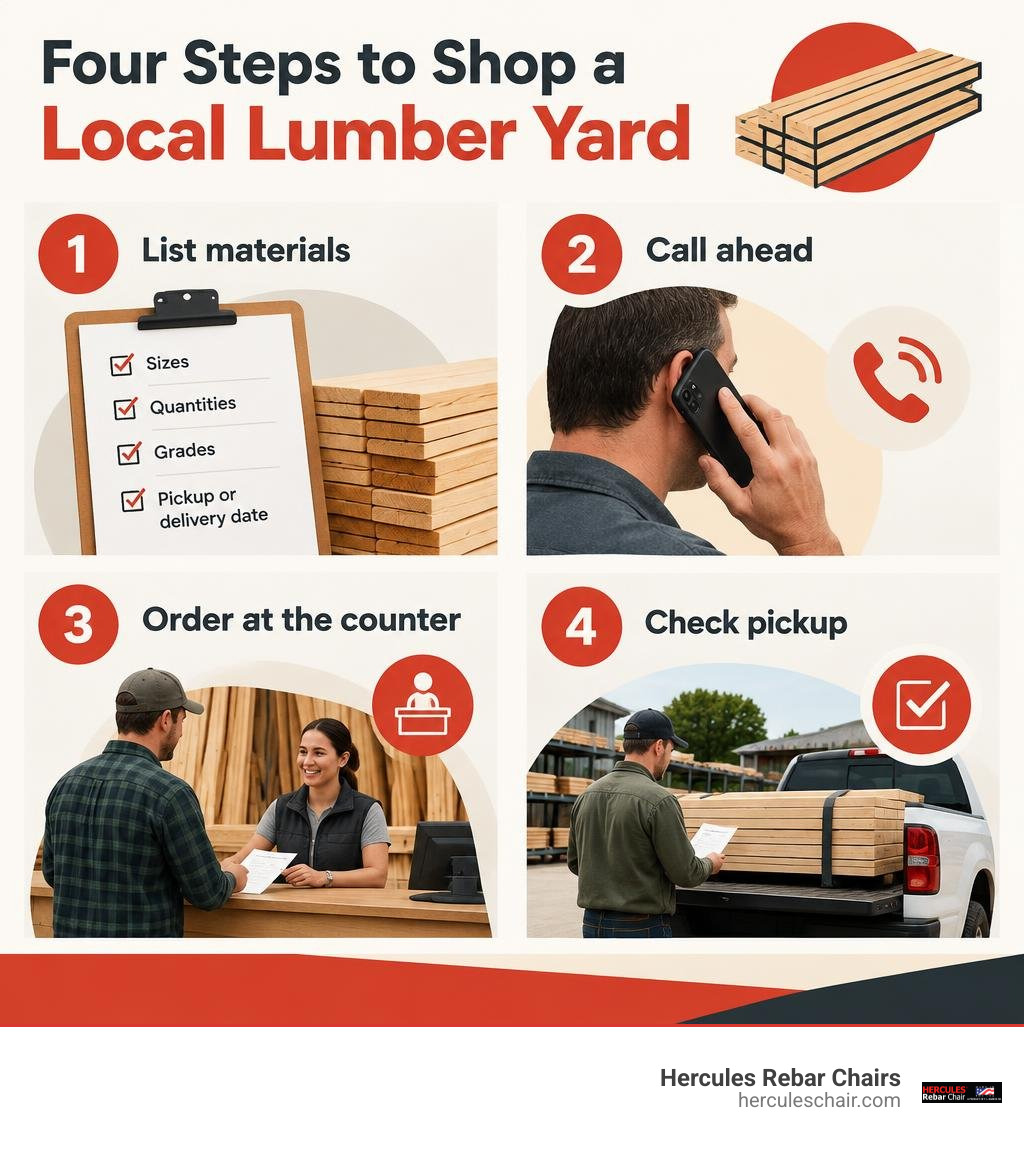
Learn more about local lumber yards:
How Local Lumber Yards Differ from Big-Box Retailers
Walking into a big-box home improvement center often means pushing an orange flatbed through crowded aisles, sifting through bowed two-by-fours, and hoping to track down an associate who knows the difference between Douglas fir and Southern Yellow Pine. In contrast, independent yards operate on a commercial scale designed for trade efficiency, material quality, and structural reliability.
Local supply yards maintain rigorous standards for material grading. Rather than stocking mass-commodity wood that sits exposed under high-temperature warehouse lighting, independent distributors protect their timber in covered, well-ventilated sheds or specialized drive-thru bays. This storage protects the wood’s moisture content and prevents severe warping, cupping, and checking.
| Feature | Local Lumber Yards | Big-Box Retailers |
|---|---|---|
| Material Quality & Grading | Premium #1 and Select structural grades; strict moisture control | Standard #2 commodity grades; variable moisture and high cull rates |
| Staff Expertise | Career specialists, estimators, and former builders | General retail associates rotating across multiple departments |
| Ordering & Fulfilment | Direct drive-thru loading, tally tickets, and scheduled site delivery | Self-serve flatbeds, consumer checkout lines, and third-party courier shipping |
| Custom Services | Precision milling, custom moulding, rough surfacing, material take-offs | Basic crosscuts on manual panel saws |
| Structural Timber | Wide availability of engineered joists, glulams, and long-length spans (20+ ft) | Limited dimensional lengths (rarely exceeding 16 ft) |
When you consult a handy guide to your local lumber hardware store, the biggest operational difference you will notice is the service model. Independent yards are built to get framing crews, general contractors, and serious DIYers back to the jobsite with straight, code-compliant framing packages without wasted handling time.
Core Advantages of Independent Supply Yards
Independent yards often have deep roots in their regional building economies. Many have operated as multi-generational family enterprises for over a century, while others thrive as 100% employee-owned cooperatives operating multi-acre distribution campuses. Because staff members often stay for decades, their product knowledge and grasp of local building codes run deep.
These suppliers build long-term relationships through financial and logistical support:
- Contractor Credit and Priority Terms: Trade accounts provide structured commercial billing, priority cash discounts, and streamlined invoicing for active builders.
- Architectural Material Take-Offs: In-house estimators can review blueprint sets to provide full framing packages, subfloor systems, and structural hardware lists.
- Dedicated Account Managers: Builders work with single points of contact who track special orders and coordinate phased deliveries to match construction stages.
- Sustainable Sourcing: Independent yards frequently partner with responsible mills to stock certified, responsibly harvested regional softwoods and domestic hardwoods, making them ideal sustainable building supply stores.
Essential Product Categories at Local Lumber Yards
Independent distributors stock deep inventories of structural and finishing materials that exceed standard retail offerings. They work closely with primary mills tracked in North American lumber production data to maintain consistent stock across core categories:
- Dimensional Framing Lumber: Premium Kiln-Dried (KD) Douglas Fir, Spruce-Pine-Fir (SPF), and Southern Yellow Pine (SYP) stocked in lengths up to 24 feet.
- Pressure-Treated Wood: Ground-contact rated (UC4A/UC4B) timbers, structural posts, and decking boards treated for rot and insect resistance.
- Engineered Wood Products (EWP): I-joists, Laminated Veneer Lumber (LVL), rim boards, and Glued-Laminated (Glulam) beams engineered for clear-span floor and roof framing.
- Structural Sheathing & Panels: High-performance Huber ZIP System sheathing panels, heavy-duty subfloor underlayment, marine-grade plywood, and cabinet-grade Baltic birch sheets.
- Siding and Architectural Trim: Pre-primed cedar siding, authentic shiplap, fiber cement claddings, and PVC exterior boards.
- Decking & Railing Systems: Exotic hardwoods, thermally modified decking, and advanced composite lines with hidden fastening hardware.
Preparing for Your First Visit: Etiquette, Take-Offs, and Terminology

Visiting an independent yard is straightforward once you understand how commercial transactions work. You do not push a cart through aisles to pick out individual boards. Instead, orders begin at the contractor sales counter.
Before you arrive, turn your project plans into a clear material list. While professional builders provide detailed architectural drawings for automated material take-offs, DIYers and remodelers should bring a structured cut list organized by nominal dimensions, board lengths, wood species, and intended use.
Review these fundamental lumber terms before placing an order:
- Nominal vs. Actual Sizing: A dimensional two-by-four actually measures 1-1/2 inches by 3-1/2 inches, and a two-by-six measures 1-1/2 inches by 5-1/2 inches. Always frame your plans around true physical dimensions.
- Board Feet (BF): Hardwoods and specialty timbers are sold by volume rather than linear foot. Calculate board footage with this simple formula: Multiply thickness in inches by width in inches by length in feet, then divide the total by 12.
- Moisture Content (MC): Kiln-dried lumber marked S-DRY or KD contains 19 percent or less moisture, preventing shrinking and drywall cracks after installation.
- Linear Footage (LF): Trim, mouldings, and dimensional boards are priced and measured by their total end-to-end length.
Planning your material purchases carefully is a key part of sourcing discount building supplies locally, as bulk ordering full-bundle units saves money over smaller piecemeal runs.
Working with the Contractor Sales Counter
The pro sales counter is the operational hub of the yard. When you step up to the desk, hand your material list to the counter specialist. They will verify live inventory counts, confirm stock keeping unit (SKU) numbers, and process your transaction.
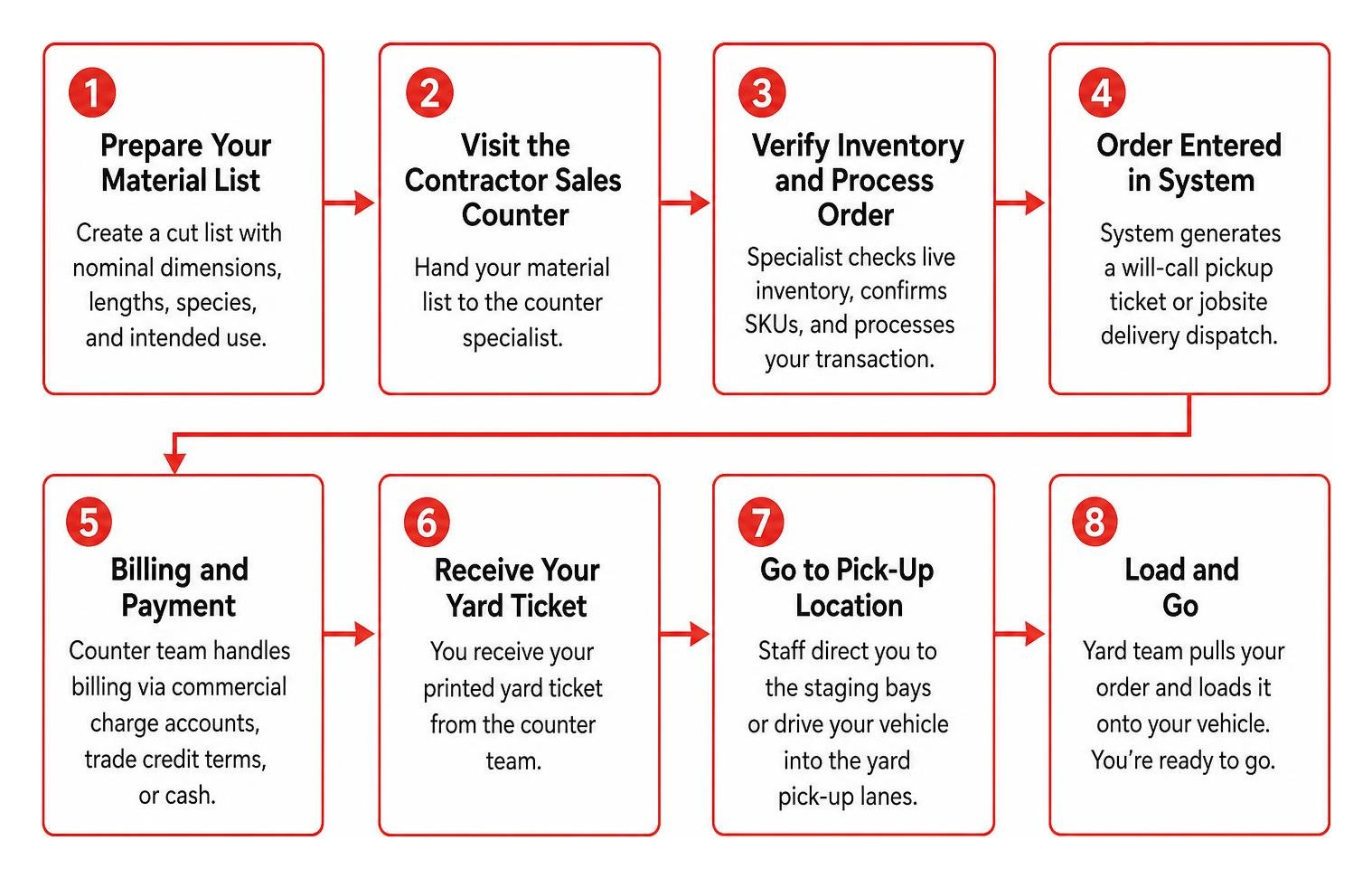
Once entered into the system, your order generates a will-call pickup ticket or a jobsite delivery dispatch. The counter team handles billing via commercial charge accounts, trade credit terms, or priority retail cash transactions. After you receive your printed yard ticket, staff will direct you to the staging bays or tell you to drive your vehicle into the yard pick-up lanes.
Step-by-Step Guide to Navigating Drive-Thru Bays and Yard Stacks
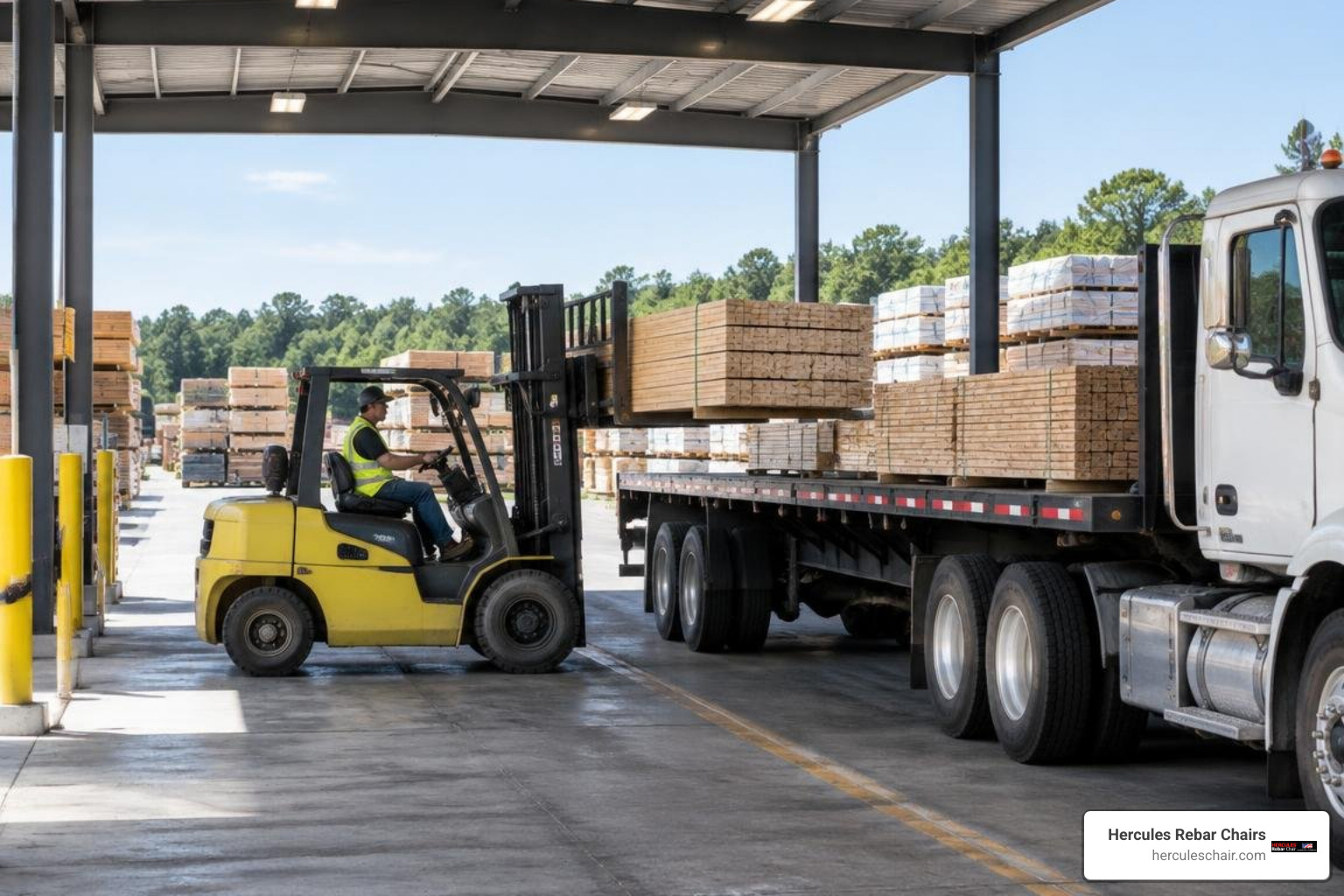
Driving into an active yard requires good spatial awareness and careful attention to heavy machinery. Commercial yards are busy job sites where forklifts, side-loaders, and flatbed trucks move multi-ton bunks of timber all day.
Follow these practical steps for a smooth yard run:
- Check In at the Yard Gate: Stop at the entrance booth or drive-thru staging line and show your sales receipt or loading ticket to the yard marshal.
- Follow Designated Traffic Lanes: Drive at low speeds (typically 5 to 10 mph) with your hazard lights on, following the painted directional arrows to the correct material bay.
- Yield to Heavy Equipment: Forklifts always have the right of way. Never walk behind a reversing lift truck, and give wide clearance when operators lower full bunks from overhead cantilever racks.
- Hand Your Ticket to the Yard Specialist: A yard attendant will review your tally sheet, guide your vehicle into the loading spot, and help pull your stock or stage a forklift lift.
- Secure Your Load in the Strapping Zone: Once loaded, pull forward into the designated tie-down area. Use heavy-duty ratchet straps to anchor your lumber to your truck bed or pipe rack. Add a high-visibility red flag to any timber hanging out past your tailgate.
- Final Gate Clearance: Present your verified tally sheet to the gate marshal on your way out to confirm that everything loaded matches your paid invoice.
Navigating these steps quickly is standard practice at the best local building supply stores, keeping yard operations safe and on schedule.
Selecting and Inspecting Wood Grades
While yard staff pull bundled materials quickly, taking time to inspect your lumber ensures structural stability and clean finishes on the job.
Look for these structural and cosmetic points when inspecting boards:
- Sight for Crown: Lift one end of the board and look down its narrow edge. Any slight upward curve along the edge is the “crown.” Mark this curve with a pencil so you can install all joists and studs with their crowns facing up, letting gravity level the framing.
- Check for Cup and Twist: Look down the wide face of the board to confirm it lies flat and is not twisting like a propeller.
- Review Grade Stamps: Look for certified stamps from agencies like the Southern Pine Inspection Bureau (SPIB) or Western Wood Products Association (WWPA). These confirm the lumber’s structural grade (e.g., #1, #2, Select Structural) and verify kiln-drying.
- Inspect Specialty Hardwoods: When buying architectural hardwoods for cabinetry or fine trim, look for smooth grain, minimal sapwood, and clear faces. For rare regional species or custom slabs, consult regional woodworking lumber resources to match wood characteristics to your finish requirements.
Specialized Services: Custom Milling, Equipment Rentals, and Jobsite Delivery
Independent lumber suppliers offer valuable services beyond simply pulling stock boards off a rack. They function as full-service fabrication and logistical hubs for builders.
Many regional yards maintain on-site millwork shops equipped with commercial jointers, planers, resaws, and CNC routers. These shops can surface rough-sawn lumber on two or four sides (S2S or S4S), true up edge profiles, glue up custom panels, and recreate historical moulding patterns for historic restorations.
Alongside custom millwork, full-service yards often run dedicated equipment centers. Contractors and DIYers can rent commercial tools like pneumatic framing nailers, plate compactors, core drills, and high-capacity equipment right from the sales counter. This equipment integration is detailed in our ultimate list of local lumber yards.
How Local Lumber Yards Handle Deliveries and Milling
Coordinating bulk deliveries directly to your project site saves time and keeps heavy materials moving efficiently. Commercial supply fleets include flatbed dumps, curtain-side haulers, and truck-mounted moffett forklifts that can place full bunks right next to your foundation forms.
When ordering delivery or custom milling services, keep these logistical points in mind:
- Drop-Off Access: Confirm your jobsite has clear, firm, and unobstructed access for heavy tandem-axle trucks.
- Material Staging: Ask the driver to set bunks on level wood dunnage off the bare ground, keeping framing stock clean and dry.
- Millwork Lead Times: Custom surfacing, historical trim runs, and precision cross-cutting require advance scheduling. Give the mill shop clear lead times ahead of framing.
- Specialty Orders: High-grade Baltic birch sheets, exotic hardwoods, or engineered timber spans can be brought in via weekly distributor transfers.
Frequently Asked Questions About Timber Supply Outlets
Can DIY homeowners buy directly from independent lumber yards?
Yes. Independent yards welcome retail homeowners, hobbyists, and DIYers alongside commercial framing crews. Walk straight to the main sales counter, present your cut list, and the staff will write up a retail ticket, take your payment, and show you where to load your vehicle.
What information should I bring to place an accurate order?
Bring a complete list of:
- Nominal dimensions (such as 2×4, 2×10, 4×4)
- Exact lengths required in even two-foot increments (8′, 10′, 12′, 16′)
- Wood species and treatment specifications (such as KD SPF framing, Ground Contact PT, Western Red Cedar)
- Span ratings or architectural load requirements for engineered beams
Do local yards cut lumber to exact finished lengths on-site?
Most yards will make rough crosscuts on dimensional boards so materials fit safely into your truck or SUV. However, precision cuts, miter joints, and detailed dimensioning are handled through the yard’s custom millwork shop and may carry a small per-cut or shop fee.
Conclusion
Navigating local lumber yards gives you access to premium materials, deep trade expertise, and custom milling services that keep your building projects on solid ground. Whether you are framing a home addition, putting in a backyard deck, or managing a multi-unit job site, partnering with an independent yard ensures your materials are straight, properly graded, and code-compliant.
Every sound build starts with a solid foundation. While independent yards supply the quality timber for your framing, our team at Hercules Rebar Chairs (T.J. Harris Co.) provides the structural foundation support you need. As America’s #1 rebar chair manufacturer with over 14 million units sold, our signature red concrete supports save time and labor while ensuring code-compliant steel placement during your slab, footing, and deck pours.
Find our high-performance concrete support solutions at building supply stores nationwide to build with confidence from the ground up.