

Find Reliable Roofing Places Near Me Without Overpaying
To find dependable roofing places near me, start with three checks: verify the contractor’s state or local license and insurance, compare at least three written estimates, and review recent customer feedback plus BBB ratings. For materials, call nearby roofing supply houses or building-supply stores to confirm stock, delivery fees, contractor pricing, and whether the products meet your local code and climate needs.
A good local roofer should clearly explain whether you need a small repair, emergency tarping, or a full replacement. Ask for an itemized scope covering materials, labor, permits, cleanup, warranty terms, and any work performed by subcontractors. This helps you compare real value instead of choosing the lowest number on a vague quote.
I am Jordan Harris, a Tennessee-licensed Professional Engineer with experience in structural engineering, manufacturing, and construction-focused product development. That background shapes how I evaluate roofing places near me: prioritize documented materials, code-aware work, clear scopes, and suppliers or contractors who can deliver consistently.
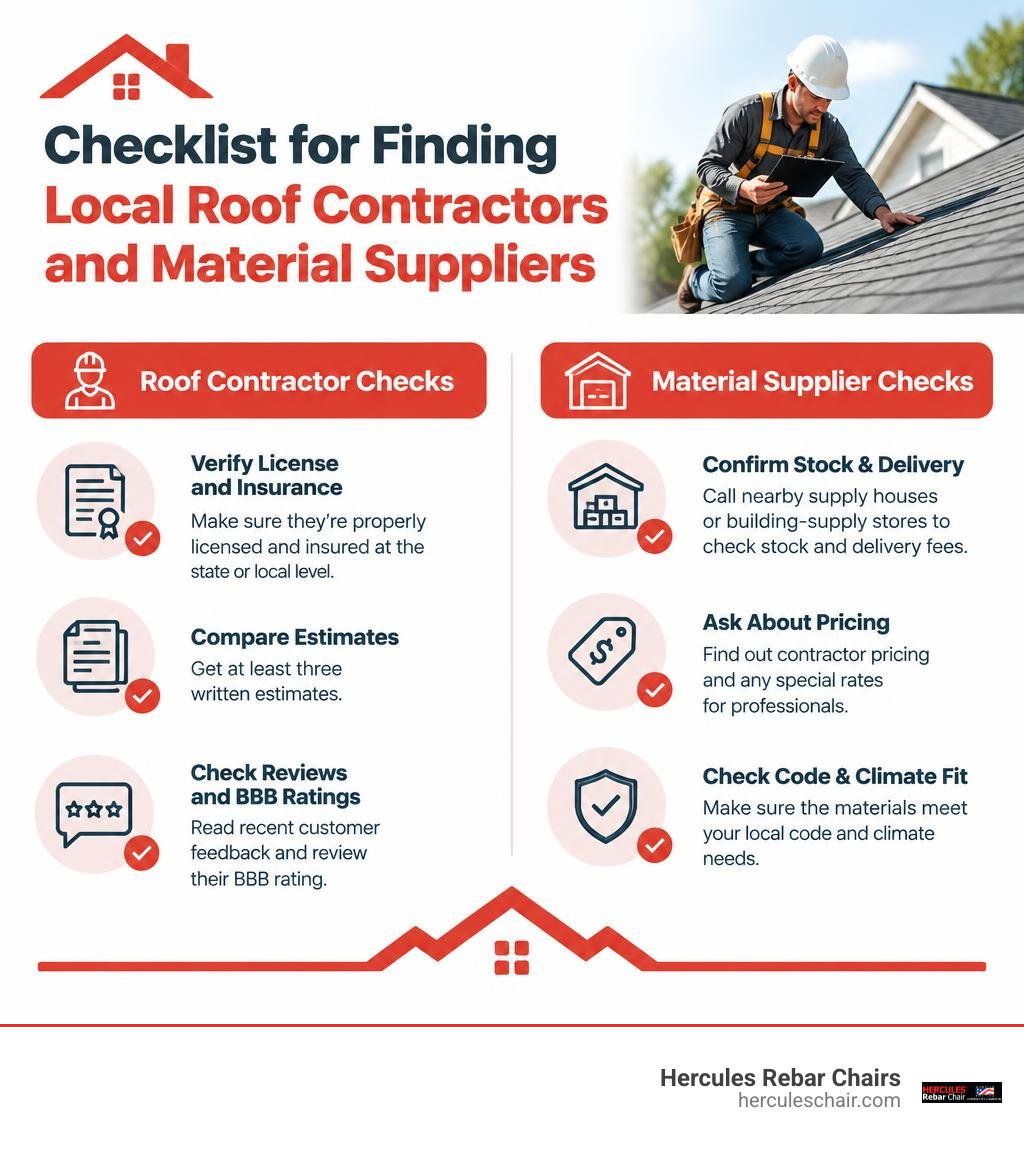
Simple guide to roofing places near me:
Finding Top-Rated Roofing Places Near Me for Supplies and Labor
When tackling a major exterior build or renovation, knowing where to source trade-grade materials and dependable labor makes all the difference. While big-box retailers carry basic asphalt shingles and generic underlayment, dedicated supply yards and commercial warehouses cater directly to the building trades. These specialty outlets stock higher-grade underlayments, heavy-duty drip edges, specialized fasteners, and premium architectural shingles that hold up against regional weather extremes.

Finding local suppliers also connects you to established contractor networks. Commercial trade counters interact daily with top-tier roofers, framing specialists, and general contractors. Engaging directly with these hubs allows you to compare wholesale pricing against retail markups, check immediate material availability, and verify whether local installers maintain active trade accounts backed by good standing.
How to Research Roofing Places Near Me and Local Directories
Finding trustworthy contractors requires a systematic approach rather than picking the first sponsored result online. Start by consulting the Better Business Bureau (BBB) to examine company ratings, complaint resolution histories, and overall years in business. An A+ BBB rating provides a strong indicator of ethical business practices, dispute resolution, and local operational stability.
Beyond consumer watchdog directories, look for verified manufacturer certifications from major material brands. When an installer holds factory-certified status, they have undergone rigorous technical training and can provide extended manufacturer warranties that uncertified crews cannot match. To balance your research, explore resources on finding reputable roofing yards near you to see which yards contractors frequent. Always cross-reference local municipal licensing databases to confirm your prospective contractor holds active liability coverage and workers’ compensation.
Sourcing Direct: Supply Houses vs. Contractor Warehouses
Understanding the difference between commercial distributors and standard warehouses helps you secure trade-level pricing. Dedicated local roofing supply houses specialize in steep-slope and low-slope roofing products, stocking everything from synthetic underlayments to rooftop delivery cranes. These facilities offer volume discounts and rooftop staging services, saving crews hours of manual labor on site.
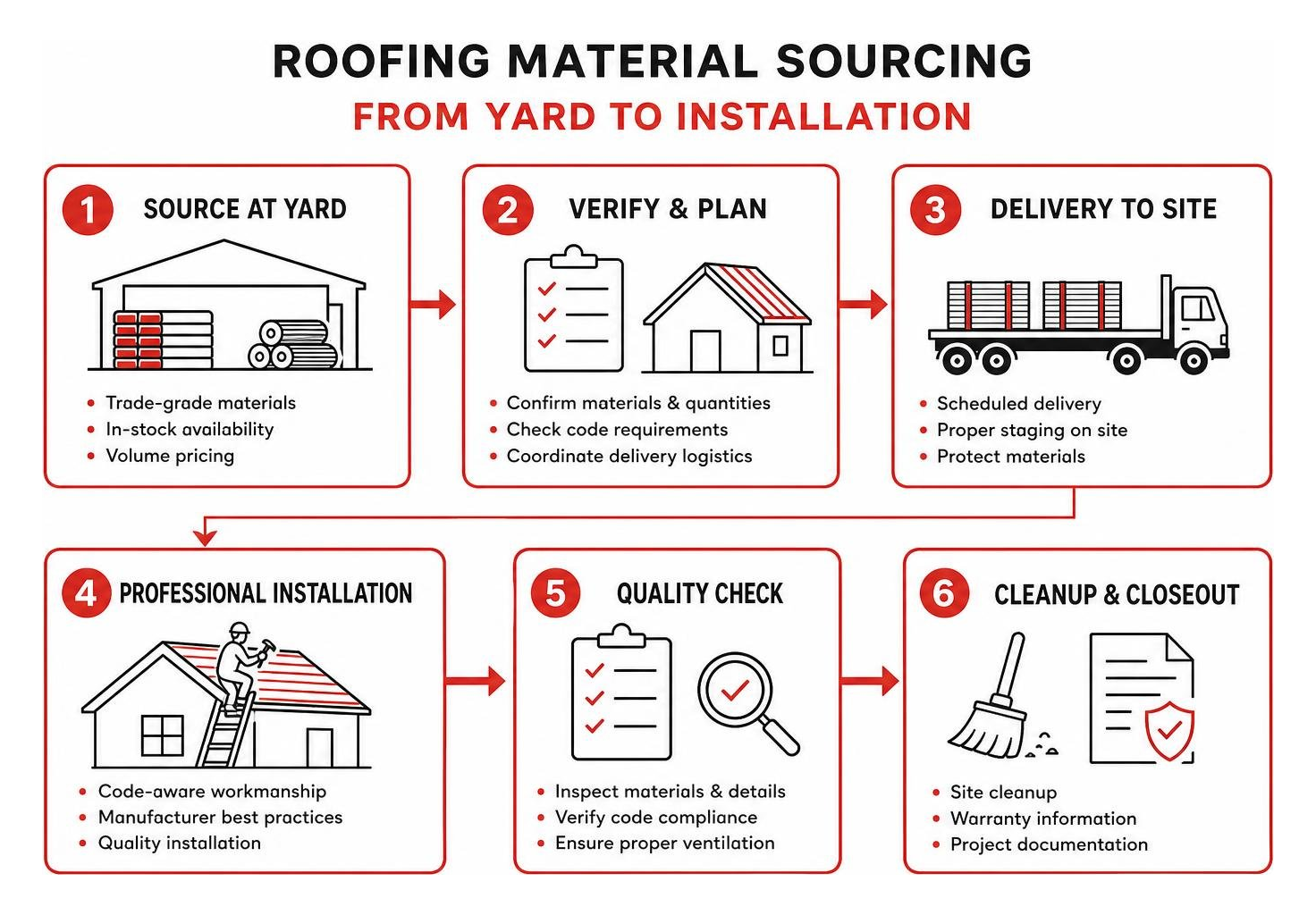
Conversely, navigating contractor warehouses is ideal when your build requires mixed materials—such as structural framing lumber, ventilation hardware, and flashing rolls. Sourcing through the best local building supply stores lets you manage broad material schedules under a single trade account while ensuring that delivery logistics, boom truck access, and returns are coordinated seamlessly.
Essential Signs Your Roof Needs Repair or Full Replacement
Roofs endure continuous thermal expansion, ultraviolet radiation, and driving precipitation. Recognizing the early indicators of structural distress prevents minor leaks from turning into widespread decking rot or interior drywall destruction.
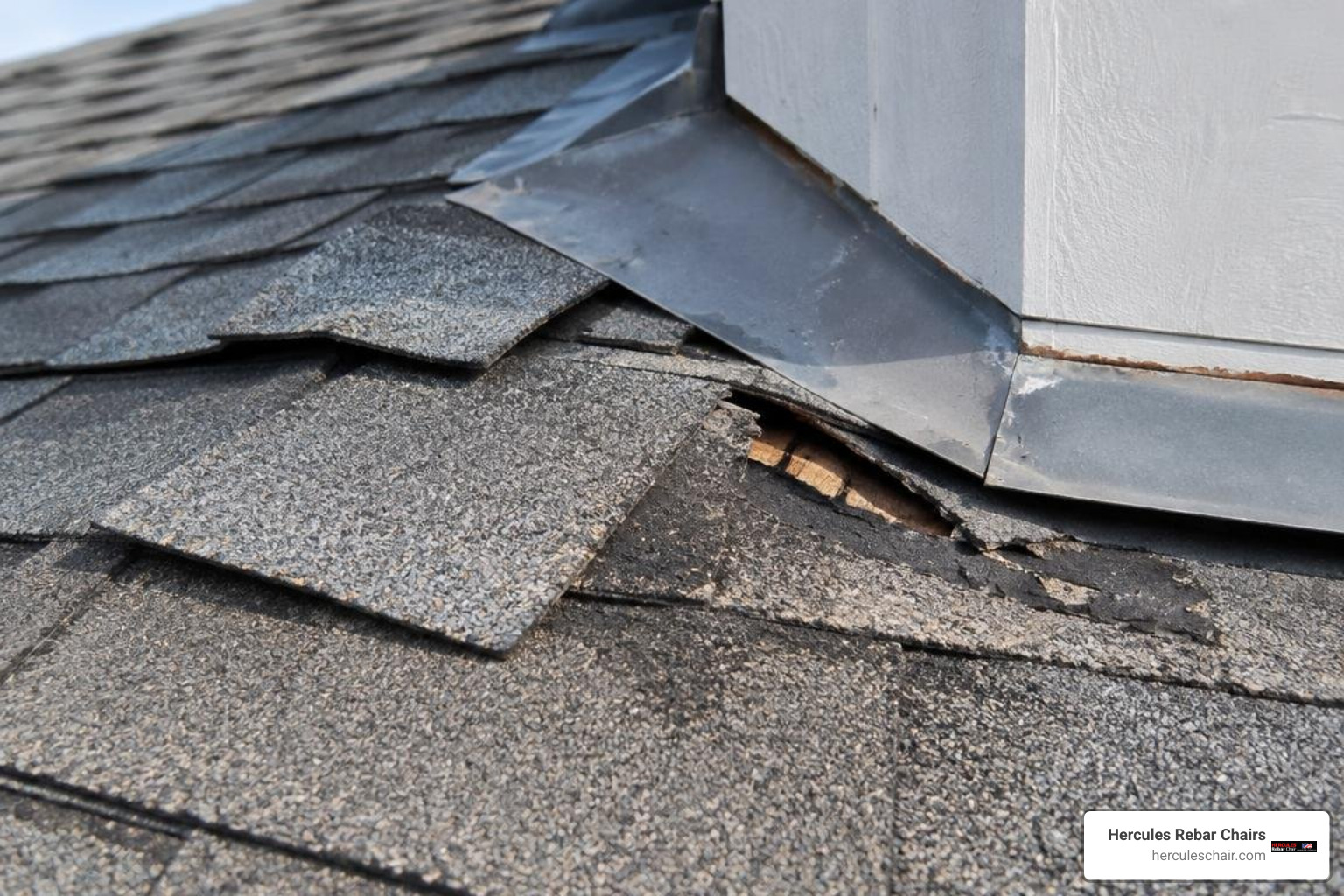
Key warning signs include:
- Shingle Curling and Cupping: Edges turning upward or bubbling in the center signal that the asphalt binder has dried out due to age and persistent heat exposure.
- Heavy Granule Loss: Finding dense accumulations of dark granules in gutters or downspout splash blocks indicates that shingles have lost their protective UV coating.
- Visible Daylight in the Attic: Pinpricks or beams of light penetrating the roof boards point to compromised decking or failed flashing points.
- Decking Sag and Sponginess: Visible dips along the roof planes or a springy, soft feeling underfoot indicate advanced moisture decay in the plywood substrate.
- Age Threshold: Standard three-tab asphalt shingles generally reach the end of their service life between 15 and 20 years, whereas architectural shingles can last 25 to 30 years depending on attic ventilation.
Spotting Storm Damage and Attic Ventilation Issues
Severe weather introduces unique structural threats. Hail impacts cause localized bruising that fractures the internal fiberglass matting without leaving an immediate hole, allowing water to slowly infiltrate over several seasons. High winds create uplift forces that break shingle sealant strips along eaves and ridges, leaving tabs vulnerable to water penetration during wind-driven rain.
Equally damaging is an unbalanced attic ventilation system. When intake soffit vents are blocked or ridge vents are undersized, trapped heat and humidity accumulate beneath the roof deck. During summer months, this heat cooks shingles from beneath, accelerating granule loss. In winter, escaping heat warms the roof surface, melting snow that runs down to cold eaves and freezes into destructive ice dams. Proper airflow balance requires equalized continuous intake and exhaust to maintain thermal equilibrium.
Emergency Protocol: Post-Storm Leaks and Tarping
When an active leak occurs during or immediately after a severe storm, swift containment protects your home’s structural framing and interior finishes:
- Mitigate Interior Water Damage: Place collection buckets under active drips and safely puncture swollen ceiling drywall bubbles at the center with a small screwdriver to release pooled water smoothly.
- Document the Damage: Take clear, timestamped photos and videos of interior leaks, water stains, and exterior roof damage from ground level to support insurance claims.
- Deploy Emergency Tarping: Contact a professional service for temporary tarp deployment. Quality emergency crews secure heavy-duty woven poly tarps using 2×4 furring strips anchored past the damaged ridge line, preventing wind uplift without puncturing unaffected shingles.
- Schedule Comprehensive Inspection: Avoid walking on wet, steep roofs. Arrange a professional assessment to evaluate decking integrity, underlayment condition, and flashing seams.
Roofing Material Options, Replacement Timelines, and Cost Benchmarks
Selecting the right roofing material involves balancing upfront expenditure against lifespan, aesthetic goals, and local environmental demands. Coastal and southern regions demand high wind and UV resistance, while northern climates require robust snow-load capacity and ice-barrier integration.
| Roofing Material | Typical Lifespan | Installed Cost per Sq. Ft. (Labor + Material) | Ideal Climate Suitability |
|---|---|---|---|
| 3-Tab Asphalt Shingles | 15–20 Years | $3.50 – $5.50 | Moderate climates, budget-focused builds |
| Architectural Shingles | 25–30 Years | $4.50 – $8.50 | Versatile; broad wind and impact resistance |
| Standing Seam Metal | 40–70 Years | $10.00 – $18.00 | High wind, heavy snow, intense heat/sun |
| Concrete / Clay Tiles | 50–100 Years | $12.00 – $22.00 | Hot, arid climates; coastal hurricane zones |
| TPO / Flat Membrane | 20–30 Years | $5.00 – $10.00 | Flat or low-slope residential/commercial roofs |
Selecting Materials: Shingles, Metal, and Drainage Systems
When specifying steep-slope materials, Class 4 impact-resistant architectural shingles offer superior defense against hail and wind damage, often qualifying homeowners for significant reductions on property insurance premiums. Cool-roof granules reflect infrared radiation, keeping attic temperatures lower in warm southern states.
For agricultural, modern, or high-durability projects, sourcing metal roofing materials provides standing-seam and corrugated profiles that resist rot, fire, and algae growth.
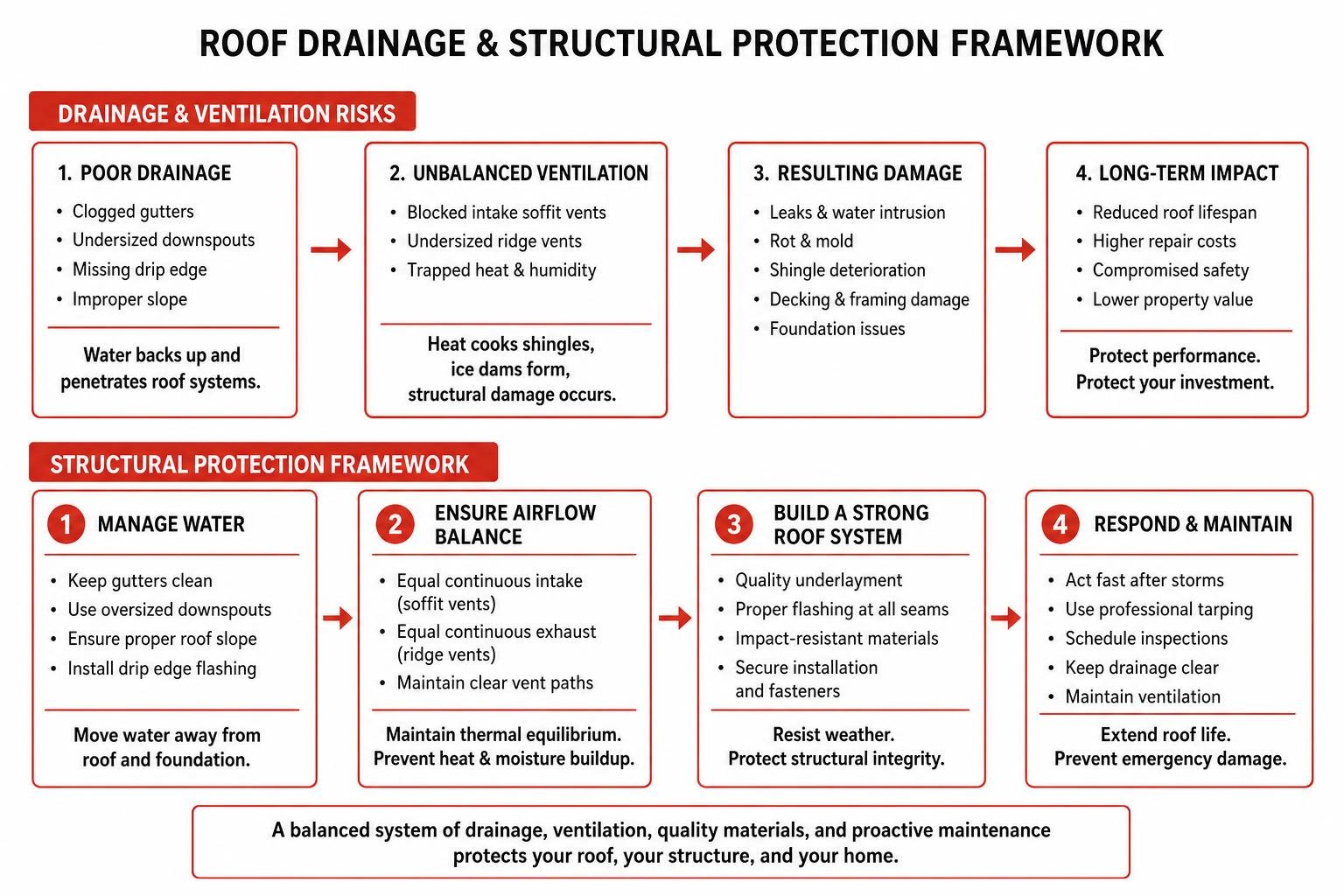
A high-performing roof also requires an integrated perimeter drainage system. Reviewing gutter supply selections ensures your seamless gutters, oversized downspouts, and drip edge flashings channel water away from foundations and structural concrete footings.
Project Durations and Total Cost Estimates
A standard residential roof replacement (1,800 to 2,500 square feet) using asphalt shingles typically takes between one and two days under favorable weather conditions. A dedicated five-to-six-person crew handles tear-off, underlayment roll-out, flashing installation, shingle nailing, and final yard sweep within 8 to 16 working hours. Specialty materials such as standing-seam metal or concrete tiles require custom bending, mechanical seaming, or structural decking reinforcement, extending timelines to 3 to 5 days.
Labor generally accounts for roughly 60% of total project costs. Comprehensive replacement scopes factor in permit acquisition fees, dumpster rental, disposal charges, and potential plywood decking replacement ($65 to $100 per 4×8 sheet) for sections damaged by moisture.
How to Vet Contractors and Ensure Long-Term Value
Hiring a roofing contractor requires vetting beyond standard marketing claims. Always insist on a comprehensive written contract containing an itemized scope of work. The agreement should clearly outline tear-off procedures down to the bare wood deck, the specific underlayment brands being installed (such as self-adhering ice-and-water shield along eaves and valleys), step flashing replacement around chimneys, and ridge ventilation specs.
Differentiate between the manufacturer’s product warranty (which covers material defects) and the contractor’s workmanship warranty (which covers installation labor, flashing leaks, and structural sealing). Reputable contractors stand behind their labor with a written guarantee ranging from 2 to 10 years. Inquire about on-site property protection—such as heavy tarps shielding landscaping and magnetic sweeps across driveways to collect stray fasteners.
Essential Questions for Roofing Places Near Me Before Hiring
Before signing any contract or handing over a deposit, ask these direct questions:
- Do you use in-house crews or third-party subcontractors? Ensure that on-site installers carry workers’ compensation coverage under the primary contractor’s policy.
- Can you provide a certificate of general liability insurance? Request that the insurance agency email the certificate directly to you.
- What specific cleanup protocols do you follow? Confirm that the crew will perform multiple magnetic sweeps for nails and haul all tear-off debris away daily.
- How do you handle city permits and local inspections? The contractor should manage permitting and coordinate required building authority inspections.
- Where can I see local references or verified reviews? Check community feedback on local review platforms and municipal licensing databases to evaluate recent local performance.
Frequently Asked Questions About Local Roofing Services
How much does a typical roof repair or replacement cost in 2026?
As of September 2026, minor to moderate roof repairs—such as replacing missing shingle tabs, resealing pipe boots, or fixing step flashing—typically range from $380 to $1,800, with an average nationwide repair cost around $1,100. Complete roof replacements for standard single-family homes generally range between $5,890 and $12,800 for architectural shingles. High-end architectural designs, complex rooflines, or premium metal systems can reach $15,000 to $25,000+, with large luxury projects exceeding $45,000.
How long does a standard residential roof replacement take?
Most standard asphalt shingle installations are completed in a single day (6 to 10 hours) by an experienced 5- to 7-person crew. Larger homes (over 3,000 square feet), steep roof pitches (8/12 or greater), complex multi-gable profiles, or extensive rotten decking replacements can extend the project to two full days. Inclement weather, such as sudden rain or freezing temperatures, will pause operations to protect the exposed building envelope.
Why is proper attic ventilation essential for roof performance?
Proper attic ventilation balances continuous cool air intake at the soffits with warm, moist air exhaust at the ridge. Without adequate airflow, attic temperatures can exceed 150°F during summer, baking shingles from underneath and voiding manufacturer warranties. In winter, poor airflow traps indoor moisture, leading to mold growth on the roof framing, wet insulation, and ice damming along exterior eaves. Balanced ventilation protects your building envelope and helps lower heating and cooling costs.
Conclusion
A durable roof starts with proper planning, clear scopes of work, and quality materials from trusted supply yards. Whether you are addressing storm damage, scheduling routine maintenance, or commissioning a full tear-off and replacement, verifying contractor credentials and material specifications ensures your investment protects your home for decades.
At Hercules Rebar Chairs (T.J. Harris Co.), we understand that every successful structure relies on reliable materials and solid construction practices. As America’s #1 choice with over 14 million strong, red concrete supports and rebar chairs sold across the United States, we help contractors and builders save time, cut costs, and maintain structural code compliance from the foundation up. When planning your next major residential or commercial build, explore sourcing certified materials from local building supply stores to ensure solid performance from the ground to the ridge cap.