

What Are the Most Common Types of Rebar Chairs Used in Large-Scale Construction?
In large-scale commercial and infrastructure projects, keeping reinforcing steel perfectly positioned during the high-velocity chaos of a concrete pour is a major engineering challenge. If the reinforcing grid shifts even a fraction of an inch, the structural integrity of the entire slab can be compromised.
To prevent this, the Concrete Reinforcing Steel Institute (CRSI) and the American Concrete Institute (ACI) define clear standards for bar supports. These supports are categorized by their geometry, load capacity, and contact points with the formwork or subgrade. Different structural elements—such as elevated slabs, thick foundations, bridge decks, and footings—require distinct chair geometries to distribute weight and maintain concrete cover.
Understanding the differences between these designs is the first step toward achieving a code-compliant pour. For a deeper dive into these classifications, you can read From Dobies to Double Mats A Comprehensive Look at Rebar Chair Types.
Individual Bar Chairs and Castle Chairs
Individual bar chairs are the workhorses of slab-on-grade and elevated slab construction. Standard individual bar chairs typically feature a four-legged design or a wide circular base. They are engineered to cradle a single reinforcing bar or a single intersection of a rebar grid.
Castle chairs are a highly popular subset of individual supports, easily recognized by their distinct webbed, cone-like shape and castellated top. The “castle” peaks at the top of the chair allow contractors to lay rebar in multiple directions across different heights.
One of the most critical design features of a high-quality castle chair is a wide, stable base. In slab-on-grade applications, standard narrow-legged metal chairs can easily sink into soft subgrades (like sand or compacted dirt) under the weight of the steel and construction crews. This sinking lowers the rebar, leaving it too close to the bottom of the slab and violating concrete cover codes.
Furthermore, on modern jobsites utilizing vapor barriers or rigid foam insulation, sharp, narrow-legged chairs can easily puncture these protective layers. Castle chairs feature a broad, flat base that distributes the load evenly, preventing sinking and protecting underlying membranes. Standard height ranges for these supports typically span from 1.5 inches up to over 6 inches, accommodating a wide variety of slab thicknesses.
Continuous Supports and Slab Bolsters
When dealing with massive concrete pours—such as highway pavements, airport runways, bridge decks, and heavy industrial foundations—individual chairs may not provide enough continuous support. In these high-load scenarios, contractors turn to continuous supports and slab bolsters.
- Slab Bolsters: These consist of a continuous top wire supported by legs spaced at regular intervals (typically 2-1/2 inches on center) along a runner wire or flat metal base. They are used to support the bottom layer of reinforcing steel in concrete slabs.
- Beam Bolsters: Similar to slab bolsters but built with heavier-gauge wire and without the continuous runner wire on the bottom, beam bolsters are designed specifically to support heavy rebar cages in beam forms.
- Continuous Supports (Zig-Zags): Often referred to as continuous high chairs, these supports feature a continuous, wave-like zig-zag wire pattern. They are incredibly stable, highly resistant to tipping, and can even be bent around curved forms or partitions without losing their load-bearing capacity.
Because these continuous runners distribute heavy loads across a massive surface area, they prevent the reinforcing steel from sagging between support points, ensuring a perfectly uniform plane of reinforcement across thousands of square feet.
Mesh Chairs and Snap-On Supports
For lighter-gauge reinforcement, such as welded wire fabric (mesh) or smaller rebar sizes (like #3 and #4 bars), standard heavy-duty chairs are often overkill and can be difficult to secure. For these applications, specialized mesh chairs and snap-on supports are the ideal choice. Learn more about why these supports are critical in our article, Elevate Your Concrete Why Bar Chairs Are Essential for Strong Slabs.
These chairs feature integrated, flexible plastic clips or snap-on mechanisms at the top. Instead of requiring workers to manually tie the wire mesh to the chair using steel tie wire—a tedious, back-breaking process—the worker simply pushes the mesh down into the chair until it snaps securely into place. This mechanical lock keeps the mesh from shifting or lifting during the pour, maintaining the reinforcement precisely in the middle third of the slab where it belongs.
Multi-Bar Footing Stands
Concrete footings are the literal foundation of any structural build, requiring precise placement of parallel reinforcing bars to handle immense load-bearing tension. Traditionally, setting up footings required laying out individual chairs and painstakingly tying multiple parallel bars to keep them spaced correctly.
Multi-bar footing stands solve this labor bottleneck. These heavy-duty, wide-span plastic stands are designed to hold two or three parallel lines of rebar simultaneously at a fixed height and spacing (such as 2-bar or 3-bar configurations). They feature built-in dual-clamping jaws that grip the rebar securely without the need for manual wire tying. By eliminating manual alignment and tying, footing stands allow crews to lay out hundreds of feet of footing reinforcement in a fraction of the time.
Which Major American Suppliers Provide Rebar Chairs for Commercial Projects?
Sourcing the right bar supports for a large-scale commercial project requires partnering with reliable domestic manufacturers and distributors. In the United States, contractors rely on a mix of specialized industrial manufacturers, regional concrete accessory distributors, and national retail networks to keep their projects on schedule. For a detailed comparison of sourcing channels, check out our guide on the 5 Best Rebar Chair Distributors Compared.
Hercules Rebar Chairs
At Hercules Rebar Chairs (manufactured by T.J. Harris Co. in Knoxville, Tennessee), we have established ourselves as America’s leading manufacturer of high-strength, patented red polypropylene rebar chairs. With over 14 million units sold across the United States, our products are engineered specifically to solve the practical, real-world problems that contractors face on the jobsite.
Our product line includes:
- 1.5-Inch Rebar Chairs (Model 911): Ideal for 4-to-5-inch concrete slabs.
- 3-Inch Rebar Chairs (Model 912): Perfect for thicker 6-to-8-inch slabs.
- 2-Bar and 3-Bar Footing Stands (Models 928 & 924): Designed to hold multiple parallel bars in foundations without tying.
- 2-Inch Steel Mesh Chairs (Model 944): Specifically engineered for securing welded wire fabric.
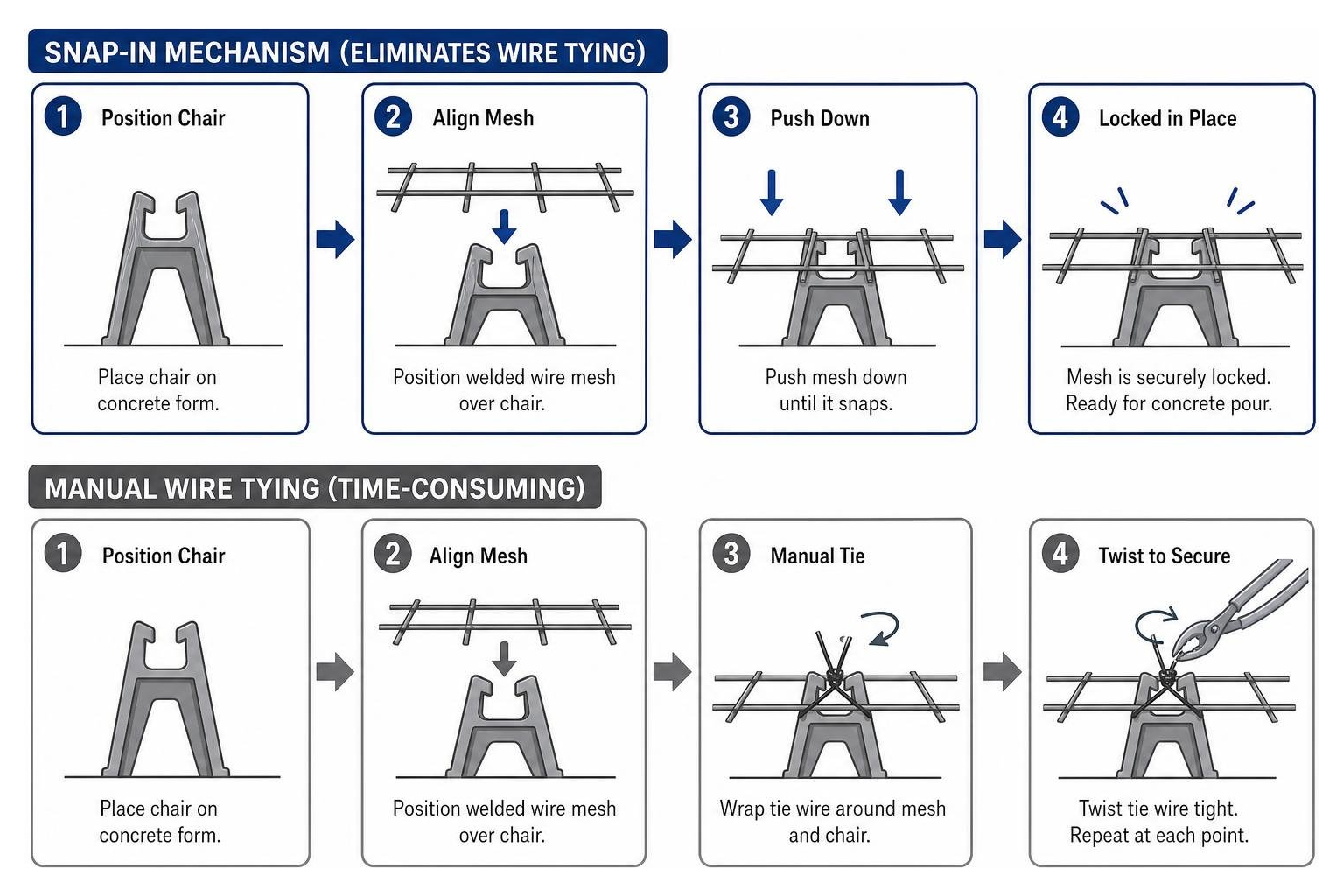
What sets our chairs apart is their patented, heavy-duty polypropylene construction and unique snap-in design. Unlike traditional metal chairs that require manual wire tying, our chairs allow the rebar to snap directly into place, completely eliminating the labor and material costs associated with tie wire.
Furthermore, our chairs are molded in a highly visible red color, making it incredibly easy for field inspectors to verify proper chair placement and spacing before the concrete truck arrives. To understand why our products are trusted on major commercial jobsites, read Why Hercules Chairs Are the Heavyweight Champions of Rebar Support.
National Retailers (The Home Depot)
For immediate, on-demand sourcing, national retail networks like The Home Depot play a vital role in the commercial supply chain. When a jobsite runs short on accessories mid-pour, waiting days for a freight shipment from an industrial distributor isn’t an option.
The Home Depot stocks heavy-duty contractor packs of high-performance brands, including the Hercules 3 in. Rebar Chair (100-Pack) 912. This retail accessibility allows commercial contractors to purchase bulk quantities locally, utilize pro-desk delivery services, and keep fast-moving projects on track without costly downtime.
Specialized Industrial Distributors
For massive, high-volume infrastructure projects—such as highway paving, bridge construction, and high-rise foundations—contractors typically secure bulk orders through specialized industrial concrete accessory distributors.
These distributors provide a massive range of CRSI-compliant bar supports, including composite stack chairs, joist chairs, and heavy-duty metal supports in multiple corrosion-resistant finishes. They also supply slab bolsters, beam bolsters, and continuous high chairs designed specifically to support heavy rebar cages. By partnering with regional and national construction supply networks, contractors can establish a single-source supply chain for both reinforcing steel and the necessary bar supports to keep large-scale projects fully compliant and on schedule.
How Do Material Options Compare in High-Load and Corrosive Environments?
Selecting the correct rebar chair design is only half the battle; contractors must also choose the right material composition. The environment in which the concrete structure will exist dictates the level of corrosion resistance required.
If moisture, salt, or chemicals penetrate the concrete and reach a corrosive metal chair, that chair will rust. The rust will then travel along the reinforcing steel grid—a process known as “rust bleeding”—causing the concrete to spall, crack, and eventually fail structurally. For a deep dive into choosing heavy-duty supports for extreme environments, see Heavy Duty Rebar Chairs for Chemical and Power Plant Construction.
Plastic and Composite Supports
Advanced polymers, such as high-density polypropylene, have revolutionized the concrete accessories industry. Unlike steel, plastic is 100% non-corrosive. It will never rust, degrade, or react with concrete admixtures, making it the premier choice for coastal environments, wastewater treatment plants, chemical facilities, and slabs exposed to de-icing salts.
Historically, some contractors worried that plastic chairs would crush under heavy construction traffic. However, modern engineered polymers are incredibly tough. High-quality plastic chairs feature thick, webbed walls and wide bases designed to withstand immense vertical loads without collapsing, even when stepped on by workers carrying heavy equipment.
Carbon Steel (Bright Basic) and Plastic-Protected Metal
Standard metal wire supports are manufactured from cold-drawn carbon steel wire, often referred to as “bright basic” steel. These chairs offer exceptional load capacity and are highly cost-effective, making them the standard choice for interior concrete slabs where moisture penetration is not a concern.
However, to prevent rust from bleeding through to the bottom of the slab where the chair legs touch the formwork, manufacturers offer plastic-protected metal supports. These feature plastic-dipped or plastic-capped feet. The plastic barrier prevents the steel wire from making direct contact with the exterior air or formwork, providing a basic level of corrosion protection.
Epoxy-Coated, Galvanized, and Stainless Steel
For heavy-duty infrastructure projects that demand the ultimate load capacity of steel combined with extreme corrosion resistance, specialty metal coatings are specified:
- Epoxy-Coated Supports: These metal chairs are coated in a thick protective epoxy resin. They are designed specifically to support epoxy-coated rebar, ensuring that no bare metal-to-metal contact occurs, which could scratch the rebar’s protective coating.
- Galvanized Supports: Hot-dip galvanized steel chairs are coated in a protective layer of zinc, offering excellent outdoor weathering resistance for highway and bridge construction.
- Stainless Steel Supports: The gold standard for corrosive environments, stainless steel chairs offer maximum protection against chemical attack and rust, though they come at a premium cost.
| Material Type | Relative Cost | Load Capacity | Corrosion Resistance | Best Application |
|---|---|---|---|---|
| Polypropylene Plastic | Low to Moderate | High (Engineered) | Excellent (100% Rust-Proof) | Slabs-on-grade, vapor barriers, coastal zones |
| Bright Basic Steel | Low | Extremely High | Poor | Interior slabs, dry environments |
| Plastic-Protected Steel | Moderate | Extremely High | Moderate | General commercial construction |
| Epoxy-Coated Steel | High | Extremely High | High | Epoxy rebar systems, bridge decks, parking garages |
| Stainless Steel | Very High | Extremely High | Maximum | Marine structures, chemical plants, heavy infrastructure |
What Key Specifications and Standards Must Rebar Chairs Meet?
In commercial and public infrastructure work, you cannot simply throw any support under a piece of steel. Every accessory used must meet strict engineering standards to ensure safety and code compliance.
CRSI Classifications for Bar Supports
The Concrete Reinforcing Steel Institute (CRSI) establishes the industry-standard classifications for bar supports based on their level of rust prevention. These classifications dictate where and how supports can be used:
- Class 1 (Maximum Protection): These supports are designed to be used in highly corrosive environments or where the concrete surface will be exposed to view. They include plastic-molded chairs, composite supports, and metal chairs with at least 1/4 inch of plastic protection at the points of contact with the formwork.
- Class 2 (Moderate Protection): These are stainless steel supports or metal supports with stainless steel tips. They are designed for use in moderately corrosive environments where the concrete surface may be exposed to weathering.
- Class 3 (No Protection): These are standard bright basic wire supports with no protective coatings. They are strictly intended for use in non-corrosive environments where the concrete will remain dry and unexposed.
ACI and ASTM Compliance
The American Concrete Institute (ACI) publishes the building code requirements for structural concrete (ACI 318). ACI 318 mandates strict minimum concrete cover requirements—typically 1.5 to 3 inches of concrete surrounding the rebar, depending on exposure to earth, weather, or chemicals. Rebar chairs are the primary mechanism used to achieve and guarantee this cover during the pour.
Additionally, ASTM International provides testing standards (such as ASTM A1035 or ASTM materials standards) that govern the physical properties, tensile strength, and load-bearing capacities of both steel and plastic reinforcing supports. Sourcing products from reputable manufacturers ensures that your jobsite remains fully compliant with these critical engineering codes.
How Do Contractors Select the Right Chair Type and Spacing?
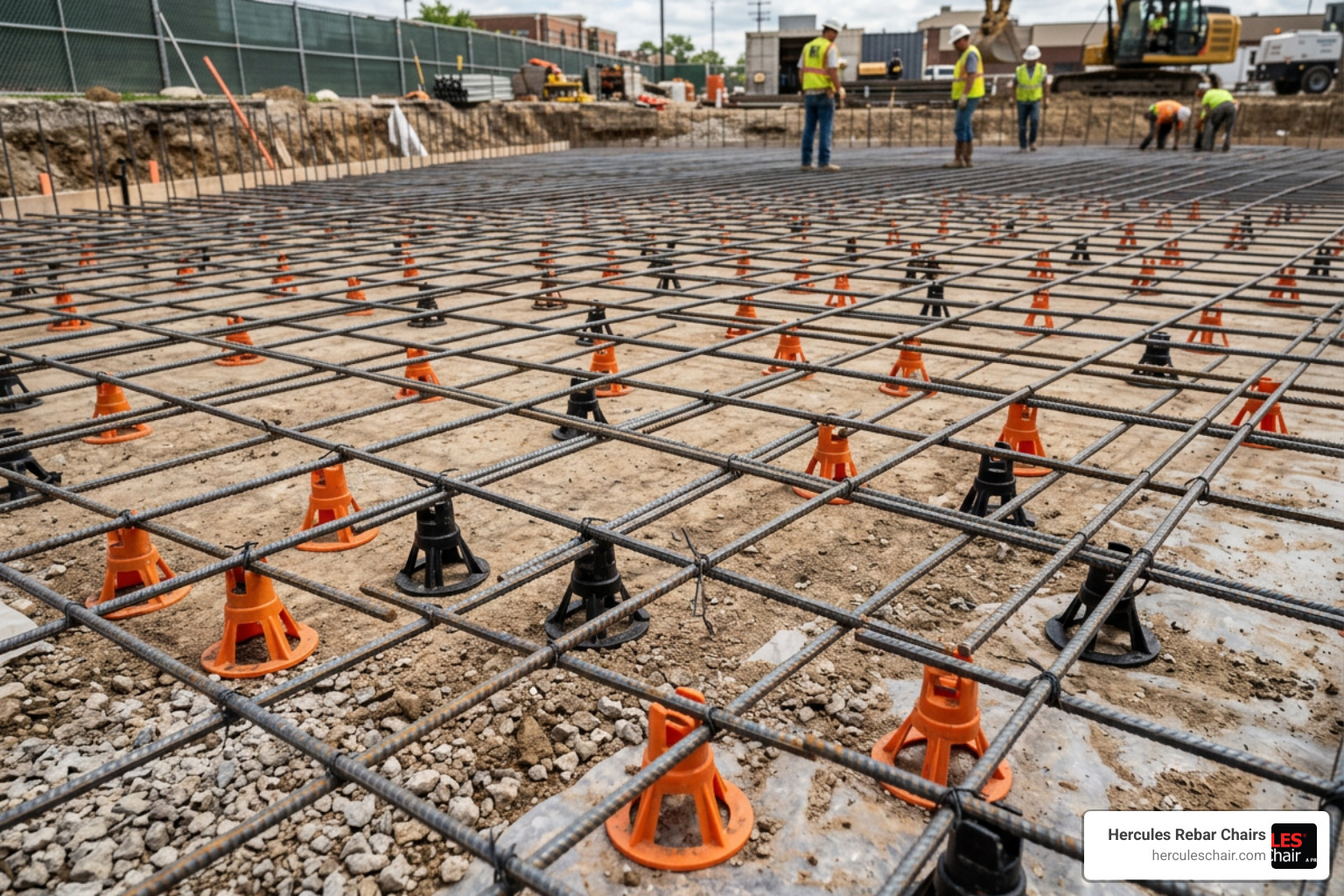
Selecting the right chair is only half the battle; you must also lay them out correctly in the field. Proper spacing prevents the rebar grid from sagging under the weight of wet concrete and active construction traffic. For a comprehensive, step-by-step sizing guide, read The Ultimate Guide to Rebar Chairs Types Uses and Sizing for Concrete Slabs.
Determining Chair Height Based on Slab Thickness
To select the correct chair height, you must calculate the required concrete cover specified in your engineering drawings. For a standard slab-on-grade, a 2-inch concrete cover is typical.
As a general rule of thumb:
- Use 1.5-inch chairs for 4-to-5-inch concrete slabs.
- Use 3-inch chairs for 6-to-8-inch concrete slabs.
This positioning ensures that the reinforcing steel sits in the middle-to-upper third of the slab, which is where the concrete experiences the most tension and requires the most reinforcement.
Spacing Guidelines to Prevent Sagging
The spacing of your rebar chairs depends heavily on the diameter of the rebar being used. Thinner rebar (like #3 or #4 bars) is highly flexible and will sag easily between supports, requiring tighter chair spacing. Thicker, high-strength Grade 60 rebar (like #5, #6, or #8 bars) is much stiffer and can span longer distances.
- For #3 and #4 Rebar: Space chairs every 3 to 4 feet along the grid.
- For #5 Rebar and Larger: Space chairs every 4 to 6 feet along the grid.
Always ensure that the rebar grid is properly tied together at its intersections. A well-tied grid distributes loads across multiple chairs, preventing localized sagging when workers walk across the steel during a pour.
Sourcing and Logistics for Large-Scale Pours
When managing a large-scale commercial pour, logistics can make or break your schedule. Contractors must evaluate lead times, bulk packaging (such as pallet quantities versus individual boxes), and shipping costs.
At Hercules, we make this process seamless. Contractors can easily Buy Rebar Chairs in bulk directly or through our national distributor network, ensuring that you have the exact volume of high-strength, code-compliant supports delivered directly to your jobsite right when you need them.
Frequently Asked Questions About Rebar Chairs
Can plastic rebar chairs handle heavy construction traffic without collapsing?
Yes, high-quality, engineered plastic chairs—such as those molded from heavy-duty polypropylene—are specifically designed to handle the rigorous demands of commercial jobsites. Unlike cheap, brittle plastic imports, professional-grade plastic chairs feature thick, webbed structural walls and wide bases that distribute weight evenly. They will not crush, crack, or collapse when stepped on by workers carrying heavy equipment or when supporting heavy-duty Grade 60 rebar grids.
Why shouldn’t contractors use concrete bricks or dobies to elevate rebar?
While using clay bricks, concrete chunks, or field-cast “dobies” was a common practice in the past, modern building codes strongly discourage it. Clay bricks are highly porous; they absorb moisture from the ground and transfer it directly to the rebar, accelerating rust.
Furthermore, pre-cast concrete blocks often do not bond perfectly with the newly poured wet concrete. This creates cold joints and micro-cracks around the block, allowing moisture to penetrate the slab, weakening the concrete, and leading to eventual structural spalling.
How do snap-on rebar chairs save labor costs compared to metal tie wire?
Traditional metal chairs require workers to manually wrap steel tie wire around every single rebar intersection and twist it tight with pliers. This is an incredibly labor-intensive, slow process that takes a massive toll on a worker’s back and knees.
Snap-on chairs feature patented, flexible locking clips at the top. Workers simply snap the rebar into the chair in a fraction of a second. This eliminates the need for tie wire entirely, reducing setup times by up to 50% on large-scale projects and allowing contractors to allocate their labor force to more critical tasks.
Conclusion
In modern concrete construction, the humble rebar chair plays a massive role in guaranteeing the structural integrity, safety, and longevity of our infrastructure. Whether you are pouring a massive highway, a high-rise foundation, or a commercial warehouse floor, selecting the right chair type, material, and spacing is critical to ensuring code compliance and preventing costly structural failures.
By partnering with a trusted domestic manufacturer like Hercules, you gain access to America’s strongest, most efficient rebar support systems. Our patented, high-visibility red polypropylene chairs and footing stands are engineered to save you time, slash labor costs, and stand up to the toughest jobsite conditions.
Ready to elevate the quality of your next concrete pour? Explore our complete line of high-performance concrete accessories and Our Products today, or contact us directly to Become a Hercules Dealer.