

What Does 3/4-Inch Rebar Actually Cost in 2026?
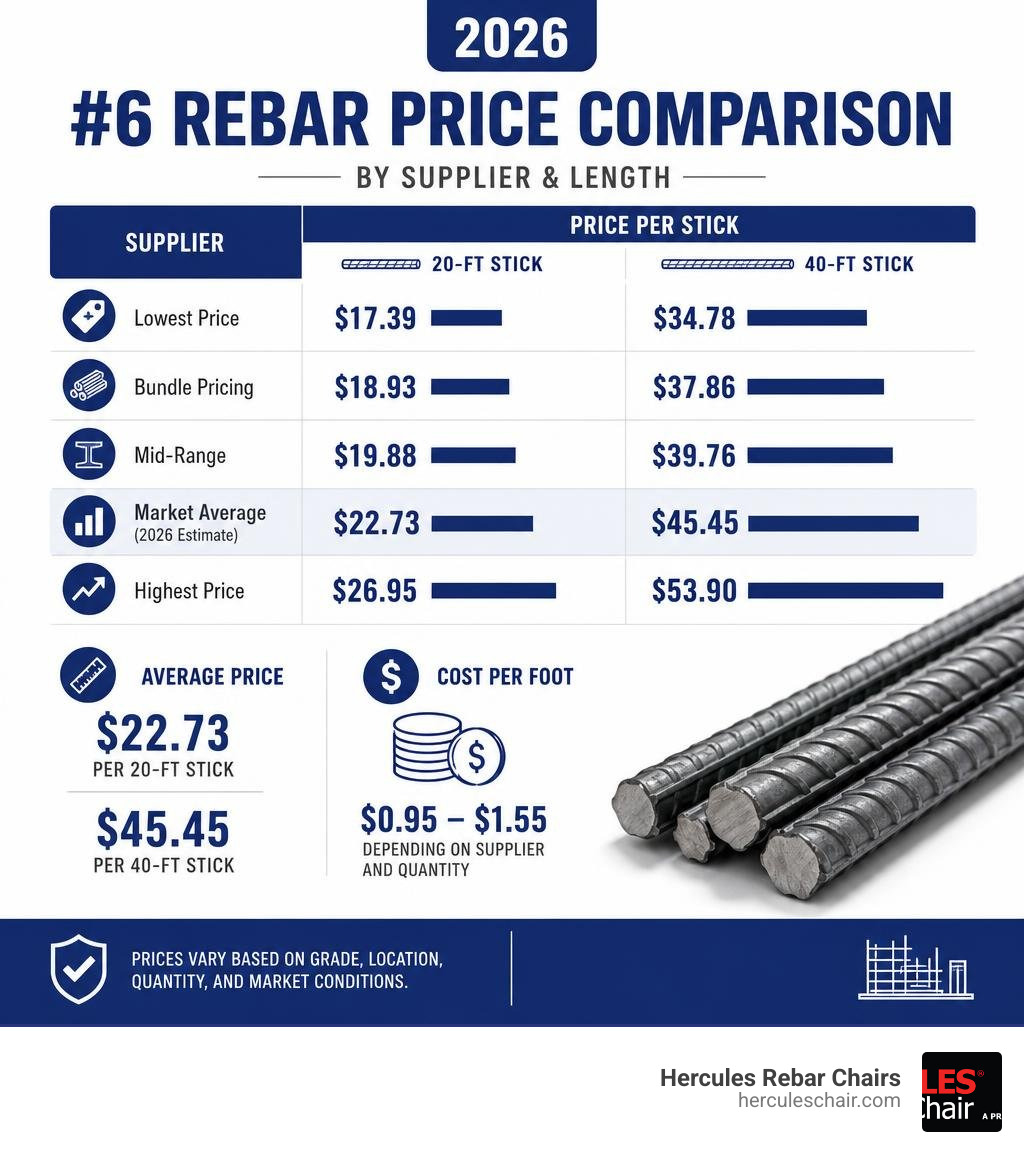
The 3/4 rebar price varies by supplier, but here’s a quick snapshot of what you can expect to pay for a standard 20-foot stick of #6 Grade 60 rebar in 2026:
| Supplier | Price per 20-ft Stick |
|---|---|
| McCoy’s Building Supply | $17.39 |
| WC Rebar (bundle pricing) | $18.93 |
| LA Steel Works | $19.88 |
| Market average (2026 estimate) | $22.73 |
| Kuhlman Direct | $26.95 |
- 20-foot stick average: ~$22.73
- 40-foot stick average: ~$45.45
- Cost per foot: roughly $0.95 to $1.55 depending on supplier and quantity
Prices shift based on grade, location, quantity, and market conditions — all of which we break down below.
If you’re budgeting for a concrete pour, knowing the right 3/4 rebar price before you call your supplier can save you real money. #6 rebar is one of the most commonly specified sizes in residential and commercial concrete work — used in footings, slabs, retaining walls, and CMU construction. But prices can swing by more than 50% depending on where you buy, how much you order, and what’s happening in the steel market.
In early 2026, rebar prices remain elevated compared to 2024 levels, partly driven by Section 232 steel tariffs raised to 50%. That means a quick price check before your next order isn’t just smart — it’s essential.
I’m Jordan Harris, a licensed Professional Engineer with a background in structural concrete and steel projects, and I now work with T.J. Harris Company, where we’ve spent years helping contractors make smarter decisions around rebar — including understanding what fair 3/4 rebar price benchmarks look like. That hands-on experience is what shapes every insight in this guide.
Related content about 3 4 rebar price:
Understanding the Average 3 4 Rebar Price in 2026
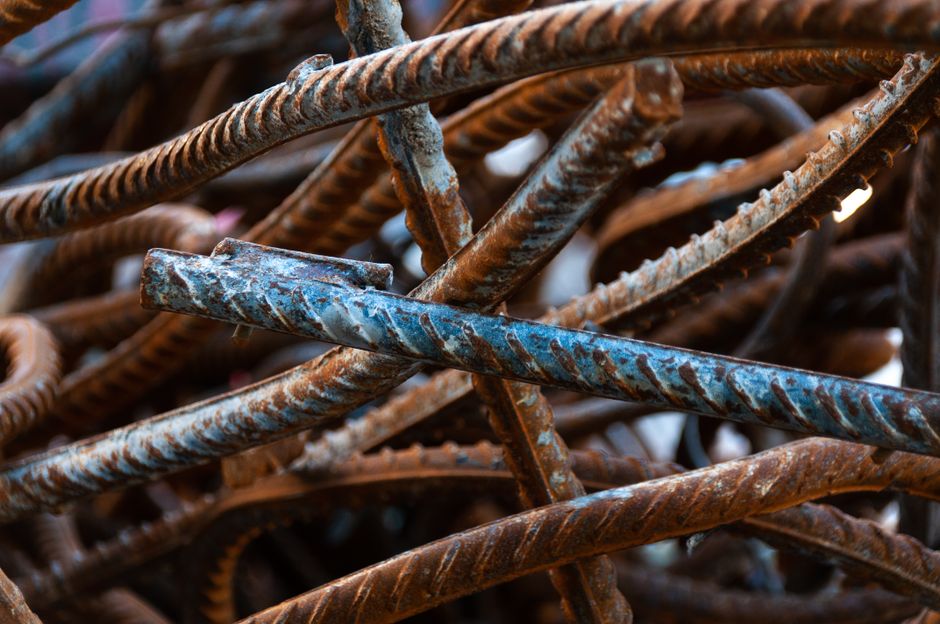
When we look at the structural steel market in 2026, the average cost of size 6 (3/4-inch) rebar sits at approximately $22.73 per 20-foot stick. However, that single number doesn’t tell the whole story. If you’ve ever stepped onto a job site or spent an afternoon calling local steel yards, you know that the price you are quoted can change based on the length of the bar, the quantity you buy, and whether you are sourcing from a retail home center or a commercial distributor.
According to national tracking data found on the Rebar Pricing Information index, a 40-foot stick of #6 rebar averages $45.45. This shows a perfectly linear pricing model per foot for raw steel, but in the real world, logistics and handling can alter these figures. For those actively searching for current inventory and regional deals, keeping an eye on 3 4 Rebar For Sale listings is a great way to spot local price drops.
To help you visualize how these costs stack up across different regional suppliers and nationwide averages, we have compiled a comparison table for both 20-foot and 40-foot lengths:
| Supplier / Source | 20-Foot Stick Price | 40-Foot Stick Price | Est. Price Per Foot |
|---|---|---|---|
| McCoy’s Building Supply | $17.39 | $34.78 | $0.87 |
| WC Rebar (Bundle Rate) | $18.93 | $37.86 | $0.95 |
| LA Steel Works | $19.88 | $39.76 | $0.99 |
| National Average (2026) | $22.73 | $45.45 | $1.14 |
| Kuhlman Direct | $26.95 | $53.90 | $1.35 |
As you can see, buying from specialty steel fabricators or in bulk bundles often brings your cost per stick down significantly compared to buying individual pieces from high-end retail distributors.
Key Factors That Influence 3/4-Inch Rebar Costs
Rebar pricing is notoriously volatile. One month you are riding high on a cheap quote, and the next month your supplier calls with bad news about a price spike. To protect your project margins, we must understand the primary economic forces that drive the 3/4 rebar price:
- Raw Material Costs: Rebar is manufactured by melting down steel billets (often recycled scrap metal). When global scrap metal prices rise, the cost of manufacturing rebar rises with it.
- Section 232 Tariffs: Economic and trade policies play a massive role. In early 2026, structural steel tariffs rose to 50%, putting upward pressure on domestic steel mills and making imported steel much more expensive.
- Logistics and Transportation: Steel is incredibly heavy. Shipping a truckload of 40-foot #6 bars requires specialized flatbeds and permits. Fuel surcharges can easily add $0.05 to $0.15 per foot to your order, especially if your job site is located in a remote area.
- Regional Demand: If you are building in a high-growth construction hub (like Texas, Florida, or California), local demand can drive up supplier markups. Conversely, areas with slower construction seasons might see suppliers offering discounts to clear out inventory.
For a deeper dive into how these macroeconomic factors shape the broader construction landscape, you can read more about How much does rebar cost in 2026? to see how different material classes are fluctuating.
Steel Grade and the Impact on 3 4 Rebar Price
The physical strength of your steel directly impacts its price. Rebar is classified by grades, which indicate the minimum yield strength of the steel in thousands of pounds per square inch (kpsi):
- Grade 40: Has a yield strength of 40 kpsi. It is easier to bend and manipulate, making it popular for light residential work or DIY projects. Because it uses slightly less carbon and alloying elements, it is generally cheaper.
- Grade 60: Has a yield strength of 60 kpsi. This is the industry standard for most commercial, industrial, and structural concrete projects. It is significantly stronger and handles heavy tensile loads much better than Grade 40.
Most 3/4-inch rebar sold today is Grade 60 because engineers specify #6 bars for heavy-duty structural applications where high yield strength is mandatory. Expect to pay a 20% to 40% premium for Grade 60 over Grade 40. You can view standard retail specifications for these structural bars on the 3/4 in. x 20 ft. #6 Rebar PAR402006 – The Home Depot product page, which highlights how retail suppliers package Grade 60 steel for commercial buyers.
Length and Weight Specifications
When ordering #6 rebar, weight is just as important as length. Because shipping rates and structural load calculations depend entirely on weight, you need to know the numbers:
- Unit Weight: #6 rebar weighs exactly 1.502 lbs per linear foot.
- 20-Foot Stick: Weighs 30.04 lbs.
- 40-Foot Stick: Weighs 60.08 lbs.
If you are ordering a standard 1-ton bundle of #6 rebar (which weighs approximately 2,000 lbs), you will receive about 67 pieces of 20-foot bars. Knowing these weights helps you calculate whether your delivery truck can handle the load, and whether your crew can safely move the bars by hand on-site. For more tips on handling and working with shorter or custom lengths, check out our guide on Getting To Grips With 3 4 Rebar 10 Ft For Your Next Pour.
Comparing 3/4-Inch (#6) Rebar to Other Common Sizes
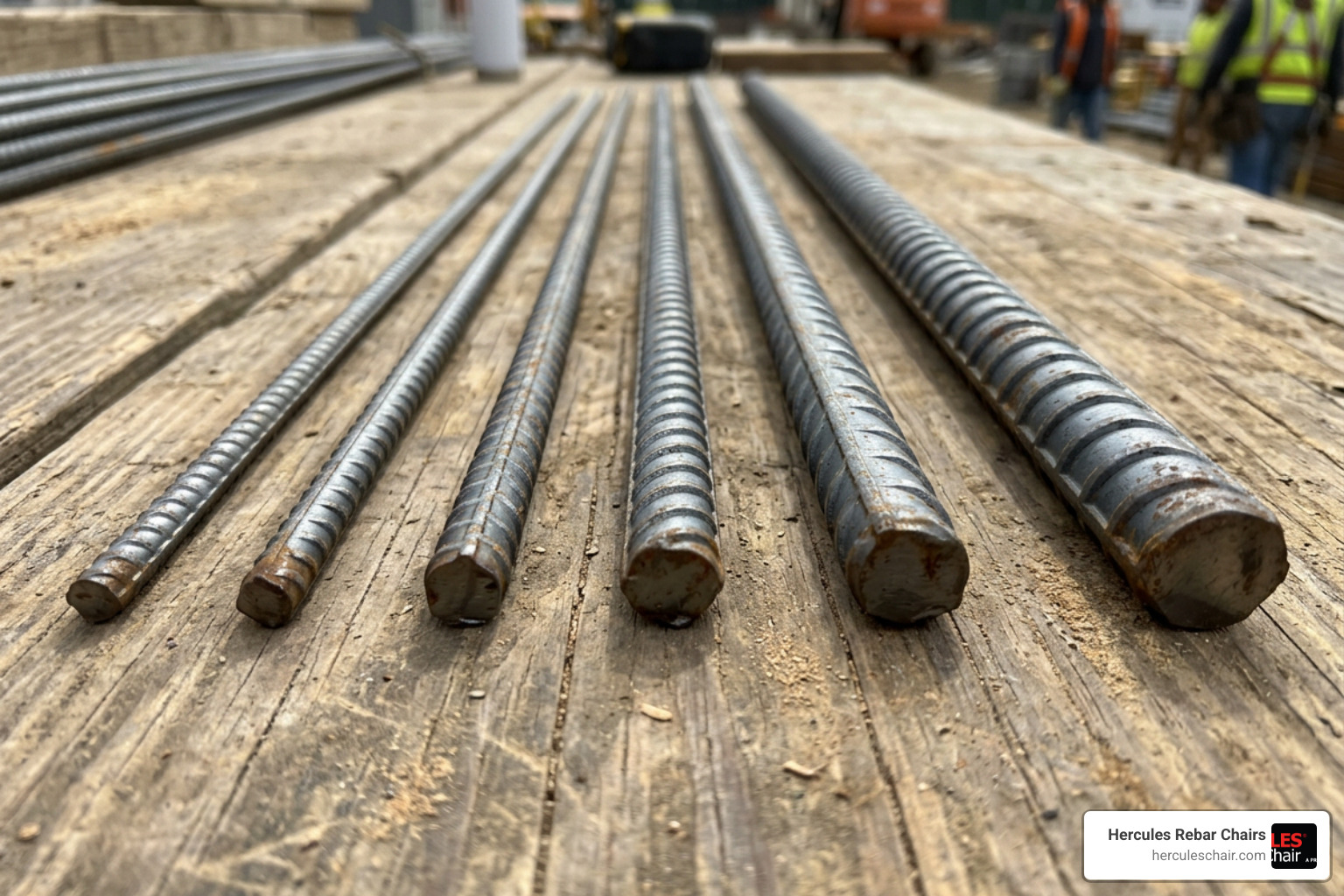
In the United States, rebar sizes are designated by numbers that represent the bar’s diameter in eighths of an inch. Therefore, a #6 bar is 6/8 inches, which simplifies down to 3/4 of an inch.
As the diameter of the bar increases, its cross-sectional area and weight grow exponentially. While a light residential driveway might only require #3 or #4 rebar, heavy-duty applications like bridge abutments, commercial foundations, and thick retaining walls demand the structural integrity of #6 rebar. To understand how these different sizes and grades fit into various structural designs, refer to The Essential Guide To Rebar Sizes And Grades.
How Size Affects the 3 4 Rebar Price vs. #3, #4, and #5
Because steel is priced primarily by weight, larger diameter bars cost more per linear foot. Let’s look at how the cost of #6 rebar compares to smaller, lighter alternatives in 2026:
- #3 Rebar (3/8″ Diameter): Weighs 0.376 lbs/ft. It typically costs $0.40 to $0.75 per foot. It is highly flexible and easy to bend, ideal for light slabs and patios. You can view light residential pricing options on the 3/8 in. x 4 ft. #3 Rebar page or check out the Current Price of 40 foot size 3 Rebar index. For a complete financial breakdown of this smaller size, read our comprehensive How Much Is 3 Rebar A Cost Guide For Concrete Projects article.
- #4 Rebar (1/2″ Diameter): Weighs 0.668 lbs/ft. It costs $0.55 to $0.95 per foot. This is the absolute king of residential concrete construction. It provides a great balance of strength and affordability. You can check out a typical short-length product sample on the 1/2 in. x 3 ft. #4 Rebar page.
- #5 Rebar (5/8″ Diameter): Weighs 1.043 lbs/ft. It costs $0.75 to $1.25 per foot. Frequently used in commercial footings and residential retaining walls.
- #6 Rebar (3/4″ Diameter): Weighs 1.502 lbs/ft. It costs $0.95 to $1.55 per foot. It is significantly heavier and stiffer, designed to handle major structural loads.
As you can see, upgrading from #4 to #6 rebar more than doubles the weight of steel per foot, which roughly doubles your raw material cost. That is why it is critical to only use #6 rebar where structural engineering plans explicitly require it.
How to Estimate Total Rebar Costs for Your Project
Estimating rebar costs is more complicated than simply measuring the length of your concrete slab and multiplying it by the price per foot. If you estimate that way, you will run out of material halfway through the pour. To get a highly accurate estimate, we must follow a professional quantity takeoff process:
- Calculate Total Linear Footage: Review your structural drawings to find the spacing requirements (e.g., “12 inches on center”). Calculate how many rows of rebar are needed horizontally and vertically.
- Account for Lap Splices: Rebar cannot simply be placed end-to-end; the bars must overlap to transfer structural tension. The standard structural lap splice is typically 40 to 60 times the diameter of the bar. For a 3/4-inch (#6) bar, a 40-diameter lap splice equals 30 inches of overlap at every single joint. This can easily add 10% to 15% to your total linear footage requirement.
- Add a Waste Factor: No matter how carefully you cut, there will always be off-cuts and scraps. We recommend adding a standard 5% to 10% waste factor (8% is the sweet spot for most contractors) to ensure you don’t run short.
- Convert to Weight (Optional): If you are buying from wholesale suppliers, multiply your total linear footage by 1.502 lbs/ft to get the total weight in pounds, then divide by 2,000 to get the total tonnage. Wholesale rates are almost always quoted per ton.
To make this math incredibly simple and avoid costly manual errors, we highly recommend using our specialized tool and reading our guide on Mastering The Rebar Calculator For Your Next Concrete Project.
Frequently Asked Questions about 3/4-Inch Rebar
What is the average price of a 20-foot stick of #6 rebar?
The national average price for a 20-foot stick of #6 (3/4-inch) Grade 60 rebar in 2026 is $22.73. However, prices can range from $17.39 at highly competitive regional suppliers up to $26.95 at premium retail outlets. For example, you can see real-time regional pricing on the 4011302 (#6) Rebar, 3/4 in Dia, 20 ft L, Grade 60 product page, which serves as an excellent price benchmark for Southern and Midwestern job sites.
How do retail and wholesale rebar prices compare?
Buying retail (individual sticks from home improvement stores) is perfect for small DIY projects, but it is the most expensive way to purchase steel. If you are a contractor running a commercial job, you should always buy wholesale.
Wholesale suppliers sell rebar in 1-ton (2,000 lb) bundles or by the truckload. For instance, a 1-ton bundle of #6 rebar contains 67 sticks (20 ft each) and costs around $1,268, which drops the individual stick price down to $18.93. You can explore these volume-based bulk discounts on the #6 (3/4)” Rebar – ASTM Grade 60 – lasteelworks product page.
What additional costs should I expect when buying 3/4-inch rebar?
When putting together your final budget, don’t forget to include these often-overlooked expenses:
- Delivery Fees: Because 20-foot and 40-foot steel bars require flatbed shipping, freight charges can add anywhere from $100 to $500+ to your order depending on the distance from the yard.
- Sales Tax: Local state and city taxes will apply to your material totals.
- Tie Wire and Accessories: You will need tie wire (typically $10 per roll or $159 per box) and concrete dobies to secure the steel grid.
- Concrete Supports (Rebar Chairs): To do their job, rebar grids must sit perfectly suspended in the middle of the concrete pour, not resting on the ground. This requires heavy-duty rebar chairs designed to handle the weight of heavy #6 bars.
Conclusion
Getting the best 3/4 rebar price requires a mix of smart timing, bulk purchasing, and accurate project estimation. By keeping an eye on raw material trends, factoring in lap splices, and comparing regional wholesale yards, you can keep your material costs under control.
But buying the steel is only half the battle. If your heavy 3/4-inch rebar sinks to the bottom of the slab during the concrete pour, it loses its structural value, leading to cracks, structural failure, and failed code inspections.
That is where we come in. Hercules Rebar Chairs (manufactured by T.J. Harris Co.) are America’s #1 concrete supports. With over 14 million units sold across the USA, our iconic red chairs are engineered to support heavy structural loads, saving you time and money on-site while ensuring absolute code compliance. Don’t let your steel investment go to waste by letting it sink to the mud.
Ready to secure your next concrete pour with the industry’s toughest support chairs? Buy Hercules Rebar Chairs today and get the peace of mind that comes with a perfectly supported slab!