

The Leading Concrete Chair Brand: What Contractors Need to Know
The leading concrete chair brand for construction professionals is defined by durability, code compliance, and job site efficiency. For projects involving reinforced concrete, choosing the right support is critical. Here’s a quick look at the primary types of supports used in the industry:
| Support Type | Best For | Material | Key Strength |
|---|---|---|---|
| Hercules Chair (T.J. Harris Co.) | All concrete pours | High-strength plastic | 14M+ units sold, consistent cover height |
| Sand Chairs | Slabs & footers on unstable soil | Plastic | Cover heights 3″–8″, sold in bulk |
| Wire Rebar Chairs | General reinforcement support | Wire | Low cost, widely available |
| Concrete Block Chairs | Heavy-duty applications | Concrete | Extreme load capacity |
Quick answer: For contractors who need reliable, code-compliant rebar support at scale, the Hercules Chair by T.J. Harris Company is the most proven choice — with over 14 million units sold across job sites nationwide.
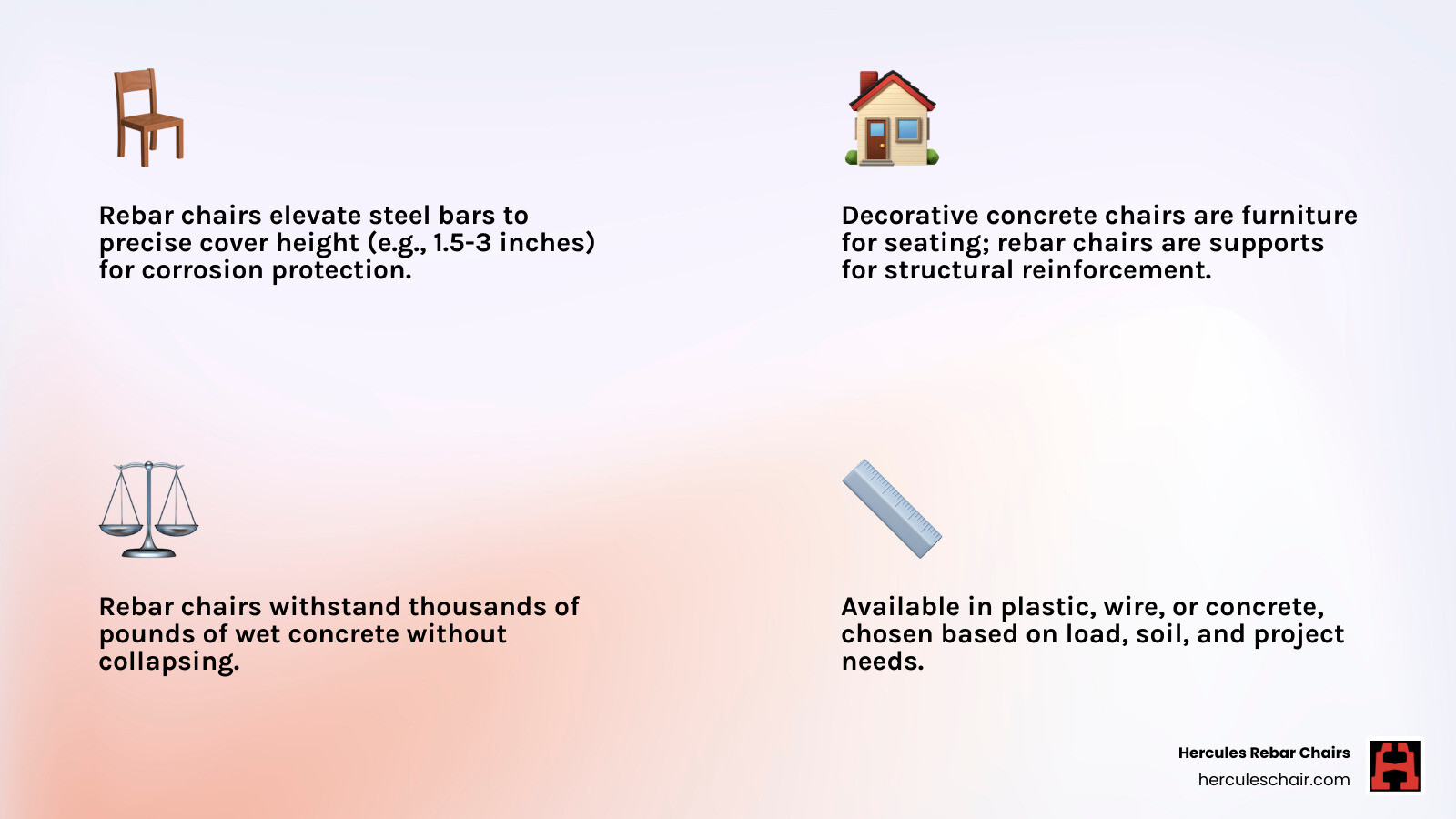
It’s easy to get confused when searching for “concrete chair.” The term covers two very different products: decorative concrete furniture for homes and public spaces, and rebar chairs — the small supports used in concrete pours to hold reinforcing steel at the correct cover height. This article focuses on the latter: the structural workhorses that keep your slabs strong and your pours code-compliant.
Choosing the wrong support — or skipping it entirely — can compromise a slab’s structural integrity from the inside out. Getting rebar placement right isn’t optional. It’s the difference between a pour that lasts decades and one that fails inspection.
I’m Jordan Harris, a licensed Professional Engineer and product development lead at T.J. Harris Company, with five years of structural engineering experience on large-scale concrete projects — which gives me a practical, field-tested perspective on what makes a leading concrete chair brand worth trusting. In the sections below, I’ll break down exactly what separates the best brands from the rest.
Defining the Leading Rebar Chair Brand: Design and Functionality
When we talk about a leading concrete chair brand in the construction world, we aren’t talking about aesthetics or “brutalist” design philosophies. We are talking about engineering. A rebar chair has one job: to hold heavy steel reinforcement at a precise height while thousands of pounds of wet concrete are dropped on top of it.
Ergonomics and Stability
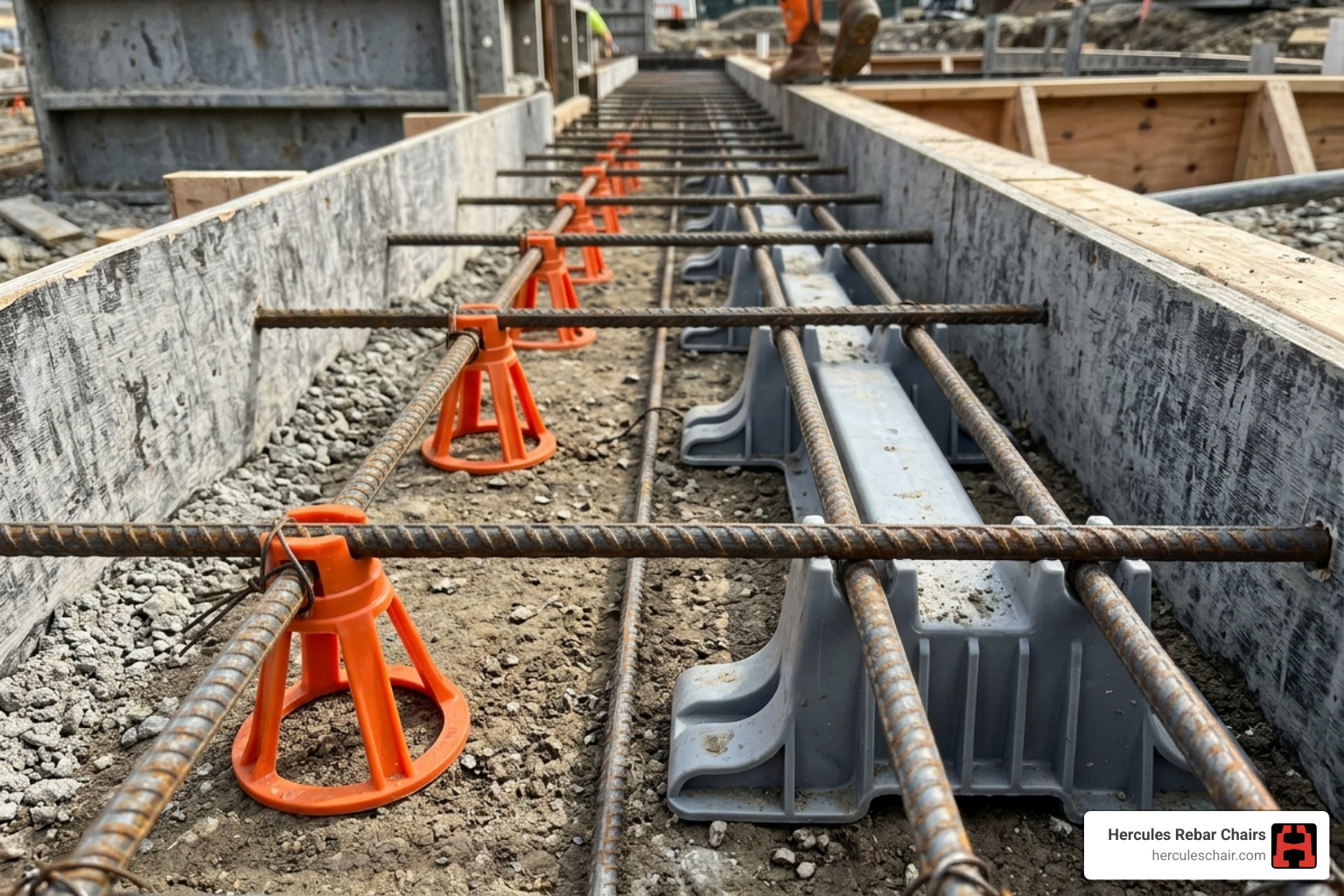
The best designs, such as those found in our Hercules Rebar Chair lineup, prioritize stability and load distribution. If a chair tips over during the pour, the rebar sinks to the bottom of the slab, leading to “ghosting” or eventual corrosion. Leading brands utilize wide bases or multi-leg configurations to ensure the chair stays upright even when workers are walking on the rebar grid.
Material Choice: Plastic vs. Wire
In 2026, the industry has largely shifted toward high-strength, non-corrosive plastic. While traditional wire chairs are still available, they are prone to rusting if they are too close to the surface of the concrete. A leading concrete chair brand will offer plastic supports that are chemically inert, meaning they won’t react with the concrete or cause structural “pop-outs” years down the line.
User-Friendly Features
Ease of installation is a major factor for contractors. Features like “snap-in” tops allow rebar to be secured without the need for tie wire, significantly reducing labor costs. When you buy rebar chairs, you’re looking for a product that makes the pre-pour inspection a breeze.
Innovation in Manufacturing and Material Science for Rebar Chairs
The science behind the leading concrete chair brand has come a long way since the early days of precast concrete blocks. Today, manufacturing is a high-tech process involving precision injection molding and advanced polymer chemistry.
Injection Molding and Automated Production
To achieve the consistency required for large-scale infrastructure projects, we utilize high-speed injection molding. This ensures that every single chair—whether it’s the first or the 14 millionth—meets the exact same height and strength specifications. This is a stark contrast to handcrafted or small-batch production, where variances can lead to code compliance issues.
Material Comparison Table
| Support Type | Material | Best Application | Pros | Cons |
|---|---|---|---|---|
| Plastic Chair | Polypropylene | Slabs, Walls, Footers | Non-corrosive, lightweight | Can be UV sensitive if left out |
| Wire Chair | Steel Wire | Heavy Mats | High heat resistance | Risk of rust/corrosion |
| Concrete Brick | Precast Concrete | Heavy Foundations | Extreme load capacity | Heavy, hard to transport |
| Sand Chair | Plastic | Unstable Soil/Sand | Large base prevents sinking | Bulky for small jobs |
Our commitment to innovation includes a deep dive into rebar support systems to ensure that our materials can withstand the weight of heavy rebar mats without deforming. Furthermore, many leading manufacturers are now incorporating UV stabilizers into their plastic blends, allowing chairs to be stored on outdoor job sites for weeks without becoming brittle.
Practical Considerations for a Leading Rebar Chair Brand
In the field, a leading concrete chair brand must be more than just a piece of plastic; it must be a reliable partner. Contractors deal with harsh environments, from the frozen ground of Alaska to the humid marshes of Florida.
Durability and Compatibility
A top-tier chair needs to be compatible with various rebar sizes (typically #3 through #6 for standard residential and commercial work). It also needs to be easy to handle. If a chair is too flimsy, it will crush; if it’s too rigid and brittle, it will snap. We focus on a “Goldilocks” polymer blend that provides enough flex to handle impact but enough rigidity to maintain cover height.
Sustainability and Eco-Forward Production
Sustainability is no longer just a buzzword in the concrete industry. Leading manufacturers are looking at the entire product lifecycle.
- Recycled Content: Many of our products utilize 100% recycled plastic, diverting waste from landfills while providing a structural-grade product.
- Reduced Waste: Efficient injection molding processes minimize “sprue” and scrap material, which is then reground and reused.
- Local Sourcing: By manufacturing in the USA, we reduce the carbon footprint associated with long-distance shipping.
For more on how these materials impact your project, check out our guide on everything you need to know about reinforcement supports.
Pricing and Availability
High-quality rebar chairs are typically mass-produced to keep costs competitive. While a single designer concrete chair for a living room might cost over $15,000, construction rebar chairs are sold in bulk. For instance, specialized “Sand Chairs” for unstable soil might retail around $130 for a box of 100. For contractors, bulk purchasing and efficient distribution networks are essential to keeping a project on budget and on schedule.
Structural Support: The Leading Rebar Chair Brand for Construction
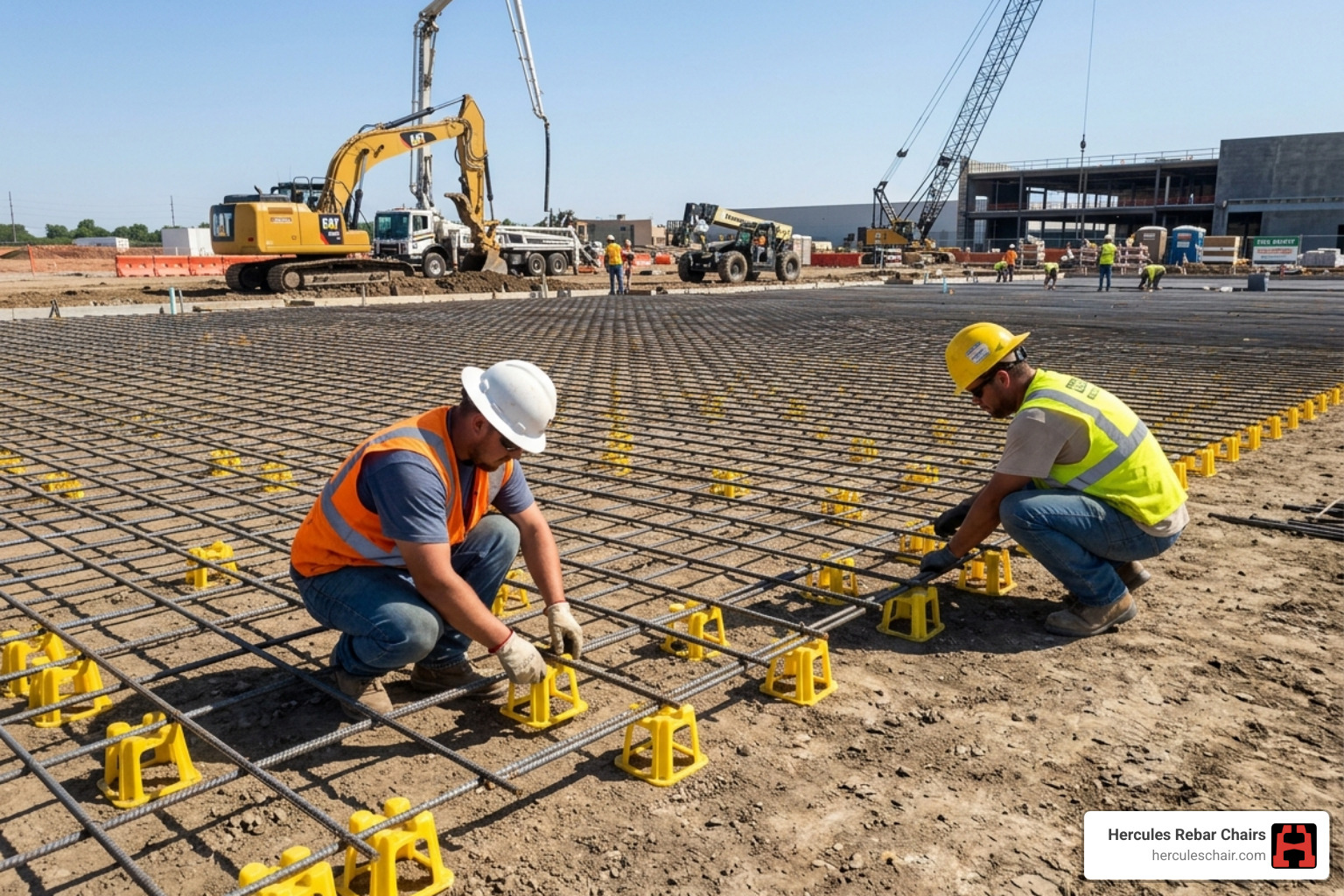
The primary goal of any leading concrete chair brand is to ensure “cover height.” This is the distance between the rebar and the edge of the concrete. If the rebar is too high, the slab lacks strength; if it’s too low, the steel will eventually rust and expand, cracking the concrete from within.
Applications Across Different Bases
Not all ground is created equal. A standard chair might work fine on a vapor barrier over compacted gravel, but what about sand or loosely compacted soil?
- Loosely Compacted Soil/Sand: This requires a “Sand Chair” or a chair with a large “sand plate” base to prevent the support from sinking into the ground under the weight of the steel.
- Carton Forms: Used in expansive soil areas, these require specific supports that won’t puncture the cardboard forms.
- Rock Bases: Heavy-duty chairs are needed here to avoid sliding or breaking on the uneven surface.
We’ve detailed why your slab needs rebar chair supports in our technical library, emphasizing that the “human factor”—workers walking on the steel—is often the biggest stressor on these supports.
Essential Role of Rebar Chairs in Concrete Slabs
In 2026, building codes are stricter than ever. Using a leading concrete chair brand ensures that you meet these requirements without second-guessing.
- Fixed Spacing: Ensures the rebar mat stays uniform.
- Load-Bearing Capacity: High-quality chairs are rated for hundreds of pounds of point load.
- Efficiency: Using the right chair can shave hours off the setup time for a large pour.
Frequently Asked Questions about Rebar Chairs
What are the different types of rebar chairs available?
There are several varieties including individual chairs (for single points), continuous high chairs (for long runs of steel), slab bolsters, and multi-level chairs that can accommodate different heights depending on which way they are turned.
How do I choose the correct rebar chair height for my project?
Your project blueprints will specify the “clear cover.” For example, a 6-inch slab might require the rebar to be exactly in the center, meaning you would need a 3-inch chair. Always consult your structural engineer’s specifications.
How do rebar chairs impact the strength of a concrete pour?
They don’t “add” strength themselves, but they ensure the rebar is in the “tension zone” where it belongs. Without chairs, rebar often ends up at the bottom of the slab, where it provides zero structural benefit, effectively turning your reinforced slab into an unreinforced one.
Are rebar chairs reusable?
Generally, no. Rebar chairs are designed to be “sacrificial” components. They stay embedded in the concrete forever. Attempting to pull them out would leave voids and weaken the structure.
What materials are rebar chairs typically made from?
Most modern chairs are made from high-density polypropylene or similar plastics. You can also find wire chairs (often dipped in plastic to prevent rust) and precast concrete “dobies” or blocks.
Conclusion
When the trucks are lined up and the pump is primed, the last thing you want to worry about is whether your rebar supports are going to hold. Choosing a leading concrete chair brand like Hercules Rebar Chairs (T.J. Harris Co.) gives you the peace of mind that comes with “America’s #1” support system.
With over 14 million units sold, our iconic red chairs are a staple on job sites from New York to California. We’ve built our reputation on helping contractors save time and money while ensuring every pour is 100% code-compliant. Whether you are working on a small residential driveway or a massive industrial footer, our range of products is designed to keep your steel exactly where it needs to be.
Don’t leave your structural integrity to chance—chair-ish your concrete with the best in the business. For more information or to see what our customers have to say, visit our reviews page.