

Why High-Quality Chairs Matter for Your Comfort and Health
High quality chairs combine durable construction, ergonomic support, and lasting comfort to protect your health while improving productivity. Whether you’re outfitting a home office, choosing seating for your living space, or kitting out a jobsite trailer or field office for concrete construction, investing in well-made chairs pays dividends in reduced pain, better posture, and years of reliable use.
For crews, project managers, and inspectors who spend long hours reviewing plans, handling paperwork, or monitoring pours, good seating is just as important as good structural support in the slab. Hercules Rebar Chairs knows that when the foundation is solid, everything built on top performs better – and the same principle applies to the chair that supports your body all day.
Top Features to Look for in High-Quality Chairs:
| Feature | Why It Matters |
|---|---|
| Hardwood Frame Construction | Provides structural integrity and long-term durability |
| High-Density Foam Cushioning | Maintains shape and comfort over years of use |
| Adjustable Lumbar Support | Aligns your spine and reduces back pain |
| Breathable Materials | Keeps you comfortable during extended sitting |
| Premium Mechanisms | Ensures smooth, reliable adjustments and movement |
Most of us spend 8–12 hours a day sitting. That is true whether you are at a computer in the office, driving between jobsites, or coordinating a concrete pour from a trailer. Your chair is not just furniture—it is essential equipment for your body, just as reliable rebar chairs are essential equipment for a structurally sound slab.
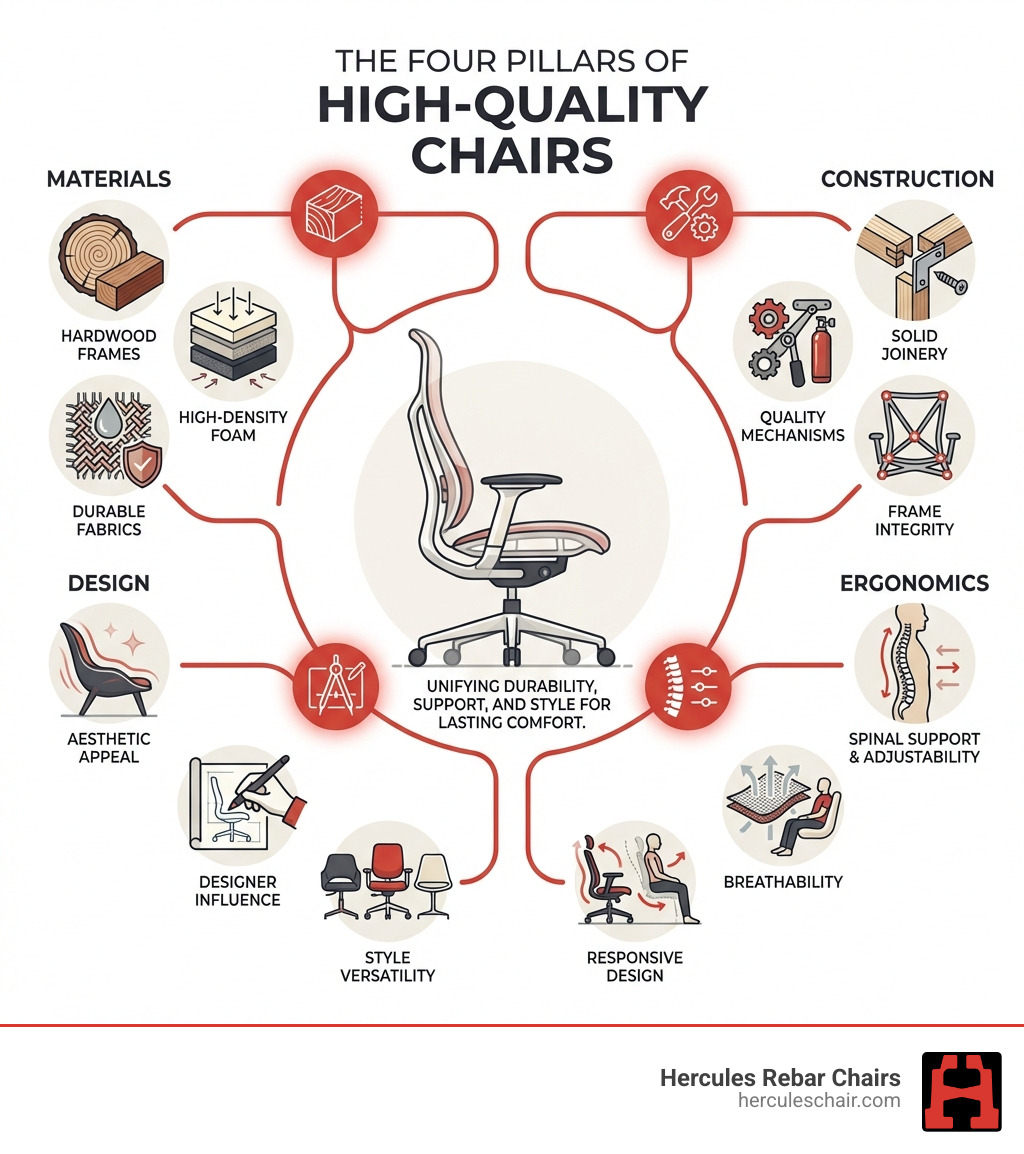
The difference between a cheap chair and a quality one shows up in three key areas: materials, construction, and ergonomic design. A well-built chair uses hardwood frames instead of particle board, CertiPUR-US® certified foams that will not break down, and mechanisms designed to support your body’s natural movement.
Herman Miller’s iconic Aeron Chair, for example, accommodates body types from the 1st to the 99th percentile and is made with over 50% recycled materials—proving that quality and sustainability can work together. Best Home Furnishings chairs feature hardwood frames and premium cushioning fibers, while brands like Ethan Allen use certified foams designed for lasting durability.
Just as Hercules Rebar Chairs focuses on strength, code compliance, and long-term performance in concrete supports, this guide breaks down what separates great chairs from mediocre ones, compares popular styles for different spaces, and shows you how to choose seating that will serve you well for years to come.
The Anatomy of Quality: What Makes a Chair Great?
When we talk about high quality chairs, we’re discussing more than just a place to sit. We’re referring to a piece of furniture carefully crafted from superior materials, assembled with precision, and designed with the user’s long-term comfort and health in mind. It is similar to how Hercules Rebar Chairs approaches concrete supports: the right materials, intelligent engineering, and reliable performance over years of demanding use.
Materials
The foundation of any high-quality chair begins with its materials. We look for durability, comfort, and often, sustainability.
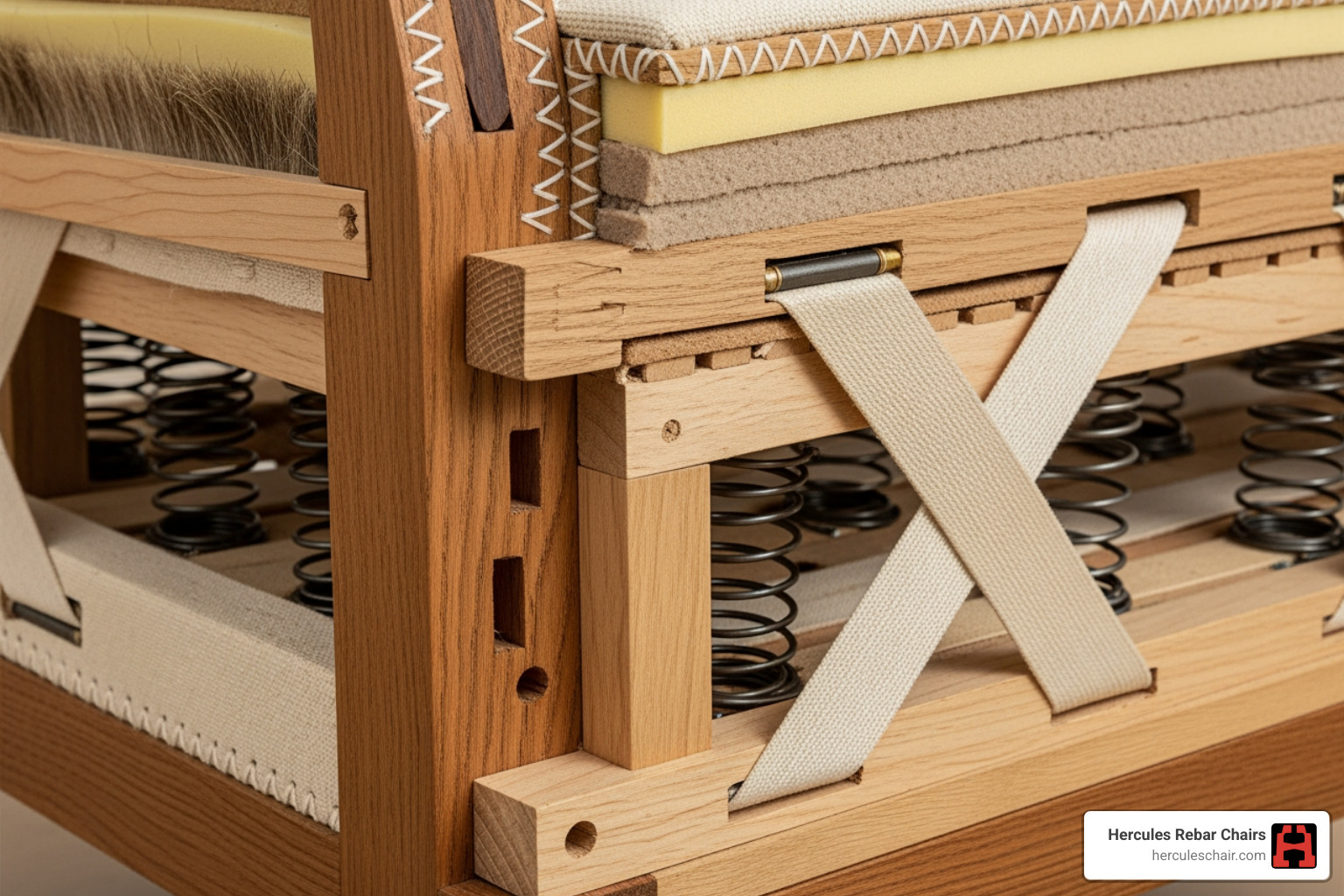
- Hardwood Frames: For structural integrity, hardwood frame construction is paramount. Brands like Best Home Furnishings pride themselves on using hardwood frames, ensuring that your chair remains sturdy and stable for years. Unlike softer woods or engineered wood products, hardwood resists warping and cracking, providing a robust skeleton for the entire piece.
- High-Density Foams & Premium Cushioning Fibers: Comfort is key, and it largely comes down to what’s inside. High-quality chairs use high-density foams and premium cushioning fibers that maintain their shape and support over time. Ethan Allen, for instance, uses foams certified through the CertiPUR-US® program, guaranteeing lasting durability and comfort without harmful chemicals. These materials prevent the dreaded “sagging seat” syndrome, providing consistent support during long meetings, project reviews, or estimating sessions.
- Durable Textiles & Leather: The outer layer of your chair faces the most wear and tear. High quality chairs offer thousands of fabric and leather options, from robust polyesters to supple, long-lasting leathers. These materials are chosen not just for their aesthetic appeal but for their resistance to abrasion, fading, and pilling, ensuring your chair looks good as new for longer—even in high-traffic construction offices and conference rooms.
Construction
Materials are only as good as the way they’re put together. Superior construction techniques are what truly define a high-quality chair.
- Frame Integrity & Joint Construction: How the frame is joined together speaks volumes about its quality. Look for solid joinery techniques like mortise and tenon, dowel, or corner blocks, which create strong, stable connections that will not loosen or creak over time. This mindset mirrors the role Hercules rebar chairs play in maintaining proper bar spacing and cover so concrete structures perform as designed.
- High-Quality Mechanisms: For chairs with moving parts, such as recliners, swivels, or ergonomic office chairs, the mechanisms are crucial. Best Home Furnishings chairs, for example, feature motion mechanisms made exclusively for them by industry leader Leggett & Platt. These robust mechanisms ensure smooth, reliable operation and prevent premature wear or failure.
Design
Beyond the physical components, the design philosophy behind a chair significantly impacts its quality perception and functionality.
- Aesthetics: High quality chairs often boast thoughtful aesthetics that blend form and function. Designers like Bill Stumpf, Don Chadwick, and Jeff Weber (known for their work with Herman Miller) create pieces that are not only comfortable but also visually striking, making them timeless additions to any space, from a home office to a project owner’s conference room.
- Designer Influence: The involvement of renowned designers often signals a commitment to innovation and excellence. Their expertise ensures that every curve, angle, and material choice serves a purpose, contributing to both the chair’s beauty and its ergonomic performance.
Ergonomics: The Science of Supportive Seating
Ergonomics is the scientific discipline focused on optimizing the interaction between people and their environment, particularly in the workplace. For chairs, this means designing seating that supports the human body’s physical and psychological needs to improve health, safety, comfort, and productivity. It is about creating a chair that works with your body, not against it—an important consideration for anyone in construction who alternates between physical work and long stretches of desk or planning time.
- Human-Centered Design: Ergonomic designs are inherently human-centered, drawing from psychology, anthropometry (the study of human body measurements), and biomechanics (the study of body movement). This ensures the chair accommodates a wide range of body types and postures.
- Spinal Support: A cornerstone of ergonomic design is proper spinal support. High quality chairs feature contoured seatbacks, adjustable lumbar support (like Herman Miller’s PostureFit SL system), and even dynamic backrests that align your spine in a natural yet active position. This promotes a comfortable, focused posture, and can be a game-changer for reducing back pain.
- Adjustability: The ability to customize your chair to your unique body is paramount. Ergonomic chairs offer a wealth of adjustments:
- Seat Height and Depth: To ensure your feet are flat on the floor and there is proper clearance behind your knees.
- Armrest Settings: Adjustable arms minimize shoulder and neck strain, allowing your arms to rest comfortably at desk height.
- Tilt and Recline Functions: Responsive tilt mechanisms, like Herman Miller’s Harmonic 2 Tilt, allow for balanced recline and natural movement, encouraging dynamic sitting.
- The Herman Miller Aeron, for example, is available in three sizes (A, B, and C) to accommodate body types from the first to the 99th percentile, showcasing the importance of fit.
- Breathability: Sitting for long periods can lead to discomfort from heat and moisture buildup. Breathable materials, such as Herman Miller’s 8Z Pellicle mesh (with eight zones of varying tension for targeted support) or other ventilated designs, improve thermal comfort by allowing air circulation, keeping you cool and focused.
- Responsive Support: The best ergonomic chairs do not just hold you; they move with you. Features like the Embody Chair’s pixelated support system automatically conform to micro-movements, distributing pressure evenly and eliminating buildup. This dynamic support promotes healthy movement and prevents stiffness.
For more insights into how proper seating can impact your well-being, we recommend exploring the scientific research on office ergonomics.
A Chair for Every Room: Comparing Popular Styles
Just as there’s a tool for every job, there’s a high quality chair for every space and purpose. Understanding the different types and their intended uses is key to making the right investment, whether you are furnishing a home office, a construction company headquarters, or a jobsite trailer where foremen and engineers spend long hours coordinating work.
How to Choose the Best High-Quality Chairs for Your Home Office
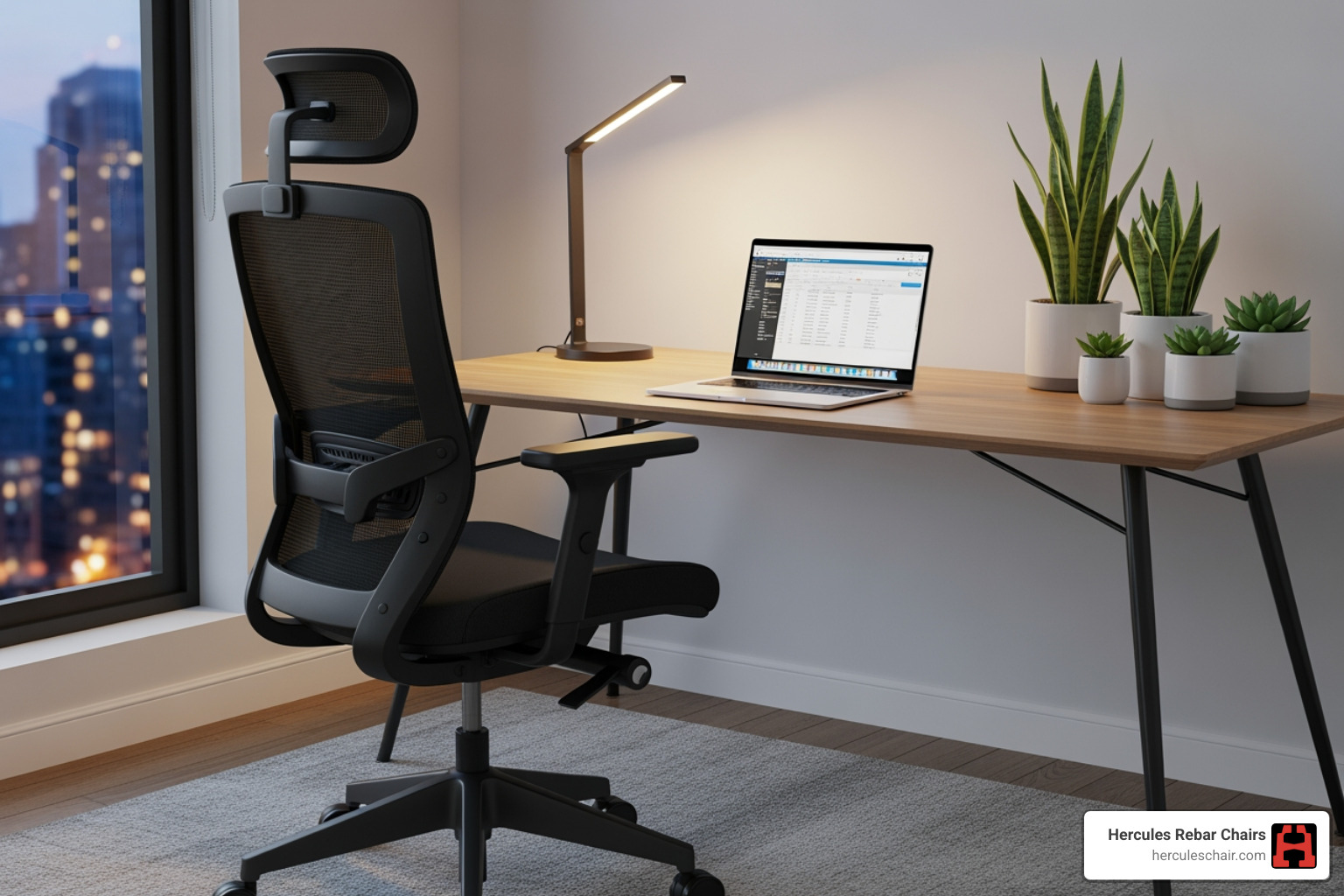
With the rise of remote work and hybrid project teams, our home offices have become central to our daily lives. Investing in a high-quality office chair is not a luxury; it is a necessity for health and productivity.
- Ergonomic Office Chairs: These chairs are task-oriented, specifically designed for long hours of sitting. Their primary goal is to provide enduring comfort and support, which translates directly into productivity benefits and significant health improvements, especially in posture correction and back pain relief. Herman Miller’s range of ergonomic chairs, including the Aeron and Embody, are prime examples.
- Key Features for Home Office Chairs: When selecting an ergonomic office chair, we look for:
- Total Spinal Support: Adjustable lumbar support that cradles the natural curve of your spine.
- Adjustable Arms: To keep your shoulders relaxed and wrists aligned with your keyboard.
- Rolling Casters: Whether you need carpet-friendly or wood-friendly casters, these allow for easy movement around your workspace.
- Breathable Fabrics: Materials like mesh or specialized textiles prevent heat buildup during long sessions.
- Responsive Tilt: Allows for dynamic sitting, encouraging micro-movements that keep your body engaged.
We understand the importance of strong support systems, not just in furniture but in foundations too. You can learn more about our commitment to durability and innovative support solutions at our products.
What Defines High-Quality Chairs for Living Spaces?
Living spaces demand chairs that blend comfort, style, and durability, catering to relaxation, conversation, and aesthetic appeal. For many construction professionals, these are the spaces where you recover after a long day on the job, so the right support matters here as well.
- Accent Chairs: These are versatile pieces, often referred to as side chairs or armchairs, designed to complement your existing furniture. They add a pop of color, texture, or a unique silhouette to a room. Ethan Allen highlights their role in filling corners, creating conversation areas, or providing extra seating.
- Style and Function: Accent chairs come in various forms, each serving a slightly different purpose:
- Wingback Chairs: Classic and cozy, offering a sense of enclosure.
- Club Chairs: Often oversized with a modern flair, perfect for sinking into.
- Swivel Barrel Chairs: Offer flexibility, allowing you to easily turn to face different directions, which can be beneficial for those with lower back pain as it reduces body twisting.
- Quality Indicators: For accent chairs, we look for hardwood frame construction (as seen in Best Home Furnishings), CertiPUR-US® certified foams for supportive seats, and a wide selection of durable fabrics and leathers that improve both comfort and longevity.
- Style and Function: Accent chairs come in various forms, each serving a slightly different purpose:
- Lounge Chairs: Designed for ultimate relaxation, lounge chairs are typically larger and more reclined than accent chairs. They often feature plush materials and generous proportions, inviting you to kick back and unwind. Pairing a lounge chair with an ottoman lifts the comfort, providing a perfect spot to stretch out. Brands like HAY focus on contemporary lounge chair designs that prioritize both comfort and aesthetics for living rooms.
Whether you are choosing seating for a home, a contractor’s office, or a project command center, the same principles apply: solid materials, reliable support, and thoughtful design—just like the red Hercules rebar chairs that keep reinforcing steel at the correct height in concrete slabs across the USA.
The Long-Term Value of Investing in High-Quality Chairs
While the initial cost of high quality chairs might seem higher, we believe it’s an investment that pays dividends over time. This is not just about avoiding “fast furniture” that quickly ends up in a landfill; it is about making a conscious choice for your health, your wallet, and the planet. For construction professionals and building owners, this long-term mindset mirrors how you evaluate structural systems, rebar supports, and other materials that must perform reliably for decades.
- Durability vs. Fast Furniture: Cheaply made chairs often use inferior materials and construction, leading to early wear, breakage, and discomfort. They require frequent replacement, which costs more in the long run and contributes to waste. High-quality chairs, built with hardwood frames, premium foams, and robust mechanisms, are designed to last for decades.
- Long-Term Cost Savings: When you consider the cost-per-year of ownership, a durable, high-quality chair often proves to be more economical than repeatedly buying and replacing cheaper alternatives. The same cost-per-use logic is what makes durable, code-compliant rebar chairs a smart choice on every slab or footing.
- Health Investment: The benefits to your health are perhaps the most compelling justification. An ergonomically designed chair significantly reduces the risk of back pain, neck strain, and other musculoskeletal issues associated with prolonged sitting. This improved comfort can lead to fewer doctor visits, less discomfort, and a better quality of life. For us, investing in comfort and proper support is an investment in your well-being.
- Sustainability: Many leading manufacturers of high quality chairs are also leaders in sustainability.
- Recycled Materials: The Herman Miller Aeron Chair, for instance, is composed of more than 50 percent recycled material, including ocean-bound plastic in certain colorways. The Embody Chair is made of 42% recycled materials.
- End-of-Life Recyclability: Beyond initial content, the Embody Chair is 95% recyclable at the end of its useful life. This commitment to circularity reduces environmental impact.
- Ethical Manufacturing: Some facilities, like those producing the Embody Chair, operate on 100% renewable electric energy. This demonstrates a holistic approach to environmental responsibility.
- Warranty as a Quality Signal: A strong warranty is a clear indicator of a manufacturer’s confidence in their product’s durability. Herman Miller offers a remarkable 12-year warranty on many of its chairs, including the Aeron and Embody. This long-term guarantee provides peace of mind and underscores the chair’s expected longevity.
At Hercules Rebar Chairs, we understand that durability is key to long-term value, whether it is in a chair or in construction. Our red rebar chairs and concrete supports are engineered to stand the test of time, helping contractors save time and money while maintaining code compliance on projects across the USA. We are committed to building products that stand the test of time. You can find more info on our commitment to durability.
Frequently Asked Questions about High-Quality Chairs
We often hear similar questions from those looking to invest in better seating. Here are some of the most common inquiries we receive:
How do I choose the right size chair for my body?
Choosing the right size chair is crucial for maximizing comfort and ergonomic benefits. It’s not a one-size-fits-all situation!
- Chair Sizing and Adjustability: We recommend looking for chairs that offer a range of sizes or extensive adjustability to accommodate different body types. For example, the Herman Miller Aeron Chair is famously available in three sizes – A, B, and C – designed to fit a wide range of body types, from the first to the 99th percentile. This ensures that most users can find a chair that truly fits them.
- Checking Seat Depth and Height Ranges: When trying out a chair, ensure your feet can rest flat on the floor with your knees at a 90-degree angle. There should be a small gap (about two fingers’ width) between the edge of the seat and the back of your knees. The armrests should allow your arms to be parallel to the floor, supporting your elbows without shrugging your shoulders.
- Trying Chairs in Person: While online research is valuable, we always suggest trying chairs in person if possible. This allows you to test the adjustability, feel the materials, and ensure the chair genuinely supports your unique posture and body shape.
Do my accent chairs have to match my sofa?
Absolutely not! In fact, we often encourage our customers to think beyond strict matching.
- Design Harmony vs. Matching: Accent chairs are called “accent” chairs for a reason—they’re meant to complement or “accent” your existing furniture, not necessarily mirror it. The goal is to create a harmonious and visually interesting space, not a perfectly uniform one.
- Using Color and Pattern: This is where you can truly express your personal style. An accent chair can introduce a bold color, a unique pattern (like a striped fabric), or a different texture (such as leather) that contrasts beautifully with your sofa. Ethan Allen notes that accent chairs can either match or stand out in a bold, complementary hue, as long as the overall furniture arrangement is harmonious.
- Creating a Focal Point: A well-chosen accent chair can serve as a focal point in the room, drawing the eye and adding character. Imagine a classic chair in a neutral hue paired with a vibrant, patterned accent chair. It adds depth and personality.
How can I justify the cost of a premium chair?
We understand that high quality chairs represent a significant investment. However, we firmly believe the long-term benefits far outweigh the initial outlay.
- Value Proposition: Consider the cost-per-use over the lifespan of the product. A chair with a 12-year warranty, used daily, will likely cost less per year than a cheaper chair that needs replacing every few years.
- Investment in Health: As we’ve discussed, an ergonomically sound chair can dramatically improve your posture, reduce existing back pain, and prevent future issues. This is an investment in your physical well-being, which can impact your productivity, mood, and overall quality of life. Think of it as a preventative health measure!
- Durability and Longevity: Premium chairs are built to last. They use superior materials and construction techniques that resist wear and tear. This means fewer replacements, less waste, and a piece of furniture that can remain a cherished part of your home or office for decades.
- Improved Productivity and Comfort: Especially for office chairs, improved comfort and support directly translate to increased focus and productivity. When you’re not constantly shifting or experiencing discomfort, your mind is free to concentrate on your tasks.
Conclusion
In summary, choosing high quality chairs is a decision that impacts more than just your decor—it is an investment in your comfort, health, and long-term well-being. We have seen that what defines a truly great chair boils down to robust materials like hardwood frames and CertiPUR-US® certified foams, meticulous construction with high-quality mechanisms, and thoughtful ergonomic design that supports your body’s natural movements. From the scientific precision of an ergonomic office chair to the stylish comfort of an accent chair, the long-term value of durability, health benefits, and even sustainability makes the initial investment worthwhile.
For builders, engineers, and contractors, this philosophy will feel familiar. Just as the right chair provides essential support for your body, the right structural supports are the foundation of any durable project. At Hercules Rebar Chairs, we apply the same focus on strength and reliability to the concrete construction industry. Our red rebar chairs and concrete supports help ensure code-compliant cover, save time on placement, and contribute to long-lasting slabs, walls, and foundations for projects across the USA.
We encourage you to prioritize quality and thoughtful design in your seating choices, just as you do when specifying critical structural components. For your next project, whether it’s outfitting your home office, a contractor’s headquarters, or a jobsite trailer, a high quality chair is a choice for a better, more comfortable future.
To explore how our commitment to strength and durability extends to construction, we invite you to learn more about our innovative support solutions.