

What Are Professional Concrete Accessories (And Why They Matter)?
Professional concrete accessories cover a wide range of tools, supports, and materials used to place, finish, reinforce, and protect concrete structures — from residential driveways to large commercial slabs.
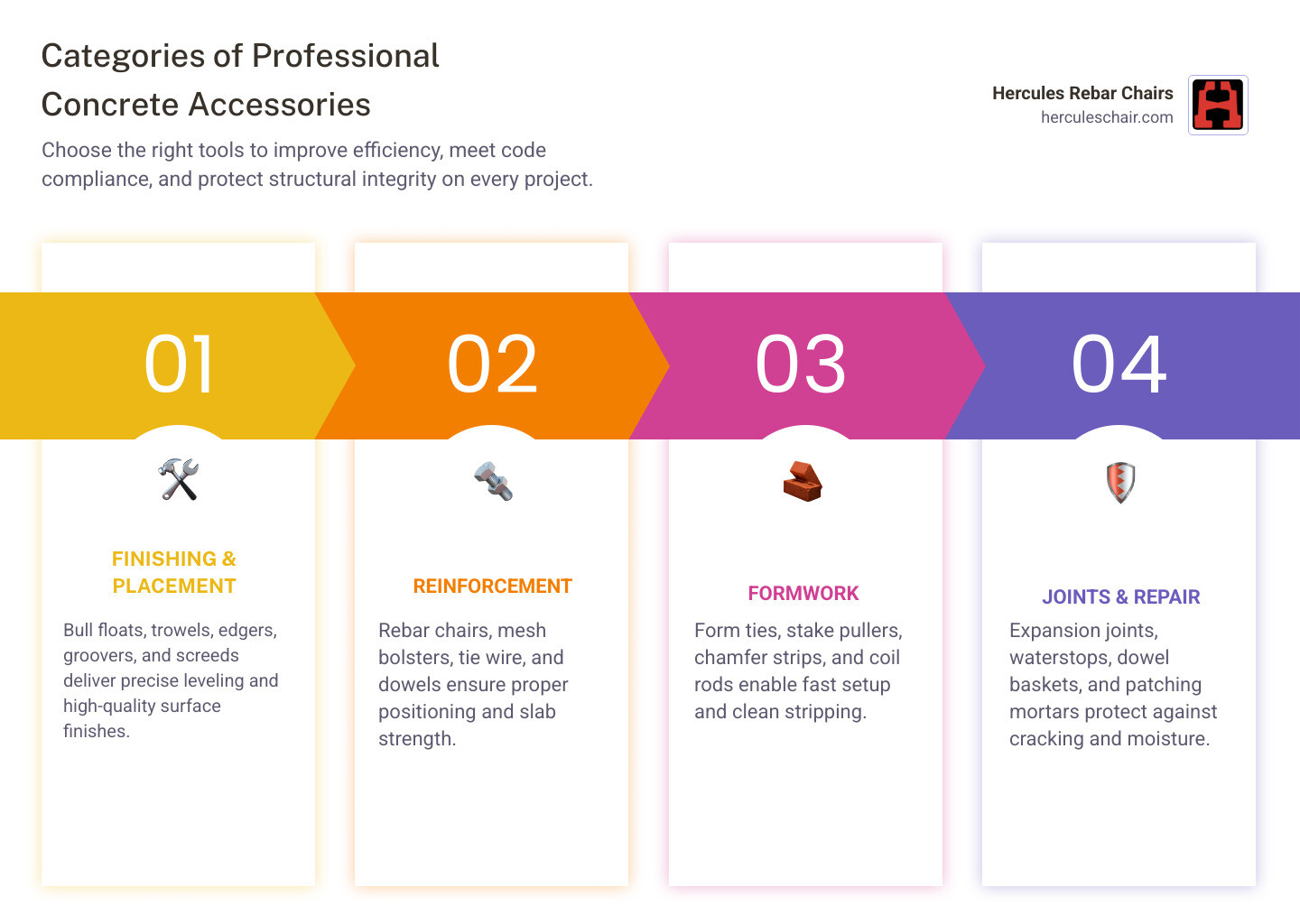
Here’s a quick overview of the main categories:
| Category | Examples |
|---|---|
| Finishing & Placement Tools | Bull floats, trowels, edgers, groovers, screeds |
| Structural Reinforcement | Rebar chairs, mesh bolsters, tie wire, dowels |
| Formwork Accessories | Form ties, stake pullers, chamfer strips, coil rods |
| Joints & Waterproofing | Expansion joints, waterstops, dowel baskets |
| Repair & Protection | Patching mortars, ADA domes, concrete stakes |
Getting these accessories right isn’t optional. Over 80% of concrete projects require specialized accessories like expansion joints, dowels, and form ties just to meet basic structural requirements. And contractors who use high-quality finishing tools report finishing jobs up to 40% faster.
The concrete accessories market reflects this demand — it’s projected to reach $12.5 billion by 2027, growing at nearly 7% per year.
Whether you’re managing a small crew or running daily commercial pours, the accessories you choose directly affect your finish quality, code compliance, and bottom line.
I’m Jordan Harris, a licensed Professional Engineer and structural engineer with hands-on experience specifying and evaluating professional concrete accessories on large-scale concrete and steel projects. In this guide, I’ll walk you through every major category so you can make smarter purchasing decisions on your next job.
Professional concrete accessories terms to learn:
Essential Finishing and Placement Tools
When we talk about the success of a pour, the finishing phase is where the “pro” is separated from the “amateur.” As we move through May 2026, the technology behind professional concrete accessories has evolved to prioritize both speed and the physical well-being of the crew.
Using high-quality concrete tools like bull floats and trowels can improve finishing efficiency by up to 40%. This isn’t just a statistic; it’s a reality on the job site. When you have the right tool, you aren’t fighting the concrete; you’re guiding it. High-grade finishing equipment ensures that the “cream” is brought to the surface quickly, allowing for a more uniform and durable finish.
Essential professional concrete accessories for Finishing and Placement
To achieve a professional-grade finish, every contractor’s trailer should be stocked with a specific arsenal of hand tools:
- Bull Floats: These are the workhorses of the flatwork world. Modern polymer bull floats offer a non-stick surface that outperforms traditional magnesium. They are lightweight, which reduces fatigue, and their rounded edges prevent gouging the fresh mix.
- Magnesium Trowels: Magnesium is the gold standard because it slides easily over the surface, opening up the pores of the concrete to allow bleed water to escape.
- Hand Edgers: Used to produce a neat, rounded edge along the forms, these help prevent future chipping and give the project a finished look.
- Walking Groovers: For larger slabs, walking groovers allow you to cut control joints without having to get on your hands and knees.
- Fresnos: These large, long-handled trowels are perfect for a final smooth finish on slabs that are too large to reach with a standard hand trowel.
We cannot overstate the importance of ergonomic tool selection. In 2026, we see more crews opting for adjustable tilt brackets and cushioned handles. These features protect the long-term health of your crew, reducing the risk of repetitive strain injuries and back pain.
Advanced Placement Equipment
For those managing larger commercial pours, hand tools are only half the story. To meet strict F-number (flatness) and FL-number (levelness) requirements, advanced placement equipment is necessary.
- Vibrating Screeds: These tools do more than just strike off the concrete; they consolidate the mix, removing air pockets that could weaken the structure. Magnesium vibrating screed boards now come in lengths ranging from 4 to 16 feet to accommodate different pour widths.
- Laser Levels: Precision is key. Laser levels ensure that your forms and your pour are perfectly on grade, saving you from expensive grinding or topping later.
- Power Trowel Blades: When the slab begins to set, power trowels take over. Using high-performance blades ensures a dense, wear-resistant surface.
- High-Performance Placement Rakes and Movers: Tools like high-performance concrete placers and other specialized movers allow workers to push and pull heavy concrete with minimal effort.
Structural Reinforcement and Formwork Systems
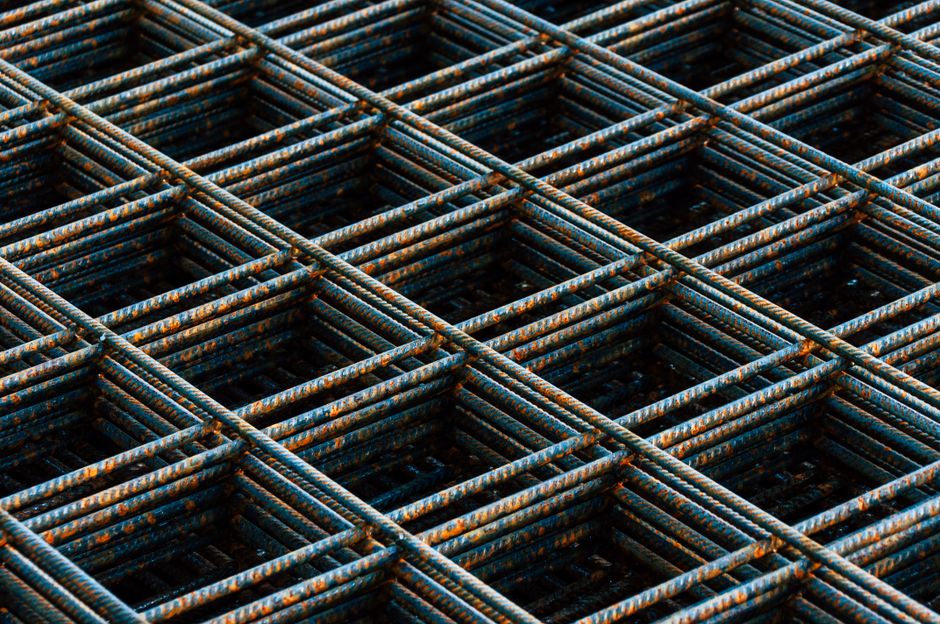
While the finish is what the client sees, the reinforcement is what ensures the structure stands the test of time. Structural integrity is the backbone of our industry, and over 80% of projects require specialized reinforcement accessories to meet building codes.
Reinforcement Positioning and Support
The most common failure in concrete slabs isn’t the concrete itself—it’s the misplacement of the rebar. If the steel is sitting on the ground, it isn’t doing its job. This is where From Rebar to Mesh: Essential Concrete Reinforcement Products Explained becomes vital reading for any builder.
- Rebar Chairs: These are essential for maintaining the correct “cover”—the distance between the steel and the surface of the concrete. We manufacture high-performance rebar chairs that are identifiable by their signature red color, making it easy for inspectors to verify that the reinforcement is properly supported.
- Mesh Bolsters: Similar to chairs, these support wire mesh in thinner slabs, ensuring the reinforcement stays in the center of the pour.
- Tie Wire and Concrete Bricks: While “dobies” (concrete bricks) are still used, modern composite chairs offer better bonding and won’t rust or cause spalling.
Ensuring code compliance through proper rebar positioning is the fastest way to avoid a “stop-work” order. Using Your Go-To Source for Concrete Reinforcing Accessories and Suppliers ensures you have the right products for the specific demands of your local jurisdiction.
| Feature | Metal Supports | Composite/Hercules Chairs |
|---|---|---|
| Rust Resistance | Low (can bleed through) | High (will never rust) |
| Weight | Heavy | Lightweight |
| Visibility | Low | High (Red color for easy inspection) |
| Code Compliance | Variable | Guaranteed |
Formwork Accessories and Stake Removal
Formwork is the “mold” for your project. If the mold fails, the project fails. The Ultimate Guide to Essential Concrete Formwork Accessories highlights the hardware needed for a secure setup.
- Form Ties and Coil Rods: These hold the forms together against the immense pressure of wet concrete.
- Chamfer Strips: These create beveled edges on columns and walls, preventing sharp corners that are prone to chipping.
- Heavy-Duty Stake Pullers: Removing stakes once the concrete has set can be a back-breaking task. Specialized tools like the JackJaw® 200 Concrete Stake Puller allow you to pull stakes straight up without bending them or damaging the fresh concrete. This not only saves your equipment but also protects your workers from back injuries.
Selecting High-Performance Professional Concrete Accessories
Choosing the right professional concrete accessories is an investment in your company’s reputation. In May 2026, the market is flooded with options, but for commercial-grade results, you need to look for specific material properties.
Specialized Professional Concrete Accessories for Longevity and Repair
A slab is only as good as its weakest joint. To ensure longevity, we must look Beyond the Mix: What Every Concrete Builder Needs to Know About Accessories.
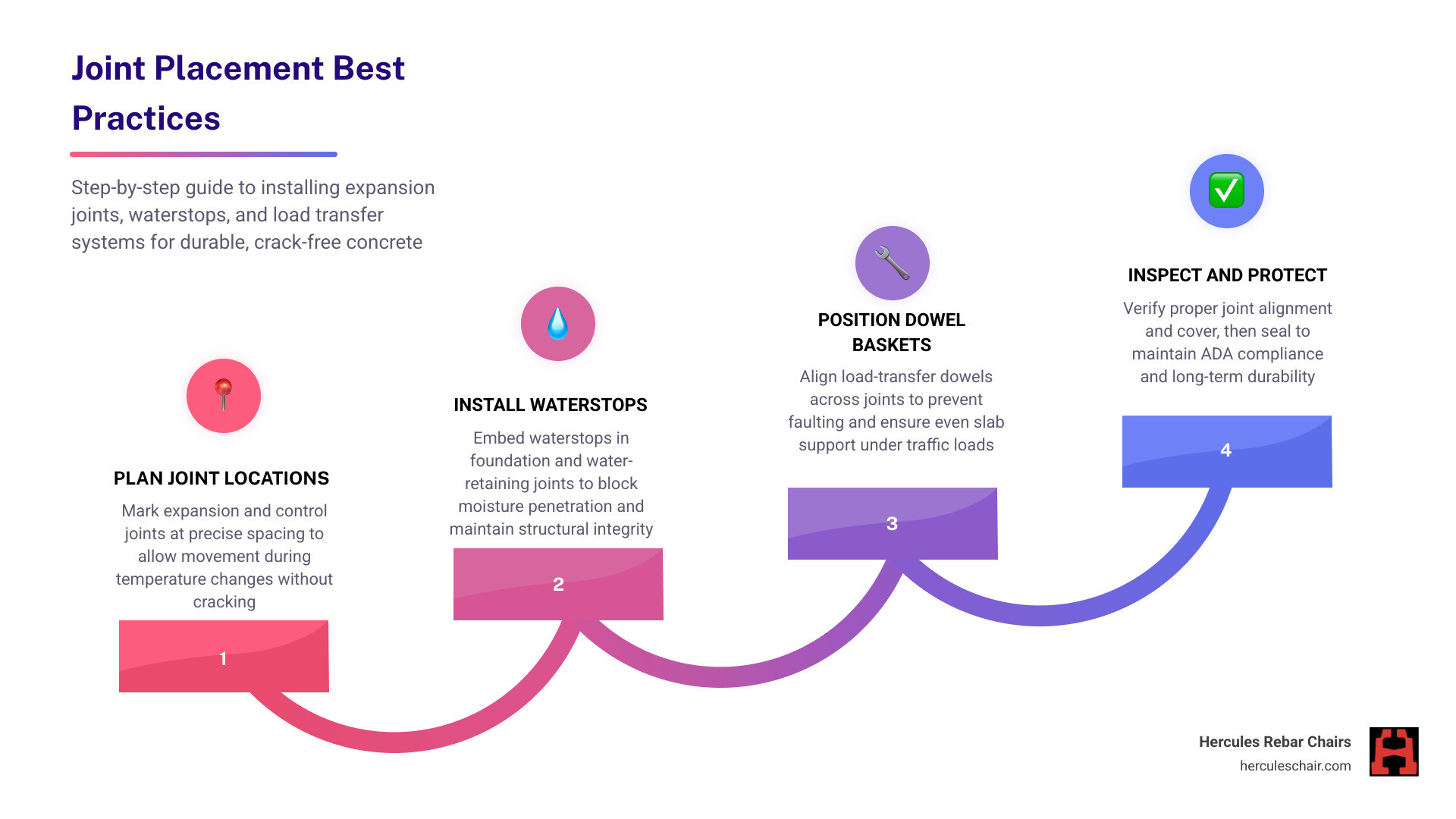
- Expansion Joints: These allow the concrete to move during temperature changes without cracking.
- Waterstops: Essential for foundations and water-retaining structures, these prevent moisture from seeping through joints.
- Dowel Baskets: These ensure that load is transferred across joints, preventing “faulting” where one slab sits higher than another.
- ADA Truncated Domes: For public walkways, these tactile warning surfaces are a legal requirement for accessibility.
When repairs are needed, using high-performance mixing and placement accessories and specialized repair mortars ensures that the patch is as strong as the original pour.
Safety, Maintenance, and Innovation
Innovation in 2026 is driven by two things: speed and safety. We’ve seen a rise in multi-function tools. For instance, some patented concrete tools now feature compound heads that allow a worker to switch from placing to screeding just by spinning the tool head. This allows crews to work up to 40% faster by carrying fewer tools.
Maintenance Best Practices:
- Clean Immediately: Concrete is easy to remove when wet, but a nightmare once it hardens.
- Use Weather-Resistant Covers: Protect your mixers and power tools with heavy-duty covers to prevent rust and electrical issues.
- Inspect Supports: Before every pour, ensure your rebar chairs are securely tied and haven’t been displaced by foot traffic.
Safety isn’t just about hard hats; it’s about the tools we use. Ergonomic handles on professional concrete tools and mechanical aids like stake pullers significantly reduce the EMR (Experience Modification Rate) for contractors, leading to lower insurance premiums.
Frequently Asked Questions about Professional Concrete Accessories
How do high-quality accessories improve project efficiency?
High-quality accessories like polymer bull floats and multi-function tools reduce the number of passes required to achieve a finish. Furthermore, using reliable rebar supports prevents the need for costly rework or failed inspections, keeping the project on schedule.
What materials should I look for in durable concrete tools?
Look for magnesium, tempered aluminum alloy, and high-density polymers. Magnesium is excellent for “opening” the surface, while polymers offer non-stick properties that make cleanup easy. For structural supports, composite materials are often superior to metal because they do not rust or corrode over time.
Why are specialized joints and waterstops necessary for structural integrity?
Concrete naturally expands and contracts. Without expansion joints and dowel baskets, this movement leads to uncontrolled cracking. Waterstops are vital in preventing water ingress, which can lead to the corrosion of internal reinforcement and the eventual failure of the structure.
Conclusion
At Hercules Rebar Chairs (T.J. Harris Co.), we understand that the smallest accessories often play the biggest role in a project’s success. As “America’s #1” provider with over 14 million units sold, we have dedicated ourselves to manufacturing the strongest rebar chairs and concrete supports in the industry.
Our products are designed to save you time and money while ensuring total code compliance. Whether you are working with local ready-mix suppliers or sourcing for a major commercial project, our signature red chairs provide the peace of mind that your reinforcement is exactly where it needs to be.
From the first stake driven into the ground to the final pass of the trowel, using the right professional concrete accessories is the hallmark of a master builder. Don’t settle for “good enough” when you can have the best.
Buy Rebar Chairs today and experience the Hercules difference on your next job site.