

Why High Performance Chairs Matter on Every Job Site
High performance chairs are the unsung heroes of reinforced concrete construction. They hold rebar at the exact height needed to ensure proper concrete cover — and when they fail, the whole slab can fail with it.
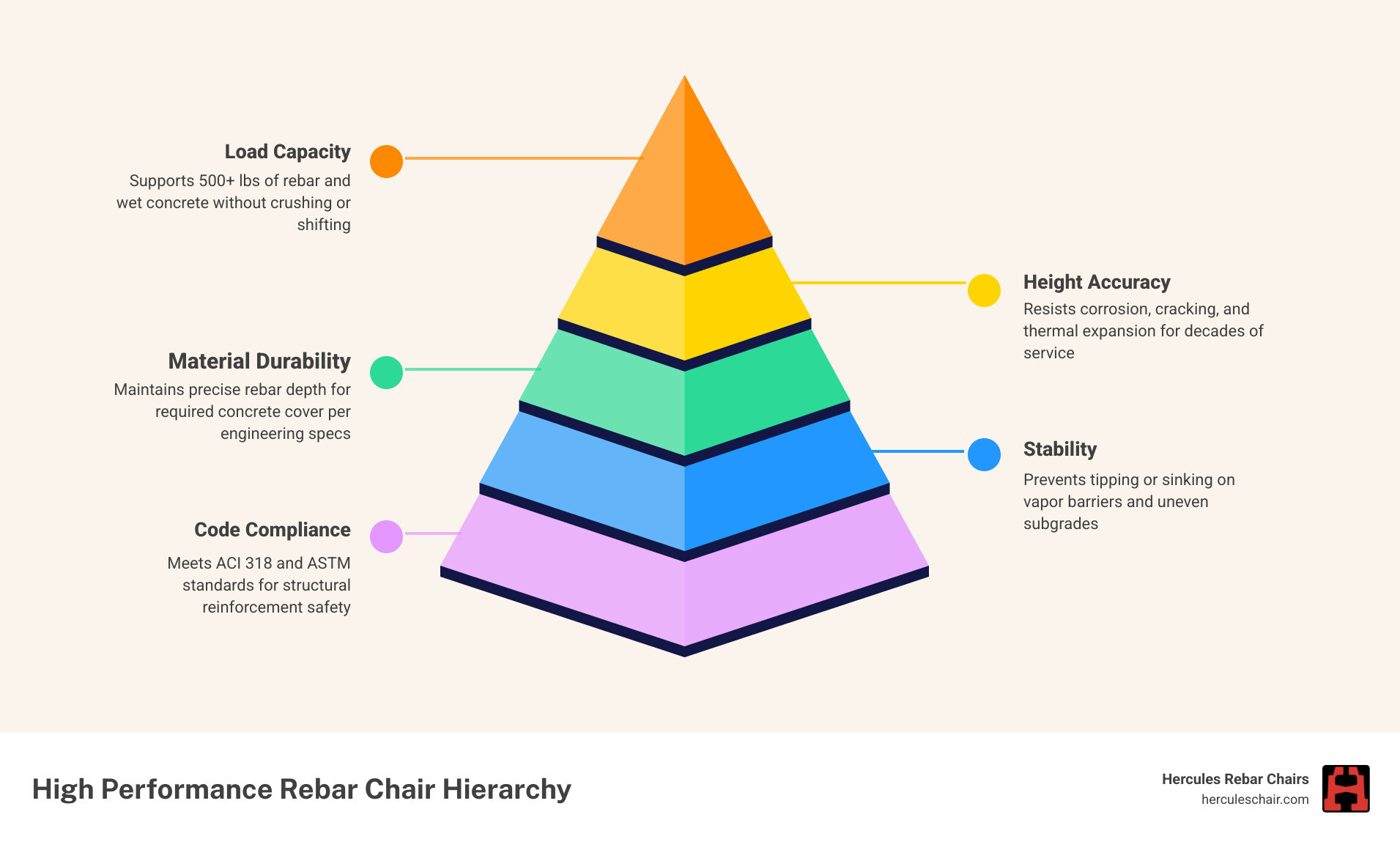
Quick answer: What makes a rebar chair “high performance”?
- Load capacity — Supports heavy rebar and wet concrete without crushing or shifting
- Height accuracy — Holds rebar at the precise depth required by engineering specs
- Material durability — Resists corrosion, cracking, and thermal expansion over time
- Stability — Won’t tip or sink on vapor barriers or uneven subgrades
- Code compliance — Meets ACI and ASTM standards for concrete cover requirements
Every concrete pour depends on rebar staying exactly where it was placed. Even a small shift in position reduces structural strength and can shorten the lifespan of a slab by decades. Choosing the right chair isn’t a minor detail — it’s a critical structural decision.
I’m Jordan Harris, a licensed Professional Engineer and product developer at T.J. Harris Company, where our team has spent years engineering rebar support solutions built for the demands of real job sites. My background in structural engineering gives me a direct understanding of how high performance chairs affect concrete integrity from the ground up. In this guide, I’ll break down exactly what separates a reliable rebar chair from one that fails under pressure.
High performance chairs definitions:
Defining High Performance Chairs in the Modern Construction Site
When we talk about high performance chairs in the context of office furniture, people often think of the Herman Miller Aeron or the Steelcase Gesture—chairs designed for 24/7 use, ergonomic support, and long-term durability. In concrete construction, the definition is surprisingly similar. A high-performance support is one that offers superior design, comfort for the structural “spine” of the building, and research-backed reliability.
Just as a premium office chair like the Embody is backed by research from over 30 physical health experts to reduce disc pressure, our high-performance rebar supports are engineered to reduce “structural pressure.” In concrete, this means ensuring that the rebar doesn’t sag or shift under the weight of the pour. If the rebar sinks, the structural integrity of the slab is compromised, leading to cracks and premature failure.
Innovation in Spacer Technology
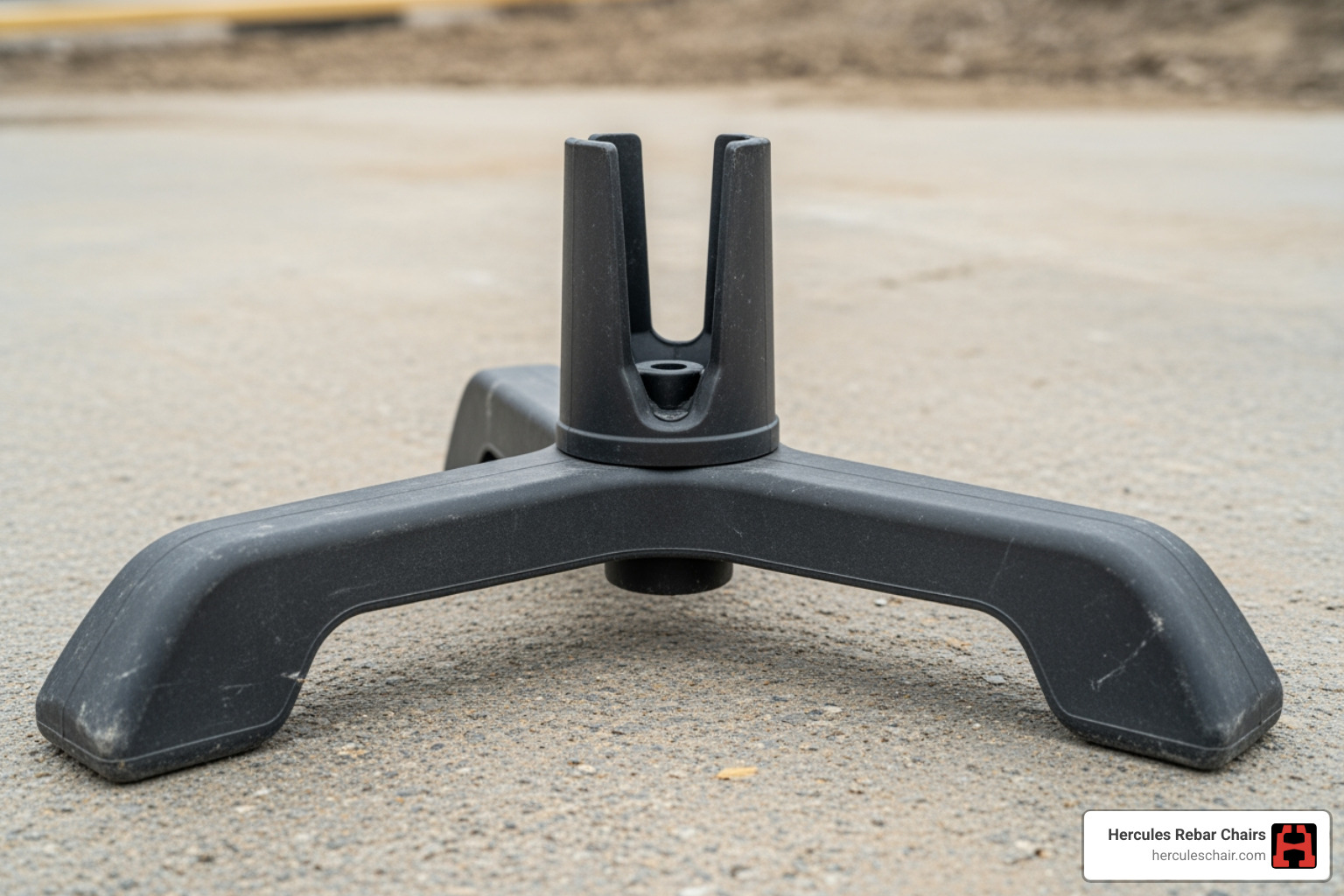
Innovation in seating isn’t limited to the office. While brands like Humanscale focus on self-adjusting technology that adapts to body movement, we focus on load-bearing stability and high-impact resistance. Modern high performance chairs for rebar must withstand the “24/7” demands of a heavy concrete pour. They aren’t just plastic bits; they are precision-engineered spacers designed to handle extreme weight loads without deforming.
For more information on what constitutes quality in this field, you can read Your Guide to the Best High-Quality Chairs Comfort Meets Durability. Much like a Steelcase chair is warranted for 24/7 multi-shift use, our supports are designed to maintain their shape and position from the moment they are tied to the rebar until the concrete is fully cured.
Advanced Adjustability in High Performance Chairs
One of the hallmarks of high-performance ergonomic seating is adjustability. The Branch Ergonomic Chair, for instance, offers eight points of adjustment to fit various body types. Similarly, high performance chairs for concrete must offer versatility to fit the specific needs of a project.
- Multi-level height options: Just as you adjust seat height for your desk, we provide chairs that offer multiple height settings to ensure the rebar sits exactly where the engineer specified.
- Compatibility with various diameters: A good chair should accommodate different rebar sizes, from standard #3 bars to heavy #6 or #8 bars used in industrial slabs.
- Stability on vapor barriers: In many modern builds, slabs are poured over vapor barriers. A high-performance chair must have a wide, stable base that won’t puncture the barrier or sink into the subgrade.
For projects involving lighter reinforcement, you might consider how to Elevate Your Slab with Concrete Mesh Chairs. These specialized supports ensure that wire mesh stays in the upper third of the slab, where it is most effective at preventing shrinkage cracks.
Scientific Testing for High Performance Chairs
The claims made by top-tier seating companies are usually backed by rigorous scientific testing. For example, the Anthros chair has been shown in university testing to reduce lumbar disc pressure by up to 40%. In our industry, we look at compressive strength testing and load distribution analysis.
High-performance rebar supports must meet ACI (American Concrete Institute) and ASTM standards. These aren’t just suggestions; they are the benchmarks for safety. We test our chairs to ensure they can handle hundreds of pounds of point-load pressure. In fact, some heavy-duty industrial chairs are warranted for users—or in our case, loads—up to 550 lbs or even 800 lbs in bariatric/heavy-duty applications.
We also prioritize “point-of-contact” visibility. Just as a “ghost” chair or a mesh back like the Herman Miller Cosm is designed to be visually unobtrusive in an office, our chairs are designed with minimal surface contact so they don’t leave large “shadows” or weak spots on the finished concrete surface. You can explore more about industrial load-bearing standards for reinforcement to see how these metrics ensure project success.
Essential Features of High-Performance Rebar Seating
Selecting high performance chairs requires an understanding of the environment they will live in. In an office, you might choose between mesh and upholstery. In concrete, you choose between tower, slab, and mesh bolsters.
Material Science in High Performance Chairs
The materials used in high-performance seating have evolved significantly. Steelcase has doubled the recycled content across its task seating portfolio, using materials like ocean-bound plastic. We take a similar approach to sustainability and performance.
Most high performance chairs in the construction industry are now made from High-Density Polyethylene (HDPE) or heavy-duty polymer blends. These materials offer:
- Thermal expansion compatibility: The material must expand and contract at a rate similar to concrete to prevent “pop-outs” or cracking.
- Chemical resistance: Construction sites are harsh. Supports must resist chemicals in the soil and the alkaline environment of wet concrete.
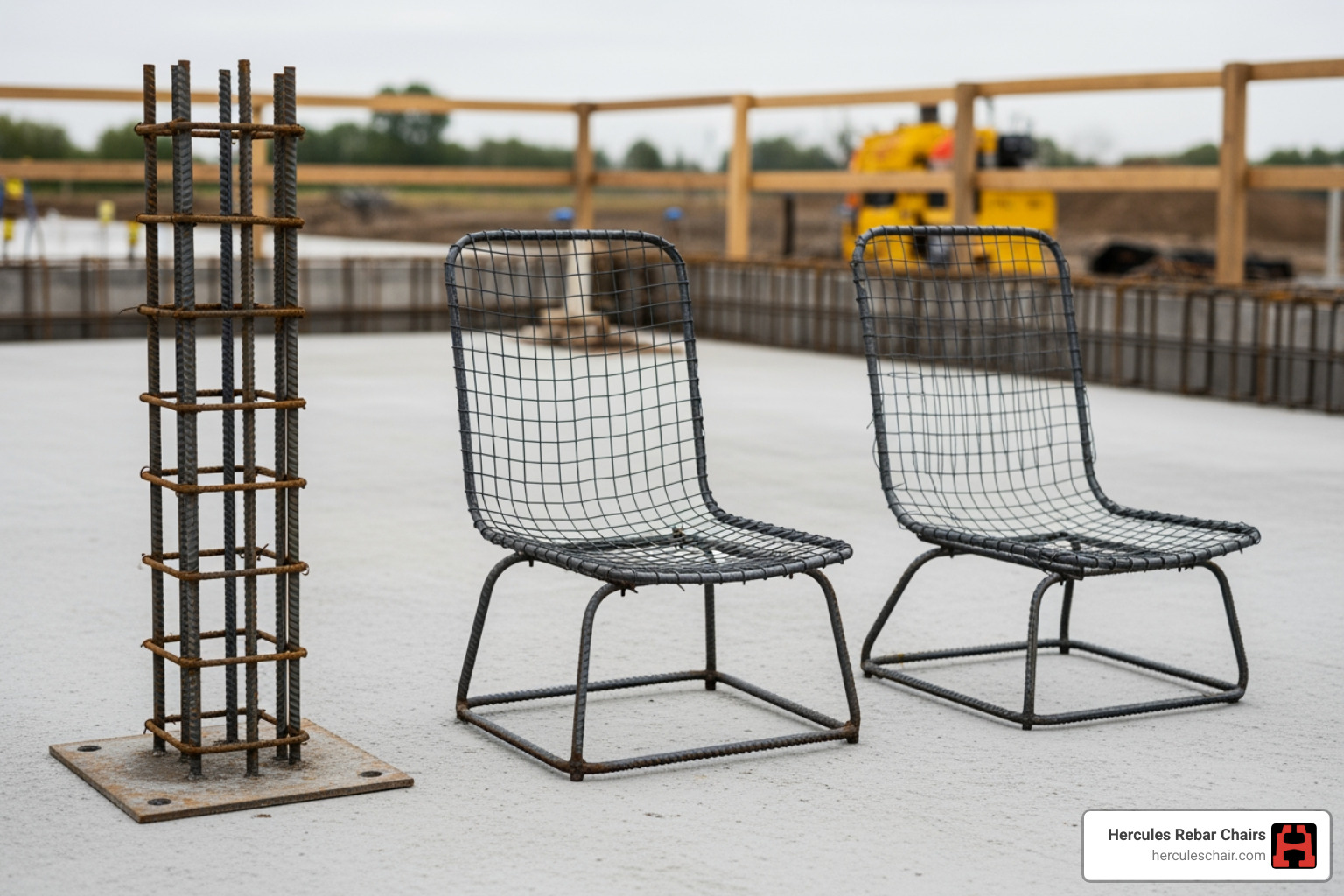
- Non-corrosive properties: Unlike old-fashioned metal chairs that can rust and cause “concrete cancer,” polymer chairs are completely rust-proof.
For a deeper dive into these materials, check out Spacer Secrets Unpacking the Role of Plastic Rebar Chairs.
Sustainability and Durability Standards
Sustainability is no longer an afterthought. Herman Miller’s Aeron is composed of more than 50% recycled material and is up to 91% recyclable. Modern construction is moving in the same direction. By using recycled industrial plastics, we reduce the carbon footprint of the project while maintaining a 50+ year design life for the structure.
Durability is the ultimate test. A Steelcase chair comes with a 12-year warranty because they know it won’t break. We build our supports so that the concrete slab won’t crack under pressure. When you use Extra Strong Rebar Supports, you are investing in the long-term health of the building.
Comparison Table: Plastic vs. Concrete vs. Metal Spacers
| Feature | High-Performance Plastic (HDPE) | Concrete Spacers | Metal Spacers |
|---|---|---|---|
| Corrosion Resistance | Excellent (Rust-proof) | Good | Poor (Can rust) |
| Weight | Lightweight / Easy to ship | Very Heavy | Moderate |
| Bonding | Excellent with polymer blends | Natural bond | Mechanical only |
| Stability | High (Wide base designs) | Moderate | Moderate |
| Cost-Effectiveness | High | Low (High shipping costs) | Moderate |
Frequently Asked Questions about High-Performance Seating
How do I determine the correct spacing for rebar chairs?
Correct spacing is vital to preventing rebar deflection (sagging). Generally, the engineering specifications will dictate the spacing, but a standard rule of thumb is every 2 to 3 feet. However, for high performance chairs, you can often optimize load distribution by calculating the weight of the rebar and the expected “live load” of workers walking on the steel during the pour. Proper placement ensures that the rebar stays in the “sweet spot” of the slab, providing maximum tensile strength.
What is the difference between mesh chairs and heavy-duty rebar chairs?
It mostly comes down to weight capacity and application.
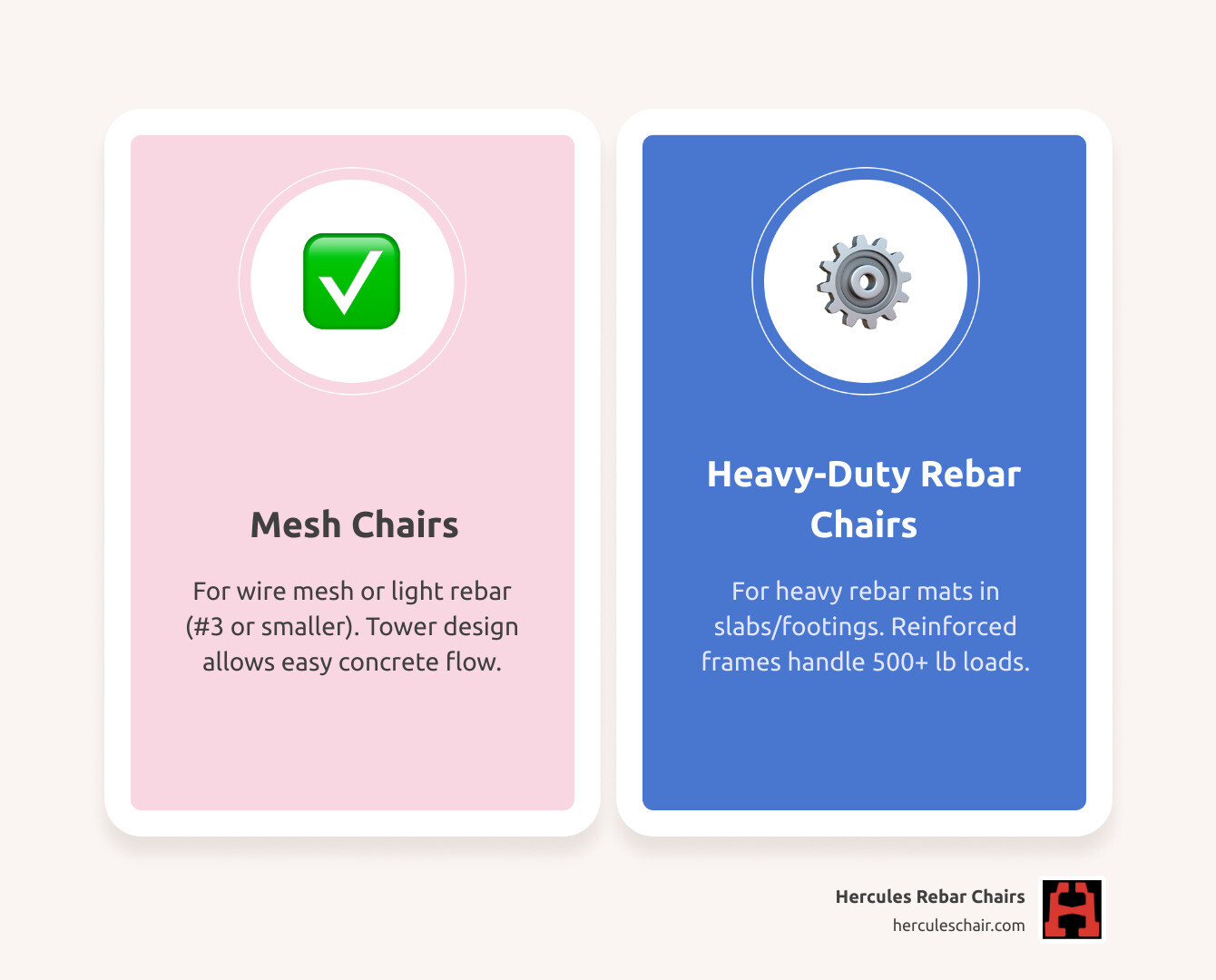
- Mesh Chairs: Designed for wire mesh or light rebar (#3 or smaller). They often have a “tower” design to allow concrete to flow through easily.
- Heavy-Duty Rebar Chairs: These are the “Embodys” of the construction world. They feature reinforced frames and can often handle 500+ lb load limits. These are used for heavy rebar mats in foundation footings or industrial warehouse floors.
How do I choose the right size chair for my project?
You must consider the “concrete cover” requirements. If you have a 6-inch slab and the engineer requires 2 inches of cover from the bottom, you need a 2-inch chair. You also need to account for the rebar grade and size. A chair that is too short will let the rebar sit too low, risking corrosion from ground moisture. A chair that is too tall will put the rebar too close to the surface, leading to surface cracking.
Conclusion
Whether you are outfitting a high-end corporate headquarters with the latest ergonomic seating or pouring the foundation for a new skyscraper, the principle remains the same: performance matters. Investing in high performance chairs is an investment in longevity, health, and structural integrity.
At Hercules Rebar Chairs (T.J. Harris Co.), we are proud to be America’s #1 choice for these critical components. With over 14 million units sold, our red chairs are a staple on job sites across the USA, from Alabama to Wyoming. We understand that saving time and money shouldn’t mean compromising on code compliance or strength.
When you’re ready to ensure your next project stands the test of time, don’t settle for “budget” supports that might fail when the concrete starts flowing. Choose the industrial-grade strength that comes with decades of research and engineering.
Buy High Performance Rebar Chairs and give your rebar the seat it deserves.