

Why Wire Mesh for Concrete Matters in Modern Construction
Wire mesh for concrete is a steel reinforcement material that strengthens concrete structures by adding tensile strength and controlling cracks. Here’s what you need to know:
What Wire Mesh Does:
- Distributes loads evenly throughout the concrete slab
- Prevents cracking from shrinkage, temperature changes, and flexural stress
- Increases durability and structural integrity
- Reduces cracks by up to 75% compared to unreinforced concrete
Common Applications:
- Residential driveways, patios, and sidewalks
- Garage floors and basement slabs
- Pool decks and outdoor living spaces
- Commercial parking areas and warehouse floors
Key Specifications:
- Available in rolls or sheets with various gauges (typically 6-gauge to 10-gauge)
- Standard mesh spacing ranges from 4″ × 4″ to 6″ × 6″
- Made from galvanized or plain steel wire welded at each intersection
Concrete is incredibly strong under compression but weak under tension. When concrete tries to bend or stretch, it cracks. Wire mesh for concrete solves this problem by creating a network of steel wires throughout the slab that absorbs tensile forces and holds the concrete together even as it shrinks during curing.
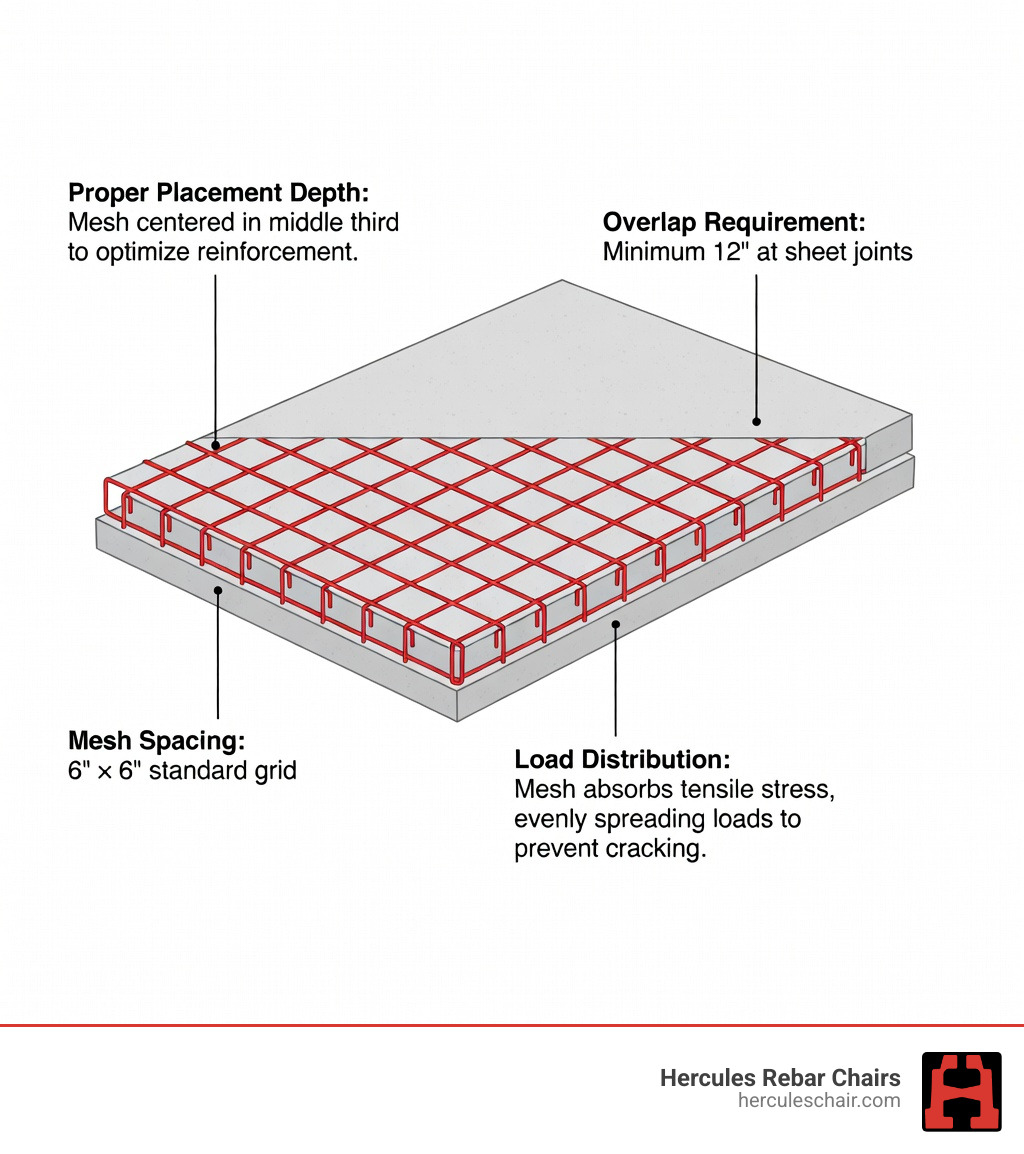
The mesh works through a simple principle: the welded steel grid becomes embedded in the concrete, creating a strong bond. When stress occurs, the load spreads across the entire mesh network rather than concentrating at one point. This uniform distribution prevents localized failures and the hairline cracks that often appear in unreinforced concrete.
I’m Jordan Harris, a licensed Professional Engineer with five years of structural engineering experience on large-scale concrete projects, and I currently help develop innovative concrete support products at T.J. Harris Company. Throughout my career, I’ve seen how properly installed wire mesh for concrete with the right support systems transforms concrete performance and longevity.
Understanding Wire Mesh for Concrete and How It Works
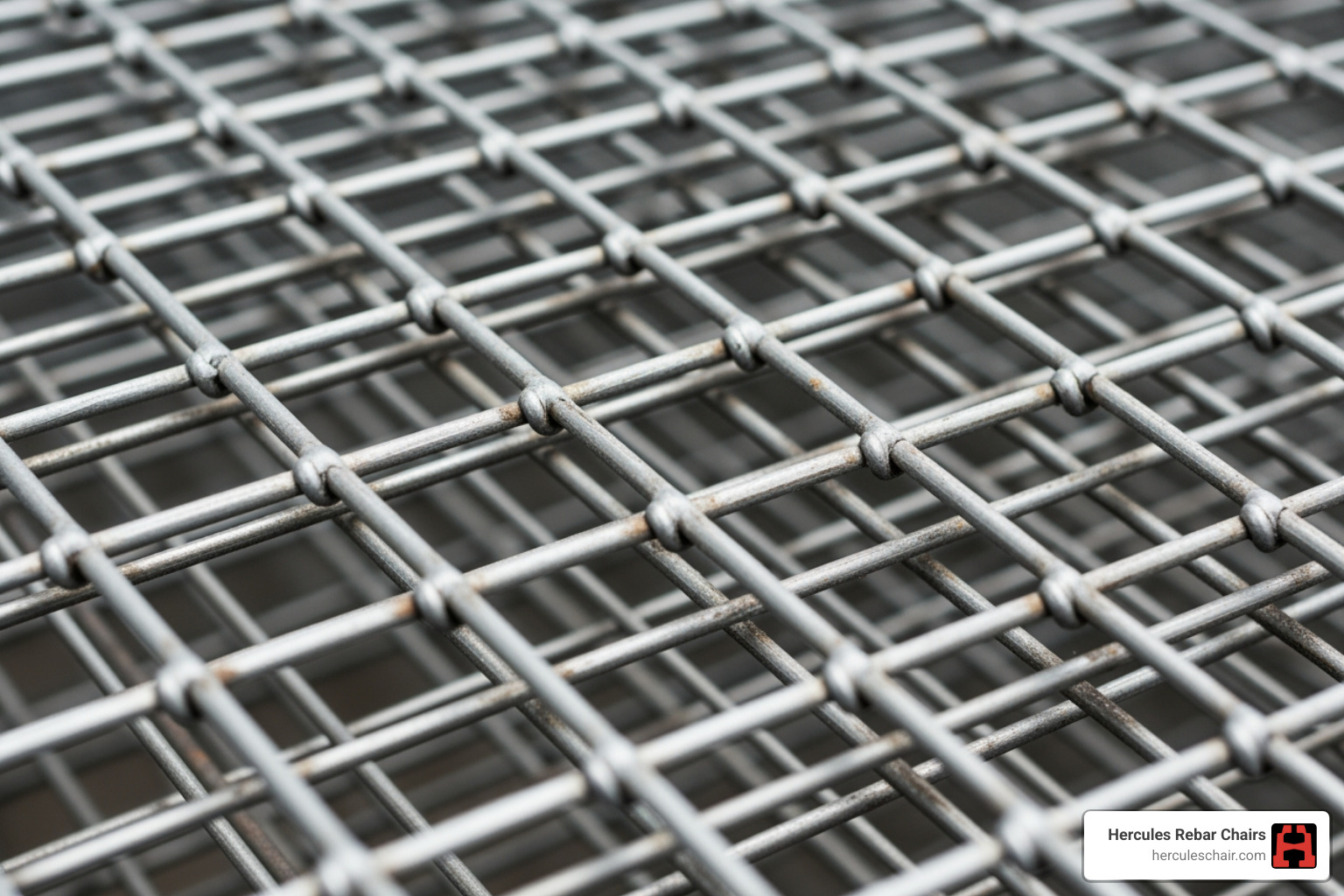
When we talk about wire mesh for concrete, we are referring to a series of cold-drawn steel wires that are arranged in a grid and welded together at every intersection. This process creates what is technically known as Welded Wire Fabric (WWF). But it isn’t just a “net” sitting in the mud; it is a sophisticated engineering component designed to handle the internal physics of a drying slab.
Concrete is a bit like a giant sponge that dries out over time. As the water evaporates, the concrete volume decreases, causing it to shrink. Without reinforcement, this shrinkage creates internal tension that pulls the concrete apart, leading to cracks. By embedding a steel grid, we introduce a material that has high tensile strength—meaning it can be pulled and stretched without breaking.
The welded intersections are the secret to its success. Unlike tied systems that can shift, the welds ensure that the load distribution remains constant across the entire surface. This is vital for managing thermal expansion. In states like Arizona or Texas, where temperatures fluctuate wildly, the concrete expands in the heat and contracts in the cold. The wire mesh acts as a skeleton, maintaining structural integrity through these cycles.
The Role of Wire Mesh for Concrete in Crack Prevention
One of the most impressive statistics in our industry is that wire mesh for concrete can reduce cracks by up to 75% compared to unreinforced or poorly reinforced structures. This is especially true for the pesky hairline cracks that ruin the appearance of a new driveway or patio.
How does it achieve this? It all comes down to uniform stress management. When concrete begins to shrink, the steel mesh resists that movement. Instead of one large, ugly crack forming where the stress is highest, the mesh forces the concrete to distribute that stress into thousands of microscopic points.
This shrinkage control is essential during the first 28 days of the curing process. By holding the “mix” together during its most vulnerable phase, the mesh ensures that the final product is a solid, cohesive unit rather than a collection of loosely joined fragments.
Structural Integrity and Durability
Beyond just looks, we use wire mesh to handle flexural stress. Think of a garage floor. When you park a heavy SUV on it, the concrete wants to bend slightly under the weight of the tires. Since concrete doesn’t like to bend, it needs the steel mesh to absorb that bending force.
The bonding between the steel and the concrete is what creates this “composite” strength. Research shows that using premium materials, like those found at Construction Wire Mesh, ensures the steel has the proper surface profile to grip the concrete tightly. This long-term performance is what prevents slabs from settling unevenly or crumbling over decades of environmental resistance.
Primary Applications and Benefits of Wire Mesh Reinforcement
We see wire mesh for concrete used in almost every residential and light commercial project across the USA. Its versatility makes it the go-to choice for:
- Residential Slabs: Kitchen and basement floors.
- Driveways: Handling the weight of daily vehicle traffic.
- Sidewalks and Paths: Ensuring long-term level surfaces for pedestrians.
- Pool Decks: Managing the constant moisture and temperature shifts near water.
If you are looking for heavy-duty options for these projects, products like the Wire Mesh for Concrete Heavy Duty Panel offer the robust support needed for higher-traffic areas.
Economic and Sustainability Advantages
From a business perspective, the economic advantages are hard to ignore. Using wire mesh can save 50% to 70% of labor time compared to manually tying reinforcement bars. Because the mesh comes pre-welded in large sheets or rolls, a small crew can cover a massive area in a fraction of the time.
There are also significant sustainability benefits. Steel is one of the most recycled materials on the planet. Most wire mesh is produced using recycled scrap, and the mesh itself is fully recyclable if the structure is ever demolished. Furthermore, by preventing cracks, you are reducing the need for future repairs and replacements, which significantly lowers the environmental impact of the project over its lifecycle.
Versatility in Construction Projects
The use of wire mesh extends far beyond simple flatwork. We see it used in:
- Roadways and Pavements: Increasing longevity under heavy traffic.
- Foundations: Specifically in footings to resist soil movement.
- Masonry Walls: Using “ladder” or “truss” mesh to strengthen brick and stone structures.
- Trench Mesh: Specifically designed long, narrow sheets for footings and pathways.
For those in specific regions like Colorado, suppliers like Revelation Steel provide specialized mesh custom to local building codes and soil conditions.
Choosing the Right Type of Wire Mesh for Your Project
Not all mesh is created equal. The “gauge” refers to the thickness of the wire—the lower the number, the thicker the wire.
- 6-gauge: Heavy-duty, used for high-load slabs.
- 10-gauge: The “standard” for residential driveways and patios.
Spacing is another factor. You’ll often see 6×6-10/10, which means the wires are spaced 6 inches apart in both directions, and both the longitudinal and transverse wires are 10-gauge. You can find these standard sizes at major retailers like The Home Depot.
Rolls vs. Sheets: Cost and Waste Considerations
This is a common debate on the job site.
- Rolls: These are generally more cost-effective per square foot. They are great for long, continuous runs like sidewalks. As noted by industry experts, rolls can be cut to any length, which reduces waste and the number of overlaps needed. You can find large rolls, such as the 5′ x 150 Ft. Concrete Wire, for big projects.
- Sheets: Sheets are much easier to handle for smaller, square areas like a shed pad. They stay flat and don’t require the “unrolling” struggle. A popular size is the Steel Reinforcing Mesh 5 ft. x 10 ft. Piece.
Key Considerations for Material Selection
When we choose mesh, we have to look at the environment.
- Plain Steel: Best for indoor slabs where moisture isn’t an issue.
- Galvanized Steel: Essential for outdoor projects or areas with high salt exposure (like coastal regions or driveways in the snowy North).
- Epoxy-Coated: Provides the highest level of corrosion resistance for harsh chemical environments.
Always ensure your mesh meets ASTM standards for quality. Whether you’re buying from Anchorage Sand & Gravel or Paramount Stone, checking for certification ensures the steel will actually perform as intended.
Best Practices and Common Mistakes to Avoid
The biggest mistake we see—and I cannot stress this enough—is placing the wire mesh directly on the ground (the subgrade). If the mesh is sitting on the dirt, it is doing absolutely nothing for your concrete. It’s just expensive trash buried under your slab.
To work, the mesh must be suspended in the middle third of the concrete slab. This allows the concrete to flow around the steel, creating that vital bond.
Avoiding Incorrect Placement and Embedding
Many crews try to “hook” the mesh and pull it up into the wet concrete during the pour. This is a terrible practice. It results in uneven placement, and as soon as a worker walks on the mesh, it sinks back to the bottom.
The only way to ensure proper height is to use dedicated supports. You should Elevate Your Slab with Concrete Mesh Chairs to ensure the reinforcement stays exactly where the engineers intended. Using a product like our 2-Inch Steel Mesh Chair – Product 944 provides a stable base that won’t tip over when walked on.
Ensuring Code Compliance with Proper Supports
Building inspectors are increasingly strict about reinforcement placement. If an inspector walks onto a site and sees mesh laying on the vapor barrier, they will likely stop the pour. Using identifiable supports, like the bright red chairs from Hercules, makes it easy for inspectors to see that you’ve followed best practices.
For a deeper dive into why these small details matter, check out our guide on Beyond the Mix: What Every Concrete Builder Needs to Know About Accessories. Proper support isn’t just about strength; it’s about being Vapor Barrier Mat compliant and ensuring the longevity of the structure.
Frequently Asked Questions about Wire Mesh
Can wire mesh be used for a driveway?
Absolutely. In fact, it is highly recommended. For a standard 4-inch residential driveway, 10-gauge 6×6 wire mesh is the industry standard. It helps the driveway withstand the weight of vehicles and prevents the slab from cracking during seasonal temperature changes.
What is the best gauge of wire mesh for a 4-inch slab?
For most residential 4-inch slabs (patios, walkways, garage floors), 10-gauge wire mesh is sufficient. If you expect heavier loads, such as a heavy machinery shed, stepping up to 6-gauge or 8-gauge provides extra peace of mind.
How do you keep wire mesh from sinking during a pour?
The only reliable method is using mesh chairs or bolsters. These supports are placed every 2-3 feet to hold the mesh at a consistent height. This allows workers to walk on the mesh during the pour without pushing it into the dirt.
Conclusion
At Hercules Rebar Chairs (T.J. Harris Co.), we’ve seen millions of square feet of concrete poured across the USA. We know that the difference between a slab that lasts 50 years and one that cracks in five often comes down to the quality of the reinforcement and how well it was supported.
We are proud to be America’s #1 choice for concrete supports, with over 14 million units sold. Our mission is to save you time and money while ensuring your project is 100% code-compliant. When you see those iconic red chairs on a job site, you know the builder cares about quality.
Ready to start your next project with the best supports in the business?
- Explore Our Products
- Buy Rebar Chairs directly from us and ensure your wire mesh for concrete stays exactly where it belongs.
Whether you are a professional contractor or a DIY enthusiast, remember: don’t just pour concrete—reinforce it for a lifetime.