

Why Building Materials Alaska Projects Depend On Are Harder to Source Than Anywhere Else in the U.S.
Building materials Alaska contractors need most — lumber, concrete, insulation, and steel — are available, but sourcing them takes more planning than in most other states. Here’s a quick overview:
| Material | Common Use | Key Consideration |
|---|---|---|
| Lumber | Framing, decking, timber structures | Most widely used; local Alaskan timber available |
| Concrete | Foundations, walls, precast elements | Must account for permafrost and freeze-thaw cycles |
| Insulation | Walls, roofs, floors | Critical for energy efficiency in extreme cold |
| Steel | Structural framing, roofing, mats | Often shipped by barge or air to remote sites |
| Engineered wood | Beams, joists, glulam | Increasingly common for spans and load requirements |
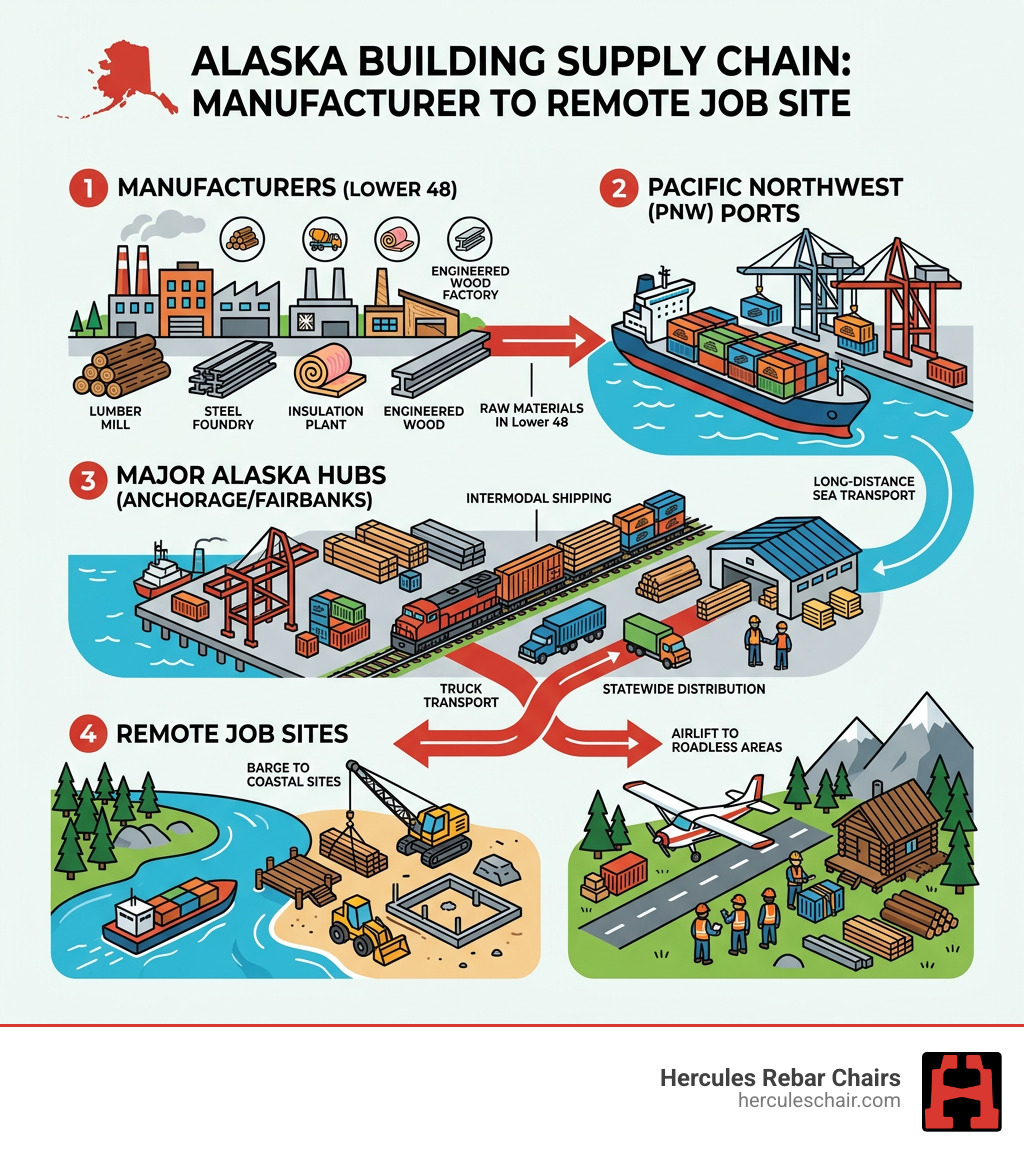
Alaska’s building market is unlike any other in the country. With a population of just over 700,000 people spread across a massive, largely roadless landscape, getting materials to a job site can be as complex as the build itself. Alaska is the only U.S. state not connected to the rest of the country by road or rail — meaning nearly all building materials must arrive by sea or air. That drives up costs and demands careful advance planning from every contractor.
Residential construction accounts for the largest share of material demand, but industrial sectors — oil and gas, mining, and marine — add layers of specialized need that you won’t find in most other markets.
I’m Jordan Harris, a licensed Professional Engineer with a background in structural concrete and steel projects, and my work developing rebar support systems has given me a close-up view of how building materials Alaska projects require — especially for concrete pours — differ from standard Lower 48 conditions. In the sections below, I’ll walk you through what to source, where to find it, and how to get it to your site.
Essential Building Materials Alaska Contractors Rely On
In the Last Frontier, “standard” doesn’t really exist. Every piece of inventory brought into the state must serve a purpose, usually involving high thermal resistance or structural integrity against seismic activity and heavy snow loads. When we look at the market, lumber remains the undisputed king of building materials Alaska builders utilize, followed closely by concrete for foundations and high-performance insulation to keep the heat in.

The demand is high; nationwide, homebuilders are predicted to break ground on 1.7 million new homes this year, and Alaska is feeling that heat despite its cold temperatures. Whether you are working on a residential cabin in the Interior or a commercial complex in Anchorage, you need a reliable pipeline.
Common material types found in Alaskan yards include:
- Kiln-Dried Lumber: Essential to prevent warping in extreme temperature shifts.
- Reinforced Concrete: Often paired with specialized supports to handle shifting ground.
- Metal Roofing: Preferred for shedding heavy snow and resisting high winds.
- Rigid Foam Insulation (XPS/EPS): Necessary for sub-grade applications and building envelopes.
Finding these items requires knowing The Best Local Building Supply Stores that understand the local logistics. For those in the major hubs, Spenard Builders Supply has been a staple for over 70 years, offering a massive range of lumber and engineered wood products (EWP) tailored for the North.
Sourcing Wood and Lumber as Building Materials Alaska
Wood is the backbone of Alaskan construction. Because of the state’s vast timber resources, some suppliers have been part of the local industry for over half a century. Using local Alaskan timber isn’t just about tradition; it supports local jobs and ensures the material is acclimated to the environment.
When sourcing, look for WWPA (Western Wood Products Association) Certified materials. This certification ensures the lumber meets structural standards for safety and performance. In addition to standard 2x4s, modern Alaskan projects heavily utilize engineered wood products:
- Glulam Beams: Great for large open spans in commercial buildings.
- I-Joists: Provide stability and allow for thicker insulation layers in floors and roofs.
- LVL (Laminated Veneer Lumber): Used for high-strength headers and beams.
Suppliers like Northland Wood have been serving the state for over 50 years, manufacturing materials directly from Alaskan resources to ensure they can withstand the “Interior” life.
Concrete and Masonry for Building Materials Alaska Projects
Concrete work in Alaska is a race against the clock and the thermometer. Because the ground is often frozen or subject to “heave,” the quality of your pour is everything. Many contractors are moving toward precast concrete for remote sites because it can be manufactured in a controlled environment and shipped ready-to-install.
For on-site pours, rebar and masonry blocks are essential. However, a common mistake in Alaska is letting the rebar sink to the bottom of the slab during the pour because of the heavy aggregate used in local mixes. This is where using high-quality concrete supports becomes a game-changer. You need tools that ensure code compliance and structural integrity in a climate that wants to crack every sidewalk it touches. For a deeper dive into who provides these heavy-duty supplies, check out the Top Concrete Contractor Supply Companies You Need to Know.
Overcoming Alaska’s Geographic and Climate Logistics
If you think a traffic jam on the I-5 is a logistical nightmare, try moving 40 tons of steel to a village that doesn’t have a single paved road leading to it. Alaska’s geography is the ultimate gatekeeper for building materials Alaska projects.
The “Bush” (remote Alaska) relies on a combination of seasonal barges and expensive air freight. If you miss the summer barge window, your project might be sitting idle until the ice thaws next year. Furthermore, the presence of permafrost — ground that stays frozen year-round — means you can’t just dig a standard trench. Materials must be chosen for their ability to handle ground movement.
| Shipping Method | Best For | Cost Level | Reliability |
|---|---|---|---|
| Barge | Bulk lumber, steel, heavy machinery | Lowest | Seasonal (Summer only) |
| Air Freight | Small hardware, urgent replacements | Highest | High (Weather permitting) |
| Trucking | Anchorage to Fairbanks/Kenai corridor | Moderate | High |
| Rail | Heavy bulk items along the “Railbelt” | Moderate | Moderate |
Extreme cold also dictates how you build. Materials like vinyl can become brittle and shatter at -40°F, while certain adhesives won’t cure. Savvy contractors choose materials that remain workable in sub-zero temperatures.
Specialized Materials for Remote Industrial and Residential Projects
Alaska isn’t just building houses; it’s building the infrastructure that powers the nation. The oil, gas, and mining industries require “industrial strength” versions of standard materials.
On the North Slope or in mining camps, you’ll see heavy use of:
- Rig Mats and Crane Mats: These provide a stable platform for heavy equipment on top of soft tundra or snow.
- Boardwalk Materials: Essential for pedestrian access in swampy coastal villages.
- Alaska Trail Mats: Specialized “hardened trail” systems that allow vehicles to move without destroying the fragile ecosystem.
For the residential side, “cabin kits” have become a massive trend. These are off-the-shelf shell packages that are “easy to ship and easy to build.” Companies like SBS offer modular 4′ panels where most components weigh under 100 lbs—perfect for two people to assemble in a remote location without needing a crane. You can find more about these specialized items through Alaska Materials, who specialize in direct-shipping these items to the most rugged corners of the state.
Sourcing and Logistics: Getting Materials to the Job Site
Once you’ve picked your materials, the real work begins: getting them there. Major suppliers in Alaska have evolved into logistics companies that happen to sell wood. They offer “value-added” services that you won’t find at a big-box store in the Lower 48.
These services include:
- Export Prep and Crating: Ensuring lumber and steel won’t be damaged by salt spray or rough handling on a barge.
- Custom Fabrication: Having glulam or steel beams drilled, trimmed, and pre-assembled before they leave the warehouse.
- Direct Ship: Bypassing local yards and shipping straight from the manufacturer to the North Slope or a remote village.
For those looking for specific exterior finishes that can handle the Alaskan sun and snow, searching for Metal Roofing Supply Near Me can help you find top-tier panels that are ready for freight forwarding.
Frequently Asked Questions about Alaska Construction
What are the most common building materials used in Alaska?
Lumber is the most common material used for framing and residential structures due to its availability and thermal properties. Concrete is the second most common, primarily for foundations, followed by high-grade insulation. Steel is heavily used in the commercial and industrial sectors, particularly for roofing and specialized mats.
How does the Alaskan climate affect material availability and pricing?
The climate creates a “seasonal” market. Prices often spike in the spring as everyone rushes to start projects during the short building season. Availability can be limited by shipping windows; if a barge is delayed by a storm in the Gulf of Alaska, entire regions may run out of specific supplies for weeks.
Where are the major building material suppliers located in Alaska?
Most major suppliers are headquartered in Anchorage, Fairbanks, and Wasilla—the “Railbelt” area. However, many have satellite yards or delivery hubs in the North Pole, Soldotna, and Juneau to serve nearly 60% of the state’s population with same-day or next-day service.
Conclusion
Sourcing building materials Alaska builders can trust is about more than just finding the lowest price; it’s about finding a partner who understands the logistics of the North. Whether you are pouring a foundation in the permafrost of Fairbanks or building a remote cabin on the Kenai Peninsula, your materials are only as good as the supports that hold them in place.
At Hercules Rebar Chairs, we know that Alaskan projects don’t have room for error. When you’re hundreds of miles from the nearest hardware store, you need your concrete reinforcement to stay exactly where it belongs. Our “America’s #1” rebar chairs are designed to save you time and money while ensuring full code compliance. Identifiable by their bold red color, our supports have been used in over 14 million units across the country, providing the stability needed for the toughest Alaskan pours.
Ready to secure your next project? Buy Rebar Chairs today or explore our full range of concrete construction products to ensure your Alaskan build stands the test of time and temperature.