

Understanding Concrete Reinforcement Products
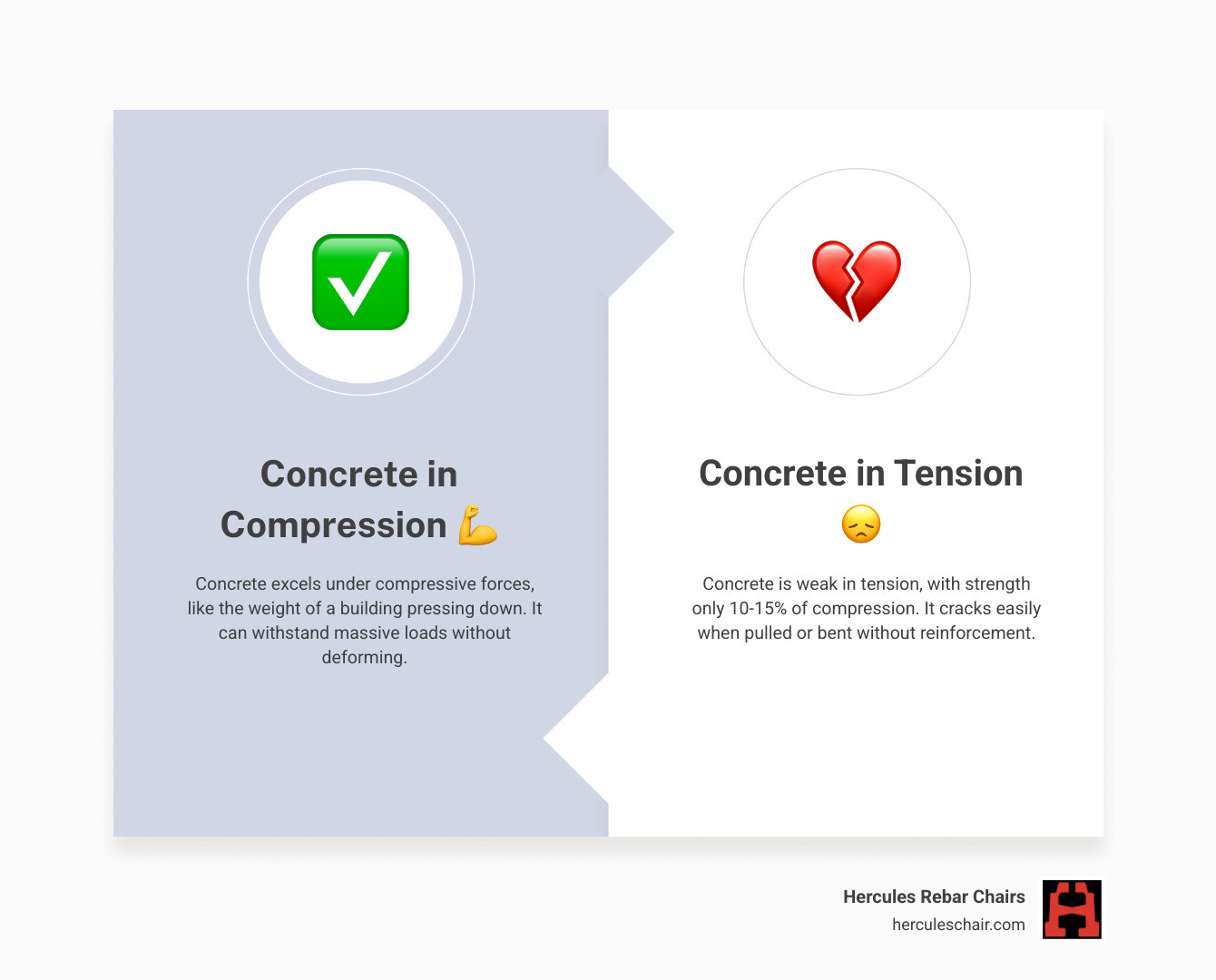
Concrete reinforcement products are materials embedded in concrete to provide tensile strength and structural support where concrete alone would fail. While concrete excels in compression, its tensile strength is only about 10-15% of its compressive strength—making reinforcement essential for slabs, beams, columns, and other load-bearing structures.
Primary concrete reinforcement products include:
- Steel rebar (deformed bars in grades 40, 60, and 75)
- Welded wire mesh (wire fabric for slabs and flatwork)
- Epoxy-coated and galvanized rebar (corrosion-resistant options)
- PC strand (prestressed concrete applications)
- Synthetic and steel fibers (secondary reinforcement for crack control)
- FRP bars (fiber-reinforced polymer alternatives)
Nearly everyone involved in construction knows that reinforcement is often used in concrete. However, why it is used and how it is used are not always well understood. The reality is simple: concrete cracks under tension. Reinforcement doesn’t prevent cracks entirely, but it limits their width and keeps structures safe under load.
Choosing the right reinforcement depends on your project’s load requirements, environmental conditions, and budget. Steel rebar remains the most common choice for structural applications, while wire mesh works well for residential driveways and sidewalks. Corrosive environments—like bridge decks exposed to deicing salts—often require epoxy-coated or stainless steel options.
Proper installation matters just as much as product selection. Reinforcement must be positioned correctly within the concrete pour to provide maximum benefit. Too close to the surface and you risk rust stains or shadowing. Too deep and it won’t effectively resist tensile forces. This is where rebar chairs and spacers become critical tools on the job site.
I’m Jordan Harris, and I’ve spent my career working with concrete reinforcement products—first as a structural engineer on large-scale power generation projects, and now at T.J. Harris Company, where we manufacture rebar support systems trusted on job sites nationwide. Throughout this guide, I’ll walk you through everything contractors need to know about selecting, specifying, and installing reinforcement products that deliver lasting structural performance.
Why Concrete Reinforcement Products are Essential for Structural Integrity
When we talk about structural integrity, we are really talking about the ability of a building or slab to handle the forces acting upon it. Concrete is a bit like a heavyweight boxer: it can take a massive hit from above (compression) without flinching. However, if you try to pull it apart or bend it, it snaps like a dry cracker. This is because the tensile strength of concrete is only about 15% of its compressive strength.
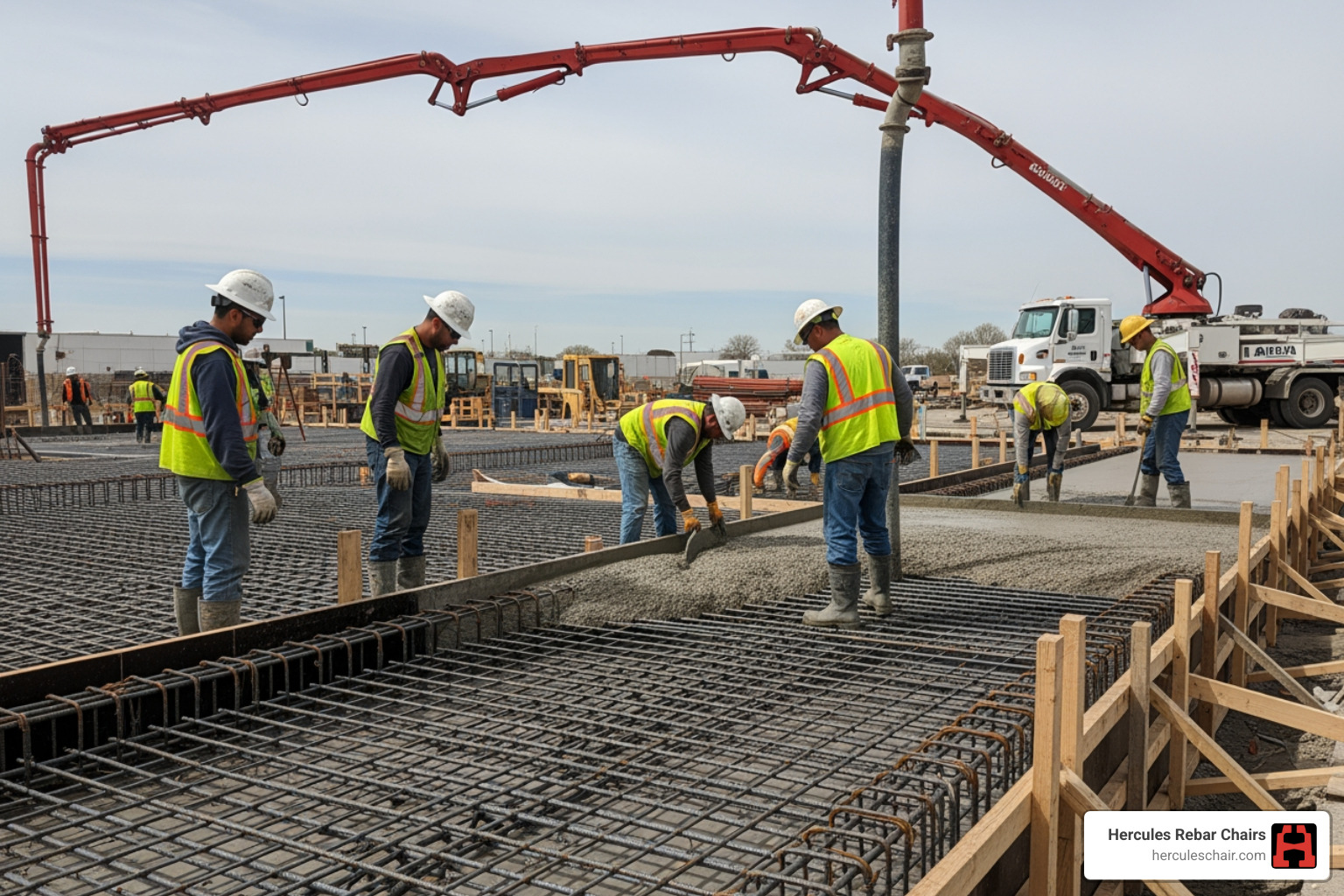
To fix this “weak chin,” we use concrete reinforcement products. These products absorb the tensile forces that occur when a slab settles, carries heavy loads, or undergoes thermal changes. Without reinforcement, a concrete beam would simply buckle under its own weight once the tension at the bottom of the beam exceeded its very low limit.
One of the most fascinating things about steel and concrete is how well they get along. Their Coefficients of Linear Thermal Expansion are remarkably similar. This means that when the temperature rises in a hot Alabama summer or drops in a Wyoming winter, the steel and concrete expand and contract at nearly the same rate. If they didn’t, the internal stress would tear the concrete apart from the inside out.
However, not every single pour requires heavy-duty steel. You might find yourself asking, Why Your 4-Inch Slab Might Not Need Rebar (And When It Does). Generally, for slabs thicker than 5 inches or those carrying heavy vehicle traffic, reinforcement is non-negotiable. For thinner residential pads, the decision often comes down to subbase quality and the desired lifespan of the project.
Regardless of the reinforcement type, it must be protected. This leads us to the concept of “concrete cover”—the distance between the reinforcement and the surface of the concrete. Understanding Rebar’s Armor: Understanding Concrete Cover and Its Critical Role is vital because if the steel is too close to the edge, moisture and salts will reach it, causing it to rust. When steel rusts, it expands, which ironically causes the very concrete it’s supposed to protect to spall and crack.
Primary Types of Concrete Reinforcement Products
Choosing the right “skeleton” for your concrete depends on where you are building and what you are building. The industry has evolved significantly since the 14th-century Château de Vincennes used 2,500 meters of iron to reinforce its tower. Today, we have a specialized menu of concrete reinforcement products designed for every environment.
Steel Rebar Grades and Specifications
In the United States, rebar is primarily manufactured in Grades 40, 60, and 75. Grade 60 (420 MPa) is the undisputed heavyweight champion of modern construction, used in everything from residential foundations to massive highway overpasses.
The Standard Specification for Deformed and Plain Carbon-Steel Bars (ASTM A615) ensures that the rebar you buy has the necessary yield strength. US sizes are based on 1/8-inch increments; for example, a #4 bar is 1/2 inch in diameter, while a #8 bar is a full inch thick. If you are working on international projects, you’ll encounter metric sizes (like 10M or 15M) and European standards which typically utilize a yield strength of 500 MPa.
| Material | Relative Cost | Corrosion Resistance | Best Use Case |
|---|---|---|---|
| Carbon Steel | Low | Low | General construction, dry environments |
| Epoxy-Coated | Medium | High | Bridge decks, deicing salt areas |
| Galvanized | High | Very High | Marine environments, exposed structures |
| Stainless Steel | Very High | Excellent | 100-year service life projects |
| Fiberglass (FRP) | Medium | Excellent | Non-magnetic or high-salt areas |
Welded Wire Mesh and Pool Wire
Not every project needs the bulk of #5 rebar. For many residential driveways, patios, and sidewalks, welded wire mesh (or wire fabric) is a cost-effective alternative. It consists of a grid of longitudinal and transverse wires welded together at intersections.
A specialized version of this is “Pool Wire” or Steeltex. This is a paper-backed wire mesh used specifically in the construction of in-ground swimming pools. It acts as a stabilizer for the excavated area and provides a backing for the concrete (shotcrete or gunite), which significantly limits waste. To keep this mesh at the right height during the pour, you should Elevate Your Slab with Concrete Mesh Chairs. Using a specific 2-Inch Steel Mesh Chair Product 944 ensures the mesh doesn’t end up sitting on the dirt, where it offers zero structural benefit.
Secondary Reinforcement: Fibers and Alternative Materials
While steel provides primary structural support, secondary reinforcement focuses on the “small stuff”—specifically plastic shrinkage cracking. This happens when water evaporates from the surface of the concrete faster than it can bleed to the top, causing the surface to pull apart while it’s still “green.”
Synthetic fibers, usually less than 0.12 inches in diameter, are mixed directly into the wet concrete. Products like UltraFiber 500® are popular because they won’t “ball” or “fuzz” on the surface, allowing for a clean finish that still accepts decorative color.
For more intense applications, steel fibers can be used to improve flexural strength. You can even find multi-tasking products like Brickform Ultra-M1x, which adds both color and fiber reinforcement in one go. It’s important to remember that while fibers are excellent for crack control, they are generally not considered a replacement for structural rebar in load-bearing beams or columns according to ACI 318 standards.
Emerging Trends in Concrete Reinforcement Products
The industry is always looking for ways to beat the “rust clock.” Fiber-reinforced polymers (FRP), particularly Glass Fiber Reinforced Polymer (GFRP) bars, are gaining traction. They are 100% rustproof and non-magnetic, making them perfect for MRI rooms in hospitals or bridge decks in the Florida Keys.
However, they do have a different GFRP Bar Transverse Coefficient of Thermal Expansion compared to steel, which engineers must account for in their designs. Another major trend is sustainability. Companies like Nucor now produce steel bar products made from 97% recycled steel, making modern rebar one of the most recycled products on the planet.
Best Practices for Installing Concrete Reinforcement Products
You can buy the most expensive stainless steel rebar in the world, but if your crew throws it in the mud and walks all over it during the pour, you’ve wasted your money. Proper placement is the difference between a 50-year structure and a 5-year disaster.
First, ensure the rebar is clean. Loose rust is okay, but mud, oil, or thick mill scale will prevent the concrete from bonding to the rebar’s “lugs” (those ridges on the bar). When connecting bars, you must follow a Rebar Placement Guide to ensure proper lap splices. Most codes require splices to meet 125% of the yield strength of the bar. For tight spaces where lapping isn’t possible, Rebar Couplers: Your Ultimate Guide to Connecting Steel Strong provide a mechanical connection that saves space and steel.
Mastering Foundation Strong: Mastering Rebar Placement for Lasting Concrete involves more than just tying wire; it involves ensuring the cage doesn’t shift during the pour. We saw the tragic result of rebar displacement during the 1989 Cypress Street Viaduct collapse, where shifting steel contributed to a catastrophic failure during an earthquake.
The Role of Rebar Chairs and Spacers
This is where we get passionate. In the old days, contractors used “dobies” (small blocks of concrete) or, worse, rocks and broken bricks to prop up rebar. These are unreliable and often lead to moisture wicking into the structure.
To get the best results, you need to know How to Determine Bar Chair Sizes in 3 Easy Steps. The goal is to keep the reinforcement at or just above the mid-depth of the slab. If the rebar is too low, it’s just sitting in the dirt. If it’s too high, you get “rebar shadowing,” where the outline of the steel is visible on the surface.
Using a dedicated Keep Your Rebar Up: A Guide to Concrete Support Blocks or high-quality plastic/steel chairs ensures the steel stays exactly where the engineer intended. We believe that Elevate Your Concrete: Why Bar Chairs Are Essential for Strong Slabs because a stable cage allows for a faster, more confident pour.
Frequently Asked Questions about Concrete Reinforcement
When is reinforcement necessary for a concrete slab?
While a 4-inch sidewalk might survive without steel if the ground is perfectly compacted, we generally recommend reinforcement for any slab over 5 inches thick or any surface that will hold more than just foot traffic. If you are unsure about the height of your supports, check out The Goldilocks Guide to Concrete Bar Chair Sizes: Not Too Big, Not Too Small.
What is the difference between pretensioned and post-tensioned concrete?
Both are forms of “prestressed” concrete. Pretensioning happens in a factory: steel strands are stretched, concrete is poured around them, and once the concrete hardens, the strands are cut, “squeezing” the concrete together. Post-tensioning happens on-site: the strands are placed in plastic sleeves, the concrete is poured, and after it hardens, the strands are pulled tight using hydraulic jacks. This makes the concrete incredibly efficient and allows for much thinner slabs and longer spans.
How does reinforcement prevent concrete cracking?
It’s a common myth that rebar prevents cracks. It doesn’t! Concrete is going to crack—it’s just what it does. However, reinforcement acts like a thousand tiny hands holding the concrete together. It distributes the stress and ensures that instead of one giant, structural crack, you get many tiny, invisible “hairline” cracks. When selecting your supports, remember The Strong Silent Type: Choosing the Best Steel Rebar Chairs for Your Project to ensure your reinforcement stays silent and effective deep within the slab.
Conclusion
At Hercules Rebar Chairs (T.J. Harris Co.), we understand that the strength of America’s infrastructure depends on the quality of the concrete reinforcement products hidden inside it. With over 14 million units sold, our red chairs have become a staple on job sites from Florida to Alaska. We take pride in helping contractors ensure code compliance and structural lastingness while saving time and money on labor.
Whether you are pouring a simple backyard patio or a complex industrial foundation, always insist on high-quality materials and proper documentation, such as mill test certificates, to verify the grade and origin of your steel. Ready to elevate your next project? Buy Rebar Chairs directly from the experts who have been supporting the industry for generations. Together, we can build concrete structures that truly stand the test of time.