

Understanding Standard Bar Chairs Concrete Sizes and Heights
When we talk about bar chairs concrete sizes, we are usually referring to the “cover” or the distance the chair holds the steel off the ground or the formwork. In the United States, we live and breathe by the inch, specifically in 1/4-inch increments. Precision is everything in our industry; a quarter-inch might not seem like much, but in a 4-inch slab, it can be the difference between a lifetime of service and a structural failure.
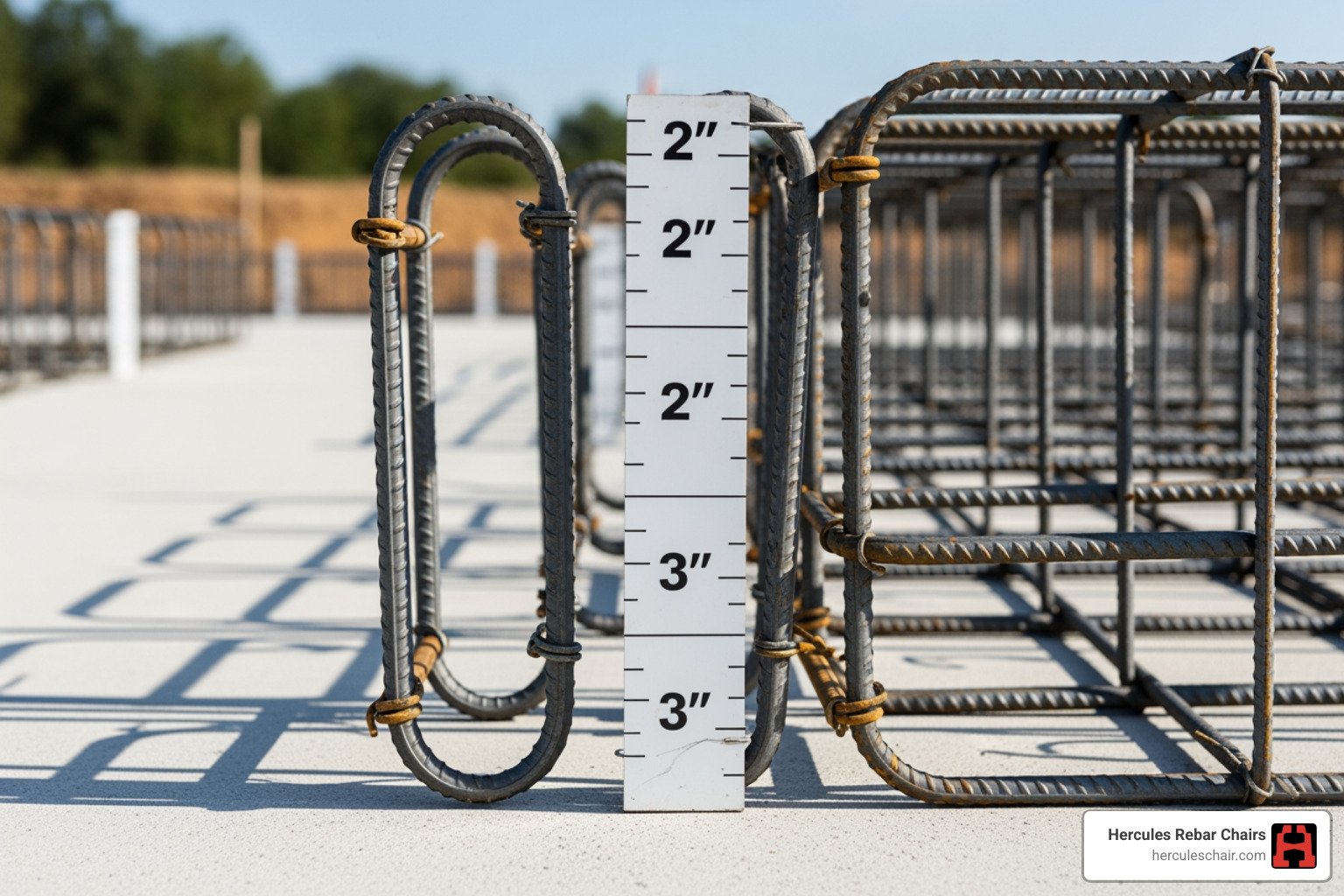
Standard heights for common bar chairs typically start as low as 3/4″ and go up to 6″. For most slab-on-grade projects, you’ll find yourself reaching for chairs in the 1-1/2″ to 4″ range. If you are unsure how to measure or select the right height for your specific project, we recommend checking out our guide on how to determine bar chair sizes in 3 easy steps.
Common Height Ranges for Slabs
For the majority of residential pours—think driveways, patios, and garage floors—the “sweet spot” for bar chairs concrete sizes is between 3/4″ and 2″. These smaller chairs are designed to keep light rebar or wire mesh right in the center of the concrete pour.
For example, our 2 inch steel mesh chair product 944 is a staple for contractors who need a reliable, consistent 2-inch clearance. Using a 2-inch chair in a 4-inch slab ensures your reinforcement is perfectly positioned to handle tension loads.
As the project scale increases to commercial warehouses or heavy-duty industrial floors, heights often jump to the 3″ to 4-1/4″ range. At these heights, the chairs must be more robust to handle the weight of heavier rebar and the foot traffic of workers during the pour.
Metric vs. Imperial Sizing Standards
While we primarily use imperial units in the U.S., many global projects and some specialized domestic specifications use metric sizing. It is helpful to know that a 25mm chair is roughly equivalent to 1 inch, while a 75mm chair is approximately 3 inches.
Many manufacturers provide “Combination Bar Chairs” that offer dual heights, such as 25/40mm or 50/65mm. This allows a single chair to be flipped or adjusted to meet two different cover requirements, which can be a real space-saver on a crowded job site. However, for most American projects, sticking to the standard 1/4-inch imperial increments ensures you stay compliant with local building codes and engineer specifications.
Types of Bar Chairs and Their Applications
Not all chairs are created equal. The type of base on a bar chair is just as important as its height. If you use a thin-legged chair on a soft sand base, that chair is going to sink the moment a worker steps on the rebar, and your “3-inch cover” will quickly turn into 1 inch.
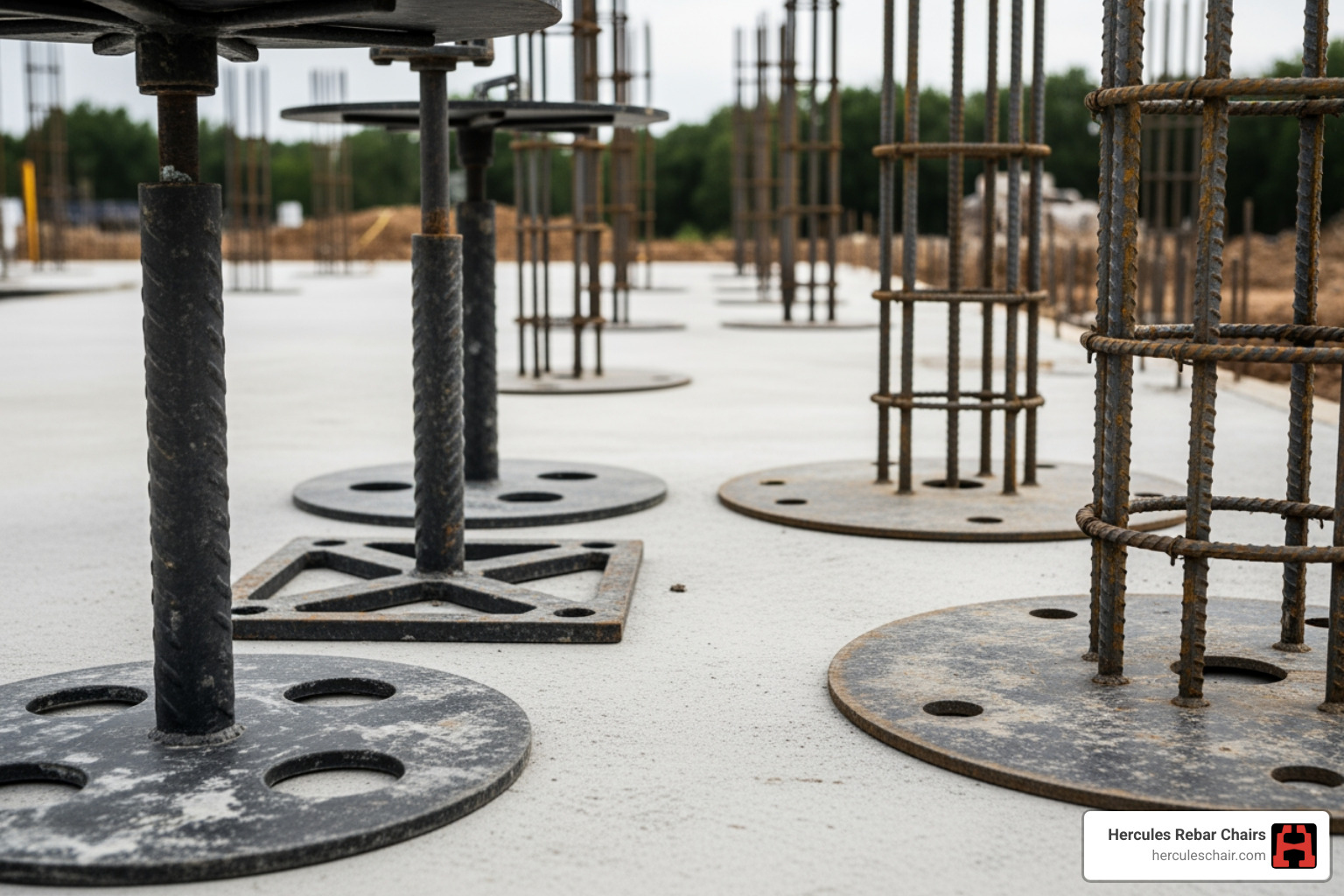
Choosing the right type of support is essential for structural integrity. You can learn more about why these supports are so critical in our article on why bar chairs are essential for strong slabs.
Matching Bar Chairs Concrete Sizes to Rebar Diameters
One detail that often gets overlooked is the “cradle” or the top of the chair where the bar sits. Bar chairs concrete sizes aren’t just about height; they are also about the diameter of the bar they are designed to hold.
- Bar Size 3-5: Most standard chairs are designed to hold #3, #4, or #5 rebar (3/8″ to 5/8″ diameter).
- Bar Size 5-6: For heavy-duty applications, such as highway paving or bridge decks, you need chairs specifically rated for #5 and #6 bars.
Using a chair with a cradle that is too small for the rebar can cause the bar to slip or the chair to break under the load. If you’re working with thicker slabs, you’ll need to be even more selective. Check out our advice on choosing the right rebar chair support for 4 to 6-inch slabs.
Base Variations: Round, Square, and Plate Bases
The “feet” of the chair determine where it can be used:
- Round Bases: Excellent for hard surfaces like plywood forms or cured concrete. They provide a small footprint and are very common in precast applications.
- Square Bases: Often used for larger heights (4″ and up) to provide a wider stance and better stability.
- Plate Bases (Sand Chairs): These feature a flat, solid bottom. They are non-negotiable when working on loosely compacted soil, sand, or over vapor barriers. The plate prevents the chair from puncturing the moisture barrier or sinking into the ground.
High Chairs and Bolsters: Specialized Support Sizes
When you move beyond standard slabs and start looking at deep beams, heavy foundations, or multi-layer reinforcement, standard chairs won’t cut it. This is where high chairs and bolsters come into play.
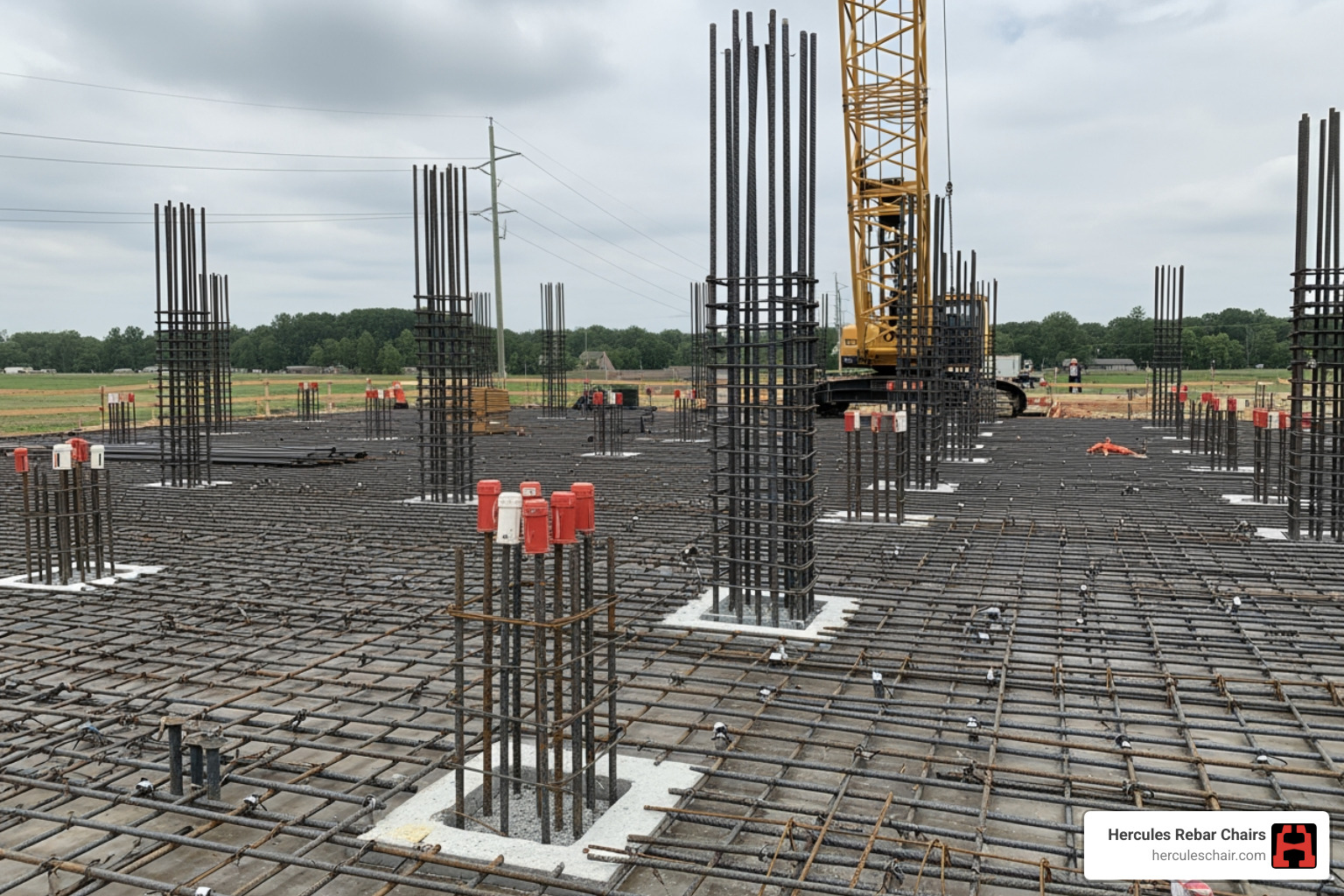
High chairs can reach impressive heights—some individual high chairs are available from 2″ all the way up to 12″ or even 20″ for custom orders. These are often used in “tilt-up” wall panels or elevated decks. For a deep dive into these specialized supports, see the ultimate guide to rebar chairs.
Continuous High Chairs and Slab Bolsters
If you have a large area to cover, placing individual chairs every few feet can be tedious. Continuous high chairs (CHC) and slab bolsters are 5-foot long supports that provide a continuous line of reinforcement elevation.
- Continuous High Chairs: These are used to support the upper layer of steel in a thick slab. They eliminate the need for “carrier bars” and can be found in heights ranging from 2″ to 15″.
- Slab Bolsters: These are shorter (usually 3/4″ to 3″) and are used to support the bottom layer of steel or mesh.
Beam Bolsters vs. Standard Bar Chairs
Beam bolsters are the heavy hitters of the support world. They are designed to support the heavy rebar cages used in concrete beams. Unlike slab bolsters, beam bolsters have legs spaced much closer together—typically every 2-1/2 inches—to handle the extreme weight of the reinforcement.
If you’re wondering whether steel or plastic is better for these high-stress areas, our guide on choosing the best steel rebar chairs offers some great insights.
Material Selection and Load Compliance Standards
The material of your chair affects both the project’s durability and its cost.
- Plastic: Lightweight, non-corrosive, and usually the most cost-effective. High-quality plastic chairs, like our Hercules Chairs, are engineered to handle significant loads without crushing.
- Steel: Strong and traditional, but they can rust if they are too close to the surface. Often available with plastic-tipped legs or epoxy coating to prevent “concrete bleed” or rust spots.
- Concrete: Some projects specify chairs made of actual concrete (often called “dobies”) to ensure the support material matches the slab perfectly.
For mesh-specific projects, you might consider elevating your slab with concrete mesh chairs to ensure the mesh doesn’t end up at the bottom of the pour.
Load Ratings and AS/NZS 2425 Compliance
In bar chairs concrete sizes, strength is measured by load ratings. A common industry standard (like AS/NZS 2425) requires chairs to withstand a point load of at least 120kg (about 265 lbs). This ensures that when a 200-lb worker stands on a piece of rebar supported by the chair, the chair doesn’t snap or deform. Always look for chairs that meet or exceed these structural safety standards to avoid mid-pour disasters.
Factors Influencing Bar Chairs Concrete Sizes Selection
Choosing the right size isn’t just about the number on the blueprint. We always tell our customers to consider:
- Slab Thickness: You generally want your rebar in the middle or top third of the slab.
- Aggregate Size: If you’re using large 1-inch stone in your concrete mix, your chairs need to be tall enough and spaced wide enough so the rocks can flow under and around the rebar without creating “honeycombing” (voids in the concrete).
- Vapor Barriers: As mentioned, if you have a plastic liner under your slab, you must use a chair with a base that won’t poke a hole in it.
For a lighthearted look at getting the size “just right,” check out The Goldilocks Guide to Concrete Bar Chair Sizes.
Frequently Asked Questions about Bar Chair Sizing
What are the most common heights for concrete bar chairs?
The most frequently used bar chairs concrete sizes are between 3/4″ and 4″. For most 4-inch residential slabs, a 2-inch or 3-inch chair is the standard. If you are specifically looking for 3-inch supports, we have a specialized list of the top 3 inch rebar chairs for sale.
How do I choose between a round base and a plate base?
It all comes down to the “subgrade” (the ground under the concrete). If you are pouring on a hard, compacted surface or plywood forms, a round or square base is fine. If you are pouring on sand, dirt, or over a moisture barrier, you must use a plate base to distribute the weight and protect the barrier.
Why is concrete cover important when selecting chair size?
Concrete cover is the “armor” for your rebar. Rebar provides the strength, but it is vulnerable to rust. If the rebar is too close to the edge of the concrete, moisture and salt will seep in, cause the steel to rust and expand, and eventually pop the concrete off (this is called “spalling”). Proper chair sizing ensures the steel stays deep enough in the “alkaline” environment of the concrete to stay protected for decades. For more on when rebar and proper support are necessary, read why your 4 inch slab might need rebar.
Conclusion
At Hercules Rebar Chairs (T.J. Harris Co.), we know that the smallest part of your project—the bar chair—often carries the biggest responsibility. We are proud to be “America’s #1” rebar chair manufacturer, with over 14 million units sold across the USA. Our iconic red chairs are designed to save you time and money while ensuring every pour is code-compliant and structurally sound.
Whether you’re pouring a small sidewalk in Ohio or a massive foundation in Texas, we have the bar chairs concrete sizes you need to get the job done right the first time.