

Why Finding the Right Nearby Lumber Store Can Make or Break Your Project
Finding a reliable nearby lumber store is one of the first — and most important — steps before any build, whether you’re pouring a concrete foundation, framing a deck, or tackling a weekend repair.
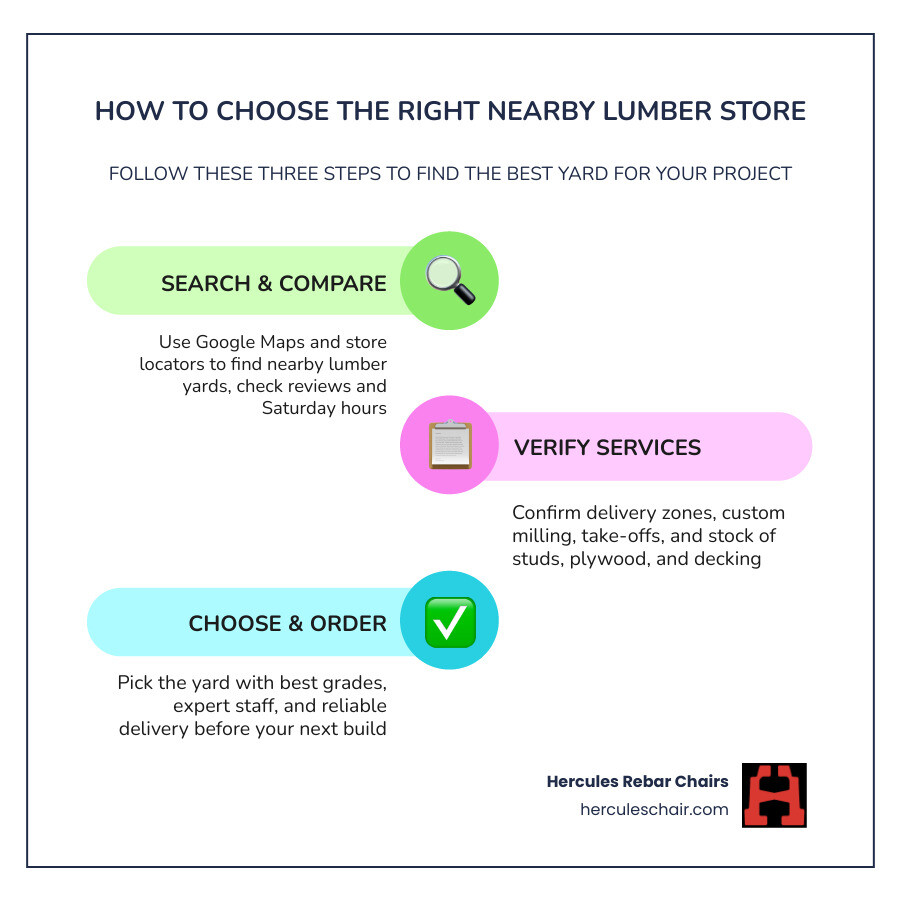
Here are the fastest ways to find a quality lumber store near you:
| Method | What to Do |
|---|---|
| Google Search | Search “lumber yard near me” and check map results |
| Store Locator Tools | Use chain store locators (e.g., 84 Lumber has 320 locations across 34 states) |
| Call Ahead | Confirm stock, hours, and delivery before driving out |
| Ask Your Supplier Network | Other contractors often know the best local yards |
| Check Saturday Hours | Many yards close Sunday — plan accordingly |
Not all lumber stores are the same. A full-service local yard often carries better grades of wood, offers custom cuts, and employs staff who actually know building materials. A big-box retailer may be more convenient but won’t always have the specialty stock or expert advice your project demands.
The right store saves you time, reduces waste, and keeps your job on schedule.
I’m Jordan Harris — a licensed Professional Engineer and structural engineering background, currently working with T.J. Harris Company developing rebar support systems used on concrete pours across the country. On every job site, the quality of your supply chain — including where you source your nearby lumber store — directly affects your timeline and your budget. Let’s break down the best options so you can find the right fit for your next project.
Explore more about nearby lumber store:
How to Find the Best nearby lumber store in Your Area
A great nearby lumber store is not always the one closest to your zip code. Sometimes the best yard is 15 extra minutes away but saves you two return trips, three headaches, and one “why is this board shaped like a banana?” moment.
Start with map results and look for more than distance:
- Whether the yard is open to the public
- Whether it serves homeowners, contractors, or both
- Delivery radius and jobsite service
- Early morning contractor hours
- Saturday availability
- Whether it has a showroom, hardware area, or milling shop
If a store website is thin on details, call. A two-minute phone check can tell you more than a dozen vague listings.
Search for a nearby lumber store by project type
Search based on what you are building, not just the word “lumber.”
Try searches like:
- nearby lumber store for framing lumber
- nearby lumber store for deck materials
- local hardwood lumber supplier
- plywood and sheathing near me
- contractor lumber yard with delivery
- lumber yard with hardware and fasteners
This matters because stores often specialize. Some are strongest in framing packages, engineered wood, and contractor support. Others shine with hardwoods, moulding, cabinetry stock, or rural products like fencing, treated posts, and metal panels.
Check the basics before you visit a nearby lumber store
Before you leave the truck or the garage, confirm:
- Hours for weekdays and Saturday
- Whether Sunday is closed
- Phone number and order desk access
- Stock on key items such as 2x4s, plywood, treated lumber, or cedar
- Delivery fees and minimum order size
- Pickup, curbside, or same-day options
- Milling, custom cuts, or special-order availability
A lot of local yards still run on call-ahead service for certain items, which is not a bad thing. It usually means a real person is checking real inventory instead of letting us gamble on an app.
9 Types of Local Lumber Yards Worth Visiting First
Rather than chasing a single brand name, we recommend matching the yard type to the project. Here are the nine kinds of stores worth checking first.
Full-service contractor lumber yards
For framing, sheathing, engineered wood, take-offs, and delivery.Builder-focused yards with pro desks
Best when you need account terms, repeated orders, and job scheduling.Hardwood and finish-lumber shops
Ideal for cabinets, trim, furniture, stair parts, and custom work.Milling-capable lumber yards
Useful when you need cut-to-size stock, surfaced boards, or pattern matching.Door and window showroom yards
Helpful for remodels where lumber, millwork, and displays need to work together.Hardware-plus-lumber stores
Great for small repairs, fasteners, adhesives, tools, and one-stop convenience.Farm and ranch suppliers
Strong for fencing, posts, pole-barn materials, rural hardware, and metal panels.Regional building supply stores
Often combine local service with larger inventory depth and delivery fleets.Old-line family-owned lumber yards
These usually stand out for experienced staff, stable service, and material knowledge.
Full-service lumber yards for contractors and remodelers
This is the category most contractors care about. The best full-service yards typically offer:
- Dimensional lumber
- Engineered wood products
- Sheathing and subfloor panels
- Hardware and structural connectors
- Take-offs from plans
- Material estimating
- Jobsite delivery
- Contractor accounts
Examples from the research show how this works in the real world. NICHOLS LUMBER YARD | BALDWIN PARK CA | THE BUILDER’S LUMBER YARD emphasizes services like plan take-offs, loading, next-day runs, and on-site milling. Rafael Lumber and Building Supply – Serving Contractors, Homeowners, and the Community in Marin since 1983 highlights early weekday hours and support for more than 1,000 active contractor accounts. Adams Lumber Company: Lumber Yard | Denver, CO focuses on dimensional lumber, engineered wood, siding, decking, delivery, and estimating help.
Those are exactly the kinds of services that keep jobs moving.
Hardwood and specialty shops for finish work and custom builds
Finish work is where generic selection starts to fall apart. If you need:
- Exotic hardwoods
- Better moulding choices
- Cabinet stock
- Premium plywood
- Custom pattern duplication
- Cut-to-size sheet goods
then a specialty yard is often the better choice.
Research examples include Ganahl Lumber | Hardware, Lumber, Tools , Heldt Lumber Company – Phoenix Arizona’s Best Lumberyard … , and Larsen Lumber — Premium Building Materials & Service , which is notable for long-standing operations and custom milling. Some local yards also maintain doors and windows showrooms, which is a major plus for remodels where the finish package matters as much as the framing.
Farm, ranch, and rural building supply stores
If your project is outside town or on acreage, you may need more than boards. Rural-focused stores often stock:
- Fence boards and treated posts
- Pole-barn components
- Metal roofing and siding panels
- Livestock and gate hardware
- Bulk fasteners
- Landscaping or garden supplies
Lancaster Lumber is a good example of a supplier that bridges lumber, farm needs, metal products, and delivery, with an online catalog of more than 75,000 products. Woodson Lumber – Groesbeck, TX | Lumber, Hardware, Paint & Building Materials adds same-day pickup, curbside options, delivery, and even a garden center.
Neighborhood hardware-plus-lumber stores for homeowners
For homeowners, convenience matters. A neighborhood store that carries lumber plus the “little stuff” can save a lot of time:
- Deck screws
- Hinges
- Shims
- Construction adhesive
- Paint
- Flashing
- Tools
- Caulk and patch materials
These stores are best for:
- Weekend repairs
- Fence fixes
- Shed projects
- Small decks
- Interior trim replacement
They may not have every grade, size, or species, but they are often perfect for practical, smaller jobs. For a wider look at nearby sourcing options, see our guide to More info about local supply options.
What a Good nearby lumber store Should Stock and Offer

A good nearby lumber store should be more than a pile of wood and a cash register. It should help us buy the right material once.
Core lumber products to look for
At minimum, a reliable yard should stock or source:
- Framing lumber like 2×4, 2×6, and 2×12
- Studs in common lengths
- Pressure-treated lumber for exterior use
- Plywood and sheathing
- OSB for wall, roof, and floor decking
- MDF for interior shelving and cabinetry
- Particle board for budget furniture and substrate uses
- Cedar for outdoor durability
- Hardwood boards for finish carpentry
- Deck boards and composite decking
- Hardware and fasteners
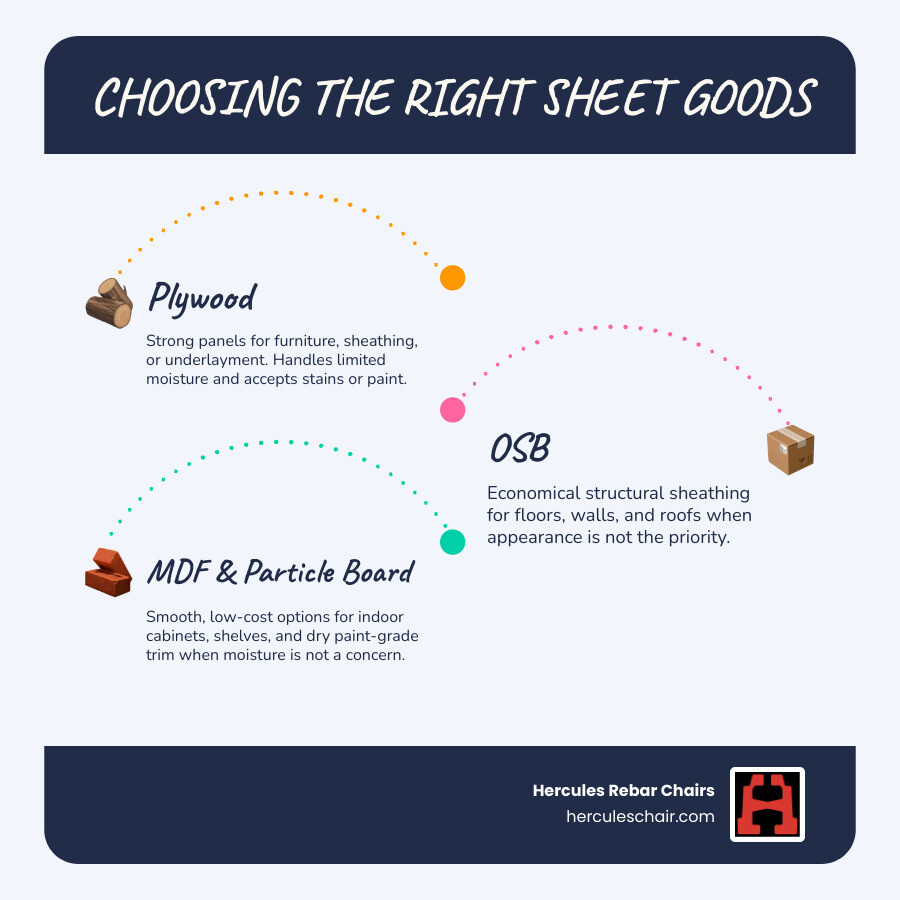
For sheet goods, the basics matter:
- Plywood works well for furniture, general construction, exterior walls, roofing, and underlayment
- OSB is commonly used for subfloors, walls, and roof decking
- MDF is easy to machine and paint but does not handle moisture well
- Particle board is economical and flat, but it can swell if it gets wet
If you want a good overview of categories and common uses, the Lumber and composites guide is a useful reference.
Value-added services that save time and waste
The services can matter as much as the stock. The best local yards often offer:
- Custom cuts
- Milling and surfacing
- Plan take-offs
- Material estimating
- Special orders
- Next-day or scheduled delivery
- Contractor charge accounts
- Showroom support for doors and windows
These services reduce waste in a very practical way. Better estimates mean fewer leftovers. Better cuts mean less field trimming. Better deliveries mean less crew downtime.
Research-backed examples include custom milling at Larsen Lumber — Premium Building Materials & Service , on-site pattern work and next-day delivery support at NICHOLS LUMBER YARD | BALDWIN PARK CA | THE BUILDER’S LUMBER YARD , and delivery plus estimating at Adams Lumber Company: Lumber Yard | Denver, CO .
Choosing the right sheet goods for the job
Choosing between plywood, OSB, MDF, and particle board is one of the easiest ways to improve results.
Use plywood when:
- Strength matters
- The panel may see limited moisture
- You are building furniture, wall sheathing, roof decking, or underlayment
- You want a real wood veneer face that can be stained or painted
Use OSB when:
- You need economical structural sheathing
- You are covering floors, walls, or roofs
- Appearance is not the priority
Use MDF when:
- You are making indoor cabinets, shelves, or paint-grade trim parts
- You want a smooth finish and easy machining
- Moisture is not a concern
Use particle board when:
- Budget matters most
- The project is dry and interior
- You need flat shelving or substrate under laminate
For outdoor jobs, exterior plywood and pressure-treated lumber are the safer bets. If treated wood is going into the ground or near the ground, ground-contact rating matters.
Local Lumber Yards vs Big-Box Stores: What Matters Most
Here is the simple version:
| Factor | Local Lumber Yards | National Chains |
|---|---|---|
| Selection depth | Better for specialty items and odd sizes | Better for common commodity items |
| Staff expertise | Usually stronger and more consistent | More variable |
| Pricing | Competitive on many pro orders; better value on service-heavy jobs | Often strong on simple commodity pricing |
| Lumber quality | Often better grading and handling | Can vary by store and turnover |
| Custom services | Milling, take-offs, delivery, special orders | Limited |
| Lead times | Faster for local special handling and jobsite support | Convenient for stock pickup |
| Contractor support | Strong account and scheduling options | More self-service |
Where local yards usually win
Local yards usually come out ahead when we need:
- Better lumber grades
- Straighter boards
- Odd sizes and special species
- Custom cuts or milling
- Project-specific advice
- Reliable delivery scheduling
- Consistent staff relationships
They are also strong when mistakes are expensive. On professional jobs, paying a little more per piece can still save money if the material is straighter, the counts are right, and the truck shows up when promised.
When large retailers may be enough
A large retailer may be fine if you need:
- A few common studs
- One sheet of OSB
- Basic repair materials
- Weekend access with long store hours
- Online browsing and impulse add-ons
For small, simple jobs, convenience may outweigh specialized service.
Best fit for contractors vs DIY homeowners
Contractors usually do best with:
- Full-service yards
- Pro desks
- Account terms
- Estimating help
- Jobsite delivery
- Early opening hours
DIY homeowners usually do best with:
- Hardware-plus-lumber stores
- Showroom help for visible finishes
- Stores willing to answer beginner questions
- Same-day pickup or curbside
- Saturday hours
That said, many local yards serve both well. Ring’s End – Your Inspiration. Our expertise. , Ridout Lumber: Hardware Store in Jonesboro, AR , and Pitman are good examples of stores that combine contractor relevance with homeowner-friendly departments and displays.
What to Compare Before You Choose a Store

Not every “best nearby lumber store” list should be based on distance alone. We compare stores using a practical checklist.
Store details that matter most
Check these first:
- Address and route convenience
- Weekday opening time
- Saturday availability
- Sunday closure policy
- Delivery zone
- In-store pickup
- Call-ahead ordering
- Public access versus contractor-only service
Some useful examples from the research:
- Rafael Lumber and Building Supply – Serving Contractors, Homeowners, and the Community in Marin since 1983 lists weekday hours from 6:00 AM to 5:00 PM and Saturday hours from 7:00 AM to 4:00 PM
- Woodson Lumber – Groesbeck, TX | Lumber, Hardware, Paint & Building Materials lists weekday and Saturday hours plus same-day pickup, curbside, and delivery
- Northland Woods | Alaska Building Materials | Alaska, USA is worth checking if you are sourcing in Alaska and want a local building materials option
- 84 Lumber is not one nearby yard but a locator starting point, with 320 facilities across 34 states
Reputation signals to watch
Even without quoting reviews, we can look for patterns:
- Long time in business
- Repeat contractor relationships
- Focus on knowledgeable staff
- Strong local trust
- Good communication around orders and deliveries
A long operating history does not guarantee perfection, but it often signals staying power. Research highlights several examples:
- Larsen Lumber — Premium Building Materials & Service has operated since 1882 and is recognized as one of the oldest continuously family-owned lumberyards in the country
- Shell Lumber and Hardware has served customers since 1928 and stocks over 30,000 items in-store with more than 100,000 products online
- Lancaster Lumber has been trusted locally for nearly a century and offers a very large online catalog
Those kinds of facts tell us the business has likely solved a lot of supply problems before ours.
Standout features that make one yard better than another
Sometimes the deciding factor is one specialty:
- Full-size door and window displays
- Custom milling
- Pattern duplication
- Large hardware departments
- Multilingual customer support
- STIHL service
- Garden center
- Online catalog and shopping list tools
Examples from the research include showroom support at Rafael Lumber and Building Supply – Serving Contractors, Homeowners, and the Community in Marin since 1983 , custom milling at Larsen Lumber — Premium Building Materials & Service , pattern duplication at NICHOLS LUMBER YARD | BALDWIN PARK CA | THE BUILDER’S LUMBER YARD , and STIHL plus garden center service at Woodson Lumber – Groesbeck, TX | Lumber, Hardware, Paint & Building Materials .
If your build also includes slab work, forms, or adjacent material planning, our guide to More info about concrete supply planning can help you coordinate the full purchase list.
Frequently Asked Questions About Choosing a nearby lumber store
What is usually cheaper: a local lumber yard or a chain store?
For basic commodity items, large stores may sometimes show lower shelf pricing. But that is not the whole cost.
A local yard can be the better value when it helps us:
- Avoid warped or damaged stock
- Buy the right quantity
- Reduce jobsite waste
- Get special orders faster
- Avoid extra trips
- Bundle delivery and service
On service-heavy projects, the “cheapest board” is often not the cheapest outcome.
Do nearby lumber stores deliver to jobsites or homes?
Yes, many do. Delivery is one of the biggest advantages of a good local yard.
Common options include:
- Jobsite delivery for contractors
- Home delivery for larger homeowner purchases
- Same-day pickup
- Curbside service
- Next-day delivery routes
Research examples back this up. Stores such as Adams Lumber Company: Lumber Yard | Denver, CO , Rafael Lumber and Building Supply – Serving Contractors, Homeowners, and the Community in Marin since 1983 , NICHOLS LUMBER YARD | BALDWIN PARK CA | THE BUILDER’S LUMBER YARD , and Woodson Lumber – Groesbeck, TX | Lumber, Hardware, Paint & Building Materials all emphasize delivery options in one form or another.
Can local lumber yards help with take-offs, milling, or custom orders?
Often, yes. This is where local yards can really separate themselves.
Depending on the store, they may help with:
- Material take-offs from plans
- Lumber and plywood cut to size
- Surfacing boards to thickness
- Pattern duplication
- Special-order products not kept in stock
- Shopping list support through online catalogs
Examples include:
- Take-offs and order desk planning at NICHOLS LUMBER YARD | BALDWIN PARK CA | THE BUILDER’S LUMBER YARD
- Custom milling at Larsen Lumber — Premium Building Materials & Service
- Online catalog planning at Home
- Broad inventory and special ordering at Shell Lumber and Hardware | Lumber | Hardware | Building Supplies
Conclusion
The best nearby lumber store is the one that fits your project, your timeline, and your level of experience. For contractors, that usually means strong delivery, take-offs, account support, and quality framing stock. For homeowners, it may mean easier pickup, hardware in the same stop, and staff who can explain the difference between plywood and OSB without making it sound like a graduate seminar.
Local yards often win on expertise, specialty selection, custom services, and dependable support. National chains can still be useful for quick commodity purchases. The smart move is to compare both through the lens of the actual job.
And when your project includes concrete work, sourcing does not stop at lumber. At Hercules Rebar Chairs, we help crews build faster and stay compliant with proven concrete supports trusted across the country. Our red chairs are easy to identify on-site, built to save time, and backed by millions of units sold.
Keep planning your material list here: