

Why Extra Strong Rebar Supports Are a Game-Changer on the Job Site
Extra strong rebar supports are the difference between a concrete pour that holds up for decades and one that fails inspection before the forms even come off.
Here are the top options contractors trust for heavy-duty pours:
| Product | Rebar Sizes | Height Range | Key Strength Feature |
|---|---|---|---|
| Hercules Rebar Chair (3″) | #3-#8 | 1.5″ – 6″ | Withstands 5 workers walking on it |
| Heavy-Duty Support Chair | Up to #8 | Dual-height notches | Wide base, snap-lock stability |
| Stackable Locking Chair | #3-#4 | 2″ (stackable) | Patented locking head, no tie wire |
| Continuous Support Bolster | All standard sizes | 2″ – 16″ | Long lengths, 1/2″ height increments |
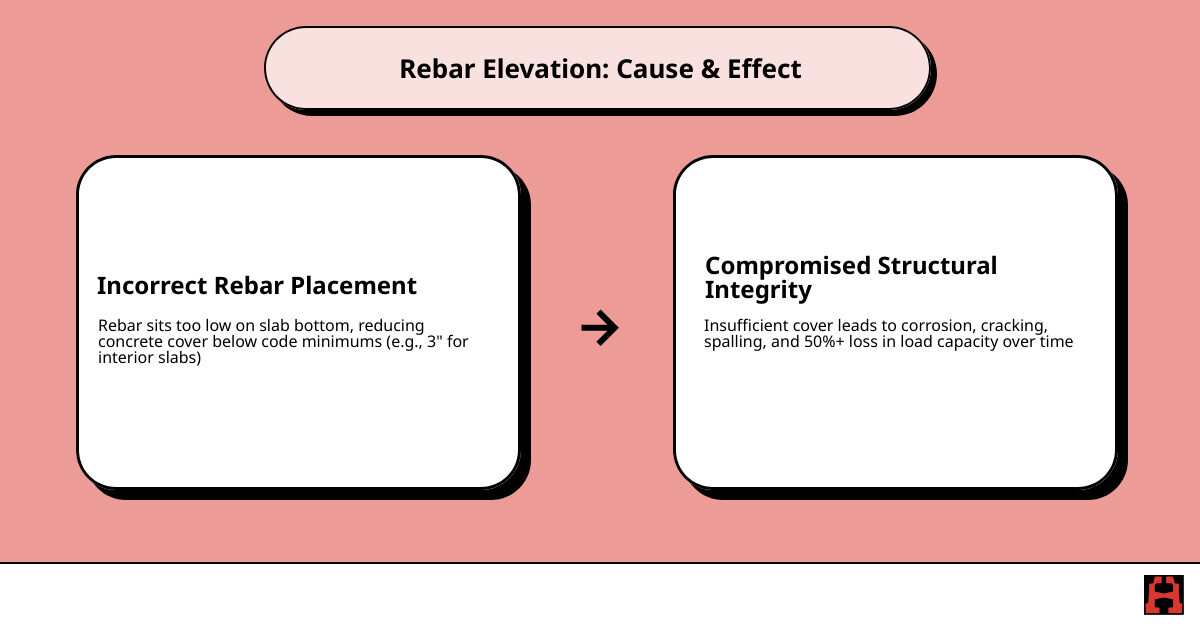
Rebar that shifts even half an inch during a pour can compromise the structural capacity of the entire slab. That is not a small problem – it can mean failed inspections, costly rework, or worse, structural failure down the road.
Traditional tying methods are slow, inconsistent, and leave too much room for error. Extra strong supports solve that by locking rebar firmly in place, so it stays exactly where it needs to be – even when workers are walking across the mat during placement.
I’m Jordan Harris, a licensed Professional Engineer and structural engineer with hands-on experience designing large-scale concrete and steel structures, and I work daily with extra strong rebar supports as part of the team at T.J. Harris Company, makers of the Hercules Rebar Chair. In this roundup, I’ll walk you through the best options on the market so you can choose the right support for your next pour.
What Defines Extra Strong Rebar Supports?
When we talk about “extra strong” in concrete reinforcement, we aren’t just talking about a piece of plastic that doesn’t break when you drop it. We are talking about structural components designed to maintain the integrity of a multi-ton concrete slab. Standard rebar chairs often struggle under the weight of heavy-duty steel or when subjected to the dynamic loads of a construction crew in motion.
Extra strong rebar supports differ from standard chairs in three main areas: load-bearing capacity, stability, and material density. While a standard chair might be rated for light mesh, a heavy-duty support is engineered to hold up to #8 rebar rods without buckling.
| Feature | Standard Rebar Chairs | Extra Strong Rebar Supports |
|---|---|---|
| Load Capacity | Light (often fails under worker weight) | High (withstands multiple workers/heavy steel) |
| Rebar Compatibility | Typically #3 to #4 | Up to #8 or specialized heavy-duty rods |
| Base Design | Narrow (tends to tip or sink) | Wide (maximum stability on all surfaces) |
| Material | Recycled thin plastic or light wire | High-impact polypropylene or heavy-gauge steel |
Material Composition of Extra Strong Rebar Supports
The “bones” of your support matter. Most high-performance chairs are crafted from heavy-duty, high-impact polypropylene or reinforced nylon. These materials are chosen because they are 100% corrosion-resistant – unlike metal, they will never rust inside your concrete, which is a major win for the long-term health of the structure.
However, for specific high-stress applications, steel is still king. When choosing the best steel options, it’s important to look for features like epoxy coating or galvanization to prevent the “rust bleed” that can occur if the support is exposed to the elements. For a deeper dive into these materials, check out our guide on The Strong Silent Type: Choosing The Best Steel Rebar Chairs For Your Project.
Load Capacity of Extra Strong Rebar Supports
Load capacity is where the “extra strong” label is truly earned. In a real-world scenario, a rebar chair isn’t just holding the weight of the steel; it’s holding the weight of the pump hose, the wet concrete, and the workers.
Our Hercules chairs, for instance, are famous for the “5-man test.” They are designed to support five grown men walking directly on the rebar mat during placement without failing or shifting. This prevents “deflection,” which is a fancy engineering term for the rebar sagging. If that rebar sags to the bottom of the pour, it loses its ability to handle tension, and your slab is essentially unreinforced at its most critical point.
Key Features of High-Performance Reinforcement Stands
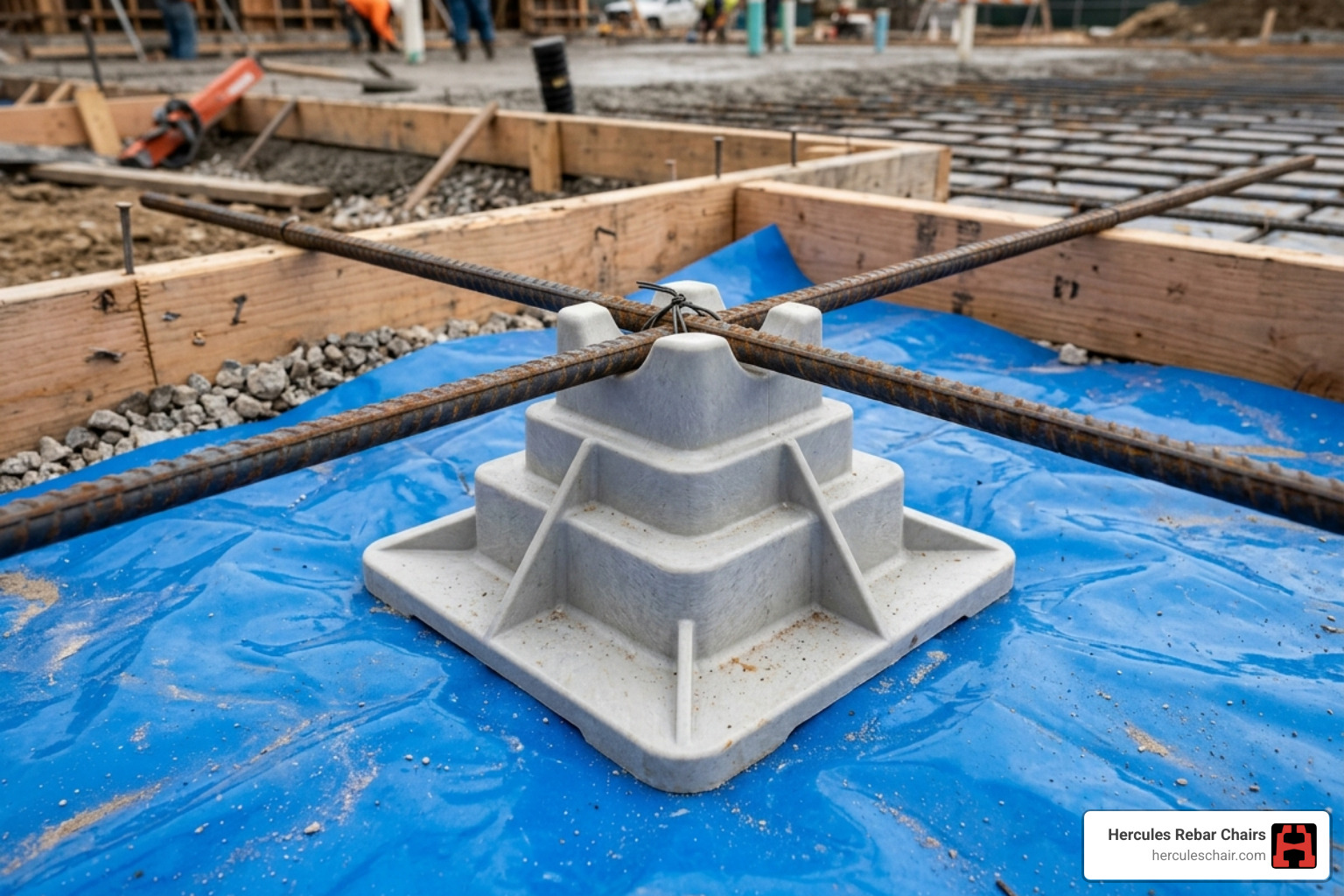
If you’ve ever seen a rebar chair punch a hole through a vapor barrier or sink into rigid foam insulation, you know why design features matter. High-performance stands are built with a “wide-base” philosophy. By spreading the weight over a larger surface area, these supports protect the integrity of your moisture barriers and ensure the rebar stays at the exact height required by the blueprints.
Key features to look for include:
- Snap-Lock Mechanisms: These eliminate the need for tedious wire tying. You simply “snap” the rebar into the head of the chair. This doesn’t just save time; it ensures the bar cannot be easily displaced by a vibrating hose or a stray boot.
- Dual-Height Notches: Many of our supports, including the 2-Bar and 3-Bar footer stands, feature notches that allow for two different elevations in a single product. This versatility is a lifesaver when you realize the grade isn’t as level as you thought.
- Stackability: High-performance products allow you to stack chairs to reach heights for 12″ or thicker slabs.
- Elevation Range: From 1.5″ for thin patio slabs to 6″ for heavy industrial foundations, having the right height is non-negotiable. For a full breakdown of sizing, see The Ultimate Guide To Rebar Chairs Types Uses And Sizing For Concrete Slabs.
Why Continuous Supports Excel in Large Pours
For massive projects like bridge decks or warehouse floors, placing individual chairs every two feet can feel like trying to empty the ocean with a teaspoon. This is where continuous rebar supports – often called slab bolsters – come into play.
Think of continuous supports as a bridge rather than stepping stones. They provide an uninterrupted line of support across 2.5-foot to 8-foot spans (and even up to 80-foot lengths in some metal configurations).
Benefits of Continuous Systems:
- Labor Efficiency: Laying down one 80-foot roll or several 5-foot bolsters is significantly faster than placing dozens of individual chairs.
- Carrier Bar Elimination: Some continuous high chairs are strong enough to act as the “carrier bar” themselves, reducing the total amount of steel you need to buy and tie.
- Lego-like Assembly: Many plastic bolsters are designed to snap together, allowing you to create custom lengths or even circles for tank foundations.
Whether you are working with standard concrete reinforcement or local supplies, using continuous supports can cut your setup time by more than half. For more on these types, explore From Dobies To Double Mats: A Comprehensive Look At Rebar Chair Types.
Essential Applications and Code Compliance
There are some projects where you can’t afford to “guess” on strength. In seismic zones, bridge decks, and deep footings, the structural stakes are too high. Extra strong rebar supports are essential in these environments to ensure the steel remains in the “tension zone” (usually the middle or bottom third of the slab, depending on the design).
Proper support isn’t just a good idea; it’s often the law. Most commercial projects in the USA require supports that meet:
- ACI 318: The American Concrete Institute’s building code requirements for structural concrete. You can review the organization behind these standards at the American Concrete Institute.
- CRSI Class 1: The Concrete Reinforcing Steel Institute’s highest standard for bar supports, ensuring they are rust-proof and structurally sound.
Using high-quality supports helps you avoid the dreaded “sagging slab” syndrome. Ensuring your supports are up to code is the first step in a successful build. For those working in the Lone Star State, we have a specific guide: Don’t Let Your Slab Sag With The Best Rebar Chairs In Texas.
To learn more about the different categories of spacing products, visit Sitting Pretty: Everything You Need To Know About Rebar Supports.
Frequently Asked Questions about Heavy-Duty Supports
Can these supports withstand workers walking on them during a pour?
Yes! Our extra strong rebar supports, specifically the Hercules line, are engineered to withstand the weight of up to five workers walking directly on the reinforcement mat. This is critical because, during a pour, workers must move around to manage the pump hose and vibrate the concrete. If the chairs crush or tip under that weight, the rebar will sink, compromising the slab.
What rebar sizes do extra strong supports accommodate?
While standard chairs often top out at #4 bar, heavy-duty supports are designed to handle much larger steel. Most of our high-performance chairs easily accommodate #3 to #5 rebar, while our specialized supports can hold up to #8 rods. If you are working with extreme loads using extra-high yield steel bars, you definitely need a chair with a high-yield rating.
Do these supports prevent damage to vapor barriers and rigid foam?
Absolutely. One of the biggest pitfalls of cheap rebar chairs is a narrow, “pointy” base that punctures vapor barriers or sinks into Styrofoam insulation. Extra strong supports feature wide, flat bases (sometimes called sand plates) that distribute the load, keeping your moisture barrier intact and your rebar at the correct elevation.
Conclusion
At Hercules Rebar Chairs (T.J. Harris Co.), we’ve spent over 25 years perfecting the science of concrete reinforcement. With over 14 million units sold, we’ve seen our products used in everything from simple residential garages to massive highway infrastructure.
We take pride in being America’s #1 choice for extra strong rebar supports. Our chairs aren’t just easy to spot thanks to their signature red color; they are built to save you time, reduce labor costs, and – most importantly – ensure your concrete meets every code requirement. When you choose Hercules, you’re choosing a product 100% made in the USA that won’t crack under pressure.
Ready to secure your next project? For more details on our specific models and to find a dealer near you, check out More info about Hercules Rebar Chairs. Let’s build something that lasts!