

What Is 3/8 x 12 Rebar and What Is It Used For?
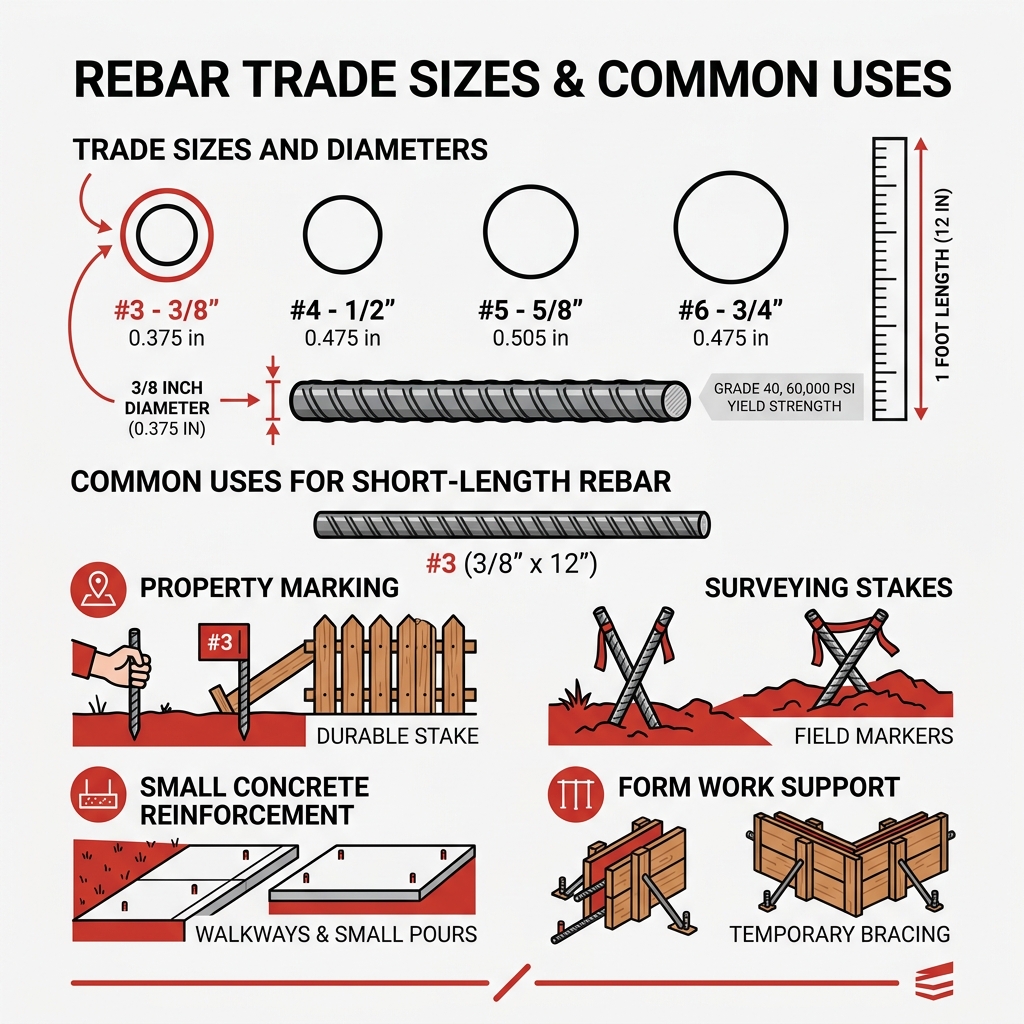
3/8 x 12 rebar is a short, one-foot section of #3 steel reinforcing bar with a 3/8-inch diameter. It’s one of the most practical sizes you can buy for quick field tasks.
Here’s what you need to know at a glance:
| Feature | Detail |
|---|---|
| Trade Size | #3 |
| Diameter | 3/8 inch (0.375 in) |
| Length | 12 inches (1 foot) |
| Material | Carbon steel |
| Grade | 40 |
| Yield Strength | 60,000 PSI (minimum) |
| Weight | ~0.38 lbs per piece |
| Primary Uses | Property marking, surveying stakes, small concrete reinforcement |
| Sold As | Single pieces, 10-piece bundles, 25-piece bundles |
Most people searching for this size need it for one of two things: marking property corners or reinforcing small concrete pours. It’s short enough to drive into the ground by hand, cheap enough to buy in bulk, and strong enough to do the job right.
I’m Jordan Harris, a licensed Professional Engineer with a master’s in structural engineering and five years of hands-on experience designing large-scale concrete and steel structures — work that gave me a deep understanding of how even a short piece of 3/8 x 12 rebar plays a critical role on the job site. Today I lead product development at T.J. Harris Company, where we build rebar support solutions trusted by contractors across the country.
3 8 x 12 rebar further reading:
Technical Specifications of 3 8 x 12 Rebar
When we talk about 3 8 x 12 rebar, we are diving into “Trade Size #3.” In the United States, rebar sizes are categorized by eighths of an inch. Since 3/8 is three-eighths, it becomes a #3 bar. While you might see 20-foot sticks at a construction site, the 12-inch (1-foot) section is a specialized pre-cut length designed for convenience and precision.
Dimensions and Weight
The exact diameter of this bar is 0.375 inches. Because it is made of heavy-duty carbon steel, it carries a specific weight that is helpful to know for shipping and handling. A single 12-inch piece of Carbon Steel Rebar – Trade Size #3 – 3/8″ Diameter x 1 ft. Long weighs approximately 0.376 lbs.
To help you visualize how this compares to other common lengths you might find at a local supplier, take a look at the table below:
| Length | Nominal Diameter | Weight (Approx.) | Common Use Case |
|---|---|---|---|
| 1 Foot (12 in) | 3/8″ | 0.376 lbs | Property marking, stirrups |
| 2 Feet (24 in) | 3/8″ | 0.752 lbs | Garden stakes, small footings |
| 20 Feet | 3/8″ | 7.52 lbs | Slab reinforcement, long runs |
Standards and Compliance
Most 3 8 x 12 rebar found in the USA adheres to ASTM A615 standards. This ensures that the steel has the chemical composition and physical properties required for reliable performance. Whether you are using it for a DIY project or a professional land survey, knowing the specs helps you stay within code. If you’re moving from simple stakes to a full pour, you might want to check out our guide on Mastering the Rebar Calculator for Your Next Concrete Project to ensure your measurements are spot on.
Top Applications for Short-Length Steel Stakes
You might wonder why someone would buy a tiny 12-inch piece of steel when they could buy a 20-foot rod. The answer is simple: efficiency. Pre-cut 3 8 x 12 rebar is a massive time-saver for specific niche applications.
Why 3 8 x 12 Rebar Is the Standard for Property Markers
If you’ve ever seen a surveyor looking through a transit or driving a metal rod into the dirt at the edge of a lot, you’ve likely seen this rebar in action. It is the gold standard for 3/8 X 12″ Rebar 25/Bundle purchases because it is:
- Permanent: Unlike wooden stakes, steel doesn’t rot or snap in the wind.
- Detectable: If the grass grows over it, a simple metal detector can find the property corner years later.
- Easy to Install: At just 12 inches long, these stakes can be driven into most soil types with a standard hammer or mallet.
Surveyors often use these in conjunction with plastic rebar caps to identify the specific surveying firm or to mark high-visibility boundaries.
Reinforcing Small Projects with 3 8 x 12 Rebar
In structural concrete, these short pieces often find a home as “stirrups” or shear reinforcement. In a rebar cage, stirrups are the rectangular or circular “hoops” that wrap around the longitudinal bars to prevent shear failure.
Even in small DIY footings or garden walls, using a Rebar Placement Guide is essential. For these small projects, 12-inch pieces can act as “dowels” to tie a new small pour into an existing structure. However, for the concrete to actually protect the steel from rust, the rebar needs to be lifted off the ground. That’s where The Ultimate Guide to Rebar Chairs Types Uses and Sizing for Concrete Slabs comes in handy—we always say that a bar on the ground is just a future rust spot!
Strength, Safety, and Material Properties
Don’t let the small size fool you. 3 8 x 12 rebar is incredibly strong. Most of the pieces we see in the market are Grade 40 steel.
- Yield Strength: Grade 40 means the steel has a minimum yield strength of 60,000 PSI. This is the amount of stress the steel can take before it starts to permanently deform.
- Tensile Strength: Carbon steel rebar typically boasts a tensile strength between 95,000 and 118,000 PSI, making it excellent at resisting the “pulling” forces that concrete is naturally weak against.
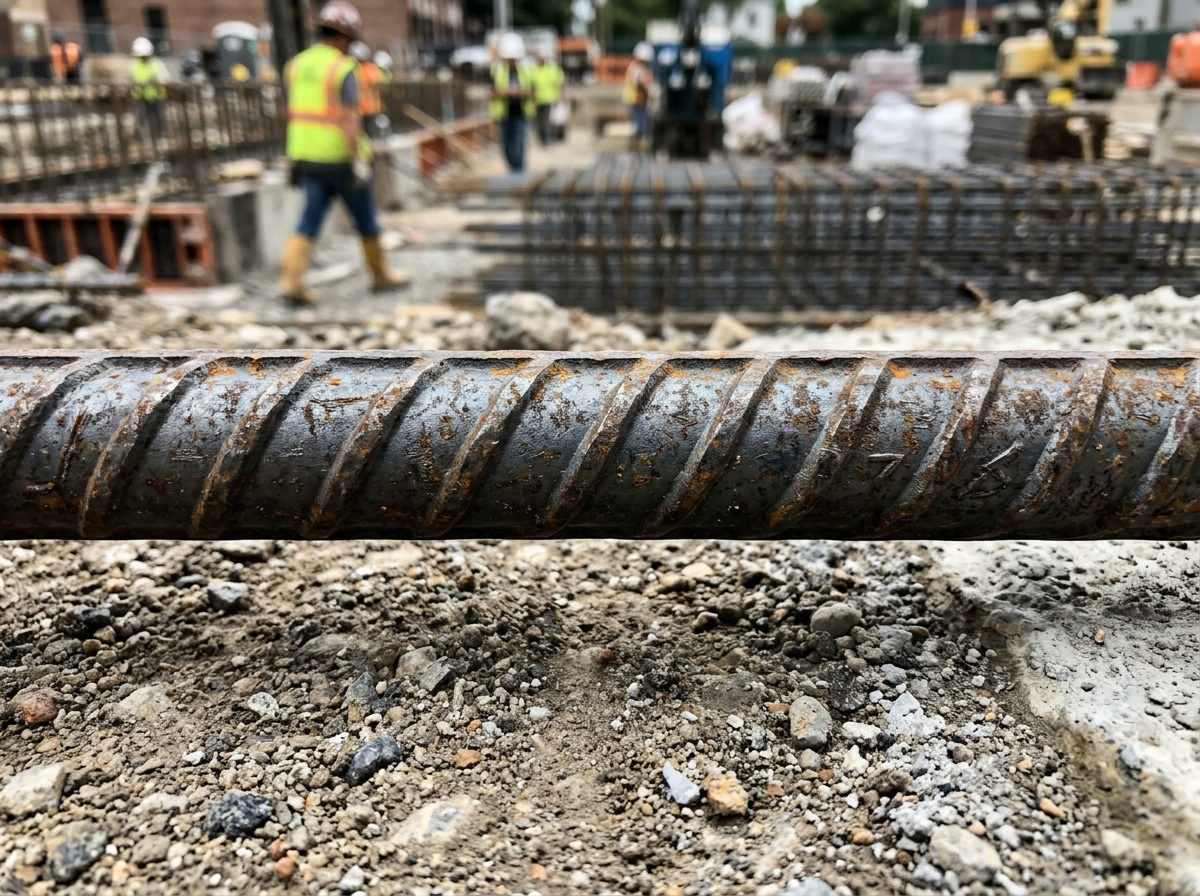
- Mechanical Anchoring: One of the most distinctive features of rebar is its ridged (deformed) design. These “ribs” aren’t just for looks; they provide a mechanical bond with the concrete, ensuring the steel doesn’t slip out once the mud hardens.
Safety Considerations
When handling any steel product, safety is paramount. You will often see a CA Prop 65 Warning on these products. This is a standard notification in California indicating the presence of chemicals (like those found in raw steel or coatings) that could be harmful. Always wear gloves to protect against sharp edges and rust.
Furthermore, if you are using these for a slab, you need to ensure they are positioned correctly to handle the load. Learning How to Calculate Rebar for Slab the Right Way can prevent structural cracks down the line.
Buying Guide: Bundles, Pricing, and Logistics
If you’re ready to buy, you have several options depending on the scale of your project.
Packaging and Quantity
- Single Pieces: Available at big-box retailers like Home Depot or Lowe’s for small DIY tasks.
- 10-Piece Bundles: A common choice for homeowners marking a few lot lines. These typically weigh about 3.76 lbs per bundle.
- 25-Piece Bundles: The preferred choice for professional surveyors.
Pricing and Discounts
Pricing for 3 8 x 12 rebar is generally very affordable. You might find a single 12-inch piece for around $1.00 to $1.50. However, the real savings come in bulk. For instance, a 10-bundle might cost around $10.00, but if you buy 20 or more bundles, the price often drops significantly—sometimes as low as $8.50 per bundle.
Logistics and Shipping
If you are ordering online, keep an eye on shipping limits. Many suppliers use FedEx Ground, which often has a weight limit of 150 lbs. If you are ordering a massive amount of steel, you might need to look into local pickup or freight delivery. For those looking for much longer lengths, like 3/8in x 20ft Grade 40 Rebar, local delivery is almost always required because you can’t exactly fit a 20-foot stick in the back of a standard sedan!
To make sure you aren’t overbuying (or underbuying) for your project, our Hercules Rebar Chair Estimator can help you plan the support side of your concrete project while you tally up your steel needs.
Frequently Asked Questions about #3 Rebar
How much does a 12-inch piece of #3 rebar weigh?
A standard 12-inch (1 foot) piece of #3 rebar weighs approximately 0.376 to 0.38 lbs. This light weight makes it easy to carry dozens of stakes in a single tool bag or bucket while working in the field.
Can I use 3/8 x 12 rebar for structural concrete reinforcement?
Yes, but usually only for very specific components like stirrups, ties, or as dowels in non-load-bearing garden walls. For major structural slabs or foundations, 12 inches is rarely long enough to provide the necessary “lap length” required by building codes. Always consult your local building department or a structural engineer for reinforcement requirements.
What is the difference between Grade 40 and Grade 60 rebar?
The “Grade” refers to the yield strength of the steel. Grade 40 has a yield strength of 40,000 PSI (though many modern #3 bars are tested to 60,000 PSI minimum yield). Grade 60 is stronger and is the standard for most modern residential and commercial construction. For simple stakes and property marking, Grade 40 is more than sufficient.
Conclusion
Whether you are a surveyor marking out a new subdivision or a homeowner finally settling that boundary dispute with the neighbor’s fence, 3 8 x 12 rebar is the reliable, “set it and forget it” tool you need. It’s affordable, incredibly strong, and perfectly sized for driving into the earth.
At Hercules Rebar Chairs, we know that even the best steel needs the right support. While these 12-inch pieces are great for stakes, if your project involves pouring concrete, you need to ensure your rebar stays exactly where the engineer intended. We are proud to be America’s #1 choice, with over 14 million units sold. Our identifiable red chairs ensure code compliance and save you time and money on every job site.
Ready to take your project to the next level? Buy Rebar Chairs from Hercules today and ensure your reinforcement is as strong as it can be.