

Introduction
Essential Concrete Formwork Accessories for Wall Systems
When we talk about wall systems, the conversation starts with how to keep two heavy panels from bursting apart under the immense weight of wet concrete. This is where concrete formwork accessories like snap ties and brackets become the unsung heroes of the job site.
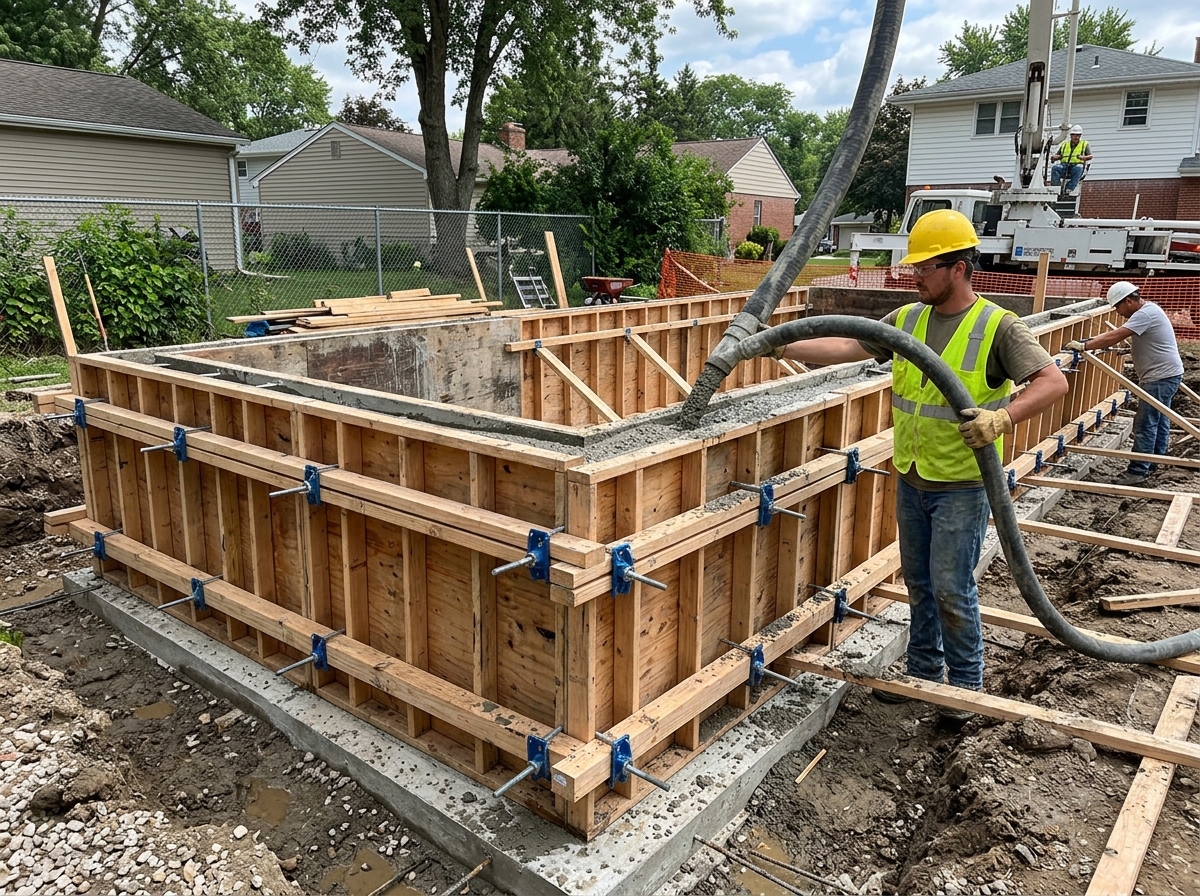
Snap ties are the most common tension members used in light to medium-duty wall forming. They pass through the formwork and are secured on the outside by a wedge. However, the tie is only half the battle. To distribute the load across the wooden “wales” (the horizontal beams), we use specialized brackets.
- Jahn A Brackets: These are designed for single waler systems. They are incredibly versatile because they can be installed before or after the wales are in place.
- Jahn C Brackets: These are the heavy lifters used for double waler support or for securing vertical strongbacks.
- Snap Tie Wedges: These are the “locks.” Often made of high-strength heat-treated steel or cadmium-plated for rust resistance, they slide over the head of the snap tie to pull the forms tight.
For those looking to ensure their internal structure is as stable as their external forms, you can learn more about concrete supports to see how rebar positioning plays a role in overall wall strength.
Selecting the Right Concrete Formwork Accessories for High-Pressure Pours
Not all pours are created equal. A 4-foot garden wall exerts much less pressure than a 20-foot retaining wall. When selecting your concrete formwork accessories, we must look at three critical factors:
- Pour Thickness: Thicker walls contain more volume and exert higher lateral pressure.
- Wall Height: Hydrostatic pressure increases with depth.
- Pour Rate: Pouring 8 feet of concrete in an hour creates significantly more stress than pouring 2 feet in the same timeframe.
For high-pressure or heavy-duty applications, we often move away from standard snap ties and toward coil ties. Coil ties have a much higher load capacity and use threaded coil bolts that can be reused hundreds of times, making them a cost-effective choice for large-scale infrastructure.
| Feature | Snap Ties | Coil Ties |
|---|---|---|
| Load Capacity | Light to Medium (approx. 2,250 lbs) | Heavy Duty (up to 18,000+ lbs) |
| Reusability | Single-use (ends snap off) | Bolts/Rods are reusable |
| Common Use | Residential/Light Commercial | Bridges, Dams, High-Rise |
| Installation | Fast, manual wedge locking | Threaded bolting |
Essential Snap Ties and Wedges as Concrete Formwork Accessories
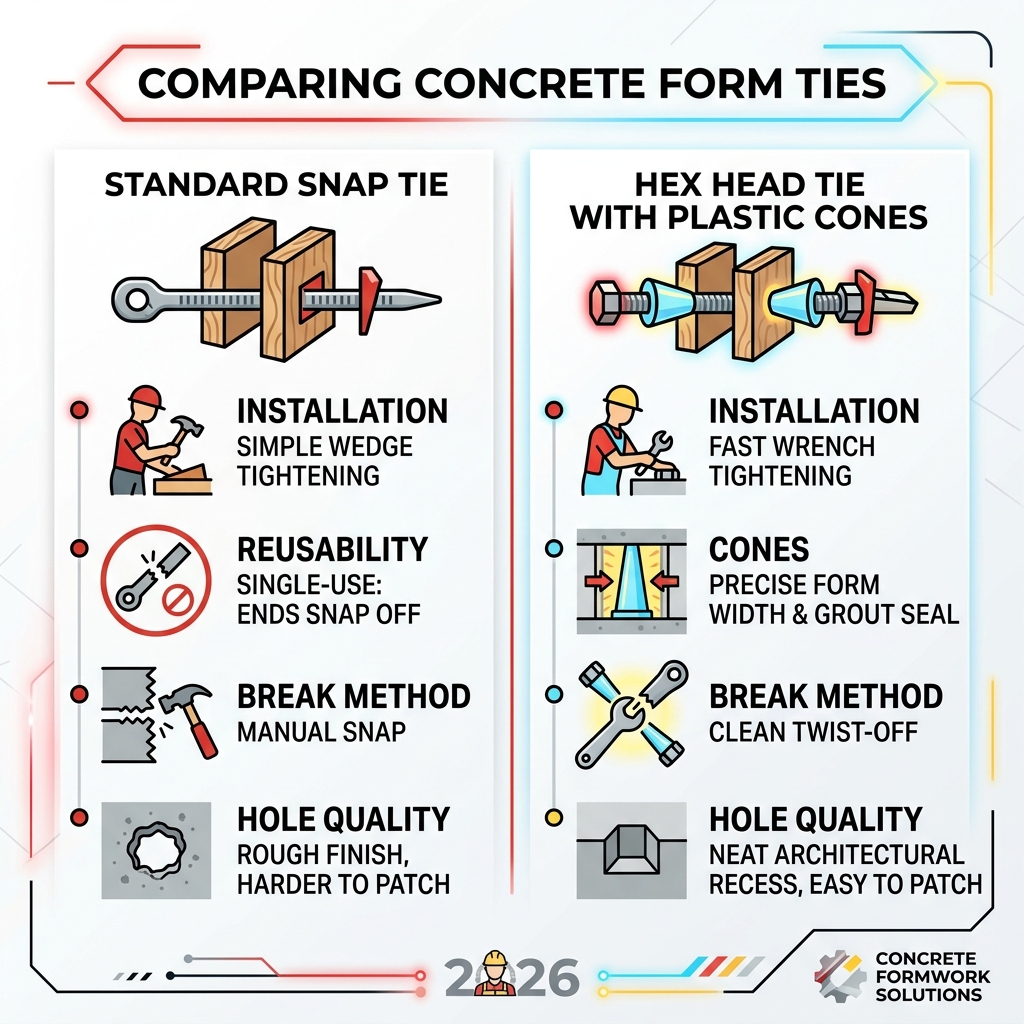
The “snap” in snap tie isn’t just a name; it’s a functional feature called “clean-break technology.” Standard snap ties feature a notch or a “breakback” located about an inch inside the concrete surface.
Hex head ties are a favorite among our crew because they allow for a cleaner break. Once the concrete has cured, you simply grip the hex head with a wrench and twist; the tie snaps off perfectly at the notch, leaving a small hole that can be easily patched. To prevent grout leakage and ensure the tie snaps at the right spot, many ties come with plastic cones. These cones act as a spreader to keep the forms at the exact width while also creating a neat architectural recess for patching.
Alignment and Spacing Hardware for Precision Forming
Even if your forms are tied together perfectly, they won’t do much good if the entire wall is leaning five degrees to the left. Alignment hardware ensures your forms stay plumb, level, and straight.
Maintaining Alignment with Precision Concrete Formwork Accessories
For wood forming, form spreaders are essential. These are typically made of 1-1/2″ x 1-1/2″ angle iron and feature multiple stake holes. They are used primarily in flatwork, like sidewalks or narrow trenches, to expand the forms in two directions and maintain a consistent width.
When we deal with vertical walls, we rely on pipe braces and turnbuckle braces. These are attached to the walers and anchored to the ground. The turnbuckle allows for “fine-tuning” — you can rotate the handle to pull or push the formwork by fractions of an inch until it is perfectly plumb.
Precision also requires proper spacing. Formwork spacers (like the X-FS C models) are often pre-mounted with nails and can be installed up to five times faster than traditional methods. These spacers ensure that the formwork panels sit exactly where they are supposed to on the concrete footing. For more tips on the gear you need to keep things straight, check out the contractor’s toolkit.
Heavy-Duty Coil Ties and Bolts for Large Scale Projects
In heavy civil engineering, coil products are king. Coil rods and coil bolts feature a fast-acting, self-cleaning thread that handles the grit and grime of a construction site better than standard national coarse threads.
- Reusability: Unlike snap ties, the coil bolt is removed after the pour. Only the internal coil tie remains in the concrete.
- Versatility: Coil rods can be cut to any length on-site, making them perfect for odd-sized pilasters or massive columns.
Specialized Accessories for Bridges and Slabs
Bridge construction requires a completely different set of concrete formwork accessories. Because you are often working over water or traffic, you can’t exactly stake a brace into the ground.
Climbing Systems and Shear Load Management
For high-rise cores or bridge pylons, we use climbing formwork. This is where climbing cones (like those from DYWIDAG) become vital. These galvanized steel cones are designed to manage “shear loads” — the downward force of the formwork weight — that standard threadbars can’t handle alone.
These cones are often tested to support shear loads at a minimum concrete strength of 10 N/mm². They replace positioning cones after the forms are stripped, allowing the next level of formwork to “climb” the building safely. To understand how these accessories fit into the broader scope of construction, see our beyond the mix: accessory guide.
Other specialized bridge hardware includes:
- Overhang Brackets: These bolt to the side of steel or concrete beams to support the “overhang” portion of a bridge deck.
- Haunch Carriers: Used to adjust the height of the deck formwork to account for the camber in the beams.
- Slab Hangers: These allow you to hang formwork directly from the structural steel, eliminating the need for shoring from the ground up.
Material Selection and Safety Standards
The materials used in concrete formwork accessories are chosen for their durability and resistance to the alkaline environment of wet concrete.
- Galvanized Steel: Most brackets and climbing cones are galvanized or cadmium-plated to prevent rust. This is especially important for reusable hardware.
- HDPE Plastic: Used for spacers and cones, high-density polyethylene is halogen-free and provides a non-reactive surface that won’t bond to the concrete.
- Safety Caps: One of the most important safety accessories is the rebar safety cap. The Occupational Safety and Health Administration (OSHA) requires these on all exposed vertical rebar to prevent impalement.
At Hercules Rebar Chairs, we take safety and code compliance seriously. While we specialize in the chairs that hold your rebar in the perfect position, we know that our products work hand-in-hand with formwork hardware to create a safe, code-compliant structure. You can explore our product range to see how we support the internal skeleton of your pour. If you’re working on a specific joint, you might also find our splicer information helpful.
Frequently Asked Questions about Formwork Hardware
Should I rent or buy formwork accessories?
This depends on the “reuse factor.”
- Rent: If you are doing a one-off bridge project or a high-rise, renting heavy-duty items like overhang brackets, pipe braces, and large-scale steel forms is often smarter. It saves on storage and maintenance costs.
- Buy: For “consumables” like snap ties, rebar caps, and small hardware like Jahn brackets that you use on every residential foundation, buying in bulk is the way to go.
How do I calculate concrete pressure for accessory selection?
Concrete pressure is primarily determined by the rate of rise (how many feet per hour you are filling the form) and the temperature. Cold concrete stays liquid longer, exerting hydrostatic pressure for a greater duration. Most manufacturers provide charts that tell you the maximum “psf” (pounds per square foot) their ties and brackets can handle. Always include a safety margin — usually 2:1 for wall ties.
What is the difference between a Jahn A and Jahn C bracket?
- Jahn A: Used for single waler systems. It has a sliding wedge that grips the snap tie and holds a single horizontal 2×4 or 2×6 against the form.
- Jahn C: Used for double waler or vertical strongback applications. It is designed to span across two pieces of lumber, providing much higher resistance to bending and deflection.
Conclusion
The success of any concrete project lies in the details. From the concrete formwork accessories that hold the exterior shape to the rebar chairs that maintain the internal strength, every component has a job to do.
We recommend a strict maintenance and inspection routine for all reusable hardware. Check your coil bolts for thread wear, inspect your pipe braces for bends, and always ensure your brackets are free of dried concrete buildup.
At Hercules Rebar Chairs, we’ve sold over 14 million units across the USA — from the tech hubs of California to the busy sites in New York and Florida. We are proud to be America’s #1 choice for rebar supports, helping contractors save time and money while ensuring every pour meets the highest safety standards.
Ready to secure your next project? Buy high-quality rebar chairs today and experience the Hercules difference.