

The Unsung Heroes of Concrete Construction
A concrete rebar support chair is a specialized device used to lift and secure reinforcing steel bars (rebar) at the correct height within concrete forms during the pouring process. These chairs ensure proper concrete cover, prevent corrosion, and maintain the structural integrity of foundations, slabs, bridge decks, and walls.
Key Facts About Concrete Rebar Support Chairs:
- Primary Function: Hold rebar in place and maintain proper spacing during concrete pours
- Common Materials: Plastic (corrosion-resistant, economical) or metal (stronger, heavy-duty)
- Typical Heights: Range from 1.5 inches to 4 inches
- Rebar Compatibility: Designed to fit rebar sizes #3 to #5
- Spacing Guidelines: Place chairs 2 to 3 feet apart along the rebar length
- Permanent Installation: Chairs remain embedded in the concrete after pouring
- Cost Impact: Eliminate labor-intensive wire tying, saving time and money
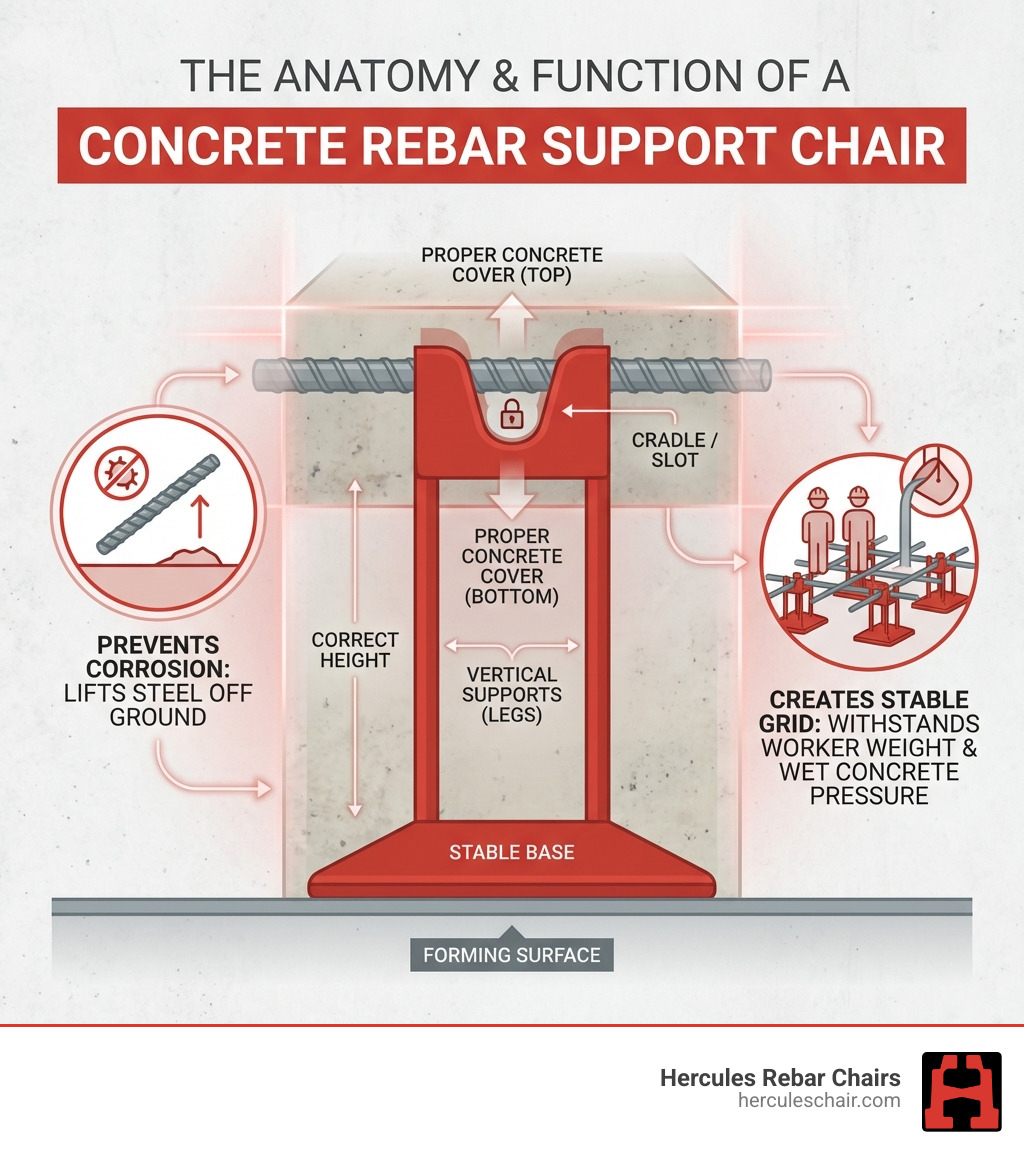
Rebar chairs are the backbone of reliable concrete construction. Without them, rebar can shift, sink, or become dislodged during the pour—compromising the strength and durability of the entire structure. They lift rebar off the ground to prevent corrosion, ensure even concrete coverage, and create a stable reinforcement grid that can handle heavy loads and harsh conditions.
Whether you’re pouring a residential foundation, a commercial slab, or a bridge deck, the right concrete rebar support chair makes the difference between a structure that lasts decades and one that fails prematurely. These simple devices prevent cracks, reduce settling, and help you meet building codes without the hassle of traditional wire tying methods.
I’m Jordan Harris, and I’ve spent my career as a structural engineer and now at T.J. Harris Company, where we’ve manufactured over 14 million Hercules Chairs—a trusted concrete rebar support chair solution used on job sites nationwide. My hands-on experience with large-scale concrete projects has shown me how the right support system saves time, reduces labor costs, and ensures structural integrity for the long haul.
Why Rebar Chairs are Non-Negotiable for Strong, Lasting Concrete
Imagine building a house without a strong foundation, or a bridge without robust support. It sounds absurd, right? The same principle applies to concrete structures and the reinforcement within them. Concrete rebar support chairs are those often-unseen heroes that ensure the rebar—the very skeleton of your concrete—is precisely where it needs to be. This seemingly small component plays an enormous role in the structural integrity, longevity, and overall success of any concrete project.
They are essential tools in the construction industry that hold rebar in place during the pouring process, preventing it from shifting or becoming dislodged. This precise positioning is crucial for distributing stress effectively throughout the concrete, which in turn improves its support and stability. Without proper rebar support, the entire structure is at risk of premature failure, cracking, and a significantly shortened lifespan.
The Role of a Concrete Rebar Support Chair in Structural Integrity
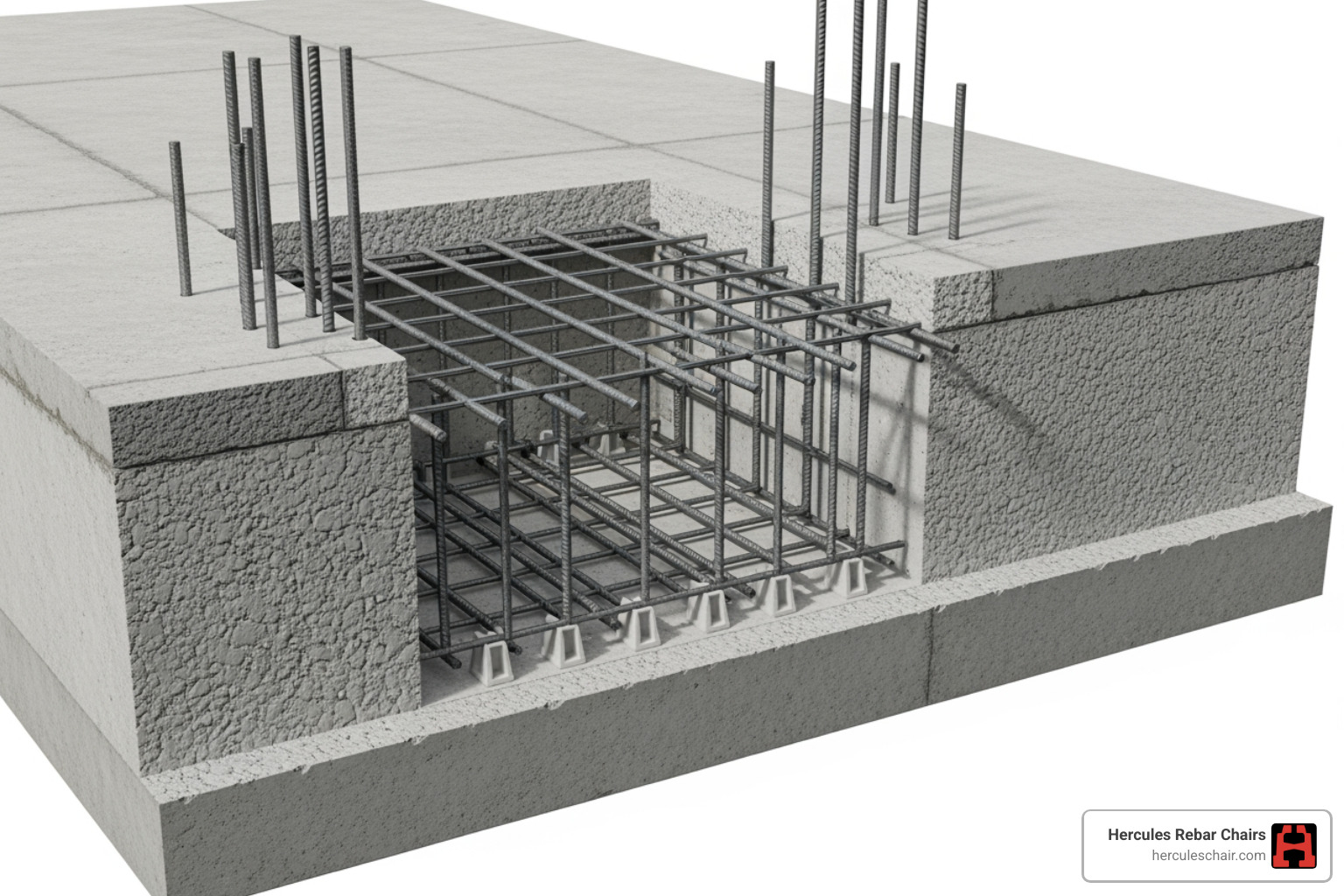
Our primary goal in concrete construction is to create structures that are not only strong but also safe and durable. A concrete rebar support chair is fundamental to achieving this. It ensures that the rebar is accurately placed and maintained in its intended position within the concrete matrix. Why is this so important?
Firstly, rebar chairs prevent the rebar from shifting or sinking to the bottom of the formwork during the concrete pour. If rebar isn’t correctly positioned, it can’t provide the tensile strength needed to resist pulling forces, leading to weaknesses in the structure. By keeping the rebar liftd and stable, these chairs help us maximize the strength of the concrete, ensuring even distribution of reinforcement throughout the pour.
Secondly, proper rebar placement, facilitated by chairs, is key to mitigating cracks and resisting settling. When rebar is where it should be, it effectively manages the stresses within the concrete, reducing the likelihood of unsightly and structurally compromising cracks. This precise positioning helps the concrete handle heavy loads and environmental stresses, contributing to the overall stability and long-term performance of the structure. For more detailed information on ensuring correct rebar placement, we encourage you to check out our More info about our rebar placement guide.
Preventing Rebar Corrosion and Ensuring Durability
One of the greatest enemies of reinforced concrete is corrosion. When rebar is exposed to moisture and oxygen, it rusts, expands, and can cause the surrounding concrete to crack and spall. This leads to costly repairs and significantly shortens the lifespan of the structure. This is where the concrete rebar support chair steps in as a vital defender.
Rebar chairs lift the rebar off the ground or sub-base, ensuring it’s encased in the correct amount of concrete—known as “concrete cover.” This protective layer of concrete acts as a barrier, shielding the steel from corrosive elements. The research tells us that these chairs are designed to lift rebar 2 inches off the ground, providing crucial coverage. For example, some metal rebar chairs even come with plastic-dipped legs specifically to prevent rust from staining floors and decks, highlighting the importance of corrosion resistance.
By maintaining this proper concrete cover, rebar chairs effectively prevent corrosion, preserving the integrity of the rebar and, by extension, the entire concrete structure. This not only extends the structure’s lifespan but also helps us avoid the headaches and expenses associated with premature deterioration.
Boosting Efficiency and Reducing Labor Costs
Time is money in construction, and efficiency is the name of the game. Using concrete rebar support chairs offers significant advantages in terms of labor savings and project timelines. Historically, workers might have used labor-intensive methods like wire tying or improvised supports to position rebar. However, these methods are often slow, inconsistent, and prone to errors.
Rebar chairs, on the other hand, provide a quick, consistent, and reliable way to set up the rebar grid. They eliminate the need for labor-intensive wire tying, saving both time and labor costs. Instead of carefully tying each intersection or fashioning makeshift supports, workers can quickly snap rebar into place on the chairs. This stability also means less need for constant adjustments during the pour, further streamlining the process.
With rebar chairs, we can achieve a stable and accurate rebar grid much faster, reducing the overall time spent on rebar installation. This efficiency translates directly into lower labor costs and quicker project completion. Plus, by ensuring proper placement from the start, we reduce the risk of rework or structural issues down the line, saving even more time and money. To help you estimate your needs and further boost efficiency, we offer a handy tool: Use our estimator tool.
A Guide to Rebar Chair Types, Materials, and Applications
Just like there are different tools for different jobs, there are various types of concrete rebar support chairs designed for specific applications and project requirements. Understanding these differences is key to selecting the right chair for optimal performance. Rebar chairs are commonly used in building foundations, bridge decks, and slabs across the construction industry.
Material Matters: Plastic vs. Metal Concrete Rebar Support Chair Options
When it comes to the material of your rebar chairs, the two main contenders are plastic and metal. Each has its own set of advantages and disadvantages, making them suitable for different scenarios.
| Feature | Plastic Rebar Chairs | Metal Rebar Chairs |
|---|---|---|
| Strength | Good for typical loads, generally sufficient for residential and light commercial projects. | Stronger, designed for heavy-duty applications where they need to support heavy loads and resist deformation under significant pressure. |
| Cost | More economical and budget-friendly, making them a popular choice for many projects. | Generally higher initial cost per unit. |
| Corrosion Resist. | Inherently corrosion-resistant, as they are non-metallic. They do not rust or stain concrete. | Can rust if exposed, potentially staining concrete. Some models feature plastic-dipped legs or coatings to mitigate this. |
| Ease of Install. | Lighter and easier to handle, often featuring snap-on designs for quick installation. | Can be slightly heavier to handle, but designs are often robust for secure rebar placement. |
| Typical Apps. | Slabs-on-grade, footings, foundations, driveways, patios, and areas where rust staining is a concern (e.g., exposed aggregate finishes). | Heavy-duty slabs, bridge decks, precast panels, tilt-up walls, liftd slabs, and projects requiring maximum load-bearing capacity. Can be used in roads, highways, retaining walls, buildings (columns, beams, walls), and foundations. |
| Disadvantages | Can be susceptible to crushing under very heavy loads or foot traffic if not adequately spaced or designed for the specific application. May become brittle in extreme cold. | Risk of rust staining if not coated or plastic-dipped. Can be a thermal bridge in some specialized applications. |
| Unique Features | Many are designed to be compatible with hydrofoam insulation, and some have wide bases for solid support in footings and slabs. | Often feature plastic-dipped legs to prevent rust from staining surfaces and wide leg spans to straddle lower rebar layers in multi-layer setups. Formed cradles allow multi-positioning support. |
Plastic rebar chairs are known for their low cost compared to alternatives, making them a budget-friendly choice for many projects. They are also corrosion-resistant, which means they won’t rust or stain your concrete. Metal rebar chairs are stronger than plastic ones and are used for heavy-duty applications where they need to support significant loads. The choice between them depends entirely on the specific demands of your project, balancing strength, cost, and corrosion concerns.
Specialized Rebar Chairs for Unique Projects
Beyond the basic plastic and metal options, concrete rebar support chairs offers specialized designs to tackle unique construction challenges.
- Stackable Chairs: These are designed for efficient storage and transportation, which is beneficial for large projects where space and logistics are crucial. They can also often be interlocked to achieve higher elevations.
- Tilt-Up Chairs: Specifically engineered for tilt-up concrete applications, these chairs provide the necessary support for panels cast horizontally and then tilted vertically into position.
- Exposed Aggregate Chairs: Used in decorative concrete applications, these chairs are designed to ensure a smooth finish where the aggregate will be exposed, preventing any visible staining or marks from the chair itself.
- Slab Bolsters: Longer, continuous supports used to maintain rebar height over larger areas, often used in slabs to provide continuous support for rebar mats.
- Beam Bolsters: Similar to slab bolsters but designed for use in beams, providing support for multiple layers of rebar.
- High Chairs: These are often taller versions of standard chairs, used when a greater elevation of rebar is required, such as in thick slabs or multi-layer rebar grids.
Each of these specialized chairs addresses a particular need in concrete construction, helping us achieve precise rebar placement in complex scenarios. To explore the full breadth of our offerings and find the perfect fit for your project, we invite you to browse See our full range of products.
Understanding Rebar Chair Sizes and Heights
Choosing the correct size and height of a concrete rebar support chair is critical for ensuring proper concrete cover and structural integrity. The height of the chair dictates how far the rebar is lifted off the sub-base or formwork, directly impacting the amount of concrete that encapsulates the steel.
Rebar chairs typically range from 1.5 inches to 4 inches in height. This range allows us to accommodate different slab thicknesses and ensure the rebar grid is positioned correctly within the concrete. For instance, a 2″ rebar chair will lift the rebar 2 inches off the ground, contributing to the required concrete cover.
In addition to height, chairs are designed to fit specific rebar sizes. Our chairs, for example, are designed to fit rebar sizes #3 to #5, which are common in many construction projects. It’s essential to match the chair’s cradle size to the diameter of your rebar to ensure a secure fit that won’t allow the rebar to slip or shift. Selecting the right height and size is paramount for achieving the desired concrete cover and maintaining the structural integrity of your project. As we always say, it’s about finding the “Goldilocks” fit—not too big, not too small, but just right. You can read more about this in The Goldilocks Guide to Concrete Bar Chair Sizes: Not Too Big, Not Too Small.
How to Select and Install Your Concrete Rebar Support Chair System
Selecting and installing the right concrete rebar support chair system might seem straightforward, but it involves careful consideration to ensure the longevity and strength of your concrete structure. It’s not just about grabbing any chair; it’s about making informed decisions based on your project’s unique demands.
Choosing the Right Rebar Chair: Key Factors
When we’re on a job site, selecting the right rebar chair is a critical step that impacts everything from structural performance to budget. Here are the key factors we consider:
- Project Type: Is it a building foundation, a heavy slab, a bridge deck, or a tilt-up panel? Each application might demand a different type of chair. Foundations often require robust supports, while decorative slabs might prioritize chairs that won’t leave stains.
- Rebar Size and Weight: The diameter and weight of your rebar will dictate the strength and stability required from the chair. Chairs are typically designed to fit rebar sizes #3 to #5, but you need to ensure the specific chair can adequately support the load. Metal chairs are often preferred for heavier rebar and higher loads.
- Required Concrete Cover: Building codes specify the minimum concrete cover needed for different structural elements to prevent corrosion and ensure fire resistance. The chair’s height must precisely match this requirement. For instance, if you need 2 inches of cover, you’ll select a 2-inch chair.
- Forming Surface: What will the chair rest on? Is it a vapor barrier, compacted soil, or a rigid formwork? Some chairs have wide bases for stability on softer surfaces, while others are designed for hard, flat forms.
- Environmental Factors: Will the concrete be exposed to corrosive elements, extreme temperatures, or heavy traffic? This influences the material choice (e.g., plastic for corrosion resistance, robust metal for durability).
- Budget: While cost is always a factor, we emphasize that compromising on rebar support can lead to far greater expenses down the road due to structural failure. Plastic chairs are generally more economical, but metal chairs offer superior strength for specific applications.
Making the right choice ensures that our structures are built to last. We’re proud of the quality and durability of our chairs, which are designed to meet the demands of any project. Learn about our high-quality chairs to see how our products can support your next build.
Best Practices for Spacing and Installation
Once we’ve chosen the right concrete rebar support chair, proper spacing and installation are paramount. Even the best chairs won’t perform optimally if they’re not used correctly.
- Spacing Guidelines: As a best practice, we place rebar chairs about 2 to 3 feet apart along the length of the rebar. This spacing ensures consistent support and prevents the rebar from sagging between chairs, maintaining its elevation and alignment. The amount of rebar chairs needed will depend on the project, but this 2-3 foot rule is a solid starting point for most applications.
- Creating a Stable Grid: The goal is to create a stable rebar grid that can withstand the weight of workers, the pressure of wet concrete, and the vibrations of compaction without shifting. Securely placing rebar into the chair’s cradle ensures it stays put. Some chairs offer multi-positioning support, allowing for flexibility in how the rebar is seated.
- Monitoring During the Pour: During the concrete pour, it’s crucial to monitor the rebar grid and chairs. We need to ensure they remain in place and undamaged. Pouring concrete evenly also helps prevent uneven settling or displacement of the rebar grid.
- Mitigating Common Issues: One common issue is chairs sinking into soft subgrades. Using chairs with wider bases or placing them on a stable footing (like a small piece of plywood) can mitigate this. Another is rebar popping out of the cradle; ensuring the rebar is firmly seated and using chairs with secure locking mechanisms can prevent this.
Interestingly, the ornamental design for a rebar chair support was patented in 2007, showcasing the continuous innovation in even seemingly simple construction components. You can view the details of this specific design at View the ornamental design patent for a rebar chair. This highlights the engineering and thought that goes into these “unsung heroes.”
Safety Considerations During Placement and Pouring
Safety is always our top priority on any job site. While concrete rebar support chairs are designed to make construction safer and more efficient, there are still crucial safety considerations during their placement and the concrete pouring process.
- Firmly Seating Rebar: Always ensure the rebar is firmly seated in each chair. Loose rebar can shift unexpectedly, creating tripping hazards for workers or even causing structural instability during the pour.
- Preventing Tripping Hazards: Before and during the pour, keep the work area clear of excess chairs, rebar scraps, or other debris that could lead to trips and falls. The rebar grid itself, even when supported, can be uneven, so workers must be mindful of their footing.
- Wearing Proper PPE: Always ensure all personnel involved in placing chairs and pouring concrete wear appropriate Personal Protective Equipment (PPE), including hard hats, safety glasses, gloves, and sturdy work boots.
- Avoiding Chair Displacement: During the concrete pour, the force of the wet concrete and the action of vibrating equipment can potentially displace chairs. We must monitor the chairs closely and pour concrete evenly to minimize this risk. An evenly distributed pour reduces sudden pressures on the rebar grid.
- Ensuring Stability on Uneven Surfaces: If working on uneven ground or a sloped sub-base, take extra precautions to ensure the chairs are stable. This might involve leveling small areas or using specialized chairs designed for varied terrain.
By adhering to these safety practices, we protect our workers and ensure the integrity of our concrete structures from start to finish.
Frequently Asked Questions about Rebar Chairs
We often get asked common questions about concrete rebar support chairs, and we’re happy to clear up any confusion.
Are rebar chairs left in the concrete?
Yes, absolutely! Rebar chairs are designed to be sacrificial components. Once placed and the concrete is poured, they are left inside the concrete to help support the rebar. They become an integral, permanent part of the concrete structure. Their purpose is to provide continuous support and maintain the rebar’s position throughout the lifespan of the concrete, ensuring the structural integrity we’ve worked so hard to achieve.
How many rebar chairs do I need for my project?
The number of rebar chairs you’ll need depends on the size and specific requirements of your project. As a general rule of thumb, we recommend placing rebar chairs about 2 to 3 feet apart along the length of the rebar.
To calculate this, you would:
- Measure the total length of rebar you’ll be using.
- Divide that length by the desired spacing (e.g., 2 or 3 feet).
- Add a few extra for ends and corners.
For larger or more complex projects, using an online estimator tool can provide a more accurate calculation, helping you plan your material needs precisely. This ensures you have enough support without over-ordering.
Can I use broken bricks or rocks instead of rebar chairs?
While it might seem like a clever workaround to save a few dollars, we strongly advise against using broken bricks, rocks, or any other improvised materials to support your rebar. Here’s why:
- Inconsistent Height: Bricks and rocks provide inconsistent and unreliable heights, making it impossible to guarantee proper concrete cover. This leads to uneven rebar placement and compromised structural integrity.
- Water Absorption: Many improvised materials, especially bricks, are porous and can absorb water. This moisture can be drawn into the concrete, potentially leading to localized weakening, freeze-thaw damage, or even promoting rebar corrosion over time.
- Compromised Structural Integrity: Improvised supports can shift or break during the pour, leaving rebar unprotected or misaligned. This directly undermines the strength and durability of your concrete.
- Code Compliance: Building codes and specifications are in place for a reason – to ensure safety and longevity. Using non-approved materials for rebar support will likely put your project out of compliance, potentially leading to costly rework or structural failure.
Professional concrete rebar support chairs are specifically engineered for this purpose, ensuring consistent height, stability, and compatibility with concrete. They are a small investment that yields massive returns in terms of structural integrity and peace of mind.
Conclusion: Build with Confidence and Strength
As we’ve explored, the concrete rebar support chair is far more than just a piece of plastic or metal; it’s a fundamental component that underpins the strength, longevity, and efficiency of any concrete construction project. From preventing corrosion and ensuring proper concrete cover to boosting labor efficiency and maintaining structural integrity, these “unsung heroes” are truly non-negotiable.
We’ve seen how the right chair ensures precise rebar placement, mitigating cracks and resisting settling, and how choosing the appropriate material—plastic for economy and corrosion resistance, metal for heavy-duty applications—can make all the difference. Understanding the various types, sizes, and proper installation techniques empowers us to build smarter, safer, and stronger.
At Hercules Rebar Chairs, we’re proud to be America’s #1 choice, with over 14 million units sold, helping contractors nationwide achieve superior results. We stand by our commitment to providing durable, reliable solutions that save you time and money while ensuring code compliance. When you choose our products, you’re not just buying a concrete rebar support chair; you’re investing in the long-term success and integrity of your concrete structures.
We encourage you to build with confidence and strength, knowing that your concrete is supported by the very best. Build your next project on a solid foundation by choosing the right rebar supports today.