

Why Understanding Rebar Chair Types Is Critical for Concrete Success
Types of rebar chairs are essential components in concrete construction that keep reinforcing steel positioned correctly before and during a concrete pour. From simple dobies to specialized double-mat supports, each type serves a specific purpose in ensuring structural integrity.
The main types of rebar chairs include:
- Individual Chairs (High Chairs) – Single-point supports for upper rebar mats in slabs and foundations
- Continuous Supports (Bolsters) – Linear supports for bottom mats and welded wire mesh
- Spacer Wheels – Round supports for vertical applications in walls and columns
- Multi-Level Chairs – Supports for complex rebar configurations with multiple layers
- Concrete Dobies – Heavy-duty block supports for load distribution on soft surfaces
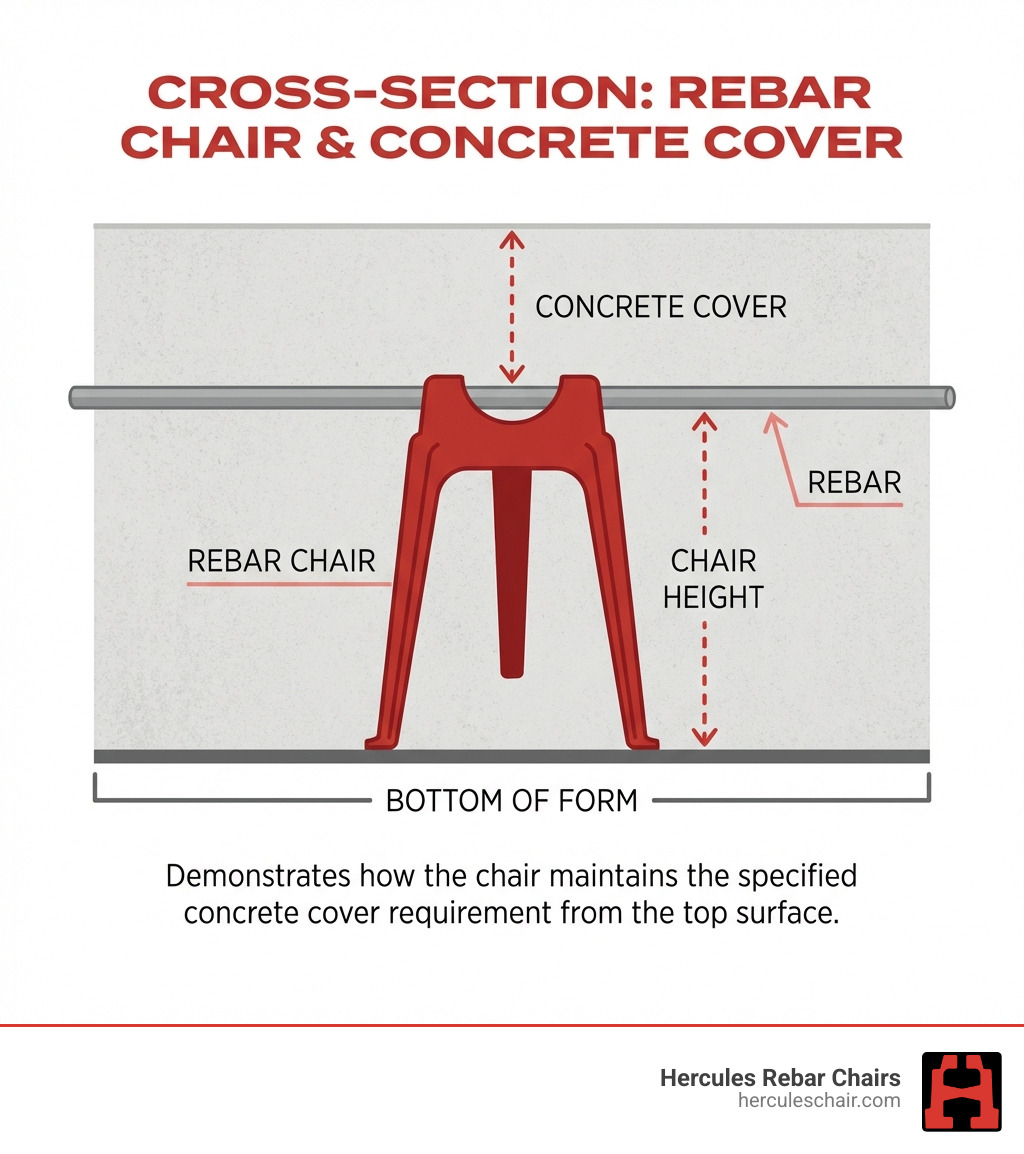
The primary function of rebar chairs is straightforward: maintain the correct concrete cover around reinforcing steel. Without proper support, rebar can sink to the bottom of forms or shift during the pour, compromising the structure’s strength and durability. Research shows that proper rebar positioning is essential for code compliance and preventing costly structural failures.
Rebar chairs come in various materials—plastic, metal, and concrete—each with distinct advantages. Plastic chairs resist corrosion and cost less but may not handle heavy loads. Metal chairs offer superior strength and can last 50+ years but require protective coatings to prevent rust. The spacing matters too: industry standards recommend placing chairs approximately 2 to 3 feet apart, though this varies based on rebar size and load requirements.
One common problem contractors face is chair tipping during pours, particularly when concrete cover exceeds 2.5 inches. This occurs because the height-to-width ratio makes chairs unstable when workers walk across the rebar grid. Understanding which chair type works best for each application prevents these issues and ensures structural integrity from the ground up.
I’m Jordan Harris, a licensed Professional Engineer with five years of structural engineering experience on large-scale concrete projects, and I now lead product development at T.J. Harris Company, where we’ve manufactured over 14 million Hercules Chairs since 2002. Throughout my career working with various types of rebar chairs on everything from building foundations to bridge decks, I’ve seen how the right support system saves time, reduces labor costs, and ensures code-compliant concrete placement.
The Foundation of Support: Understanding Rebar Chair Materials
When it comes to selecting the perfect rebar chair, the material it’s made from is just as important as its shape and size. The material directly impacts the chair’s performance, durability, and suitability for different construction environments. We understand that a chair isn’t just a simple prop; it’s a critical component that becomes a permanent part of your concrete structure.
Plastic Rebar Chairs
Plastic rebar chairs, often made from industrial-grade polypropylene or GTI composite, have become incredibly popular in concrete construction across the USA, from Florida’s humid coasts to Arizona’s dry deserts. Their appeal lies in several key advantages:
- Corrosion Resistance: Unlike bare metal, plastic doesn’t rust, making it an excellent choice for environments where moisture or corrosive elements are present. This helps protect the rebar itself from corrosion, a leading cause of concrete deterioration.
- Lightweight and Cost-Effective: Plastic chairs are easy to handle and transport, contributing to labor savings. They also typically have a lower unit cost, making them a budget-friendly option for many projects.
- Versatility: They come in a wide array of designs, including standard chairs, spacer wheels, and multi-level options, catering to diverse needs. Many plastic chairs are stackable and adjustable, offering continuous secure footing.
- Lifespan: While generally not as long-lasting as metal, plastic rebar chairs can last between 2 to 20 years, which is more than sufficient for the lifespan of many concrete applications.
However, plastic chairs do have their limitations. They generally have a lower load capacity compared to their metal counterparts. This means they might not be suitable for extremely heavy rebar mats or situations where significant worker foot traffic is expected on the rebar grid. In some demanding applications, code might even restrict their use.
Applications: Plastic rebar chairs are ideal for slabs-on-grade, residential building foundations, sidewalks, driveways, and other light to medium-duty concrete pours.
Metal Rebar Chairs
Metal rebar chairs, typically made from low-carbon steel, are the workhorses of heavy-duty concrete construction. They are renowned for their superior strength and durability, making them indispensable for projects that demand robust support.
- High Strength and Durability: Metal chairs can withstand significantly heavier loads and more rigorous conditions than plastic chairs. This makes them perfect for large-scale commercial structures, infrastructure projects, and applications with large rebar sizes.
- Long Lifespan: Properly protected metal chairs can last for at least 50 years, often outliving the structure itself.
- Wide Rebar Compatibility: Most metal rebar chairs are designed to handle rebar sizes ranging from #3 to #6, with specialized options for even larger bars.
The primary drawback of bare metal chairs is their susceptibility to rust. If not properly protected, corrosion can occur, potentially staining the concrete or, more critically, initiating corrosion in the reinforcing steel itself. To mitigate this, metal chairs are often available with various protective coatings:
- Plastic-Tipped: These chairs have plastic caps or “feet” that prevent direct metal-to-form contact, reducing rust spots on exposed concrete surfaces.
- Epoxy-Coated: A fusion-bonded epoxy coating provides excellent corrosion resistance, making them suitable for aggressive environments.
- Galvanized: A zinc coating offers another layer of protection against rust.
- Stainless Steel: For the ultimate in corrosion resistance, stainless steel chairs are used when plastic is not allowed or when rebar weight exceeds plastic chair capacity, especially in highly corrosive environments.
Applications: Metal rebar chairs are frequently employed in robust construction projects like retaining walls, commercial structures, high-rise buildings (such as the 947-foot tall Society (Key) Tower in Cleveland, Ohio), and critical infrastructure like bridge construction (like the Innerbelt Bridge in Cleveland) where structural integrity and long-term durability are paramount.
Concrete and Composite Supports (Dobies)
Beyond plastic and metal, we also use concrete and composite supports, affectionately known as “dobies” or “dobie blocks.” These are solid, precast concrete blocks designed to lift rebar off the ground or formwork.
- Load Distribution: Dobies excel at distributing the load of the steel reinforcement over a large area, significantly reducing the risk of puncturing sensitive materials like waterproofing membranes or vapor barriers. This is especially crucial when working over substrates like compacted earth, stone, or mud slabs.
- Non-Corrosive: Being concrete, they are inherently non-corrosive, eliminating concerns about rust stains or galvanic reactions with the rebar.
- Stability: Their solid, heavy nature provides exceptional stability, preventing tipping even under heavy loads or worker traffic.
While dobies are excellent for their specific applications, they do have some considerations. They can be brittle, prone to breaking if dropped, and their weight can make them more cumbersome to handle compared to lighter plastic or metal chairs.
Applications: Dobies are primarily used for bottom-mat support, especially when laying rebar over vapor barriers or waterproofing membranes, or when a very stable, non-corrosive support is required directly on the subbase. They ensure a minimum clearance of 2 inches from the outer edge to the rebar, and in cases of limited space, a minimum height of 1.5 inches may be considered.
A Catalog of Support: Exploring the Main Types of Rebar Chairs
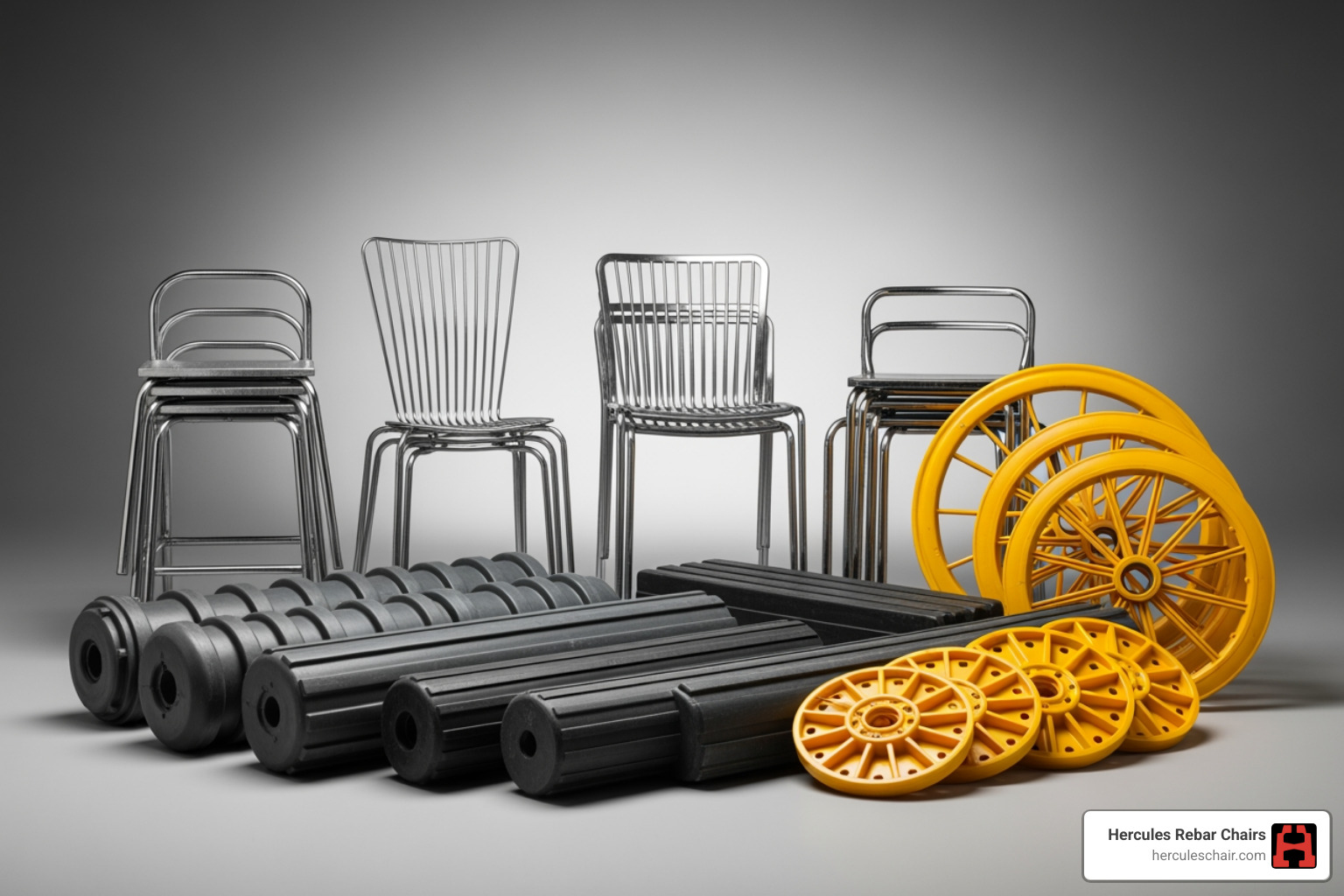
Just as a chef has a variety of tools, we in concrete construction have a diverse catalog of types of rebar chairs, each designed to tackle specific challenges and ensure precise rebar placement. From individual supports to continuous systems, understanding these variations is key to a successful pour. You can explore many of these options in detail on our Our Products page.
Individual Chairs (High Chairs)
Individual rebar chairs, often referred to as high chairs, are single-point support devices. Their main job is to hold the upper mat of rebar at the correct height within a concrete slab, ensuring adequate concrete cover above the steel. Imagine them as tiny stilts for your rebar!
- Standard High Chairs: These are the most common form, featuring legs that lift the rebar to a specific height. They come in various heights to accommodate different concrete cover requirements.
- High Chairs with Sand Plates: Some individual chairs are equipped with a wider base or “sand plate” at the bottom. This feature is particularly useful when pouring over soft subbases like sand or gravel, as it prevents the chair from sinking and maintains the desired rebar elevation.
- Applications: Individual high chairs are indispensable for concrete slabs, foundation footings, and any flatwork where a precise upper rebar mat elevation is needed. We offer specialized solutions like our 2 Bar Footer Stand and 3 Bar Footer Stand which are excellent examples of individual supports designed for specific footer configurations.
Continuous Supports (Bolsters and Runners)
When you need linear support over a longer span, continuous supports, such as bolsters and runners, come into play. These are designed to support bottom rebar mats or welded wire mesh, providing a consistent height along a line.
- Slab Bolsters: These are long, continuous supports, typically 5 feet in length, with multiple legs that lift the rebar or mesh. They are perfect for large concrete slabs, ensuring the bottom steel is lifted off the formwork or subbase.
- Beam Bolsters: Similar to slab bolsters but often more robust, beam bolsters are specifically designed to support rebar within concrete beams. They ensure the reinforcing steel maintains its position within the beam’s cross-section.
- Applications: Continuous supports are widely used in large slabs, paving projects (like roads and airport runways), and structural beams where consistent linear support is critical. Our 2-inch Steel Mesh Chair – Product 944 is an example of a continuous support designed for mesh applications.
Specialized and Accessory Supports
Beyond the common individual and continuous chairs, there are specialized types of rebar chairs and accessories designed for unique structural requirements:
- Spacer Wheels: These round, often plastic, supports are specifically designed for vertical applications. With a central slot to hold the rebar, they ensure proper concrete cover on all sides of vertical bars in walls, columns, piers, and precast formwork. Their circular shape helps prevent tipping and provides consistent spacing from the formwork edge.
- Multi-Level Chairs: For complex rebar configurations that involve multiple layers of steel, multi-level chairs are a game-changer. These ingenious supports allow for bottom, intermediate, and top layers of rebar to be spaced precisely, saving time and money by reducing the need for custom fabrication. They are crucial for creating double mats or other intricate reinforcement patterns.
- Tip Spacers: These are specialized spacers, often with a thin, elongated tip, used when rebar is installed vertically and requires bottom or top concrete cover. They offer precise height positioning and are designed to improve concrete flow around the rebar.
Project Perfect: How to Select and Install Rebar Chairs
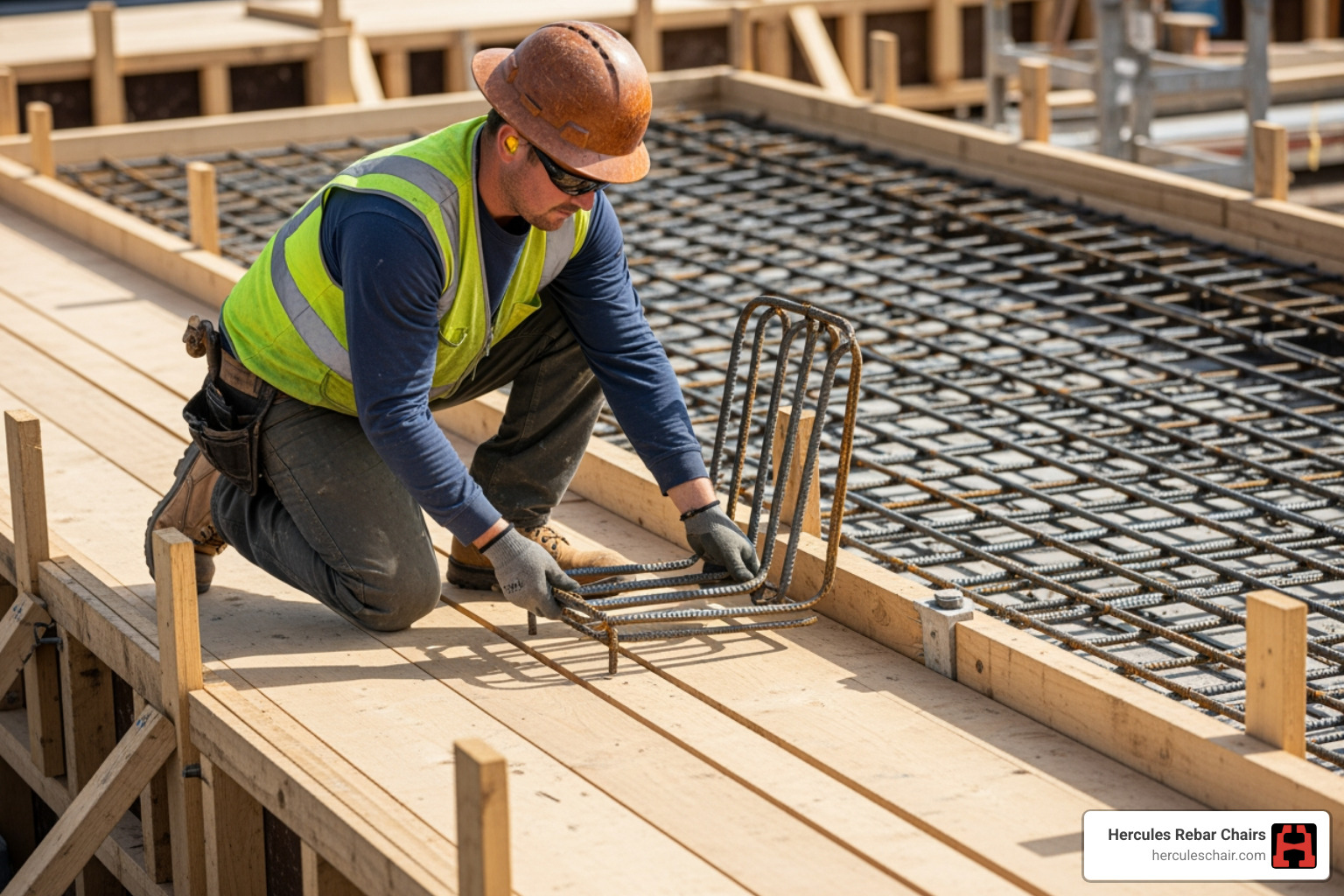
Choosing and installing the right types of rebar chairs is more than just grabbing whatever’s handy; it’s a strategic decision that directly impacts the structural integrity and longevity of your concrete project. Think of it as Goldilocks’ quest for the perfect chair – not too big, not too small, but just right! Our Rebar Placement Guide offers even more detailed insights.
Key Selection Factors for Different Types of Rebar Chairs
When selecting the appropriate rebar chair for your project, several factors must be carefully considered. Missing any of these can lead to costly rework or, worse, a compromised structure.
- Concrete Cover Height: This is arguably the most critical factor. The specified concrete cover (the distance from the surface of the concrete to the nearest reinforcing bar) dictates the height of the rebar chair. This cover protects the rebar from corrosion and ensures the concrete’s full strength. We recommend ensuring a minimum clearance of 2 inches from the outer edge to the rebar. In cases of limited space, a minimum height of 1.5 inches may be considered. For a deep dive into sizing, check out The Goldilocks Guide to Concrete Bar Chair Sizes: Not Too Big, Not Too Small.
- Load Requirements: How much weight will the chairs need to support? This includes the weight of the rebar itself, as well as any anticipated worker foot traffic or equipment on the rebar grid before the pour. For heavy rebar or large spans, metal chairs might be necessary. Most rebar chairs are designed to handle rebar sizes ranging from #3 to #6, but always verify the chair’s capacity.
- Rebar Size: The diameter of the reinforcing bar you’re using will determine the appropriate slot size or cradle in the rebar chair. A snug fit is essential to prevent the rebar from shifting.
- Worker Foot Traffic: If workers will be walking on the rebar grid, stability is paramount. Chairs with a wider base or those specifically designed for high traffic can prevent tipping.
- Surface Type:
- Soft Ground (e.g., sand, gravel, compacted earth): Chairs with wide bases or sand plates, or concrete dobies, are preferred to prevent sinking.
- Formwork (e.g., plywood, steel forms): Chairs must be compatible with the form material and not damage it. Plastic-tipped metal chairs or all-plastic chairs are often used to prevent rust stains on exposed concrete surfaces.
- Waterproofing Membranes: As highlighted in technical guidelines, chairs must distribute the load sufficiently to avoid puncturing the membrane. Concrete or brick supports (dobies) are often the best choice for this, or plastic-dipped steel chairs.
Best Practices for Installation and Spacing
Proper installation and spacing are just as vital as selecting the right chair. Even the best types of rebar chairs will fail if not installed correctly.
- Spacing Guidelines: The recommended standard spacing for chairs in a concrete project is approximately 2 to 3 feet apart along the rebar’s length. However, this is a general guideline. For specific applications, place chairs at every crossing if the spacing exceeds 12 inches, and at every other crossing if the spacing is 12 inches or less. Always consult your project’s engineering plans for precise spacing requirements. Our Hercules Rebar Chair Estimator can help you calculate the quantities needed.
- Tying Techniques: Rebar chairs should be securely tied to the rebar to prevent movement during the concrete pour. Common tie wire techniques include the Figure 8 method, Saddle method, and snap hold and wrap. The tie wire itself is typically made from low carbon annealed steel. Ensure chairs are tied away from the edges and supported at the desired height and intervals.
- Preparing Rebar Chairs: Some metal chairs may benefit from cleaning before installation to remove rust, and applying a fusion-bonded epoxy coating can further protect against corrosion.
Avoiding Common Problems
Even with the right chairs, issues can arise. Knowing how to anticipate and mitigate them is crucial for a smooth project. For more insights, refer to How to Properly Support Rebar When Pouring Concrete.
- Chair Tipping: One common problem is chairs getting tipped over during the pour. This occurs most often when the required cover is over 2.5 inches, as the height-to-width ratio can make chairs unstable when workers step on the rebar. To combat this, increase the number of chairs, use chairs with wider bases, or opt for more stable designs like spacer wheels for vertical applications.
- Rebar Sagging or Bending: If chairs are spaced too far apart, the rebar can sag or bend in the middle due compromising the concrete cover. Increase the number of supports to prevent this.
- Puncturing Membranes: As mentioned, pointed chair legs can puncture vapor barriers or waterproofing membranes. Use dobies or chairs with wide, flat bases to distribute the load effectively.
- Corrosion Spots: If plastic tips come off steel chairs during installation, or if uncoated metal chairs are used in visible areas, rust spots can appear on the finished concrete surface. Selecting plastic-tipped or epoxy-coated chairs and ensuring proper installation can prevent this.
- Chair Breakage: Excessive weight or impact can cause chairs to break. Ensure the chosen chairs have adequate load-bearing capacity for the anticipated conditions.
The Long-Term Payoff: Why Quality Rebar Chairs Matter
Investing in quality types of rebar chairs isn’t just about getting through the pour; it’s about building for the future. The choices we make today directly impact the structural integrity, longevity, and overall success of our concrete projects. For further learning, our Resources page offers valuable information.
Enhancing Structural Integrity and Longevity
Rebar chairs are the unsung heroes of concrete construction, playing a pivotal role in creating structures that stand the test of time.
- Preventing Cracks and Structural Failure: By ensuring the rebar is precisely positioned, chairs guarantee that the reinforcing steel is where it needs to be to effectively absorb tensile stresses. This prevents the rebar from sinking or shifting, which could lead to inadequate concrete cover, premature cracking, and ultimately, structural failure. In demanding applications like bridge construction, where structures are subjected to immense loads and environmental stresses, the correct placement of rebar by chairs is critical for the bridge’s stability, load-bearing capacity, and long-term durability. Omitting rebar chairs in such projects significantly increases the likelihood of cracks and catastrophic failure.
- Corrosion Prevention: Adequate concrete cover, maintained by rebar chairs, is the primary defense against rebar corrosion. When rebar is exposed to moisture and oxygen due to insufficient cover, it rusts, expands, and causes the surrounding concrete to crack and spall. This deterioration significantly shortens the lifespan of the structure. High-quality chairs, especially those made from plastic, composite, or epoxy-coated steel, further improve corrosion resistance, particularly in harsh environments.
- Demanding Applications: From the massive foundations of high-rise buildings in busy cities like New York to the intricate decks of bridges spanning rivers in states like Washington, rebar chairs ensure the precise alignment and spacing necessary for these complex structures to perform safely and reliably for decades.
The Economic Advantage of Using the Right Types of Rebar Chairs
While quality chairs might seem like a small line item in a large construction budget, their economic impact is substantial, often leading to significant savings in the long run.
- Time and Labor Savings: Efficiently designed rebar chairs streamline the rebar placement process. They are quick to install, often stackable, and can reduce the need for custom supports, saving valuable time and labor on site. Our innovative designs at Hercules Rebar Chairs are specifically engineered to save time and money on your projects.
- Preventing Costly Repairs: The initial cost of quality rebar chairs is minuscule compared to the expense of repairing a compromised concrete structure. By preventing issues like rebar corrosion, cracking, or structural deficiencies, chairs help avoid expensive demolition, re-pouring, and extensive maintenance over the lifespan of the building or infrastructure.
- Initial Cost vs. Long-Term Value: While plastic chairs might be more cost-effective upfront, specialized metal or composite chairs, though pricier per unit (some complex systems can cost over $15 per chair), offer superior strength and durability, providing better long-term value for projects requiring them. Basic chairs, for example, might cost around $60 for a box of 100 units, while a 50-pack might be $30-$35. Bulk purchasing, often available for large construction projects, can significantly reduce the per-unit cost.
- Code Compliance: Using appropriate, code-compliant rebar chairs ensures your project meets industry standards (like those from ACI and CRSI), avoiding potential penalties, delays, and legal issues. This peace of mind is invaluable.
Frequently Asked Questions about Rebar Chairs
We often hear common questions about these small but mighty components. Here are some of the most frequent inquiries about types of rebar chairs:
How far apart should rebar chairs be placed?
The general rule of thumb for placing rebar chairs is approximately 2 to 3 feet apart along the rebar’s length. However, this spacing is highly dependent on several factors: the size and weight of the rebar, the specific design of the concrete element (slab, beam, wall), and the anticipated loads (including worker traffic). For instance, if rebar spacing exceeds 12 inches, chairs should be placed at every crossing. If spacing is 12 inches or less, chairs can be placed at every other crossing. Always consult the project’s engineering drawings and specifications for precise spacing requirements. Using an estimator, like our Hercules Rebar Chair Estimator, can help ensure you have the right quantity and spacing.
Do rebar chairs stay in the concrete?
Yes, absolutely! Rebar chairs are designed to be “leave-in-place” supports. They become an integral and permanent part of the concrete structure once the pour is complete and the concrete cures. This is why material selection is so important – you want a chair that won’t degrade or cause issues within the concrete over time. Plastic chairs are corrosion-resistant and remain inert, while metal chairs, if properly coated (e.g., epoxy-coated or plastic-tipped), are also designed to be permanently embedded without causing rust or deterioration.
Can you use bricks or rocks instead of rebar chairs?
While it might seem like a cost-saving measure, we strongly discourage using bricks, rocks, wood blocks, or other makeshift items as substitutes for purpose-built rebar chairs. Here’s why:
- Inconsistent Height: Improvised supports rarely provide a consistent and accurate height, leading to uneven concrete cover and compromised structural integrity.
- Porous Material: Materials like bricks or wood are often porous and can absorb water. This moisture can then be transferred to the rebar, accelerating corrosion.
- No Secure Hold: Bricks or rocks don’t securely hold the rebar in place, allowing it to shift during the pour, which defeats the entire purpose of rebar support.
- Compromised Concrete: Porous materials can also introduce impurities or voids into the concrete, weakening the finished product.
Using proper, manufactured rebar chairs ensures precision, durability, and compliance with construction standards, ultimately leading to a safer, stronger, and longer-lasting concrete structure.
Conclusion
From the humble dobies distributing load on soft ground to the robust metal high chairs supporting complex double mats in bridge decks, the types of rebar chairs available are diverse and purpose-built. We’ve explored the foundational materials—plastic, metal, and concrete—and digd into the specific applications of individual chairs, continuous bolsters, and specialized accessories like spacer wheels.
The right choice of rebar chair, coupled with best practices for selection and installation, is paramount for achieving accurate concrete cover, preventing rebar corrosion, and ensuring the long-term structural integrity of any concrete project. This attention to detail not only improves durability but also provides significant economic advantages by saving time, reducing labor, and preventing costly repairs down the line.
At Hercules Rebar Chairs, we are proud to be America’s #1 choice, having manufactured over 14 million units that stand as a testament to our commitment to quality, code compliance, and efficiency. Our distinctive red chairs are a familiar sight on construction sites across all 50 states, from Alaska to Florida, helping builders create stronger, more resilient structures. When you choose Hercules, you’re choosing American-made solutions that empower you to build with confidence. Ready to raise the bar on your next project? Buy Rebar Chairs directly from us and experience the Hercules difference.