

Why Rebar Bar Chairs Are Essential for Every Concrete Pour
Rebar bar chair supports are small but critical devices used to lift reinforcing steel (rebar) off the ground or formwork, ensuring proper concrete cover around the steel. They maintain the exact position and spacing of rebar before and during concrete placement, preventing corrosion and structural failure.
Key Facts About Rebar Bar Chairs:
- Primary Function: Lift rebar to maintain required concrete cover (typically 3/4″ to 4″ or more)
- Common Materials: Plastic, galvanized steel, epoxy-coated steel, or stainless steel
- Typical Heights: Range from 1″ to 15″ depending on application
- Standard Types: Individual high chairs, four-leg wire chairs, continuous slab bolsters, and clip-on systems
- Main Applications: Slabs-on-ground, suspended slabs, foundations, driveways, tilt-wall panels, and precast concrete
- Packaging: Usually sold in bags of 50-100 or cartons of 500-3,500 pieces
If you’ve ever wondered why some concrete cracks prematurely or why rebar rusts through in just a few years, improper rebar placement is often the culprit. Without the right supports, rebar sinks to the bottom of the pour, leaving it exposed to moisture and eliminating the structural benefits it’s meant to provide.
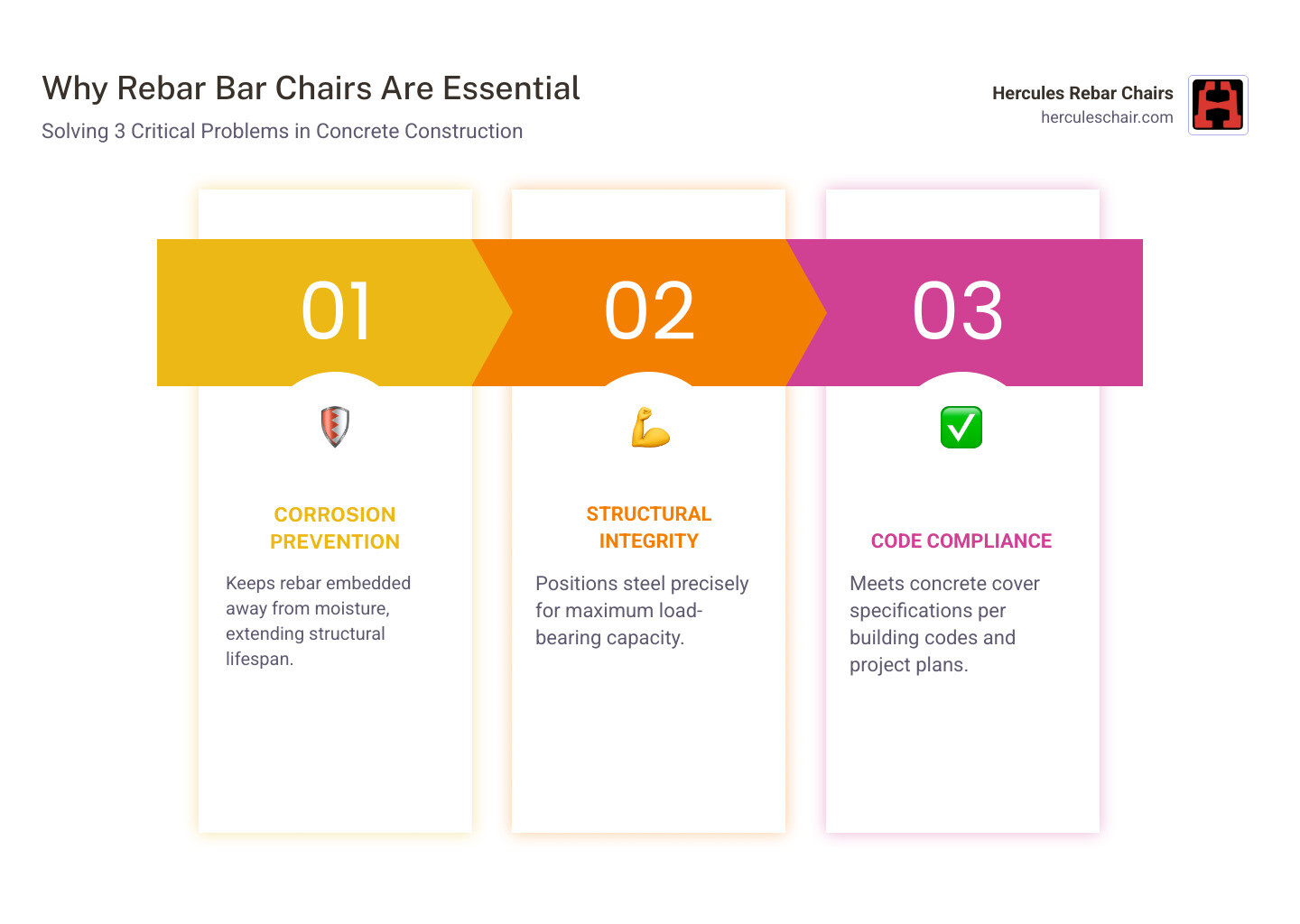
Rebar chairs solve three critical problems:
- Corrosion Prevention: Keeps steel embedded in concrete, away from moisture
- Structural Integrity: Positions steel where engineers designed it to be for maximum load-bearing capacity
- Code Compliance: Meets required concrete cover specifications per building codes and project plans
The stakes are high. In large construction projects with multi-layered reinforcement, even small positioning errors can compromise the entire structure. That’s why rebar supports are considered permanent parts of the structure itself, not temporary aids.
Different projects demand different solutions. A residential driveway pour needs very different supports than a suspended parking deck or coastal tilt-wall building. Material choice matters too—plastic chairs work great for most applications but can fail under heavy loads, while steel chairs offer superior strength but require protective coatings in corrosive environments.
I’m Jordan Harris, a licensed Professional Engineer with five years of structural engineering experience and current leader of product development at T.J. Harris Company, where we’ve manufactured over 14 million rebar bar chairs since releasing our flagship Hercules Chair in 2002. Throughout my career—from designing large-scale concrete structures for power generation companies to engineering innovative rebar support systems—I’ve seen how the right chair selection transforms job site efficiency and concrete performance.
This guide walks you through everything you need to know: types of supports, material differences, selection criteria, common problems, and practical solutions that save time and money on every pour.
The Anatomy of a Rebar Support: Types, Materials, and Designs
When we talk about rebar bar chairs, we’re referring to a whole family of devices designed to do one crucial job: hold rebar exactly where it needs to be. Just like Goldilocks searching for the perfect chair, we need to find the one that’s “just right” for our concrete project. These unsung heroes of concrete construction come in a delightful variety of shapes, sizes, and materials, each suited for specific applications and conditions.
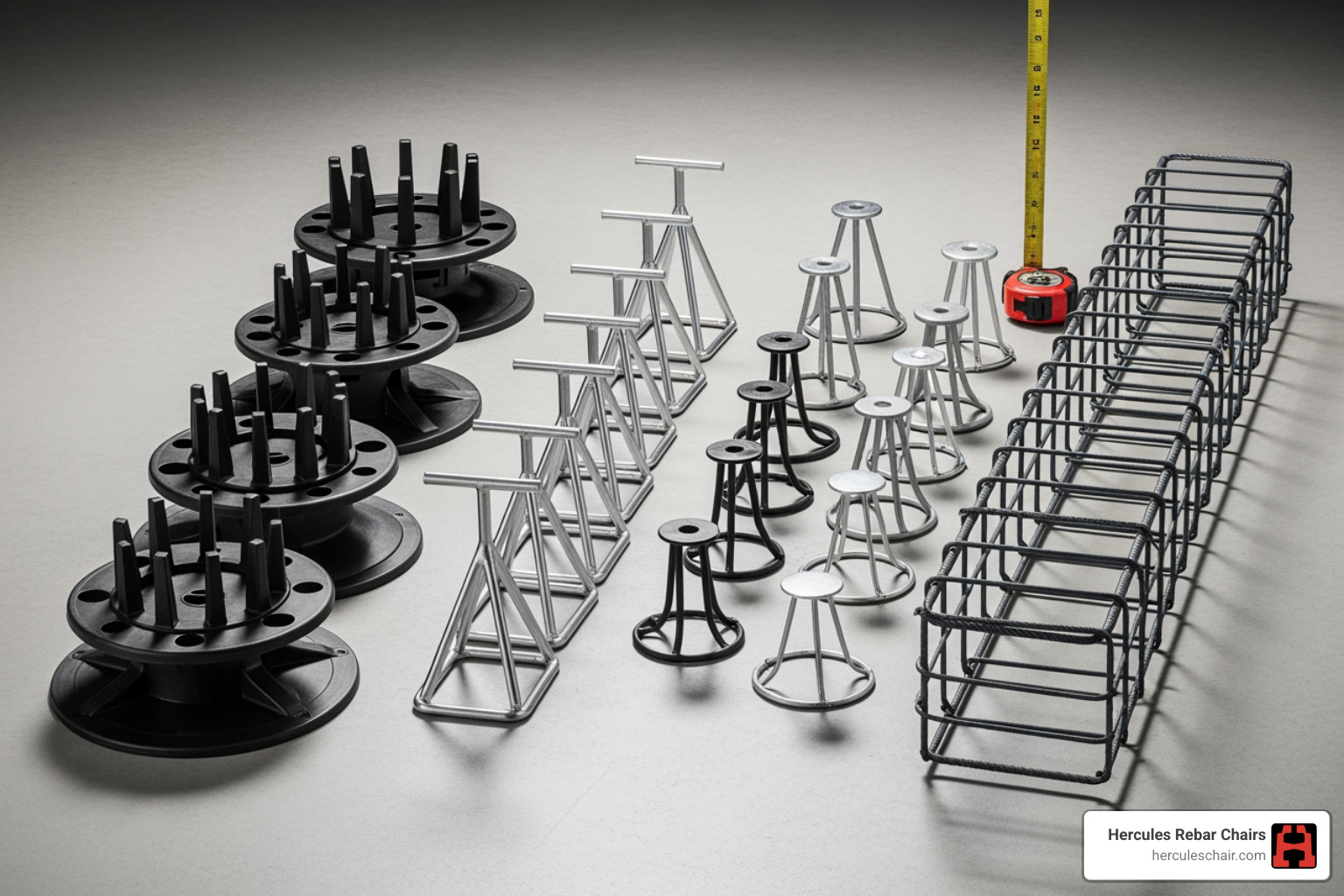
Whether it’s an individual high chair lifting a single bar or a continuous slab bolster supporting an entire mesh, each type is engineered to meet specific structural demands. We craft our chairs from robust materials like plastic, black steel, galvanized steel, or stainless steel, ensuring durability and performance across various environments. For instance, an individual high chair might come in heights ranging from 2 inches to 15 inches, while others are designed for more modest lifts. Some designs feature simple four-leg configurations, ideal for specific rebar diameters (like 12mm to 16mm rebar for four-leg chairs), while others incorporate specialized clip-on systems for quick and easy installation. Even the production methods vary, with steel chairs often created through precise welding and fabrication techniques.
At Hercules Rebar Chairs, we pride ourselves on offering a comprehensive range of solutions. Our products, like the iconic red Hercules Chairs, are recognized across the USA for their strength and reliability, helping countless projects achieve their structural goals. You can explore our full range and find the perfect fit for your next pour by checking out More info about our products.
Metal vs. Plastic Rebar Chairs
Choosing between metal and plastic rebar bar chairs is one of the most common decisions we face in concrete construction. Both have their strengths, and the “best” choice really depends on the specific demands of your project. Let’s break down the key differences:
| Feature | Hercules Metal Rebar Chairs ## What are Rebar Bar Chairs and What is Their Primary Function in Concrete Construction?
A rebar bar chair is a small, essential support device used in concrete construction to ensure that reinforcing steel (rebar) is correctly positioned and held in place before and during the concrete pour. Think of them as the tiny but mighty guardians of your rebar, making sure it stays exactly where the structural engineer designed it to be.
The primary function of these chairs is multifaceted and absolutely critical for the long-term integrity and safety of any concrete structure:
- Elevating Rebar: Their most obvious function is to lift the rebar off the ground or the formwork. This ensures that the rebar is fully encased in concrete, providing the necessary “concrete cover.”
- Ensuring Proper Concrete Cover: Concrete cover is the minimum thickness of concrete between the rebar and the outside surface of the concrete structure. This cover is vital for preventing corrosion of the steel and protecting it from fire. Without a rebar bar chair, the rebar would likely sink to the bottom of the form, leaving it exposed and vulnerable.
- Maintaining Position and Spacing: Rebar chairs secure the rebar in its exact design location, both vertically and horizontally. This is especially important for multi-layered rebar mats, where precise spacing ensures optimal load distribution and structural performance. They prevent the rebar from shifting during concrete placement, which can be a surprisingly vigorous process!
- Preventing Corrosion: By ensuring adequate concrete cover, rebar bar chairs create a protective barrier around the steel. This barrier protects the rebar from moisture, chemicals, and other environmental elements that could lead to rust and deterioration, ultimately compromising the structure’s lifespan.
- Enhancing Structural Strength: Rebar is placed in concrete to handle tensile forces—the pulling apart forces that concrete is weak against. If the rebar isn’t positioned correctly, it can’t perform this job effectively, leading to premature cracking, reduced load-bearing capacity, and potential structural failure. Rebar bar chairs guarantee the rebar is where it needs to be to provide maximum strength.
- Ensuring Code Compliance: Building codes and project specifications rigorously define the required concrete cover for different structural elements and environmental conditions. Using the correct rebar bar chair is fundamental to meeting these critical regulatory requirements, safeguarding the project’s approval and future performance.
A rebar bar chair isn’t just a convenience; it’s an integral component of the permanent structure itself. It’s the silent workhorse that ensures our concrete creations are strong, durable, and safe for decades to come.
The Anatomy of a Rebar Support: Types, Materials, and Designs
When we dive into rebar bar chairs, we find a fascinating array of designs and materials, each carefully developed to meet diverse construction needs. From the simplest plastic spacer to sophisticated epoxy-coated wire forms, these supports are engineered to perform under specific conditions and loads.
Generally, rebar bar chairs are manufactured from materials such as plastic, black steel, galvanized steel, or stainless steel. We’ve seen designs ranging from individual high chairs, which can support upper steel directly or via a carrier bar, to continuous slab bolsters that provide uniform support over longer spans. Some chairs are designed with a convenient clip-on system, making installation quick and easy, while others are four-leg wire chairs, suitable for specific rebar sizes like 12mm to 16mm. These chairs are designed to hold rebar ranging from 4mm to 40mm in diameter, accommodating various project requirements.
For instance, our Hercules Rebar Chairs are known for their robust design and consistent performance, helping projects across the USA maintain precise rebar placement. You can explore the full spectrum of our innovative products and their applications by visiting More info about our products.
Metal vs. Plastic Rebar Chairs
The choice between metal and plastic rebar bar chairs is a common one, and each material offers distinct advantages. Here’s how they stack up:
| Feature | Hercules Metal Rebar Chairs ## What are Rebar Bar Chairs and What is Their Function in Concrete Construction?
The rebar bar chair might be small, but it’s an absolutely essential component in concrete construction. Think of it as the unsung hero that ensures your concrete structures stand strong and last for generations. Its primary function is quite simple: to lift and position reinforcing steel (rebar) to the precise location required by structural designs and building codes.
Why is this so important? Without these crucial supports, the rebar would likely settle at the bottom of the concrete formwork during the pour. This creates a host of problems:
- Corrosion Prevention: Rebar needs to be fully encapsulated in concrete to protect it from moisture, oxygen, and corrosive substances. This protective layer, known as concrete cover, is critical. If rebar is exposed or too close to the surface, it rusts, expands, and can crack the surrounding concrete, leading to structural failure. Rebar bar chairs ensure this vital cover.
- Structural Integrity: Rebar is placed strategically within concrete to handle tensile forces—the pulling and stretching that concrete itself isn’t very good at resisting. If the rebar isn’t precisely positioned, it can’t perform its job effectively. The result? A structure that’s weaker than designed, prone to cracking, and unable to bear its intended loads.
- Code Compliance: Building codes across the USA, from Florida to Alaska, specify minimum concrete cover requirements based on the type of structure, exposure conditions, and fire resistance needs. Using the correct rebar bar chair is non-negotiable for meeting these regulations, ensuring the safety and legality of your project.
A rebar bar chair isn’t just a temporary prop; it becomes an integral, permanent part of the concrete structure. It guarantees that the rebar is “sitting pretty” in its optimal position, ready to perform its duties for decades to come. Without it, we’re not just building with concrete and steel; we’re building with potential problems.
A Practical Guide to Selecting the Perfect Rebar Support
Choosing the right rebar support is crucial for the success of your project. Several factors come into play, including the cover height specified in your plans, the size of the rebar being used, the expected load, and the surface the chairs will be placed on (e.g., soil, vapor barrier, or formwork). Environmental conditions, such as exposure to moisture or chemicals, also dictate the best material choice. For a detailed breakdown, check out our Guide to Concrete Bar Chair Sizes.
Understanding Standards and Specifications
Adhering to industry standards is non-negotiable for structural integrity and legal compliance. Key standards to be aware of include AS/NZS 2425:2015 and those set by the Concrete Reinforcing Steel Institute (CRSI). Always check your project specifications for:
- Required concrete cover height
- Rebar size and spacing
- Specified chair material (e.g., plastic, epoxy-coated)
- Load-bearing requirements
Choosing the right rebar bar chair for Special Environments
Harsh environments demand robust solutions. For projects in coastal areas or those with high exposure to moisture and corrosive elements, consider using plastic-tipped, galvanized, or even stainless steel chairs to prevent rust and ensure long-term durability. Our 2″ Steel Mesh Chair is an excellent example of a product designed for durability in various conditions.